


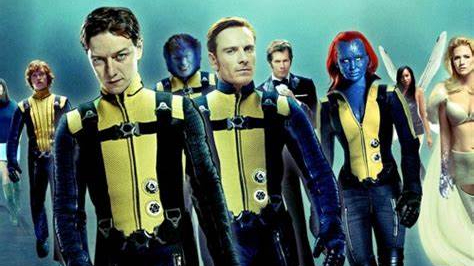
X-Men: First Class directed by Matthew Vaughn, serves as a prequel to the earlier films in the X-Men saga, taking us back to the 1960s during the height of the Cuban Missile Crisis. It’s a refreshing chapter in the series that delves into the beginnings of the X-Men and the intricate dynamics between Charles Xavier and Erik Lehnsherr before they took on their iconic roles as Professor X and Magneto.
The movie kicks off with an intense sequence in a Nazi concentration camp, where a young Erik first manifests his ability to manipulate metal. This pivotal moment lays the groundwork for his eventual path as Magneto, fuelled by a thirst for vengeance against those who have harmed him. The film ingeniously weaves the historical context of the Cold War into its storyline, casting the mutants in a covert operation during the Cuban Missile Crisis, thereby enriching the film’s narrative layer.
The performances in the film, especially those of James McAvoy as Charles Xavier and Michael Fassbender as Erik Lehnsherr, stand out as highlights. Fassbender’s interpretation of Magneto is particularly noteworthy; he infuses the character with a profound depth and complexity. The movie adeptly sets up the philosophical divide between Xavier and Magneto, a fundamental aspect of the X-Men saga.
The movie stands as an unique entry in the franchise, and while the narrative sometimes descends into chaos, stretching too thin with too many characters, the film has been praised for injecting new life into the X-Men franchise and laying down a robust groundwork for sequels to build upon.
In the grim setting of Auschwitz in 1944, a young Erik Lehnsherr, separated from his parents, inadvertently showcases his ability to manipulate metal, catching the eye of Klaus Schmidt, a Nazi officer. Schmidt’s cruel test of Erik’s powers leads to a tragic outcome, igniting Erik’s latent magnetic abilities in a fit of rage. Meanwhile, across the ocean in Westchester County, New York, a young Charles Xavier encounters Raven, a shape shifter with blue-scaled skin, and extends an invitation of friendship and a home.
Fast forward to 1962, where Erik, now on a mission of vengeance, is on the trail of Schmidt, who has adopted the new identity of Sebastian Shaw. Concurrently, Xavier is celebrating his academic achievements at Oxford. The plot thickens in Las Vegas as CIA officer Moira MacTaggert uncovers Shaw’s association with other mutants like Emma Frost and Azazel at the Hellfire Club. Shaw’s manipulation of U.S. Army Colonel Hendry, leading to a deadly outcome, sets a dangerous geopolitical move in motion, revealing the depth of Shaw’s ambition and the extent of his power.
In a daring move, Moira MacTaggert enlists the help of Charles Xavier and Raven to prove to the CIA that mutants are real and that Sebastian Shaw poses a significant threat. Their efforts pay off when another agent backs them, leading to an invitation to the clandestine Division X facility. It’s here that Xavier and Moira intercept Shaw during Erik Lehnsherr’s vengeful assault, saving Erik from a watery grave. At Division X, they encounter the brilliant Hank McCoy, a scientist with a unique mutation. Utilizing McCoy’s invention, Cerebro, Xavier and Erik embark on a mission to assemble a team of mutants, including Angel Salvadore, Armando Muñoz, Alex Summers and Sean Cassidy.
The plot thickens as Xavier, Erik, and Moira spearhead a CIA operation in the USSR, uncovering Shaw’s catastrophic plan to ignite World War III and ascend mutant kind. Shaw’s cohorts, Azazel and Riptide, decimate Division X, sparing only the mutants, whom Shaw tries to sway to his side. While Salvadore defects, Shaw mercilessly eliminates Muñoz after a skirmish. Meanwhile, Shaw manoeuvres the Soviet general into positioning missiles in Cuba, donning a telepathy-proof helmet as he shadows the Soviet fleet to bypass a U.S. blockade. Back at Xavier’s estate, the remaining team members concentrate on mastering their powers. Hank McCoy, hopeful for a solution to their distinct appearances, concocts a potential remedy from Raven’s DNA. However, swayed by Erik’s counsel, Raven rejects the idea of concealing her true self. McCoy’s self-experimentation with the serum goes awry, transforming him into a creature with blue fur and feline features.
In a daring confrontation at the blockade line, McCoy pilots a jet carrying the mutants and Moira. Xavier uses his telepathy to manipulate a Soviet sailor into destroying a missile-laden ship, while Erik, with his magnetic abilities, lifts Shaw’s submarine from the depths, grounding it. In the heat of battle, Erik commandeers Shaw’s helmet, rendering him vulnerable to Xavier’s powers. Erik, aligning with Shaw’s mutant-first ideology yet driven by vengeance for his mother, ends Shaw’s life with a coin from his past. Xavier, desperate to prevent this, feels the weight of Shaw’s passing.
The fleets, panicked by the mutant presence, launch an attack, which Erik thwarts. In a twist of fate, a bullet meant for Erik, deflected by him, tragically paralyzes Xavier. The incident scatters the mutants, with Erik departing with a few, adopting the moniker Magneto. Xavier, bound to a wheelchair, returns to his mansion to start a school for mutants, erasing Moira’s memories to protect its secrecy. Magneto, embracing his new identity, liberates Frost from confinement, setting a new course for the mutants.
A NEW ERA

X-Men: First Class stands out as a unique entry in the X-Men film series, introducing a fresh cast of characters alongside familiar faces like Charles, Erik, Hank, and Raven, each with their own twists from the comic book origins. Here are just a few of them:
Ω In the comics, Riptide is known as a Marauder, typically aligned with Mr. Sinister and meets his end at the hands of Colossus during the Mutant Massacre event.
Ω Azazel, much more verbose in the comics, was first introduced in the notorious The Draco storyline, where he was revealed to be Nightcrawler’s father through Mystique. However, a 2023 retcon altered this narrative.
Ω Angel Salvadore, originally an X-Men student in the New X-Men series, mirrors her comic book defection to the Brotherhood during the Planet X arc in the film.
Ω Contrary to the comics where Alex is Scott’s younger brother, the movie portrays him as the elder.
Ω Darwin, often believed dead in the comics, has a power set that enables him to adapt and survive against all odds, even transforming into computer code. His demise in the film is controversial, with many fans arguing that he could have survived.
Ω Banshee, typically depicted as a contemporary of Charles in the comics and Irish, is portrayed differently in the film.
Ω Emma, who appeared unnamed in X-Men Origins: Wolverine, caused a continuity error, while Shaw’s ambitions in the comics are more focused on controlling the elite rather than world domination.
Ω Notably, X-Men: First Class is the first film in the series where Wolverine plays a minimal role, swiftly declining Xavier and Erik’s offer.
Ω Hank is credited with building Cerebro in the film, despite previous claims that Erik was involved in the first movie.
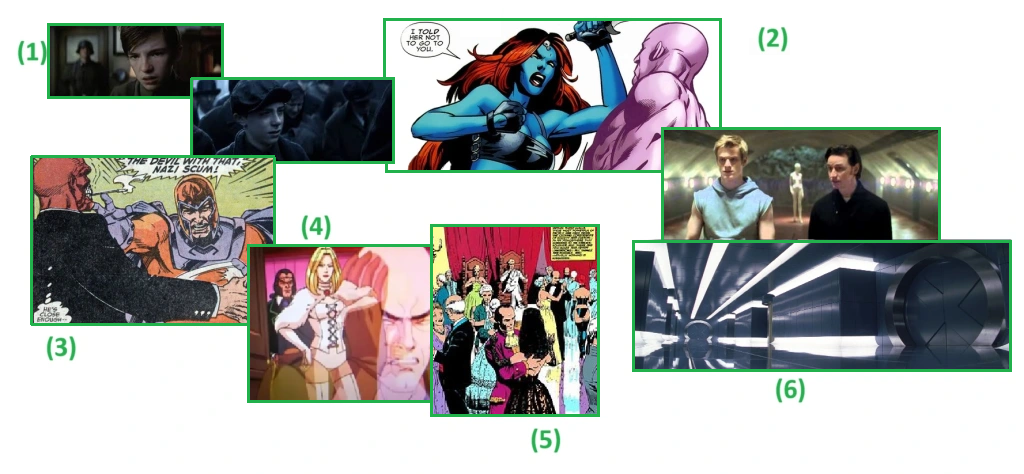
(1) As an engaging prequel to the original movie, it’s no surprise that there are numerous nods to the X-Men series: Charles’ pickup line in the bar echoes the opening narration of the first film, discussing mutants. Additionally, Charles’ advice to Moira about a mutant’s primary defence being anonymity harks back to the series’ roots. The film even begins with a meticulous re-enactment of the poignant Auschwitz scene where Erik is separated from his parents, complete with new actors but retaining the original score to evoke the same emotional impact.
(2) In the world of comics, Charles Xavier and Mystique’s relationship was virtually non-existent prior to the release of a certain movie. Their encounters in the comic books were infrequent, but the film’s influence was so significant that it led to Mystique’s character being retconned to have been secretly married to Charles Xavier at one point! However, their interactions in recent narratives are far from friendly.
(3) Erik dedicates his time to seeking justice for the atrocities committed by the Nazis during the war. Although he has never pursued them in the comics, during the AXIS event, he unleashed his fury on Marvel’s informant and Hitler supporter, the war criminal known as Red Skull.
(4) Emma Frost uses her ability to block Charles Xavier’s telepathy using her own powers, a common trait among telepaths. This particular skill was showcased in the animated series episode titled The Inner Circle.
(5) Regarding the Inner Circle, the line-up in this film differs significantly from the Hellfire Club’s traditionally opulent and decadent image. In this adaptation, they resemble a group of terrorists more than anything else.
(6) The bunkers beneath the school, where Alex safely hones his plasma energy skills, are destined to transform into the primary passageways of the mansion’s subterranean complex.
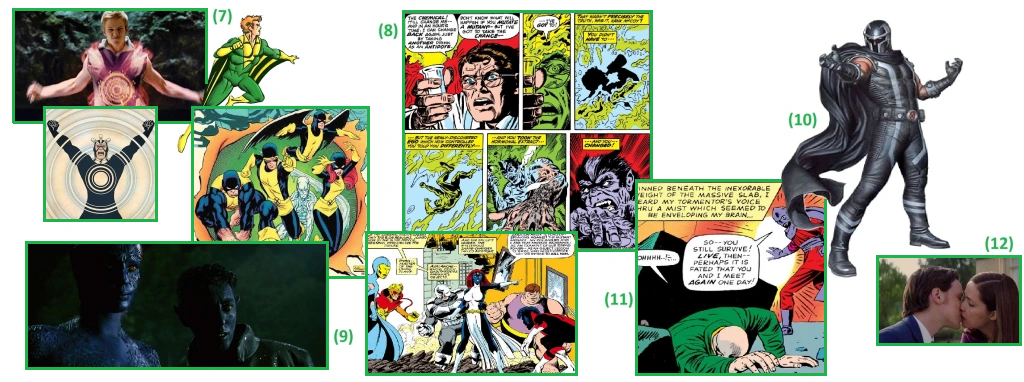
(7) Banshee and Havok’s uniforms boast unique features directly inspired by their comic book versions. These costumes also echo the uniform worn by Beast in X-Men: The Last Stand, as well as the classic blue and gold uniforms from the inaugural issue of X-Men.
(8) The events surrounding Hank’s serum intake differ slightly on panel, yet they closely resemble the occurrences in Amazing Adventures #11.
(9) Erik is the catalyst for Mystique’s embrace of her ‘mutant and proud’ identity, encouraging her to stop concealing her true appearance. This sentiment mirrors her statement to Nightcrawler in X2, advocating that hiding shouldn’t be necessary. In a notable scene, Jennifer Lawrence’s Mystique momentarily transforms to resemble Rebecca Romijn’s portrayal from the original trilogy during an attempt to allure Erik. Ultimately, Mystique aligns with the Brotherhood by the film’s conclusion, diverging from the comics where she establishes her own group.
(10) Erik donning an X-Men uniform is not a novel occurrence; indeed, in the comics, he has been aligned with the heroes more often than not over the past two decades. This evolution from villain to ally highlights the complex nature of his character and reflects the dynamic storytelling that X-Men comics are known for. Magneto’s journey from adversary to member of the X-Men showcases a rich narrative of redemption and the multifaceted nature of morality within the mutant universe.
(11) In the comics, Charles sustains an injury during a clash with an alien adversary known as Lucifer, resulting in his legs being crushed under a massive boulder. This event is revealed in Uncanny X-Men #9.
(12) In a sign of his rather loose morality to control events , Charles wipes Moira’s memories of their time together. He’ll restore them in X-Men: Apocalypse. In the comics, they have a much different history…
XAVIER’S CLOSEST CONFIDANT: MOIRA
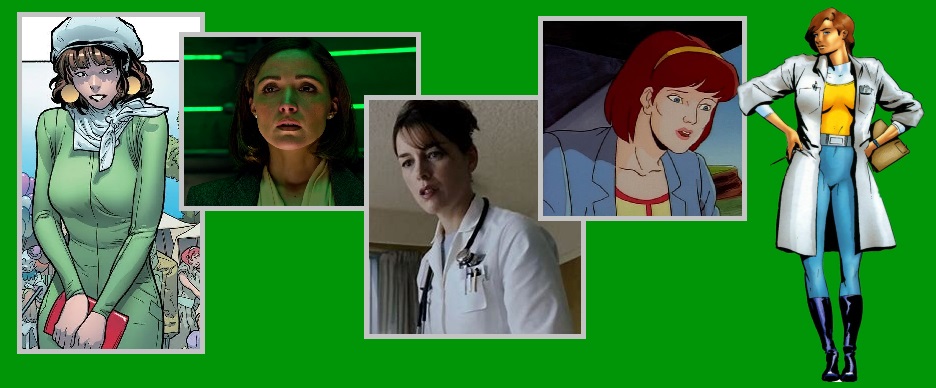
Moira MacTaggert stands out as the character who has undergone the most significant transformation from her comic book origins. Initially introduced in Uncanny X-Men #98 as Xavier’s former companion and purported housekeeper, Moira’s true identity was later unveiled as his partner in founding the X-Men. Her base of operations was primarily off the coast of Scotland on Muir Island, where she conducted research on various mutations to aid her son Kevin.
The film adaptation takes a dramatic turn, reimagining Moira as an FBI Agent deeply involved in disrupting Sebastian Shaw’s schemes to incite a nuclear war. Unlike her comic book counterpart, she isn’t portrayed as a scientist, nor does she have Scottish ties or a connection to Muir Island. And it’s safe to say, she’s definitely not depicted as a homicidal, mutant-loathing automaton.




 X-Cess Minutiae
Leave a comment