


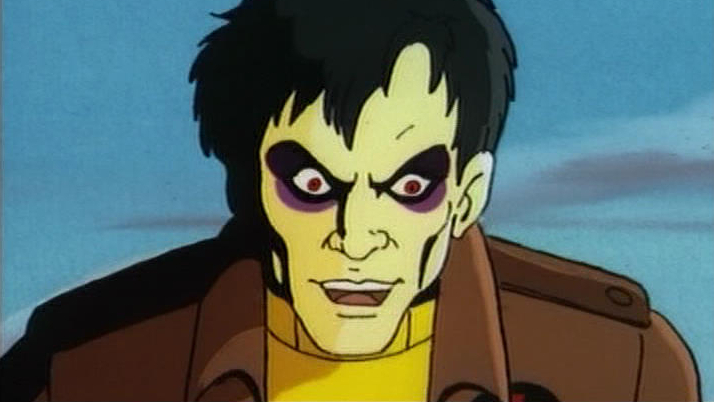

Morph was there to die.
Morph made their debut as an X-Men member in the show’s first episode, joining the mission to obliterate the Mutant Control Agency’s records on mutants. The team’s exit was compromised by Sentinels, but the X-Men were quick to respond. Morph, anticipating the danger, saved Wolverine by taking his place, and in a moment off-screen, as the scene shifted to Jean Grey, the shocking revelation came: Morph had fallen. The pilot episode concluded with the X-Men mourning their loss and uniting against the Sentinel menace.
The creators aimed to establish a grave tone for the series by depicting the death of an X-Men character in the opening episode. This mirrored the comics, where John Proudstar, also known as Thunderbird, perished on his inaugural mission in X-Men #95, a narrative that persisted well into the 21st century. Morph was chosen as the animated counterpart to carry this sombre legacy.
Adapting a lesser-known X-Men villain from the 70s known as Changeling, the producers were ready to proceed until DC Comics claimed copyright over ‘Changeling’. Consequently, the character was renamed Morph. Morph’s abilities enabled them to shapeshift, and despite a disturbing cackle, they provided comic relief for the X-Men, even being the only one capable of making Wolverine laugh.
Morph’s death in the series premiere was meant to be final, but fan affection prompted a revival and further character development. In season two, it was disclosed that Mister Sinister had recovered Morph’s body, resurrected, and manipulated them into servitude. The season concluded with the X-Men liberating Morph from Sinister’s influence and escorting them to Muir Island for recovery. Morph rejoined the team in season four but left again due to unresolved psychological trauma. Ultimately, they recuperated in time for a farewell in the poignant series finale, Graduation Day.
With the revival of the series as X-Men ’97, Morph reclaimed their rightful place at the forefront, alongside the home team. They were also honoured with their own title card in the opening sequence.
Morph’s poignant narrative struck a chord with the audience, addressing the trauma from Sinister’s experiments and delving into their identity. Represented as non-binary, Morph brought inclusivity to the series. The first season of X-Men ’97 didn’t shy away from revealing Morph’s romantic feelings towards Wolverine.
Morph’s comeback in the series revival has thrilled fans, enhancing the show’s nostalgic appeal. Their odyssey, marked by sacrifice, rebirth, and continuous battles, has profoundly touched viewers and the X-Men lore. Morph’s role in the revival remains a focal point, captivating fans and tackling significant themes of identity and trauma.
Cyclops and Jean Grey‘s wedding sees Wolverine battling a robotic Scott in the Danger Room, donning a suit no less. The ceremony takes an unexpected twist when the officiating Reverend, upon concluding the nuptials, is revealed to be Morph in disguise, alive contrary to belief since the X-Men‘s encounter at the Mutant Control Agency.
Concurrently, Senator Kelly, amidst his presidential inauguration, issues a pardon to Beast. The ceremony is marred by an assault from a mutant impersonator, leading Graydon Creed to publicly denounce Kelly for failing to protect humanity from mutants. Jean later confronts Logan in the Danger Room, expressing disappointment over his absence at the wedding, to which he offers an apology.
Elsewhere, Morph grapples with their past abandonment by the X-Men and their subsequent rescue by Mister Sinister, leading to an internal conflict over seeking vengeance, egged on by Sinister.
The city descends into chaos as the Friends of Humanity incite anti-mutant riots, spurred by Creed’s incendiary remarks. Charles Xavier reveals that this group, once supporters of Kelly’s anti-mutant stance, now feel betrayed by his newfound mutant sympathies. In a deceptive twist, Xavier receives a distress call from Magneto, unaware that he was actually speaking to Morph, masquerading as the mutant leader.
At a local bar, Beast, Wolverine, and Gambit find themselves under attack by rioters. The trio is compelled to defend themselves, and the altercation is captured on video by Creed, who plans to use the footage for his own gain. At the X-Men’s mansion, a message from Xavier announces his temporary departure, leaving Storm as the team’s leader. The news broadcasts the bar fight, erroneously accusing Beast of instigating the violence.
In a deceptive move, Morph infiltrates the mansion, impersonating Rogue to lure Gambit into a rendezvous, and later, masquerading as Storm, they manipulates Jubilee into confronting an anti-mutant assault in the city. Gambit’s encounter with the real, slumbering Rogue ends with a kiss and his own collapse. Morph’s treachery continues as they increase the Danger Room’s peril, trapping Beast inside.
Storm and Rogue thwart an anti-mutant onslaught at a counselling centre, only for Morph, disguised as a law enforcement officer, to command the police to fire upon Storm, resulting in her hospitalization.
All the while, Sinister revels in the chaos, watching Morph’s vengeful scheme unfold from afar.
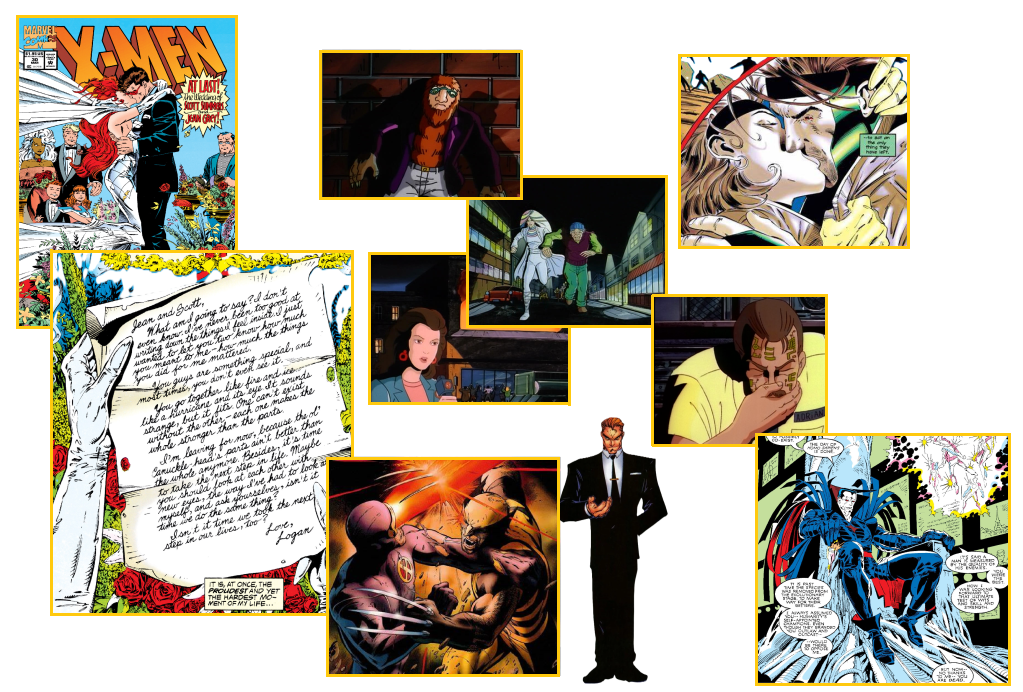
In X-Men #30, Jean and Scott’s wedding sees Wolverine reacting peacefully; he observes from a distance and sends a note.
Cyclops and Wolverine, known for their longstanding rivalry, rarely come to blows. However, their conflict reached a peak in the Schism event, leading to a split within the X-Men family as each man took a separate path with their followers.
The Friends of Humanity showcased their prejudiced ideology in Uncanny X-Men #291, founded by Graydon Creed, who debuted in #299. His chilling words to Jubilee, “You were born,” exemplify the group’s menacing presence throughout the series. Creed’s complex issues are further explored in Beauty and the Beast and Bloodlines.
Trish Tilby reports on the Friends of Humanity riots, while Morlocks Mole, Tommy, and Ape are seen escaping danger.
Jubilee’s expulsion from the War Room by Gambit and ‘Rogue’ coincides with news of “a mysterious illness sweeping the nation,” hinting at the Legacy Virus storyline in Time Fugitives.
A dramatic kiss between Rogue and Gambit in X-Men #41 leaves her psyche swamped by his persona, and Gambit comatose for months.
Sinister’s lair, featured in this and later episodes, mirrors his headquarters from the Inferno saga.
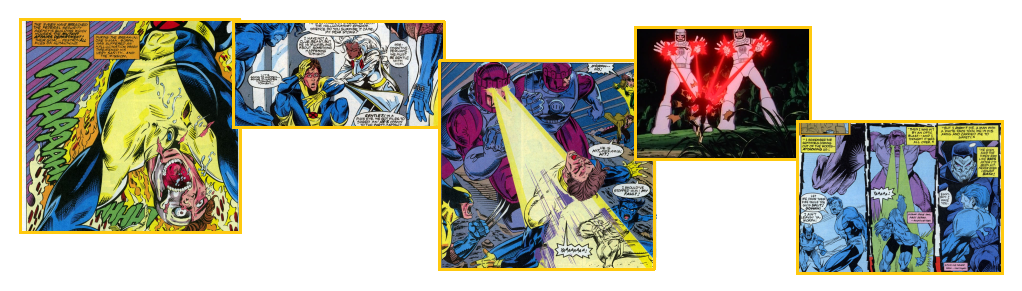
Newly revealed footage from Night of the Sentinels unveils the precise moment of Morph’s assault, previously unseen in season 1. The comic adaptation expands on this, hauntingly foreshadowing Morph’s fate.
MORPH IN THE COMICS
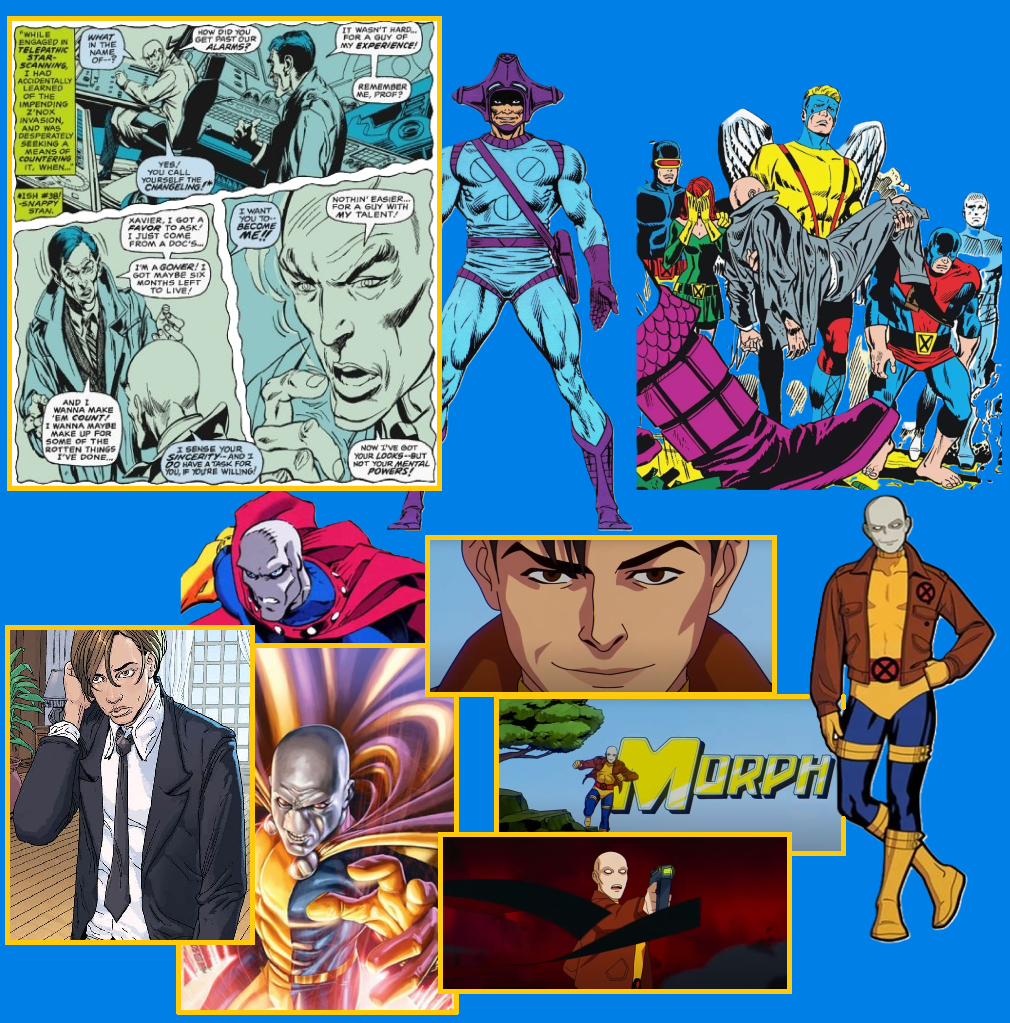
Kevin Sydney made his debut in The X-Men #35 (August 1967) under the alias Changeling, a character brought to life by writer Roy Thomas and artist Werner Roth. In his role as Changeling, he served the nefarious group Factor Three, acting as the right-hand man to the Mutant Master in their scheme to instigate World War III. The X-Men intervened, falling into Changeling’s trap. Yet, the plot twisted unexpectedly when the Mutant Master was unmasked as an alien being, spiralling out of control.
Upon understanding Factor Three’s true intentions, Changeling experienced a change of heart. He defected and allied himself with the X-Men. In a critical turn of events, Changeling covertly took on the role of Professor X while Xavier concealed himself. While impersonating Xavier, he battled alongside the X-Men. In a tragic turn, Changeling perished in combat, becoming the first X-Men member to fall in the line of duty. Jean Grey was the sole person aware of his true identity.
Inspired by the animated series, a new version of Morph was featured in the Age of Apocalypse crossover event in 1995. This iteration maintained a fluid white appearance, aligning more closely with the character’s eccentricities. A similar version became a staple in the X-Men spin-off Exiles which highlighted an X-Team’s mission to safeguard and preserve the Multiverse.
A new Morph, Benjamin Deeds, emerged in All-New X-Men #3, possessing akin abilities. The success of X-Men ’97 could potentially provide this character with an opportunity to gain prominence in the comics once again.




 X-Cess Minutiae
Leave a comment