


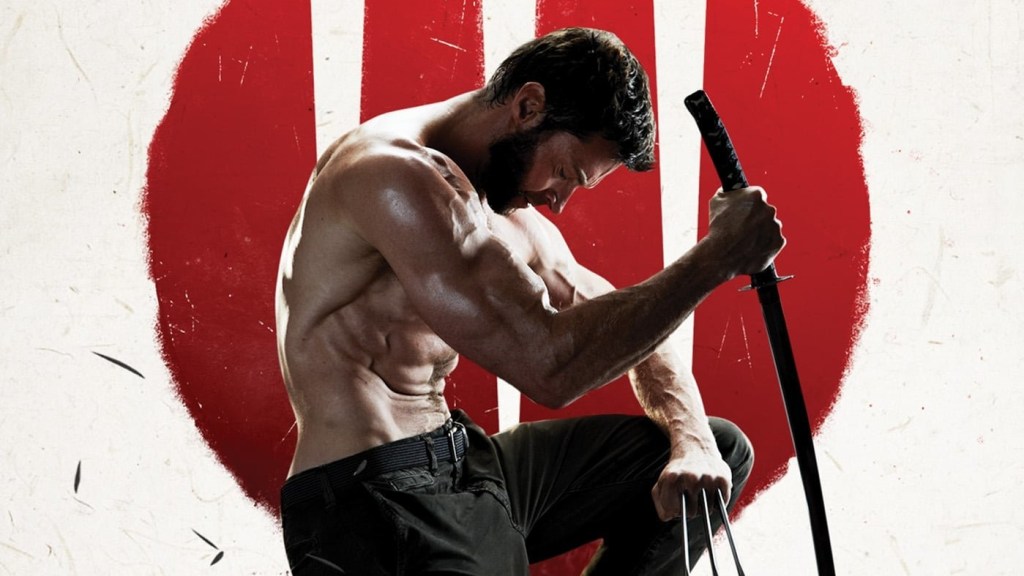
The Wolverine takes us on a profound journey into the mind of Logan, offering a depth unseen in earlier chapters. Set against the vibrant backdrop of Japan, the movie delves into the existential struggles of mortality, guilt, and the quest for redemption, presenting a contemplative narrative of the famed mutant.
The film sees Hugh Jackman’s Logan confronting the burdens of his eternal life and yearning for normalcy. Drawing from a beloved Marvel Comics storyline, Wolverine’s odyssey in Japan is a quest for personal truth, marked by both physical challenges and emotional turmoil as he navigates unfamiliar territories.
With its thrilling action set-pieces, including an iconic battle on a bullet train, The Wolverine is a visual feast, boasting meticulous production and costume designs that enrich the cinematic experience. The film stands out as a singular entity, distinctively separate from the broader X-Men universe, yet equally captivating.
Hugh Jackman’s portrayal of Wolverine is a standout, bringing a touching vulnerability that deepens the character’s complexity. Director James Mangold delivers a unique cinematic experience, fusing Eastern aesthetics and traditions with a Western flair for heroism.
The Wolverine distinguishes itself with its exploration of Logan’s personal battles and its distinctive setting. Despite certain narrative flaws and a contentious final act, the movie remains a noteworthy addition to the X-Men series, presenting a fresh take on the beloved character and his perpetual conflict with his own nature.
In August 1945, Logan finds himself captive in a Japanese POW camp near Nagasaki. Amidst the city’s atomic bombing, he shields Ichirō Yashida, an officer, saving his life.
Fast forward to the present, Logan leads a secluded life in the Yukon, haunted by visions of Jean Grey, whom he tragically had to kill. His solitude is interrupted by Yukio, a mutant with precognitive abilities, representing Ichirō, now a tech zaibatsu’s CEO. Facing terminal cancer, Ichirō summons Logan to Japan to fulfil a debt of gratitude. In Tokyo, Logan encounters Ichirō’s lineage, Shingen and Mariko. Ichirō proposes a trade: Logan’s healing powers in exchange for mortality, a gift Logan sees as a curse. Despite his reservations, Logan declines, planning to depart. Yet, under the veil of night, Dr. Green, Ichirō’s doctor, administers a mysterious poison to Logan, an act he dismisses as mere fantasy.
In the wake of Ichirō’s death, Yukio breaks the news to Logan. Chaos erupts at the funeral when the Yakuza try to seize Mariko, leading to a daring escape by the pair into Tokyo’s bustling cityscape. Despite being shot, Logan’s recovery is unusually slow. A high-speed clash with the Yakuza on a bullet train ensues, after which Logan and Mariko seek refuge in a love hotel. Concurrently, Harada, Ichirō’s loyal bodyguard, encounters Dr. Green. Under the influence of her mutant abilities, he is compelled to track down Logan and Mariko. The plot thickens as Logan and Mariko retreat to Ichirō’s residence in Nagasaki, their affection for each other blossoming. Amidst this, Yukio’s premonition of Logan’s demise sends her on a desperate mission to find him. However, before she can reach him, the Yakuza abduct Mariko. Logan and Yukio, after extracting information from a kidnapper, confront Mariko’s betrothed, the unscrupulous Minister of Justice Noburo Mori. Mori admits to colluding with Shingen, orchestrating the kidnapping to thwart Ichirō’s wishes of bequeathing the company to Mariko instead of Shingen.
Mariko is seized by Shingen at Ichirō’s estate, but a sudden ninja assault led by Harada disrupts the encounter, resulting in her abduction. Logan and Yukio later infiltrate the estate and uncover a mechanical parasite latched onto Logan’s heart, hindering his regenerative powers. In a self-surgical act, Logan removes the parasite, just as Shingen launches an attack. Yukio defends Logan, buying him time to recuperate and retaliate, ultimately defeating Shingen. Tracking Mariko to Ichirō’s hometown, Logan is ambushed and captured by Harada’s ninjas. Dr. Green then straps Logan into a contraption, aiming to siphon his healing abilities, and unveils the Silver Samurai, a towering suit of armour with electrified adamantium blades. Meanwhile, Mariko breaks free from Harada, who has a change of heart and aids Logan’s escape, only to meet his end at the hands of the Silver Samurai.
Yukio makes a dramatic entrance and eliminates Dr. Green. In the midst of a fierce battle, the Silver Samurai cuts off Logan’s adamantium claws and starts draining his regenerative powers, only to be revealed as Ichirō, who had staged his own death. Ichirō’s youth is restored, but Mariko steps in, using Logan’s detached claws to stab Ichirō. Logan’s bone claws grow back, and he defeats Ichirō. After the intense encounter, Logan experiences a poignant vision of Jean and chooses to release her from his memories. Mariko takes the helm of Yashida Industries as its new CEO and says goodbye to Logan as he sets off from Japan. Yukio promises to remain by Logan’s side as his protector, and together, they head off into the unknown.
Fast forward two years, Logan is back in the United States. At the airport, he encounters Charles Xavier and Erik Lehnsherr, who bring a dire warning about a human-made weapon that threatens mutant kind.
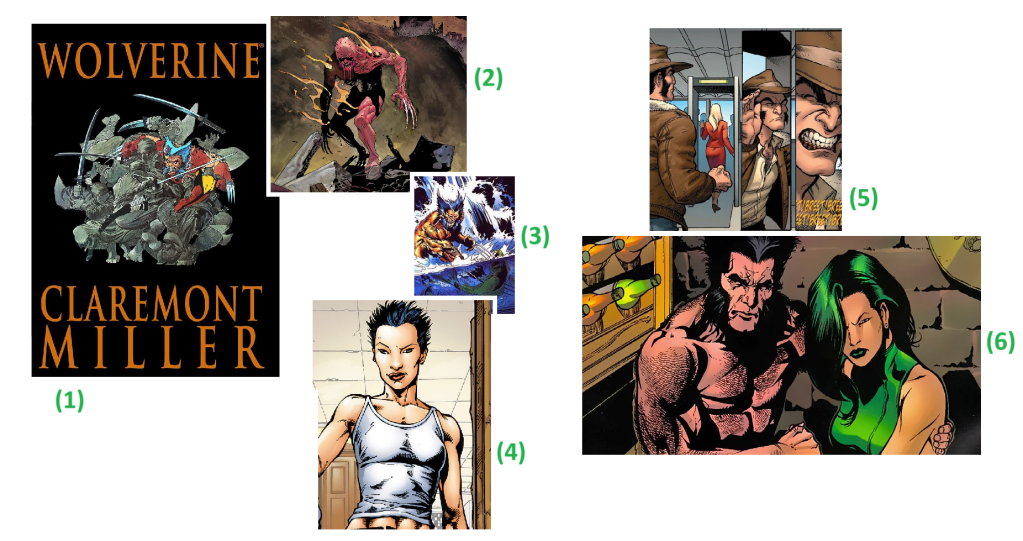
(1) The film draws inspiration from the 1982 Wolverine mini-series by Chris Claremont and Frank Miller, with notable deviations, particularly in the portrayal of the Yashida family. Unlike the comics where Shingen is the father of Mariko and Harada, making them siblings, the film presents them as lovers. Additionally, the Silver Samurai’s identity is altered, though the core narrative remains largely faithful to the original material.
(2) Echoing the X-Men series, the movie begins during World War II, showcasing Logan’s harrowing experience in the Hiroshima nuclear blast, as depicted in Logan #2.
(3) Haunted by Jean Grey’s death in X-Men: The Last Stand, Logan’s dreams reflect his deep-seated guilt. The storyline picks up at least a year later, finding Logan seeking solace in the Canadian Rockies, a retreat familiar to fans of the comics.
(4) Yukio, traditionally a ronin in the comics and not a mutant, is portrayed as a skilled warrior and martial artist. She’s entwined in Logan’s complex love life, which includes a hinted relationship with Storm. Her knowledge of Logan is extensive, owning files that feature images of him with Storm at Alcatraz, as seen in X-Men: The Last Stand.
(5) The film playfully nods to Logan’s ongoing battles with metal detectors and his aversion to flying, adding a touch of humour to the intense narrative.
(6) Viper undergoes a significant transformation from her comic book origins. Known primarily as a foe to Captain America and as Madame Hydra, her green costume pays homage to her alias. Unlike her comic counterpart, the film reinvents her as a mutant, adding a twist to her established character. She also married Wolverine in Wolverine #125 and was a lover of the Silver Samurai.

(7) In the cinematic universe of X-Men, Viper’s ability to suppress Logan’s X-Gene is a twist on the concept of a ‘cure’ introduced in X-Men: The Last Stand. Speculation arises whether the microscopic bugs, or leeches, she uses could be derived from Jimmy’s DNA, hinting at a possible connection to the Essex Corporation’s shadowy agenda. This organization’s interest in Logan’s abilities is well-documented.
(8) In a nod to the comics, Viper’s method of poisoning mirrors the events of Uncanny X-Men #172, where she stealthily administers a toxin to the X-Men. The film adaptation cleverly incorporates this plot point, using it as a means to introduce the parasitic bugs into Logan’s system.
(9) The character of Harada in the film draws inspiration from Mariko Yashida’s brother, Kenuchio Harada, known as the Silver Samurai in the comic books. His mutant power to energize his sword, enabling it to slice through any material, is a formidable ability that, tragically, leads to his demise in the movie—killed by the very powers that define him.
(10) The storyline of Wolverine’s suppressed healing factor and subsequent death aligns with the Death of Wolverine comic arc, where he meets a temporary end. This plot element serves as a poignant exploration of Wolverine’s vulnerability and mortality.
(11) The stormy weather in Japan during the movie could be a subtle homage to a similar instance in the comics where Ororo loses control of her powers the night the events of this movie happen in Uncanny X-Men #172-173.
(12) The film’s Black Clan, a group of ninjas protecting Temple Yashida, is a reimagined version of the Hand, a change necessitated by copyright issues with the Marvel Cinematic Universe.
(13) Wolverine’s claws were first broken in Wolverine #79, a pivotal moment for the character.
(14) Although his healing factor isn’t transferable as depicted in the film, the animated episode Have Yourself a Morlock Little X-Mas shows Wolverine successfully giving a blood transfusion to Leech, who ironically is the source of the cure in the movies.
(15) At the movie’s conclusion, Wolverine is left with bone claws, echoing the time when Magneto stripped the adamantium from his skeleton in X-Men #25.
(16) Jean Grey’s spectral form has rescued Logan from the brink of death on several occasions, starting with Wolverine #32.
(17) Logan is forced to kill Mariko to spare her from a slow, agonizing death due to poisoning, as seen in Wolverine #57.
(18) Yukio is spotted carrying a box onto the plane at the film’s end. A deleted scene reveals it holds a costume true to Wolverine’s comic book look. Although she says she’s his bodyguard, Yukio doesn’t stay by his side.
(19) Two years later, Trask Industries gains prominence, foreshadowing X-Men: Days of Future Past. Magneto regains his powers, suggesting the cure from X-Men: The Last Stand was only temporary, and it’s implied Charles Xavier has transferred his consciousness to a new body following the post-credits scene of that film. While not explicitly stated, the adamantium claws return by the next movie, indicating some time has passed. In fact, the events of X-Men: Days of Future Past rewrites the timeline so that the events of this movie never happen, or at least not in the same way.
THE EPONYMOUS MINI SERIES
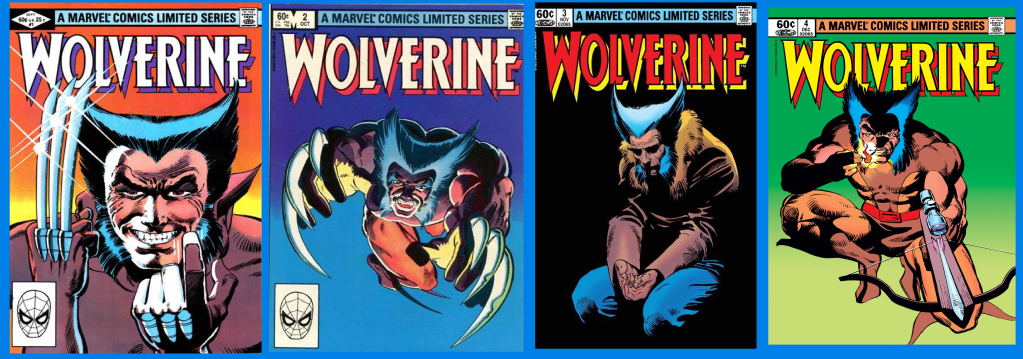
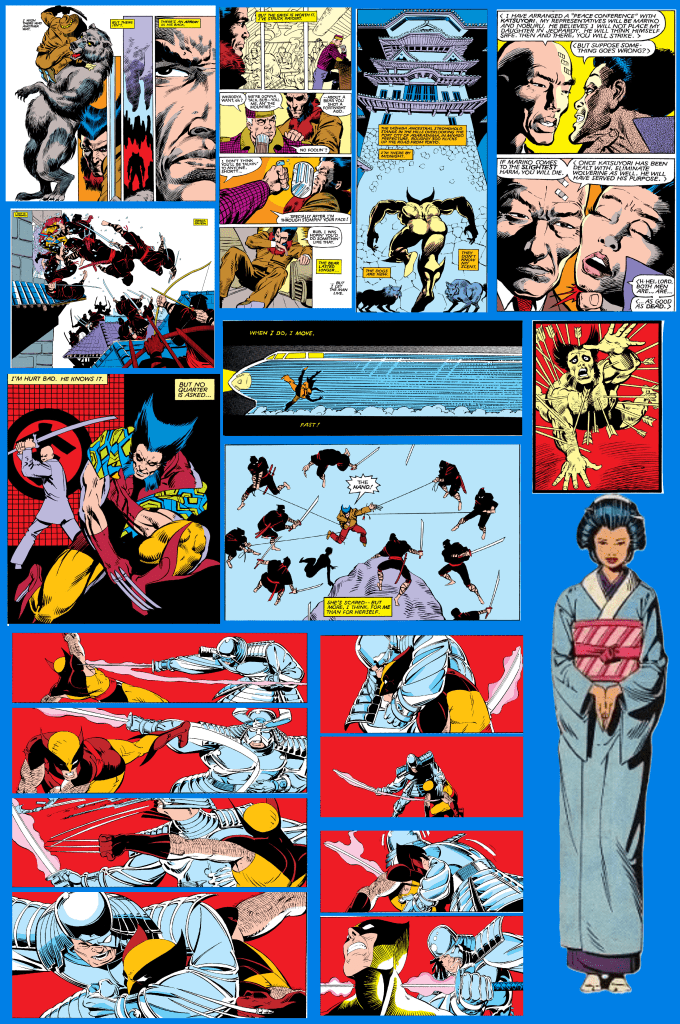
As highlighted earlier, a significant portion of this film draws inspiration from Wolverine’s inaugural solo adventure in Wolverine #1-4, penned by Chris Claremont and visually brought to life by Frank Miller. The movie masterfully captures the essence of the comic book, with numerous scenes and images that are expertly adapted from the pages of the original series.




 X-Cess Minutiae
Leave a comment