



Days of Future Past stands out as the animated series’ inaugural foray into adapting a distinct comic book narrative and storyline. This ambitious endeavour brought to life the complex layers of the original plot, marking a significant milestone in the series’ evolution. The adaptation not only honoured the source material but also expanded the X-Men‘s reach to a broader audience, showcasing the depth and potential of animated storytelling in capturing the essence of the beloved comic saga.
The two-part episode story draws inspiration from Uncanny X-Men #141-142, penned by Chris Claremont and John Byrne in January 1981. However, it has been adapted to align with the animated series’ continuity, leading to certain variations from the original comic book narrative.
The iconic comic book storyline unfolds a dystopian future where Sentinels hunt mutants. Kitty Pryde serves as the time traveller, journeying back to avert an assassination that catalyses this dark future. Her objective is to prevent Senator Robert Kelly’s murder, which triggers the sequence of events culminating in a Sentinel-ruled world.
The series depicts the grim Sentinel-dominated future not through violent ends but with tombstones marking the demise of characters. Contrasting this, the original comic portrays a more graphic and intense vision of the future, with numerous X-Men facing grim destinies. The Sentinels are depicted as unyielding, setting incredibly high stakes. The comic’s ambiance is notably darker, accentuating the mutants’ plight and desperation.
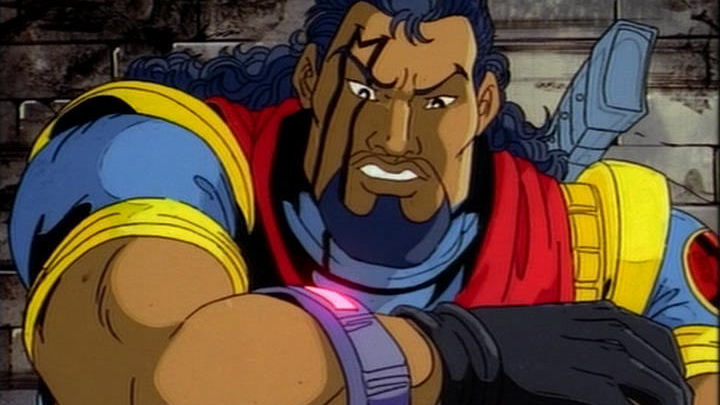
In the animated series, it’s Bishop who takes the time-traveling reins to stop an assassination that would lead to a future ruled by Sentinels. However, in the original comic book saga, it’s Kitty Pryde at the heart of the time-travel adventure. Her mind is sent back to her younger self, giving her a chance to work with the X-Men to alter the impending dark future. This storyline is a pivotal moment for Kitty Pryde, showcasing her growth and heroism as she confronts formidable obstacles. Her emotional journey and resolve are central to propelling the plot.
Both the animated and comic versions centre around averting a dystopian future, but they take different paths in terms of storytelling, character emphasis, and artistic direction. For X-Men aficionados, both renditions offer distinct takes on this beloved narrative, enriching the X-Men lore in their own ways.
The year is 2055, and the Sentinels reign over a dystopian world where mutants are bounty hunters, targeting their own kind for profit. Amidst the desolate New York ruins, an aged Logan leads a duo of mutants, Franklin and Rachel, only to be ambushed by Sentinels. The skirmish rages until Bishop, a mutant working for the Sentinels, betrays them, leading to their capture.
Marched to the Mutant Termination Centre, Logan warns Bishop of the Sentinels’ true agenda—to eliminate all mutants, not just the insurgents. Bishop dismisses the warning, but soon finds himself deceived and detained, validating Logan’s words. They pass the X-Men‘s graves, a sombre reminder of their fallen comrades.
At the Centre, a revolt ensues; Logan seizes the moment to escape and confront Forge. Forge reveals their plan to use a Sentinel’s transceiver for time travel, aiming to prevent the very event that sparked the Sentinels’ rise. Logan steps forward to volunteer, but Bishop, realizing the stakes, offers himself and is selected for the perilous journey. As Bishop prepares to depart, the Sentinels, led by Nimrod, launch an assault on their stronghold.
Initially, Bishop suspects a malfunction in his transceiver, but it soon dawns on him that he has been transported back to the 1990s, although his mission remains a blur. A glimpse of a newspaper article about Charles Xavier jogs his memory; he must find Xavier.
Rogue and Gambit pay a visit to their incarcerated teammate, Beast. As Beast resigns himself to his fate, Gambit’s evident disdain for the prison environment leads Beast to suspect Gambit’s own past with incarceration. In the meantime, Bishop recalls his critical mission to thwart an assassination. Mistakenly identifying the X-Men as the culprits, he commandeers a bus and barrels towards Xavier’s Institute, his transceiver his guide. Jubilee, monitoring the security feeds, witnesses Bishop’s aggressive entry through the mansion’s gates. She quickly informs Cyclops and Storm of the breach. Chaos ensues when Bishop crashes into the mansion, leading to a skirmish among the mutants. As Jubilee and Wolverine join the fray, Bishop attempts to explain his futuristic origins, but it’s Xavier’s intervention and mind-reading that halts the conflict.
Xavier is convinced of Bishop’s authenticity, though the rest of the X-Men remain sceptical of his extraordinary tale. While conversing with the X-Men, Bishop receives an alert from his transceiver about another entity that has travelled from his time to the present. The X-Men, along with Bishop, head to the time travel site and encounter the formidable Sentinel, Nimrod, who launches an attack on them. Despite their efforts, the team is unable to subdue Nimrod until Storm successfully freezes the robot, allowing the team to shatter it into fragments. However, Nimrod starts to reconstruct itself, prompting Bishop to destroy its transceiver, which sends it back to the future.
Rogue and Gambit come back from visiting Beast. Bishop is questioned about the identity of the assassin. Confirming his recollection, Bishop draws his weapon, takes aim at Gambit, and shoots…
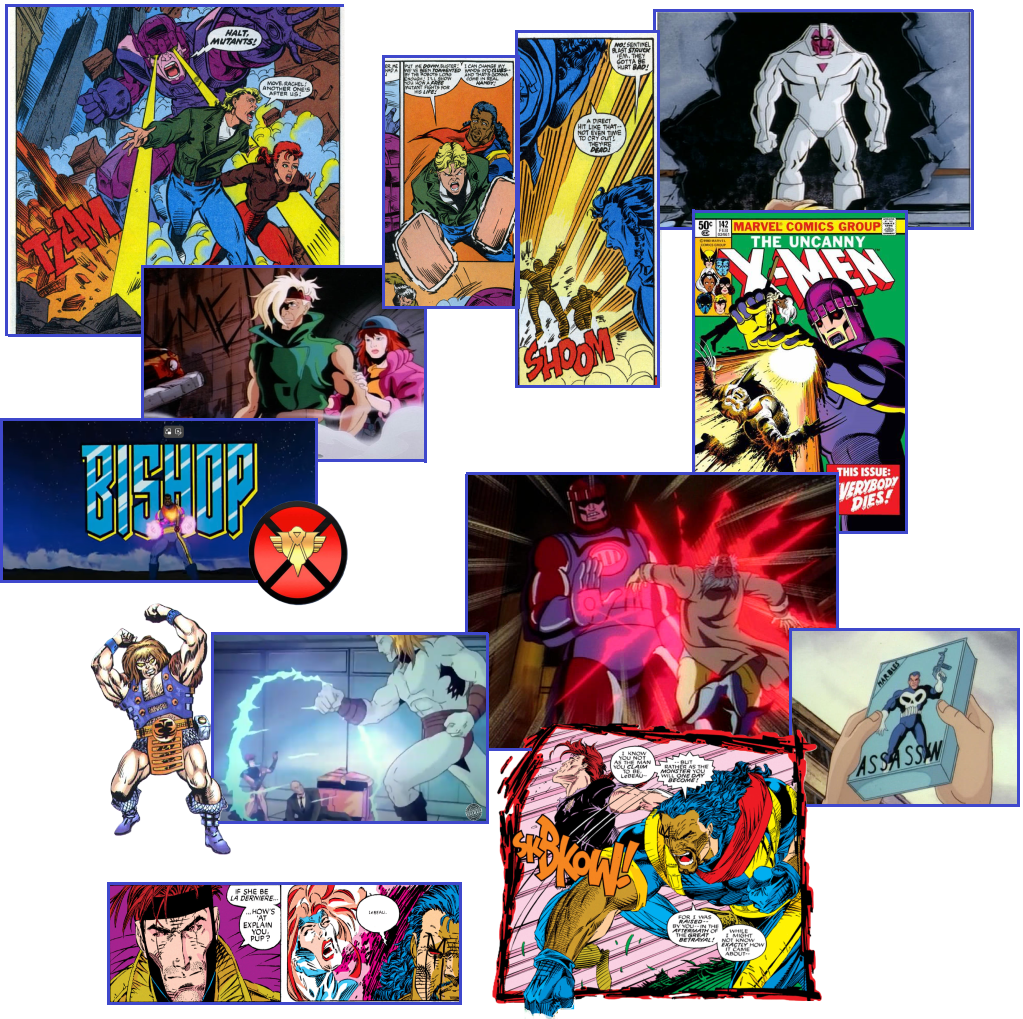
The young mutants who remain unnamed in the episode are later identified in the comic book adaptation as Rachel and Franklin, likely referencing Summers and Richards from the original storyline.
The characters Bishop and Forge debut in the series, setting the stage for their recurring roles. In X-Men ’97, they become official members of the X-Men, with Bishop even getting his own title card.
Bishop sports a prominent X-insignia, a nod to his affiliation with the XSE, or Xavier School Enforcers, who are essentially mutant police addressing mutant issues in the future.
The graves depicted are among the iconic panels from the comics brought to life in the cartoon, a scene also echoed in Wolverine and the X-Men.
Nimrod appears for the first time as the future Sentinel in Uncanny X-Men #191, destined to play a significant part in the show’s lore, which is not immediately apparent from his brief appearance. The sacrifice of Rachel and Franklin, while not a direct comic adaptation, does mirror Franklin’s demise.
Wolverine’s opportunity to don a time transceiver comes in One Man’s Worth, whereas his demise mirrors the cover of Uncanny X-Men #142, though it occurs off-screen, with only Xavier catching a glimpse through Bishop’s memories.
In a flashback, we see Jean, Rogue, and Professor X combat Grotesk, the same villain who ‘killed’ Xavier in Uncanny X-Men #42, except in that instance, it was Morph masquerading as Xavier.
A gaming cartridge featuring the Punisher adds a meta-layer to the narrative.
Bishop’s accusation of Gambit as the traitor, a pivotal moment in the comics, originally unfolds in X-Men #8.
PANEL TO PANEL: DAYS OF FUTURE PAST (Part 1)
The following images come from Uncanny X-Men #141.

These panels come from X-Men Adventures #13-14.




 X-Cess Minutiae
Leave a comment