


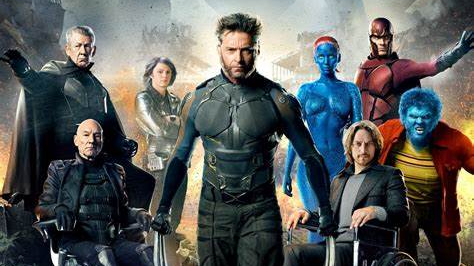
X-Men: Days of Future Past stands out as a significant chapter in the superhero film genre.
Directed by Bryan Singer, the movie is celebrated for its bold narrative that skilfully weaves together the series’ finest elements. It garnered acclaim for its compelling story, stunning visual effects, dynamic action sequences, and strong performances. The storyline centres on characters who embark on a time-travel mission to avert an impending apocalypse. While it faced some critique for its brisk pace and some shallow character development, the film’s assured direction and rhythm render it an exhilarating experience.
The movie achieved remarkable commercial success, grossing $746 million globally and ranking as the third top-earning film in the X-Men series. It also received nominations for numerous accolades, including Best Visual Effects at both the Academy Awards and the BAFTA Awards
The triumph of X-Men: Days of Future Past, along with the overall X-Men series since their debut in 2000, has significantly influenced the film industry’s adoption of superhero narratives. The original X-Men movie revolutionised the perception of comic book adaptations by treating the genre with cinematic gravitas. This shift set the stage for a wave of successful comic book movies, with superhero flicks often dominating the box office. The X-Men series has remained resilient and responsive to the evolving preferences of audiences, contributing to the sustained allure of superhero films well into the 21st century.
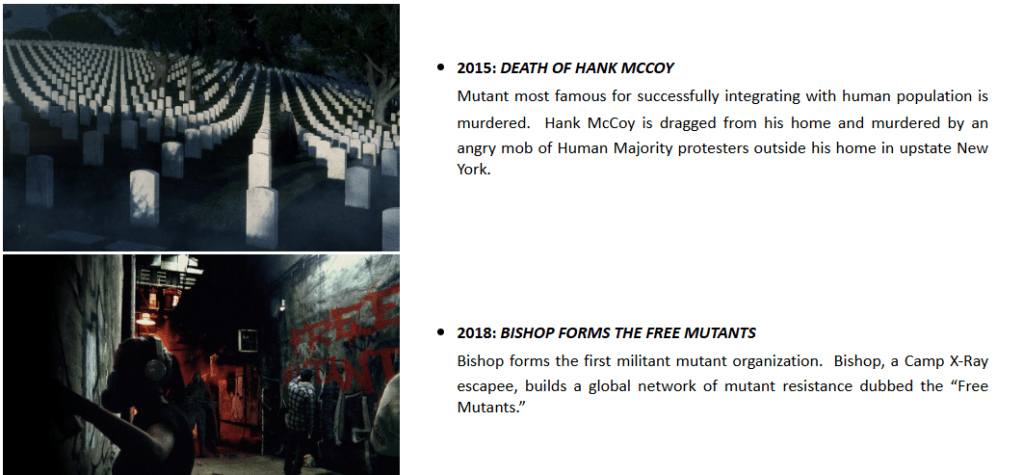
A clever viral campaign detailing the timeline up until this point was published on the official website for the film. It contain vital moments that revealed how the world went from X-Men: The Last Stand to this dark, desolate place…
THE DAYS OF FUTURE PAST TIMELINE
THE 25 MOMENTS THAT MADE HISTORY








The year 2023 unfolds into a grim dystopia where robotic Sentinels relentlessly pursue mutants and those humans destined to bear mutant children or daring to defend them. In the heart of Moscow, a fierce battle ensues as the Sentinels close in on the surviving X-Men: Kitty Pryde, Colossus, Blink, Warpath, Bishop, Iceman and Sunspot. In a valiant effort, the mutants lay down their lives to give Kitty the precious time needed to project Bishop’s consciousness back a few days, warning their past selves of the imminent danger, thus securing their continued existence.
After successfully dodging the Sentinel attack, the group finds sanctuary in an ancient temple in China, where they’re joined by Storm, Wolverine, Charles Xavier and Magneto. Xavier reveals the Sentinels’ origin, tracing back to Bolivar Trask, a military scientist whose death at the hands of Raven Darkhölme in 1973 set a dire chain of events into motion. Captured and subjected to experimentation, Raven’s DNA became the cornerstone for the Sentinels’ ability to adapt to any mutant ability. Determined to rewrite history, Xavier proposes a plan to prevent Trask’s murder. However, when it becomes clear that such a temporal journey could be fatal for him, Wolverine steps up, offering himself for the perilous mission, his unique healing factor making him the only viable candidate to withstand the rigors of time travel.
In 1973, Wolverine awakens and heads to the X-Mansion, only to find out from Hank McCoy that it’s been shut down due to the Vietnam War, and Erik Lehnsherr is in prison for the alleged assassination of JFK. Xavier, now an alcoholic and using a serum that enables him to walk but suppresses his telepathy, agrees to aid Wolverine in hopes of reconnecting with Raven. Together, they enlist Quicksilver, whose incredible speed aids in Lehnsherr’s daring escape from The Pentagon.
Meanwhile, Raven uncovers Trask’s horrific experiments on mutants and decides to assassinate him during the Paris Peace Accords. Her plan is thwarted by Xavier, McCoy, and Logan, leading to a tense confrontation where Lehnsherr tries to kill her to prevent a grim future. McCoy intervenes, allowing Raven to flee but revealing their mutant identities to the world. This incident plays right into Trask’s hands, persuading President Nixon to green-light the Sentinel program.
Lehnsherr reclaims his helmet and clandestinely seizes control of Trask’s Sentinel prototypes, turning them into steel. At the X-Mansion, Xavier forsakes the serum and, through Logan’s memories, connects with his future self, who encourages him to preserve the mutant-human bond. Utilizing Cerebro, Xavier locates Raven, and together with McCoy and Logan, heads to Washington, D.C. to prevent her from killing Trask.
During Nixon’s Sentinel unveiling ceremony, the trio searches for Raven. Lehnsherr emerges, commandeers the Sentinels, and encases the White House within RFK Stadium’s walls. In the ensuing clash, he skewers Logan with rebar and hurls him into the Potomac River. Meanwhile, Nixon, Trask, and Raven in disguise flee to the White House Bunker. Lehnsherr, relentless, extracts the bunker to eliminate its occupants. Concurrently, in 2023, the X-Men confront their final battle as Sentinels besiege the temple, with many mutants falling to secure more time. Back in 1973, Raven, revealing her identity, incapacitates Lehnsherr with a plastic gun, thereby rescuing Nixon and his team. She contemplates executing Trask, but Xavier’s telepathic plea sways her to desist, showcasing to the world a mutant’s heroism. This act leads to the Sentinel program’s cancellation, rewriting the timeline and averting the grim future of 2023. The mutants then go their separate ways; Trask faces arrest for espionage.
In 2023, Wolverine awakens at the X-Mansion, delighted to find a flourishing Xavier’s school and all the X-Men, including Rogue, Jean Grey, and Scott Summers, alive and well. Seeking to catch up on events from 1973 onwards, Logan turns to Xavier, who agrees to fill him in, recognizing the Wolverine from the original timeline. Meanwhile, back in 1973, Logan, in a twist of fate, is saved by Raven, masquerading as Major William Stryker.
Thousands of years ago, in ancient Egypt, En Sabah Nur is revered by a chanting crowd as he uses his powers to levitate stones, constructing pyramids while his Four Horsemen watch on.
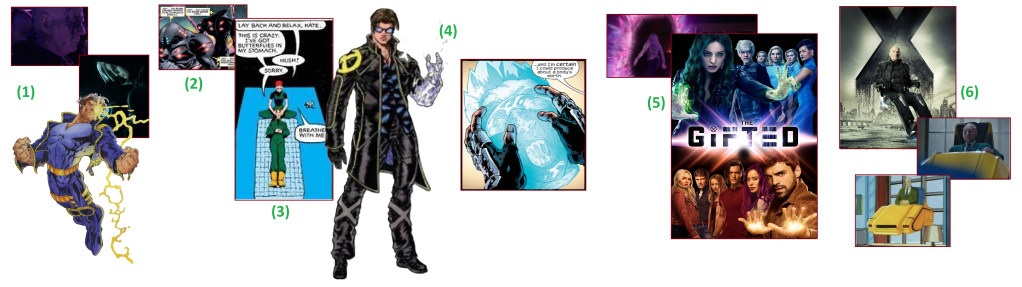
(1) The movie kicks off with flashbacks spanning the entire series, and also marks the first time Xavier has provided narration since X2. Notably, an older Quicksilver, Sabretooth, and Ink appear as the camp mates are transported. The producers have indicated that the boy in the opening scene is intended to be Nate Grey, a choice that seems puzzling from a narrative standpoint.
(2) In a futuristic twist, the Sentinels bear a closer resemblance to the Phalanx drones from Uncanny X-Men #343-345, deviating from their classic robot design.
(3) Kitty Pryde’s role in sending Bishop’s consciousness back in time mirrors Rachel Summers’ abilities in the original comics, where it was Kitty’s mind that travelled. This nod to Bishop also pays tribute to the Days of Future Past story arc from the ’90s animated series.
(4) Bobby Drake’s outfit echoes his look from around Uncanny X-Men #394. His resilience is legendary, having once been reduced to just a head in the comics, particularly during The Draco arc.
(5) The appearances of Warpath and Blink suggest a connection to the live-action FOX series The Gifted, which is set within a similar timeline.
(6) Charles sports a hoverchair similar to the one featured in the comics and animated series. In Doctor Strange in the Multiverse of Madness, he receives an upgrade that’s even more faithful to the comic books. He also delivers his iconic line about veering off the path, unknowingly echoing a parallel version of himself from another universe.
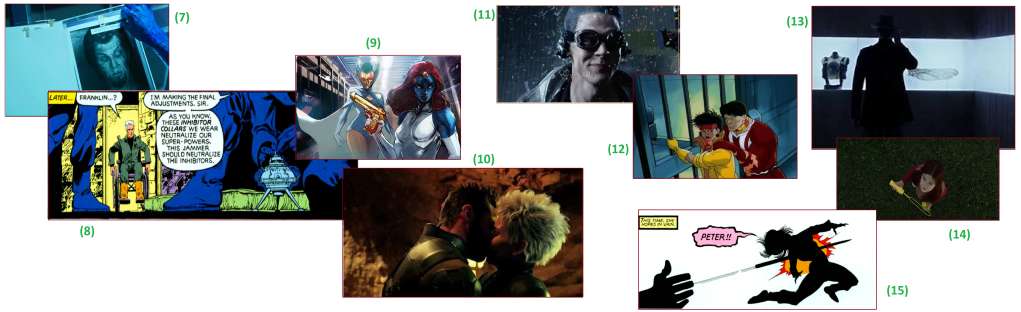
(7) In the interim between this film and the previous one, characters such as Azazel, Angel, Banshee, and Emma Frost have met their demise. Mystique discovers photographs of some of them while infiltrating Trask’s files, and Magneto acknowledges the loss of the others.
(8) In the original comic storyline, it’s Magneto who leads the X-Men from a wheelchair, as depicted in Uncanny X-Men #141.
(9) The comics portray Destiny, Raven’s spouse, as the one attempting the history-altering assassination. However, the film adaptation assigns this pivotal role to Raven, aligning with the narrative of the animated series.
(10) A cut scene from the movie would have depicted a romantic connection between Storm and Wolverine in the future, nodding to the animated series’ episodes One Man’s Worth.
(11) In the film, Quicksilver isn’t called by his codename but simply goes by Peter or by the surname Maximoff, which is seen on a mailbox.
(12) Trask, after failing to persuade the American Government to adopt his program, looks to sell it overseas, reminiscent of his actions in Slave Island.
(13) Iconic items such as Angel’s wings, Havok’s chest plate, Magneto’s helmet, and Shaw’s coin are showcased in the vault when Erik collects his possessions. He also employs ball bearings as weapons, mirroring his older self’s tactics in X2.
(14) A young Jean Grey is spotted as the stadium floats towards the White House.
(15) Storm meets her end just as she does in the comic book Uncanny X-Men #142.
Ω Hank inquires about his fate in the future, a nod to the The 25 Moments feature (see box-out above).
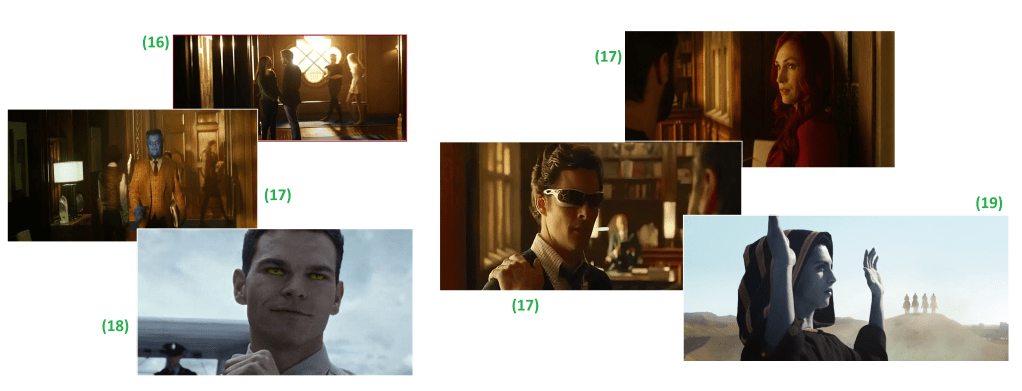
(16) Anna Paquin makes a fleeting appearance in a reflection as the Sentinels corner Charles and Erik in the future, despite her scenes being largely cut from the film. In the concluding scene, she’s seen wearing gloves, hinting that the cure was either ineffective or unused in the altered timeline. For more, see The Rogue Cut.
(17) The inside joke from X2 about Logan being an art professor comes full circle as he now genuinely has a class to teach in the future. James Marsden, Kelsey Grammar, and Famke Janssen cameo as Cyclops, Jean, and Beast, all alive thanks to the altered timeline.
(18) Raven, masquerading as Stryker, delivers Logan to Weapon X in 1973, a move that seems inconsistent with the subsequent film’s narrative. As Xavier suggests, even small changes can significantly alter the course of events.
(19) In the background, as En Sabah Nur is revered by the Egyptians, the Four Horsemen are briefly seen in the distance.




 X-Cess Minutiae
Leave a comment