


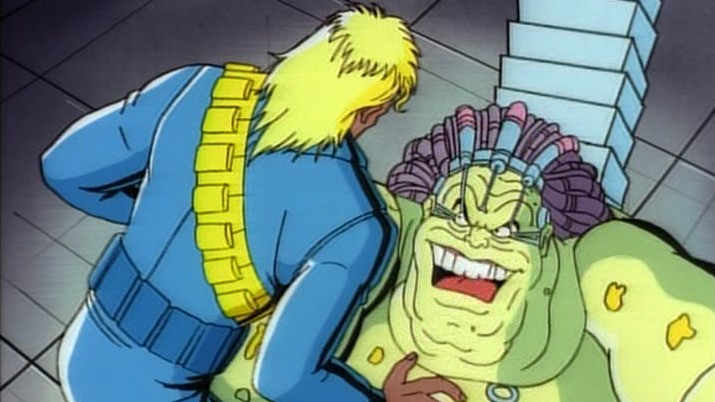
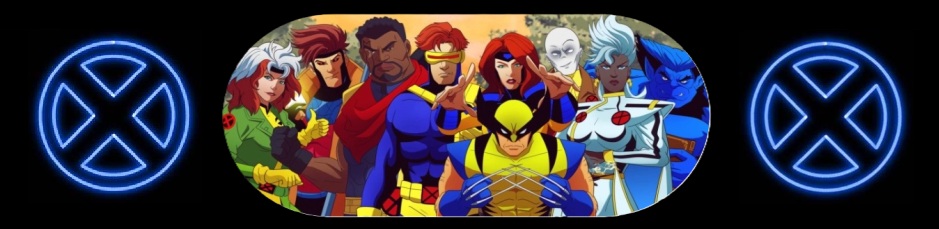
The episode Mojovision serves as a pivotal moment, introducing the grotesque and power-hungry character of Mojo to animated audiences for the first time. This episode is a satirical take on television’s influence on society, with Mojo embodying the extremes of show business and audience manipulation. As the ruler of the Mojoverse, where all life is dedicated to creating television content, Mojo’s character is an exaggerated representation of a media mogul obsessed with ratings and spectacle.
The episode cleverly uses Mojo to comment on the often absurd nature of television programming and its potential to control and distract the populace. Mojo’s obsession with creating the most entertaining and sensational shows leads him to kidnap the X-Men, forcing them to star in his deadly reality shows. This not only brings action and excitement to the episode but also serves as a metaphor for how television can exploit real human drama for entertainment value.
Mojovision also explores the idea that television can shape societal values and perceptions. The X-Men, usually seen as heroes, are portrayed as villains in Mojo’s twisted broadcasts, highlighting how media can distort reality. The episode suggests that those who control television content wield significant power over public opinion, a theme that resonates with viewers in our media-saturated world.
Overall, Mojovision stands out as an episode that not only entertains but also provokes thought about the impact of television on society. It introduces Mojo as a memorable villain whose actions offer a critical lens through which to view our relationship with media and entertainment.
Mojo, Major Domo and Longshot are viewing the opening of Longshot’s show when Mojo begins to grumble about the dipping ratings. In a huff, Longshot exits, and Domo proposes kidnapping the X-Men to spice up the program.
Meanwhile, on Earth, some X-Men are TV shopping when Mojo hijacks the screens and Spiral whisks the X-Men present to Mojoworld. There, they’re split into various shows: Cyclops and Storm in ‘Miami Mutants,’ Rogue and Beast in ‘Rogue Star,’ and Jean Grey with Wolverine in ‘I Dream of Jean.’ When Cyclops, Storm, Rogue and Beast are defeated and killed in the ‘shows’, they are ‘cancelled’.
In their scenario, Jean faces off against a robotic Punisher as Wolverine contends with Shi’ar Imperial Guard robots. Jean cuts the power to Mojo’s cameras, causing audience uproar. A disgruntled Longshot, missing the spotlight, completely powers down the station. The X-Men regroup, wrecking Mojo’s gear, and return to Earth.
In the Savage Land, Shanna the She-Devil flees from Sauron. Professor X and Magneto attempt a rescue, but Sauron captures her, delivering her to his mysterious master…
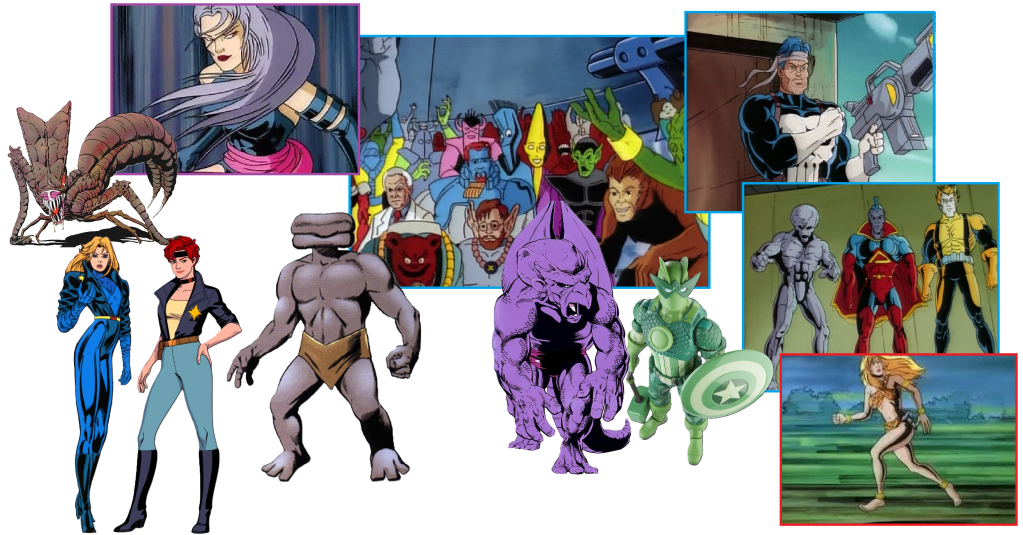
The episode is rich with cameos: Psylocke and the Super-Adaptoid briefly grace the title sequence of Mojo’s Longshot TV series. The Punisher and the Shi’ar Imperial Guard from season 3 are depicted as robots, and a group of Brood, true to their comic appearance, quickly overpower Rogue and Beast.
The audience is peppered with appearances from Dragon Man, Awesome Andy the Android, a Kree, a Skrull, the Impossible Man, and even the animators of the series, who are represented as aliens. At the heart of it all is Jack Kirby, the legendary co-creator of the X-Men. This episode coincidentally aired in the week of his unfortunate passing.
In an unexpected twist, Dazzler shows up, silent but donned in her X-Men attire. Mojo waves off her presence as a ‘long story’ in Motendo, yet this backstory is left unexplored in her later encounter with the X-Men in season four’s Dazzled.
Sauron’s capture of Shanna the She-Devil, Ka-Zar’s partner, cleverly sets the stage for the season finale.
MEDIA MOGUL
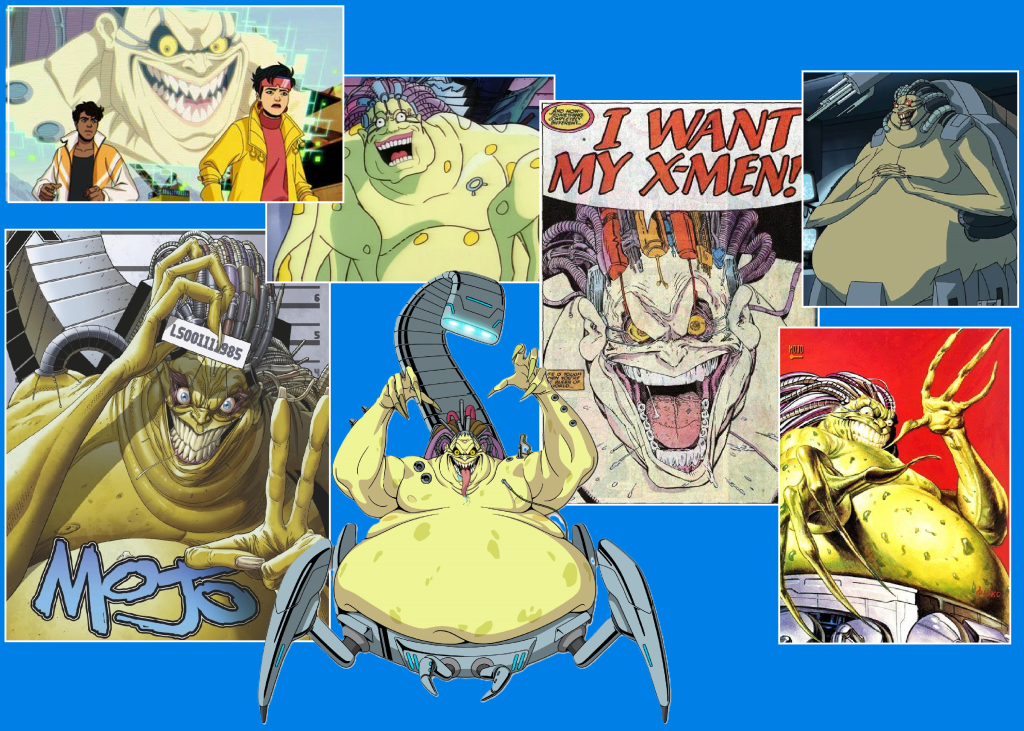
Mojo, the notorious ruler of the Mojoverse, is one of the most eccentric and memorable villains in the X-Men world. First appearing in 1985’s Longshot #3, his presence in comics, cartoons, and video games has made him an icon of overindulgence and the sinister aspects of showbiz. He’s a satirical figure, showcasing the often unsavoury side of the entertainment industry and the extremes pursued for viewership and control.
In each storyline, Mojo’s fixated on producing the most outrageous and crowd-pleasing shows for his dimension’s TV networks, leading to his wicked schemes. His domain, where everything is a show, reflects our own media-saturated society. He frequently ensnares X-Men members, forcing them into his lethal game shows and transforming their battles into broadcasted dramas.
More than just a villain, Mojo is a reflection on the sway of TV and media over society. He challenges the audience to think about the morality of amusement and the clout of content creators. The X-Men series uses Mojo to delve into issues of autonomy vs. manipulation, originality vs. exploitation, and how media shapes our views.
Mojo’s continuous role in the X-Men saga highlights the series’ knack for mixing thrilling action with introspective narratives. His character provides a critical perspective on our engagement with media and underscores the need for critical thinking in an era dominated by content.




 X-Cess Minutiae
Leave a comment