


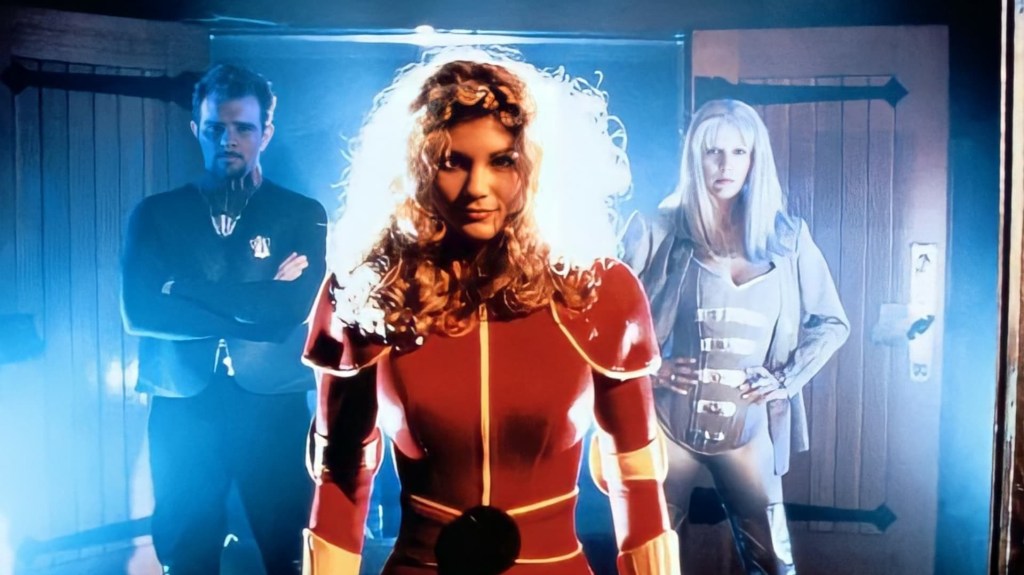
Based on the Marvel comic book series of the same name, Generation X was a bold attempt to bring the world of mutants to the small screen, years before the X-Men would become a cinematic juggernaut. The movie follows a group of young mutants, led by Emma Frost and Sean Cassidy, as they navigate their powers and the challenges of a world that fears and hates them. While it didn’t achieve blockbuster success, it laid important groundwork for future adaptations.
Comparing the TV movie to its comic book counterpart, there are notable differences and similarities. The comic series, created by Scott Lobdell and Chris Bachalo, was known for its edgy, youthful energy and complex characters. The TV adaptation tried to capture this spirit but faced limitations typical of 90s television, such as budget constraints and special effects that haven’t aged well. Characters like Jubilee and Skin were brought to life, but some fans felt the portrayals lacked the depth and nuance of the comics. The movie’s plot, involving a mad scientist and a dream machine, diverged from the more grounded, character-driven stories of the comics, which sometimes made it feel more like a typical 90s sci-fi adventure than a faithful adaptation.
One of the most significant impacts of Generation X was its role in paving the way for the X-Men movies that followed. It demonstrated that there was an audience for superhero stories on screen, even if the execution wasn’t perfect. The movie’s attempt to balance action, character development, and social commentary was a precursor to the more sophisticated storytelling seen in later X-Men films. Moreover, it showed that Marvel properties could be adapted for live-action, a crucial step in the evolution of superhero cinema. While Generation X may not have been a critical or commercial success, it was an important experiment that helped shape the future of superhero adaptations.
In retrospect, Generation X is a charming, if flawed, piece of 90s nostalgia. Its earnest attempt to bring the world of mutants to life is commendable, even if it didn’t quite hit the mark. For fans of the comic series, the movie is a curious artifact, a glimpse into what might have been. For those interested in the history of superhero cinema, it’s a fascinating stepping stone that helped lead to the blockbuster success of the X-Men franchise.
Jubilation Lee, a rebellious teenager, finds herself in a precarious situation when her mutant ability to create “fireworks” manifests unexpectedly at a local arcade. This sudden display of power attracts unwanted attention, putting her in immediate danger. Fortunately, she is rescued by Emma Frost and Sean Cassidy, the headmasters of Xavier’s School for Gifted Youngsters. Recognizing her potential, they offer her sanctuary at their school, a haven where young mutants can learn to control their extraordinary abilities.
After rescuing Jubilee, Emma Frost and Sean Cassidy encounter another teenager, Angelo “Skin” Espinosa, who possesses the ability to stretch his skin. They recruit him as well, and together, they journey to Xavier’s School. Upon arrival, Jubilee and Skin are introduced to their fellow students: M, a super-intelligent and strong mutant; Mondo, who can absorb the properties of any material he touches; Buff, who has enhanced strength and durability; and Refrax, who can emit energy beams from his eyes. At Xavier’s School, the students are not only taught to manage their mutant powers but also to navigate a world that often fears and hates them. They are cautioned against leaving the school grounds to avoid conflicts with the local non-mutant population, referred to as “townies.”
As Jubilee and Skin adjust to their new environment, they begin to experience disturbing dreams involving Russell Tresh, a mad scientist with an obsession for harnessing the power of dreams. Tresh, who once collaborated with Emma Frost on a project to develop a “dream machine” to access the dream dimension, was dismissed from the team due to his unethical practices. Now, he believes that by extracting material from mutants’ brains, he can enhance his own psychic abilities. While Jubilee manages to resist Tresh’s influence to some extent, Skin becomes increasingly drawn to the scientist’s promises, ultimately falling victim to his manipulations. This situation escalates, prompting Emma Frost and Sean Cassidy to lead their novice team in a mission to rescue Skin from Tresh’s clutches.
The confrontation with Tresh is intense, as he has augmented his abilities using the dream machine. Despite their inexperience, the young mutants band together, leveraging their unique powers and newfound teamwork to combat the enhanced Tresh. Their efforts culminate in a dramatic showdown, resulting in Tresh being trapped in the dream dimension, leaving him in a catatonic state. Through this ordeal, Jubilee, Skin, and their fellow students at Xavier’s School graduate, and a few days later, are presented with their new uniforms…
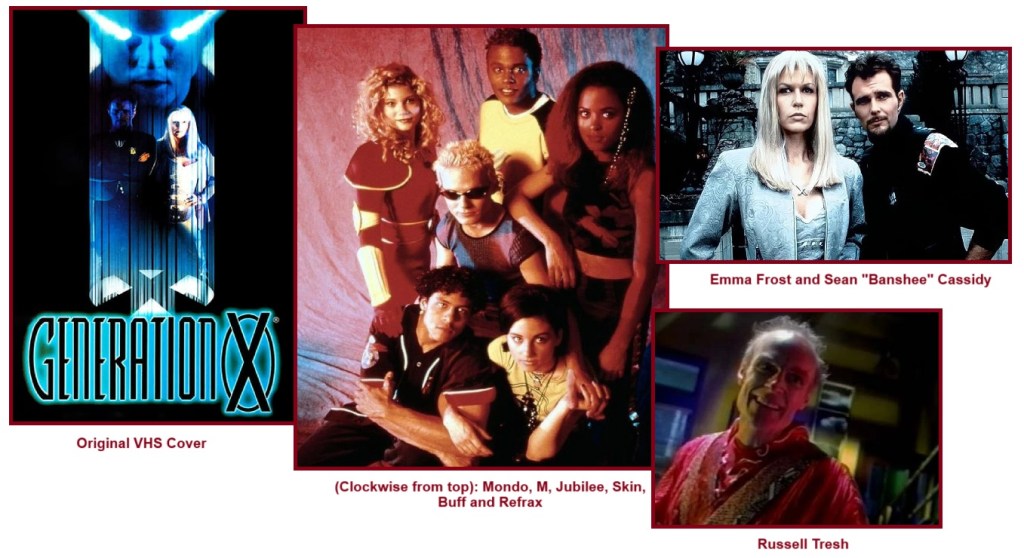
Ω The pilot begins with the phrase, All Life Mutates, but it’s unclear whether it’s an episode title or a statement.
Ω The world this pilot inhabits is darker than most X-Men franchise entries: there’s Mutant Registration Acts, Mutant Camps and Jubilee’s mother is told at one point that her daughter doesn’t have any civil rights as a result of her mutation.
Ω The film’s logo is the same as the comic logo used in the first 3 issues of the ongoing series.
Ω The pilot was sponsored on American television by SEGA’s Virtua Fighter, which is why the games are named checked and seen in the movie, in particular the arcade scene.
Ω Speaking of the arcade scene, Jubilee’s opening scene here is similar to her encounter in the mall in Night of the Sentinels (Part 1). The X-Men arcade game based on Pryde of the X-Men can be seen in the background behind Tresh.
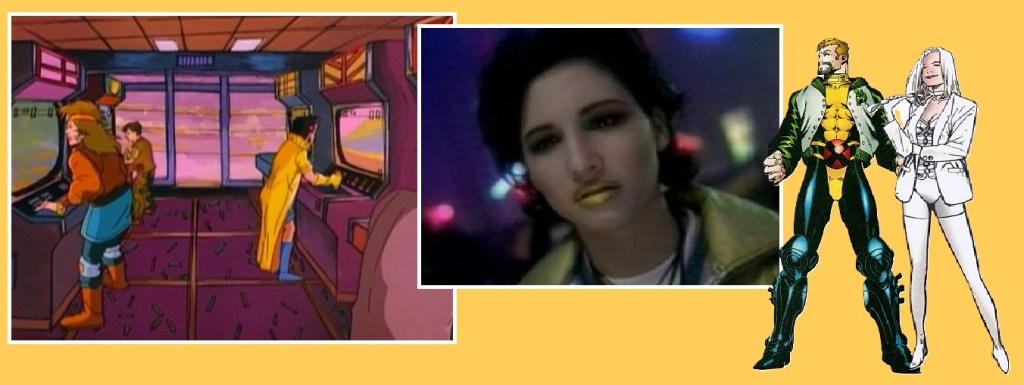
Ω Emma has a Cerebro device as well as her comics counterpart’s bitchiness. Watch actress’ Finola Hughes face when Banshee interrupts her down-talking to Jubilee’s mom. Amazing. Her main costume, as well as Banshee’s, seem to come from the Generation X comic, circa #18.
Ω The bedroom scene at the beginning when Emma wakes Sean is similar to a very flirty scene in Generation X #7.
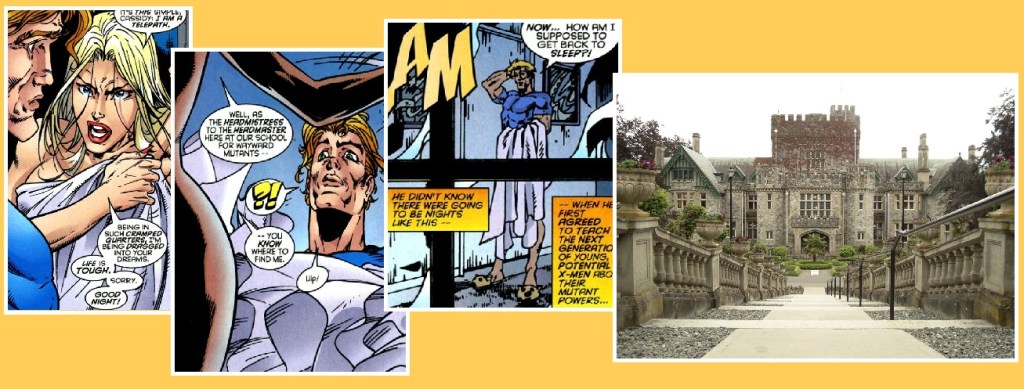
Ω Russell refers to Jubilee as a level 3 mutant, the classification used in later X-Men movies. The mansion used for Xavier’s School in this production is also used for the school in six of the X-Men films. It’s Hatley National Park in Canada and it’s also used in TV productions, such as Smallville where it’s used as the Luthor mansion exterior, or Oliver Queen’s mansion in Arrow.
Ω There is a bust of Charles Xavier in the background of the library.
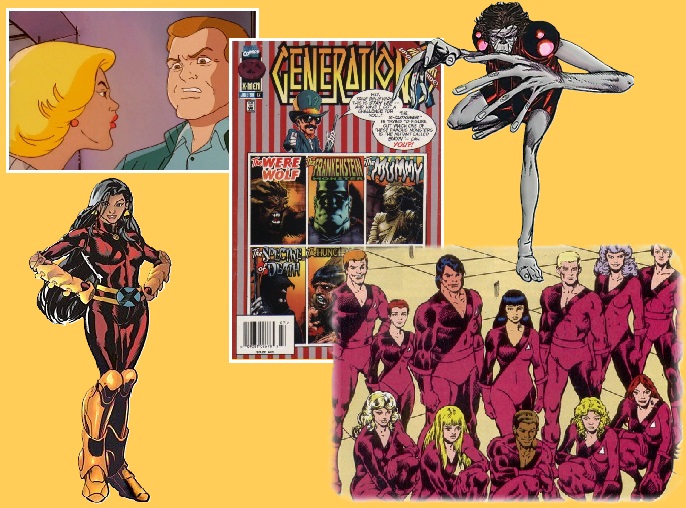
Ω Skin mentions working with gangsters in his past whilst arguing with Cerebro. This sort of tallies with his comic book backstory, albeit with some major changes. He was part of a street gang and he faked his death to get away, as revealed in Generation X #17. When he rises from the abyss at the movie’s end, the light from the environment makes his skin appear gray, just like the comics.
Ω Jubilee’s parents have a conversation in her dream that is not at all dissimilar to a similar conversation from Night of the Sentinels (Part 1).
Ω The Hellions, Emma’s former students from the comics, are mentioned as being deceased, a reference to the team of the same name from Uncanny X-Men #281.
Ω The uniforms presented to the team at the end of the movie resemble their first uniforms, first seen in Generation X #1.
TALKING ‘BOUT MY GENERATION…

Generation X, launched in 1994, is a captivating chapter in the X-Men universe that brought a fresh, youthful energy to the world of mutants. Created by writer Scott Lobdell and artist Chris Bachalo, this series introduced a new team of teenage mutants who were not only grappling with their emerging powers but also the typical trials of adolescence. Set against the backdrop of the Massachusetts Academy, Generation X stood out for its unique blend of cynicism, complexity, and the vibrant, often tumultuous lives of its characters.
Unlike their predecessors, the New Mutants, the Generation X team was mentored by Banshee, the Irish X-Man with a powerful sonic scream, and Emma Frost, the former villainess known as the White Queen. This dynamic duo brought a mix of tough love and aristocratic elegance to their roles as mentors, guiding their young charges through the perils of being mutants in a world that feared and misunderstood them. The series was notable for its diverse cast, including characters like Jubilee, our Chinese-American “mall rat” with explosive energy powers, and Chamber, a British mutant whose abilities left him with a gaping hole in his chest and face.
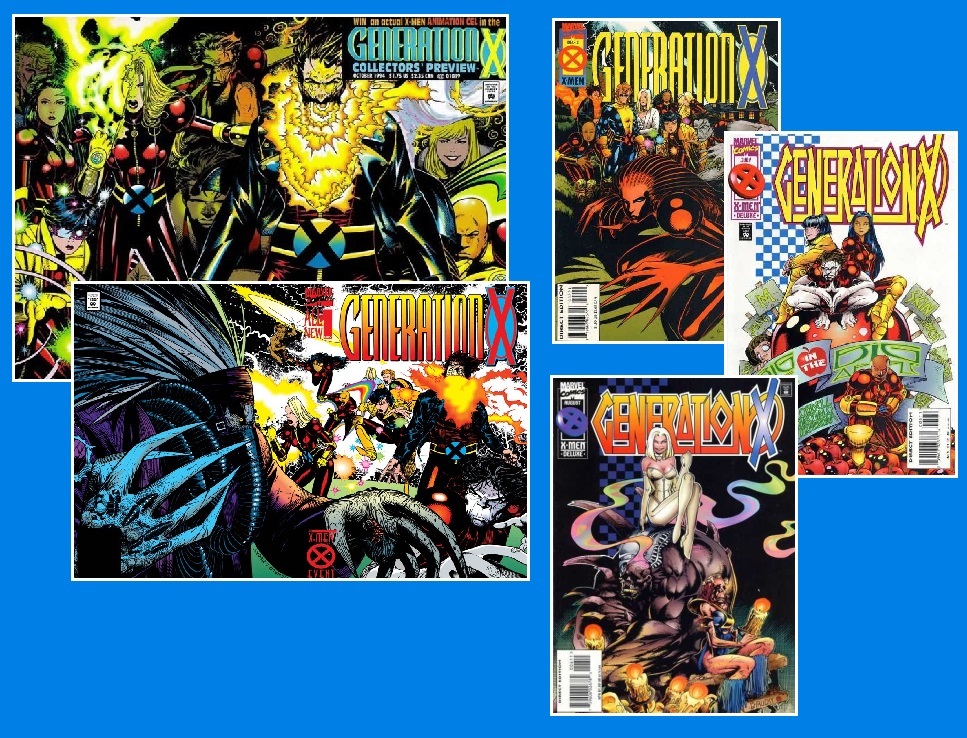
The series quickly gained a following, thanks in part to Bachalo’s distinctive, quirky artwork and Lobdell’s ability to capture the angst and aspirations of teenage life. As the series progressed, it delved deeper into the personal lives and backstories of its characters; the mysterious and “perfect” Monet St. Croix to the shape-shifting Husk, each member of Generation X brought their own unique perspective and challenges to the team. The series didn’t shy away from darker themes, exploring issues like mental health, family dysfunction, and the consequences of power.
Generation X was more than just another superhero comic; it was a reflection of its time, capturing the spirit of the 90s with its edgy, often rebellious tone. It resonated with readers who saw themselves in the struggles and triumphs of its characters, making it a beloved part of the X-Men legacy. Though the series eventually ended in 2001, its impact on the Marvel Universe and its fans remains significant, paving the way for future stories about young mutants finding their place in the world.




 X-Cess Minutiae
Leave a comment