


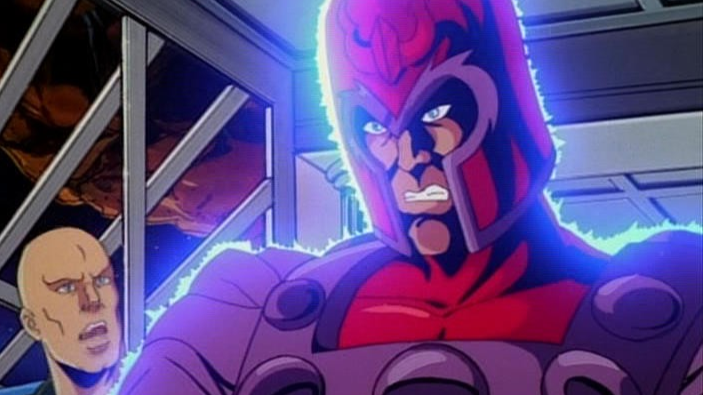

Frustrated by the relentless persecution and discrimination mutants face, Magneto proposes relocating to Asteroid M, a space station orbiting the planet. This episode kicks off with Magneto’s dramatic announcement, capturing the attention of mutants worldwide and sparking a heated debate about the future of mutant kind. The X-Men, always striving for peaceful coexistence, find themselves torn between understanding Magneto’s motives and fearing the potential consequences of his radical approach.
As the episode unfolds, we see Magneto’s vision of Asteroid M as a utopia where mutants can live free from human oppression. The idea of a separate society in space brings to light significant themes of segregation and the quest for a perfect society. Magneto’s plan is rooted in his belief that mutants will never be truly safe or accepted on Earth, and that separation is the only viable solution.
This notion of creating a distinct, isolated community raises important questions about the feasibility and morality of such an endeavour. Can true peace be achieved through isolation, or does it merely create new forms of division and conflict?
Magneto pulls off a wild stunt by kidnapping astronauts and crashing into the UN. On live TV, he declares he’s created a mutant-only haven on an asteroid, dubbed Asteroid M. Professor X watches, feeling like he’s failed to unite humans and mutants. Gambit starts doubting the X-Men’s progress and considers heading to Asteroid M.
Professor X, Beast, and Gambit decide to confront Magneto. They find him prepping mutants for the asteroid. Magneto joins them on a trip to Genosha, where mutants are enslaved. The X-Men, Magneto, and his Acolytes clash with Sentinels. After the battle, Fabian Cortez wants to kill all humans, but Magneto frees the captive mutants and they all head to Asteroid M.
On Asteroid M, Magneto deals with a laser satellite attack, thinking it’s unprovoked. He soon learns it was retaliation for a missile fired from the asteroid. Professor X runs into his ex, Amelia Voght, who coldly rejects him. Magneto discovers Cortez launched the missile and is dependent on Cortez’s powers. In a twist, Cortez ejects Magneto into space and blames the X-Men for his “assassination.”
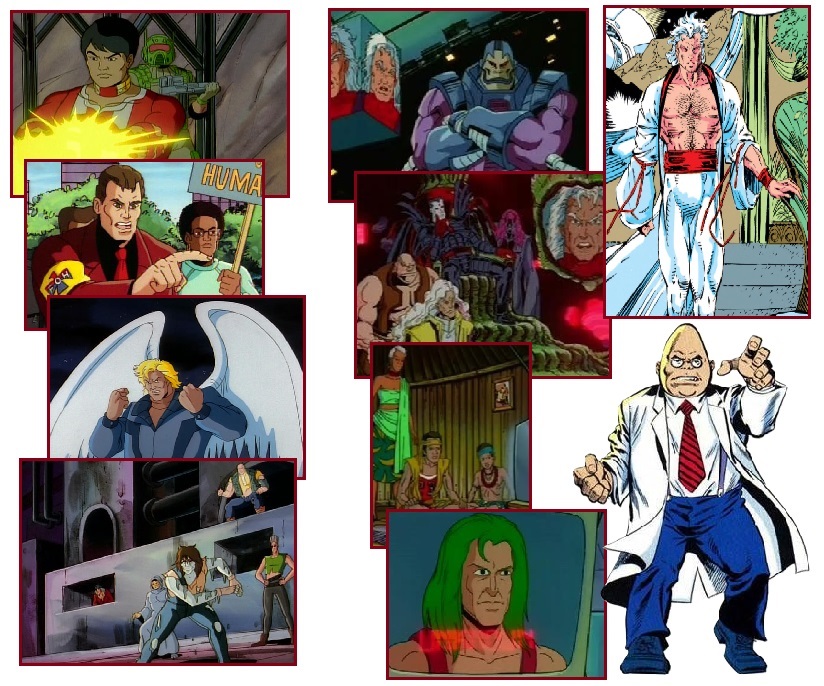
In this plea/request/order to the United Nations, Magneto uses footage of past atrocities against mutants including the slavery of Genosha (Slave Island), the Friends of Humanity’s frequent open attacks on mutants, seen throughout season two led by Graydon Creed (Beauty and the Beast), mutant in hiding like Warren Worthington, the Angel (The Cure) and the Morlocks (Captive Hearts). This episode is full of references and cameos from the past three seasons. It’s an X-Fan’s dream!
Some of those cameos: Apocalypse, Sinister and his Nasty Boys and M’Jnari (Whatever It Takes) are all seen watching Magneto’s broadcast.
When Gambit is searching through the scientists on the computer screen, he sees images of Doc Samson from The Incredible Hulk and Ant-Man adversary Elias Starr, aka Egghead.
Magneto’s leisure-wear in this episode is the same as X-Men #1.
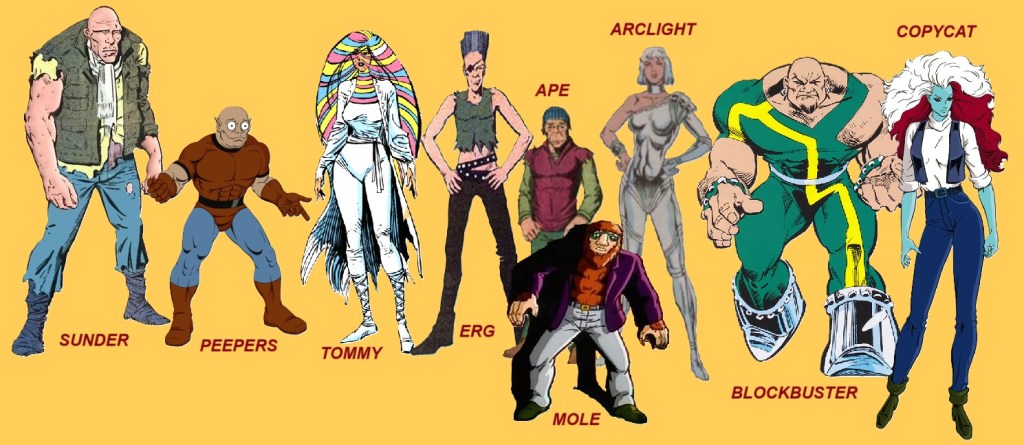
A Black Panther can be seen watching Magneto’s departure from Africa. Amongst the mutants hoping to come aboard Asteroid M are:
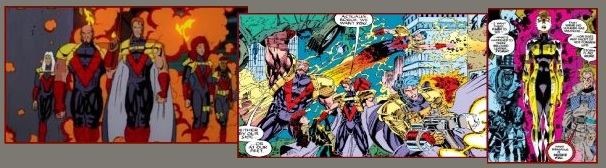
The Acolytes, led by Fabian Cortez, first appeared in X-Men #1, the initial arc of which is the inspiration of this episode. They include Chrome, Unuscione, Frenzy, Delgado and Milan, as well as Gambit’s friend Byron Caley, the mutant known as Burner. The term they use for ordinary human beings, ‘flatscan’ is heard throughout the episode. Some of the Genoshan mutant they free are wearing Genoshan Mutate Costumes, as seen in the X-Tinction Agenda.
Amelia Voght’s backsory with Xavier is taken directly from Uncanny X-Men #309. The flashback in this episode also gives us a glimpse of the original X-Men, including a pre-fur Beast, Iceman and Angel.

Magneto being left for dead by Cortez is exactly what happened in X-Men #3, where Magneto seemed to die, as the asteroid began burning up in Earth’s atmosphere…
MAGNETO: SAVIOUR COMPLEX
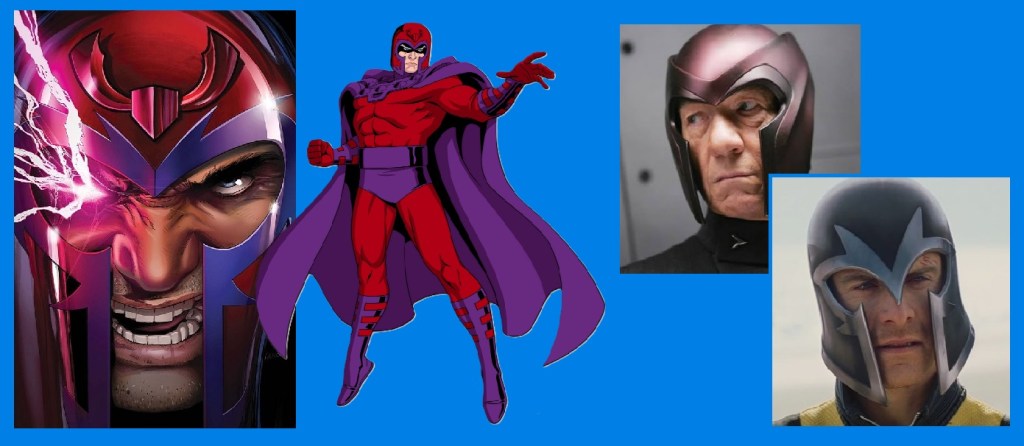
Magneto, one of the most complex characters in X-Men lore, has always been driven by his dream of mutant superiority. Born Max Eisenhardt, he witnessed the horrors of the Holocaust, which shaped his belief that mutants, like himself, needed to assert their dominance to avoid persecution. Magneto’s vision was clear: a world where mutants ruled, free from the fear and oppression of humans. This dream often put him at odds with Professor X, who believed in peaceful coexistence between humans and mutants. Magneto’s methods were extreme, but they stemmed from a deep-seated desire to protect his kind from the atrocities he had experienced.
Over time, Magneto’s approach to achieving his dream evolved. Initially, he formed the Brotherhood of Evil Mutants, a group dedicated to fighting for mutant supremacy by any means necessary. His actions, though often violent, were driven by a genuine belief that mutants were superior and deserved to rule. However, as he encountered the X-Men repeatedly, he began to see the potential for a different path. The X-Men’s dedication to protecting both humans and mutants, despite the risks, started to influence Magneto’s perspective. He began to question whether his aggressive tactics were truly the best way to secure a future for mutants.
Magneto’s transformation was gradual but significant. Key events, such as the Genosha massacre, where he witnessed the slaughter of countless mutants, deeply affected him. These experiences made him realize that his dream of mutant superiority might be better achieved through unity rather than conflict. He started to see the value in Professor X’s vision of coexistence and began to soften his stance. This shift was not just about changing tactics but also about a profound change in his understanding of what it meant to protect his people.
Eventually, Magneto’s evolving beliefs led him to join the X-Men. This was a monumental shift, as he went from being their greatest adversary to a valuable ally. His knowledge, power, and experience became crucial assets to the team. Magneto’s presence within the X-Men symbolized a new era of cooperation and mutual respect. It wasn’t an easy transition, and there were moments of tension and mistrust, but his commitment to the cause never wavered. Magneto’s journey from a militant leader to a member of the X-Men highlighted his ability to adapt and grow, even if it meant re-evaluating his deepest convictions.
Magneto’s story is a testament to the complexity of his character and the depth of his convictions. His saviour complex, rooted in a desire to protect mutants at all costs, evolved into a more nuanced understanding of leadership and protection. By joining the X-Men, Magneto demonstrated that even the most steadfast beliefs could change in the face of new experiences and perspectives. His journey reflects the broader themes of the X-Men series: the struggle for acceptance, the fight against prejudice, and the hope for a better future where all beings can coexist peacefully.





 X-Cess Minutiae
Leave a comment