


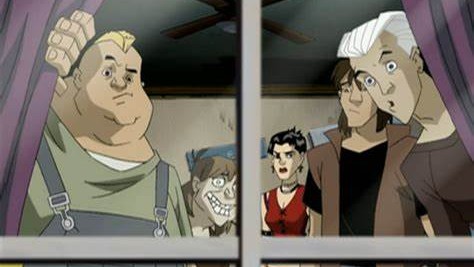

The idea of heroism has always been complex in the world of X-Men: Evolution. But in No Good Deed, it becomes something fleeting, manipulated, and ultimately, costly. The Brotherhood – the reckless, self-serving outcasts of mutant society – stumble into heroism by accident. And for a brief, dazzling moment, the world sees them not as threats, but as saviours.
It begins with Wanda, drowning in grief over her father’s apparent death. She doesn’t want recognition, admiration, or even sympathy – she wants to be left alone. But Pietro? He couldn’t care less. His complete disregard for his sister’s emotional turmoil sets off a chain reaction – an unintended subway accident that thrusts the Brotherhood into the spotlight. They act, not out of duty, but out of necessity. Lance pulls an old woman from danger, Blob clears a path for civilians – actions rooted more in survival than heroics. But to the outside world, it’s bravery.
And the media? They latch onto the narrative, amplifying it until reality blurs. Toad, always eager to embellish, feeds the lie, each retelling grander than the last. Blob, craving a sense of belonging, leans into the illusion. The Brotherhood, suddenly showered in praise, decide to capitalize on their newfound fame – manufacturing disasters so they can ‘save the day.’ But arrogance breeds recklessness. When Pietro stages a runaway train rescue, he doesn’t foresee the real danger lurking in the shadows – a second train, carrying volatile fuel, rushing toward catastrophe.
In the end, their illusion crumbles. Faced with genuine disaster, they falter. The X-Men, despite their resentment, step in. Cyclops leads the charge, Nightcrawler and Shadowcat rescue civilians, Jean tries to hold the explosion at bay – but it’s Lance, reluctant as always, who stops the worst from happening. And the Brotherhood? Their brief moment of glory dissolves. Toad loses his new possessions. Blob, still trapped in the Brotherhood’s cycle, sees his dreams slip away. Pietro? He shrugs it off – no harm, no foul. He’ll just move on.
But Wanda and Lance – arguably the most sympathetic members—share a quiet glance. Maybe, just maybe, something stuck.
Meanwhile, the X-Men, who did the real saving, remain unsung. Public perception has always favoured spectacle over substance, and in No Good Deed, that truth is painfully clear. The Brotherhood learned – albeit briefly – the price of heroism. But the X-Men? They’ve always known.
The Brotherhood’s reputation takes an unexpected turn when Wanda Maximoff, overwhelmed by grief and anger, inadvertently causes a subway accident. As chaos unfolds, the Brotherhood steps in – not out of heroism, but necessity. Lance, ever the reluctant protector, rescues an elderly woman, while Fred and Toad clear a path for trapped civilians. Their actions, unintended as they are, spark a media frenzy. The Brotherhood, long dismissed as reckless delinquents, are suddenly hailed as heroes.
The X-Men watch in disbelief as the narrative shifts. Edward Kelly, still campaigning for mayor, seethes at the Brotherhood’s newfound popularity, warning the public against misplaced trust. But the Brotherhood, intoxicated by their sudden fame, lean into the deception. They stage disasters – controlled chaos designed to reinforce their heroic image. Pietro, ever the strategist, orchestrates a runaway train incident, confident they can stop it in time. But arrogance breeds miscalculation. The train, now out of control, hurtles toward a collision with another carrying volatile fuel.
As panic spreads, the Brotherhood realizes they are in over their heads. Their staged heroics have spiralled into genuine catastrophe. The X-Men, despite their resentment, step in. Cyclops leads the charge, coordinating a desperate rescue effort. Nightcrawler and Shadowcat work in tandem, teleporting and phasing civilians to safety. The Brotherhood, stripped of their illusion, watch as the X-Men do what they could not – save lives without expectation of reward.
In the aftermath, Kelly remains unmoved. The Brotherhood’s recklessness has only reinforced his stance against mutants. As he storms away, Nightcrawler quips, “Well, I’m not voting for him.” The Brotherhood, once basking in admiration, now stand exposed. Their moment of glory has passed, leaving only the consequences of their deception.
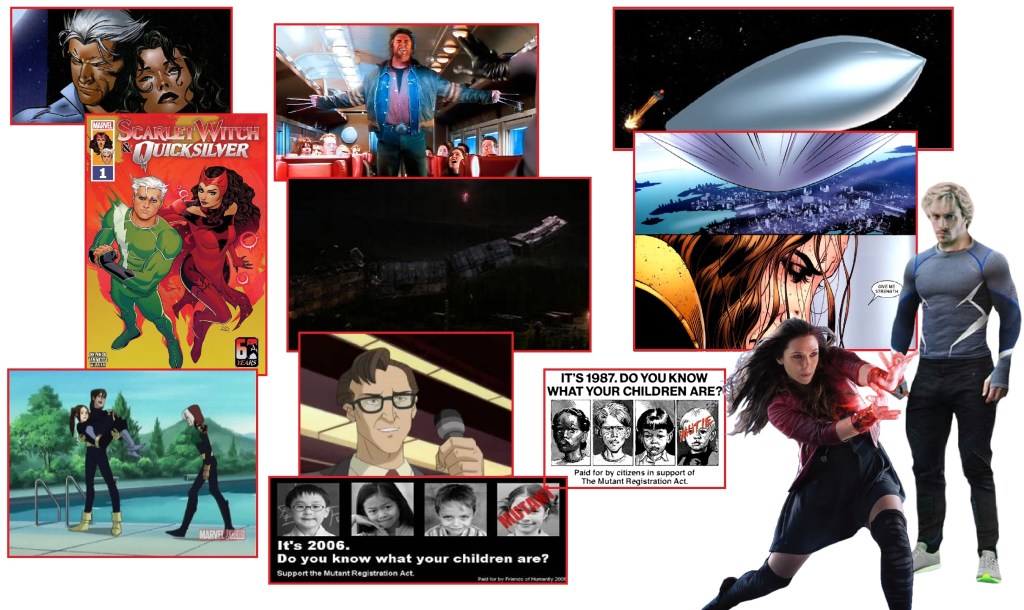
Wanda’s grief over her father’s death is mocked by Pietro in this episode, causing her powers to warp reality around the train. In Marvel Studios‘ WandaVision, a similar surge of grief allows her to amplify her reality warping powers, to encompass the whole town of Westview! In the comics, it was Quicksilver’s actions and words that caused Wanda to create the House of M reality, where mutants ruled, as well as the Decimation of 90% of the world’s mutant population.
Magneto similarly derails a train to capture Rogue in 2000’s X-Men movie. Jean Grey herself lifts a train to deal with the D’Bari threat in X-Men: Dark Phoenix, which also saw Magneto rip a subway car through the ground. In the comics, Xorn, believing himself to Magneto did the same in the Planet X arc of New X-Men. Joseph, Magneto’s clone, did the same to rescue passengers in Uncanny X-Men #336.
Lance previously tried to join the X-Men in season 2.
Kelly is now running for Mayor, leaving the School Headmastership behind to begin his race as Senator, as he did in other versions of the franchise, including all three animated series.
Wanda not being available to talk to the reporters is unintentionally ironic: she and her brother Quicksilver are both X-Men and Marvel Cinematic Universe characters and have different versions in both. Wanda was not allowed to be mentioned in the X-Men franchise until Disney acquired the X-Men rights from FOX.
Kelly mentions the Mutant Registration Act, first mentioned in Uncanny X-Men #141.
Kitty phasing the train through another train is exactly like her phasing the metal bullet through Earth in Astonishing X-Men‘s Gone storyline, where Kitty is believed lost.




 X-Cess Minutiae
Leave a comment