



Throughout the many iterations of the X-Men across different mediums, certain characters become so integral to the franchise that their presence feels essential. For every newcomer – Hellion, X-23, the Stepford Cuckoos – there are those figures who must appear for a story to truly feel like X-Men. Fans will debate the specifics, but across adaptations, certain staples remain constant: Cyclops, Wolverine, Storm, Jean Grey, Beast, Magneto, and, at the heart of it all, Charles Xavier.
No matter the version – whether Pryde of the X-Men, X-Men: The Animated Series, X-Men: Evolution, or Wolverine and the X-Men – Xavier is almost always the founder, mentor, and guiding force behind the team. But as these adaptations modernised, a subtle darkness began creeping into his portrayal, particularly in the comics. The noble idealist gradually became a man riddled with secrets: concealed truths about Cyclops and Havok’s forgotten brother Vulcan, the existence of a doomed, disposable team before the legendary Giant-Size X-Men roster even formed, and contingency plans designed to eliminate his own students if necessary – even himself.
In X-Men: Evolution, another of Xavier’s secrets comes to light. Though this version of Charles has always known more about Magneto, Mystique, and his students’ histories than he lets on, Sins of the Son delivers a revelation that cuts deeper – he is a father. However, the tragedy is that Xavier isn’t even aware of his son’s existence until this episode, which raises unsettling questions. How is it that a man who has guided, trained, and shaped countless young mutants into warriors and protectors never knew of his own child? What does it say that, while his school thrives with prodigal students, his own flesh and blood was kept from him?
The answer is complicated. Gabrielle Haller, his ex-wife in this continuity, actively ensures that David is raised away from Charles – suggesting, implicitly, that she does not believe Xavier is a safe presence for her son. And yet, David Haller – Legion – needs no help being dangerous. With his fractured psyche birthing uncontrollable alter-egos, David’s raw power makes him a threat not just to himself, but to the entire structure of reality itself.
This episode forces Xavier to reckon with a different kind of consequence. Unlike his ideological battles with Magneto, this is not about dreams clashing or the fate of mutantkind. This is about personal loss, absent responsibility, and the terrifying truth that even a man with limitless telepathic power can be completely blind to something that should matter most.
David’s existence doesn’t just shake Xavier – it complicates his legacy. When his students fail him, he can guide them. When his allies betray him, he can strategize against them. But when faced with the son he never knew, whose mind is a battlefield of its own, all Charles Xavier can do is watch – powerless in a way he has never been before.
And perhaps, that is the greatest sin of all.
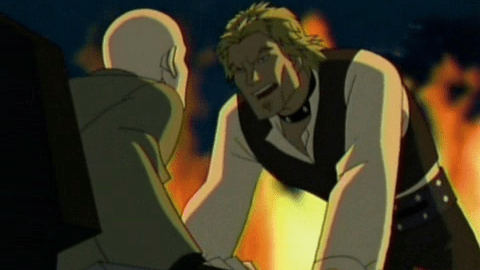
Charles Xavier is blindsided when he receives a cryptic phone call from a young man claiming to be his son. Shocked by the revelation, Xavier gathers Jean Grey, Storm, and Cyclops to travel to Scotland in search of David Haller. Upon arrival, Xavier confronts his ex-wife, Gabrielle, who admits she kept David’s existence a secret, fearing the consequences of his mutant abilities. The only clue she has to David’s whereabouts are his young, but silent friend Ian, who establishes a bond with Charles. Meanwhile, David has been imprisoned beneath the ruins of McFadden Castle, tormented by Lucas – who seeks to manipulate him into unleashing chaos.
As Xavier and the X-Men attempt to locate David, tensions rise between Charles and Gabrielle, exposing deep wounds from their past. Gabrielle reveals that she told David his father had abandoned him, further complicating the emotional stakes. Meanwhile, back at the Institute, Kitty and Kurt are bedridden with the flu, leading to Kurt’s teleportation powers malfunctioning, causing unintended chaos. Beast monitors their condition while keeping communication open with the team in Scotland.
The situation escalates when Xavier and his team finally track David down, only to find themselves caught in a battle with Lucas. It’s revealed that Lucas and Ian are distinct aspects of David’s personality and Lucas, the most aggressive of his alters, takes control, using telekinesis to attack the X-Men and resist Xavier’s attempts to reach his son. Jean and Storm struggle to contain the situation, while Cyclops tries to break through Lucas’s defences. Xavier, desperate to connect with David, enters his mind telepathically, witnessing first hand the turmoil within.
Inside David’s psyche, Xavier confronts the chaos of his son’s fractured mind, attempting to bring him back to stability. Lucas fights back, determined to maintain dominance, but Xavier’s presence begins to weaken his hold. In a moment of clarity, David briefly regains control, allowing Xavier to reach him. However, the victory is short-lived – Lucas’ stronger personality becomes dominant and he tells Xavier that he has been let free. He flies up into the sky about Scotland, too fast for the X-Men to follow. Xavier is left with the painful realization that his son’s battle is far from over.
Xavier and the X-Men leave Scotland, their mission incomplete. David remains a prisoner of his own mind, and Xavier must grapple with the consequences of his absence in his son’s life.

David/Lucas has a Scottish accent in this episode, for no apparent reason apart from the fact that his mother lives there. Interestingly, in the comics, Legion also adopted a Scottish brogue from Moira – an attempt to fit in more on the Island.
Gabrielle seem to be a mixture of her main comics counterpart, Ambassador Gabby Haller and Moira MacTaggert.
Due to the series cancellation, David’s plot line is not continued.
SINS OF THE FATHER
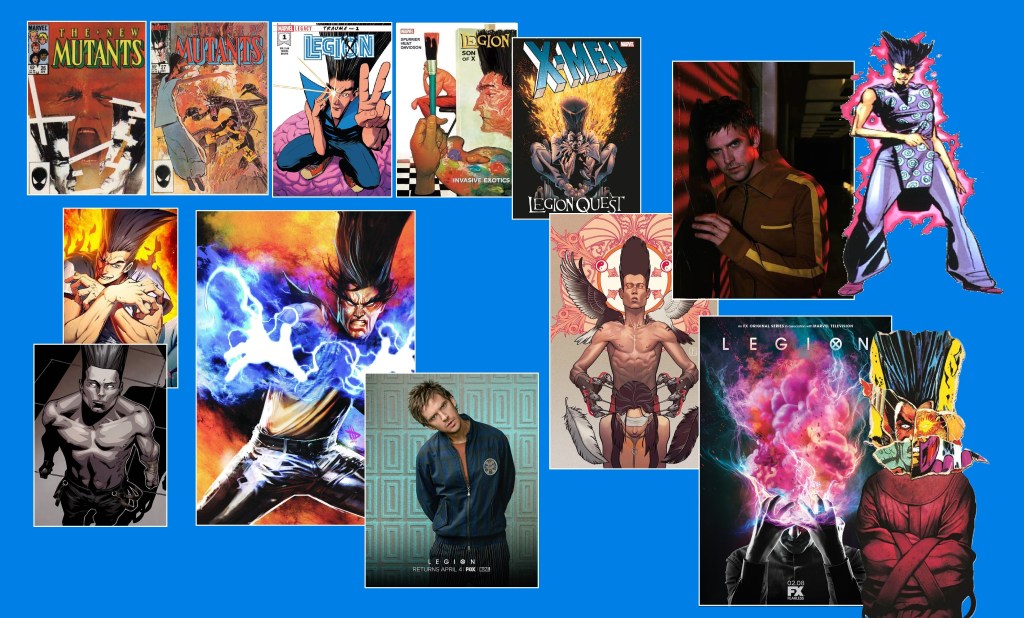
Legion, also known as David Haller, is one of the most fascinating and complex characters in X-Men lore. Created by writer Chris Claremont and artist Bill Sienkiewicz, he first appeared in New Mutants #25 (1985) in Moira MacTaggert’s notes before making his full debut in the following issue. Legion was introduced as the son of Professor Charles Xavier and Gabrielle Haller, an Israeli diplomat. His existence was unknown to Xavier for much of his early life, adding layers of tragedy to his story.
David Haller’s defining characteristic is his dissociative identity disorder, which manifests in a unique way due to his mutant abilities. Each of his personalities possesses a different power, ranging from telepathy and telekinesis to reality warping. His fractured psyche stems from childhood trauma – his home was attacked by terrorists, and in the chaos, his latent mutant abilities activated, absorbing the consciousness of the terrorist leader Jemail Karami. This event shattered his mind, creating multiple alters, each with their own distinct abilities and agendas.
Throughout his comic book history, Legion has been both an ally and a threat to the X-Men. His immense power makes him unpredictable, and his struggle for control has led to catastrophic consequences. One of his most infamous storylines, Legion Quest, saw him attempt to rewrite history by killing Magneto before the formation of the X-Men. Instead, he accidentally killed Xavier, triggering the Age of Apocalypse timeline – a dystopian reality where mutants ruled and humanity was on the brink of extinction. His journey has been one of redemption, loss, and the constant battle between his personalities for dominance.
The portrayal of mental health in comics has often been a subject of debate, and Legion is a prime example of how complex psychological conditions are depicted in superhero narratives. While his dissociative identity disorder is exaggerated for dramatic effect, his struggles with identity, control, and trauma resonate with real-world discussions about mental health. Over the years, writers have attempted to explore his condition with more nuance, moving beyond the trope of mental illness as a source of danger and instead highlighting his journey toward self-acceptance.
Legion’s story was adapted into the critically acclaimed television series Legion (2017–2019), starring Dan Stevens. The show took a surreal, psychological approach, deviating from mainstream X-Men continuity and comic book lore.
Rather than focusing on traditional superhero battles, Legion explored David’s fractured mind, presenting his reality as an ever-shifting landscape of hallucinations, unreliable memories, and existential horror. The series was praised for its bold storytelling, unique visual style, and deep exploration of mental illness, standing apart from other superhero adaptations. While it did not directly connect to the X-Men films, it carved out its own space as one of the most innovative and thought-provoking entries in the genre.
Legion remains one of the most compelling characters in the X-Men universe, embodying the intersection of immense power and psychological struggle. His story continues to evolve, offering new perspectives on identity, trauma, and the nature of reality itself.





 X-Cess Minutiae
Leave a comment