


After nearly three decades in animation limbo, The Fantastic Four returned to television screens in 1994 with all four original members intact for the first time since 1967. This premiere episode wasn’t just a reintroduction – it was a reclamation of Marvel’s First Family, bringing Reed, Sue, Johnny, and Ben back into the spotlight for a new generation of viewers. While the animation may show its age – particularly in its first season’s more limited production – the voice cast delivers with warmth and conviction, capturing the heart of each character with surprising nuance.
Framed through a charity telethon hosted by Dick Clark, the episode cleverly uses a televised interview to recount the team’s origin story. It’s a narrative device that not only grounds the episode in a media-savvy 1990s setting but also allows the characters to speak directly to the audience – inviting them into the mythos rather than simply retelling it. The story of cosmic rays, transformation, and the birth of the Fantastic Four is familiar, but here it’s paired with their first encounter with the Puppet Master, a villain whose eerie manipulation of others through clay puppets introduces the show’s recurring theme: the tension between control and identity.
Ben Grimm’s struggle with his monstrous form, Sue’s quiet strength, Johnny’s impulsive flair, and Reed’s scientific detachment all come into focus, not just as powers, but as reflections of who they are beneath the surface. The Puppet Master’s ability to override free will becomes a metaphor for the challenges the team faces – not just from villains, but from the world’s expectations and their own inner conflicts.
This episode also marked a turning point in how the Fantastic Four were perceived by mainstream audiences. No longer just comic book icons, they were now animated ambassadors of Marvel’s expanding universe, reaching viewers who may never have picked up a comic. It was a bold step toward making the Fantastic Four relevant again, and despite its rough edges, it succeeded in reintroducing the team with heart, humour, and a sense of legacy.
In many ways, The Origin of the Fantastic Four (Part 1) is more than just an origin story – it’s a statement of intent. The Fantastic Four are back, and while the world around them may have changed, their mission – to explore, to protect, and to stand together — remains as vital as ever.
In a bid to raise funds for education, the Fantastic Four do something a little unorthodox – they go on live television. Hosted by none other than Dick Clark, the quartet appear on a celebrity telethon and, between pleas for donations from the ever-gravelly Ben Grimm, they recount the tale of how they got their powers… and their first run-in with one of their creepiest foes: the Puppet Master.
Reed walks the audience through their fateful spaceflight – how exposure to cosmic radiation irrevocably changed them. When they crash-landed back on Earth, they weren’t just explorers anymore. Sue could turn invisible. Johnny burst into flame and took to the skies. Reed’s body became elastic, able to stretch into unimaginable shapes. And Ben… well, he became the Thing, a living rock with a heart bigger than his biceps. Together, they decided to form the Fantastic Four, using their powers for good – even if that sometimes meant facing down the downright bizarre.
Cue the Puppet Master. An eerie, manipulative villain who crafts tiny clay effigies of people to control their minds. His first demonstration is horrifying – a man compelled to leap from a bridge, only saved by the timely intervention of the Human Torch. But the Puppet Master’s ambitions don’t stop at experiments. With the Fantastic Four now in the public eye, he sets his sights on them.
Targeting the Thing, he sculpts a puppet in Ben’s image and lures him in like a moth to flame. Sue, ever watchful, follows – only to fall into the Puppet Master’s clutches. Seeing a resemblance between Sue and his blind stepdaughter Alicia, he disguises the latter and sends her back with the unwitting Thing, planting her inside the team’s own headquarters. Alicia, loyal but unaware, complies, just as the Puppet Master prepares his next move: a prison riot triggered by his sinister clay creations.
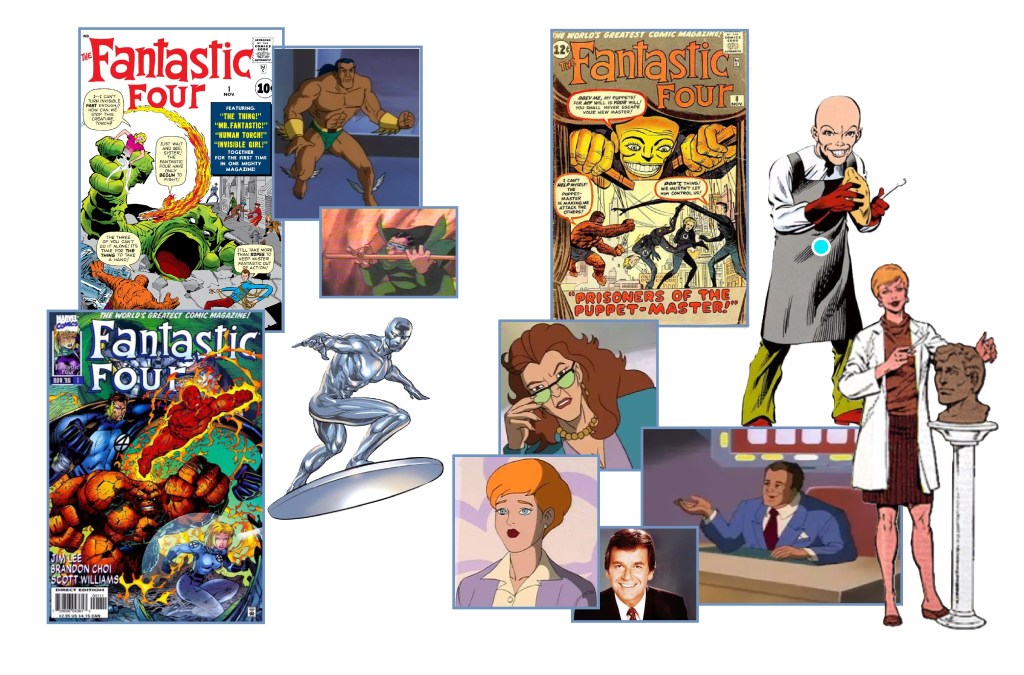
The origin of the Fantastic Four comes straight from 1962’s Fantastic Four #1, although the Mole Man is omitted from the story. His story will be adapted in the episode Mole Man.
Although the audience is told about an adventure with the Sub-Mariner, the third episode, Now Comes the Sub Mariner implies that they meet for the first time in that episode.
The signal which Reed detects that takes the team into space is later revealed to be the path of the Silver Surfer. This also happened in the Heroes Return comic book storyline, which may have been inspired by aspects of this series.
Ms. Forbes, one of the most disliked characters in the series’ run, was an original character created for this series. She was voiced by Joan Lee, the wife of Stan Lee, co-creator of the comic book. She also voiced Madame Web in the 1994 Spider-Man series, which exists in the same universe as this cartoon. The character was written out in between seasons one and two due to fan reaction and the change in storylines.
The Puppet Master storyline is a direct adaption of the FF’s first encounter with the villain from Fantastic Four #8, which also marked the first appearance of Alicia Masters, one of the most important recurring characters in Marvel history.
THE ORIGINS OF MARVEL COMICS
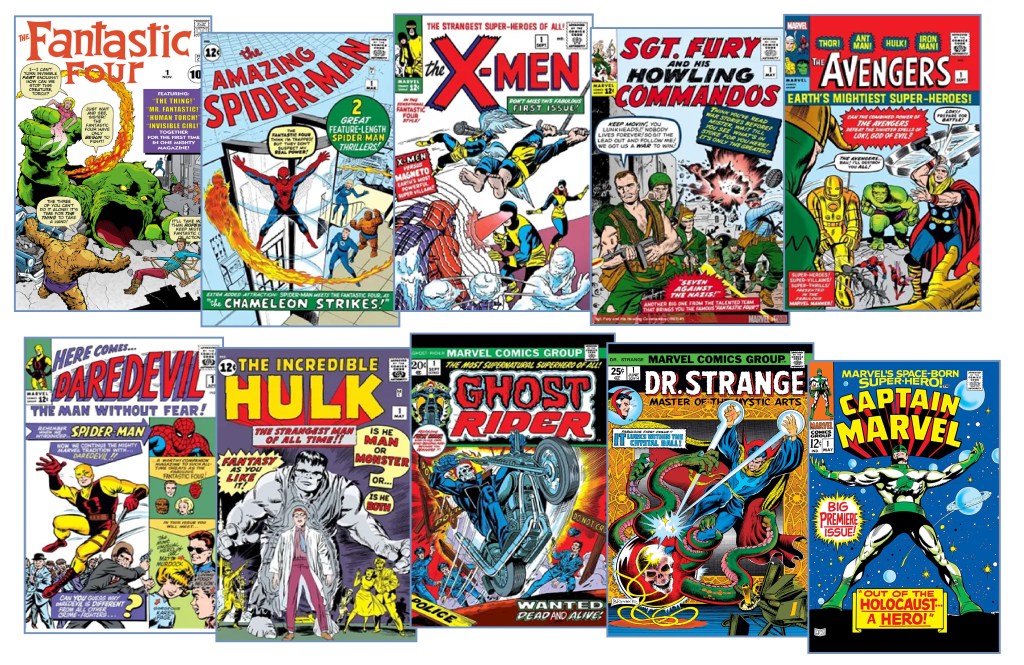
When Fantastic Four #1 hit shelves in 1961, it didn’t just launch a new superhero team – it ignited the Marvel Universe as we know it. Before this, Marvel (then known as Timely and later Atlas) had dabbled in costumed heroes, but nothing with the scope, ambition, or emotional depth that Stan Lee and Jack Kirby brought to this book. It was the big bang of modern Marvel storytelling: flawed heroes, interpersonal drama, and a world that felt just a little too real to be entirely fictional.
The origin itself is deceptively simple. Reed Richards, brilliant and driven, takes his fiancée Sue Storm, her hot-headed younger brother Johnny, and his gruff best friend Ben Grimm on an unauthorized space flight. Cosmic rays bombard the ship, and when they crash back to Earth, they’re changed – physically, emotionally, and forever. Reed becomes the elastic Mr. Fantastic. Sue, the Invisible Girl. Johnny, the Human Torch. And Ben… Ben becomes the Thing, a man trapped in a monstrous form. But instead of hiding, they step into the light, forming the Fantastic Four – not as masked vigilantes, but as a family of explorers and protectors.
What made this moment so revolutionary wasn’t just the powers or the premise – it was the humanity. These weren’t gods or paragons. They argued. They doubted. They failed. And in doing so, they connected with readers in a way that no superhero team had before. The Fantastic Four weren’t just superheroes—they were people first, and that changed everything.
From that single issue, the seeds of the Marvel Universe were sown. Within months, characters like the Hulk, Spider-Man, Thor, and Iron Man would follow, each inhabiting the same world, occasionally crossing paths, and building a shared continuity that was unprecedented in comics. But it all started with Reed’s rocket and a reckless leap into the unknown.
So while the Fantastic Four may not always get the spotlight they deserve, their legacy is undeniable. They weren’t just Marvel’s first family – they were its foundation. And every cosmic crisis, every multiversal collision, every quiet moment of heroism that followed? It all traces back to that fateful flight and the four who came back changed.




 X-Cess Minutiae
Leave a comment