


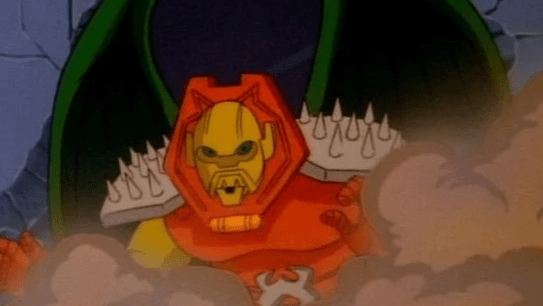

By this point in the series, the show’s starting to take risks. Behold the Negative Zone isn’t just another villain-of-the-week episode – it’s a pivot. The tone shifts. The stakes feel bigger. And for once, the threat isn’t just personal – it’s dimensional.
Reed opens a portal to the Negative Zone, and what comes through isn’t metaphor or mystery – it’s Annihilus and Blastaar, two cosmic tyrants who don’t care about Earth’s rules or Reed’s intentions. The episode doesn’t waste time explaining them. It just lets them loose. And suddenly, the Fantastic Four are dealing with something far beyond their usual street-level chaos.
There’s a confidence to the storytelling here. The humour is still present – Ben’s lines are some of his best – but it’s woven into a plot that actually moves. The music lifts the whole thing, giving the action a weight the animation can’t quite carry. And while the visuals struggle, the voice performances do the heavy lifting, especially Clyde Kusatsu’s Annihilus, who manages to sound both theatrical and genuinely threatening.
This isn’t the Negative Zone of the comics. It’s something leaner, stranger, and more direct. The episode doesn’t aim for cosmic philosophy – it aims for impact. And it lands.
Ben Grimm is live on the TV shopping channels, hawking a new video series titled It’s Clobberin’ Time! – a highlight reel of his most iconic battles. Meanwhile, back at the Baxter Building, the rest of the Fantastic Four (plus Alicia Masters) are once again at the mercy of Miss Lavinia Forbes, who’s loudly protesting their continued residence atop the skyscraper. In her flustered attempt to make a point, Miss Forbes yanks a plug from the wall – accidentally interrupting one of Reed Richards’ volatile experiments.
The timing couldn’t be worse. Reed’s been monitoring a strange dimension, and the disruption triggers a cascade of energy that tears open a portal right inside the Baxter Building. The dimension – dubbed the Negative Zone – is a universe where matter, antimatter, and other exotic forces operate in reverse to our own.
Before the team can react, a bizarre creature stumbles through the breach. Though the Four attempt communication, the being doesn’t understand and bolts from the building. Moments later, a second creature follows – two unknown entities now loose in New York City.
Ben is retrieved mid-broadcast, and the team sets out to track the intruders. The first creature, having absorbed enough Earth media to grasp English, introduces himself as Annihilus. He feeds on the energy of our universe, channelling it through a rod embedded in his armour. His goal: to amass enough power to dominate the Negative Zone, which he claims as his rightful domain.
The second is a hulking, hairy brute named Blastaar, equally determined to rule the Zone. The two clash with the Fantastic Four in a brutal skirmish, ending in a stalemate. They agree to resume their battle at a designated time and place.
Reed deduces that replicating the original experiment could reopen the portal. He does just that, and the team races to the World Trade Center – the chosen battleground.
But Annihilus and Blastaar don’t wait. The fight erupts early. The Human Torch and the Thing manage to drive both foes onto one of the Twin Towers, where Sue traps them in a force field and hauls them back to the Baxter Building.
Using the Fantasti-Car – and Ben’s deft piloting – the team escorts the villains back into the Negative Zone, releasing them to continue their endless rivalry far from Earth. The Four barely escape before the portal closes behind them.
Back home, Ben finally reveals the reason for his video-selling side hustle: he wanted to buy Alicia a present. What that present is, however, remains a mystery – until a baby elephant casually strolls into the Baxter Building.
Sue sighs. Just one more thing for Miss Forbes to complain about.

Ben’s video contains footage of him defeating enemies seen thus far in the series: Namor (from Now Comes the Sub-Mariner!), Terrax and Firelord (seen briefly in The Silver Surfer and the Coming of Galactus (Part 2)), and the Super Skrull (from the episode of the same name). He’s charging $29.96 – which, for 1994, is a bit steep!
Sam Jaggers, the journalist reporting on events, notes that the police have left the alien alone until now. The law only steps in when Annihilus climbs the Chrysler Building. We wonder if its secret owner had anything to do with it – the Chrysler Building is, after all, the hidden lair of the Kingpin over in Spider-Man.
Ben’s lines are fantastic this week, as usual. He deadpans to himself, when hurled into the air by one foe: “Uh, I’m sorry officer. I didn’t see the off-ramp!” He also quips that Annihilus makes him look like actor Brian Austin Green – famous at the time for his role on Beverly Hills, 90210, and also the voice of this series’ Johnny Storm!
One of the kids in the crowd is wearing an Iron Man shirt.
Alas, poor Ben. The line of the week, despite its harshness, has to go to Miss Forbes – who accidentally causes the entire episode’s threat. While speaking to Sue at the start of the episode about Ben’s presence on TV, she frets about the building’s safety with this gem: “Everyone in New York knows that orange dump truck lives here, Mrs. Richards!”
Clyde Kusatsu voices Annihilus. As an actor, he’s been in everything – doing voice work for
countless ’90s animated series, and appearing on TV in everything from NCIS to Star Trek.
Ron Friedman, who voices Blastaar, is a television legend. Not only does he voice the character, but he also produces the show and wrote the episode! He literally created G.I. Joe: A Real American Hero for animation, and was one of the key creatives behind the original Transformers series.
TO RULE THE NEGATIVE ZONE!
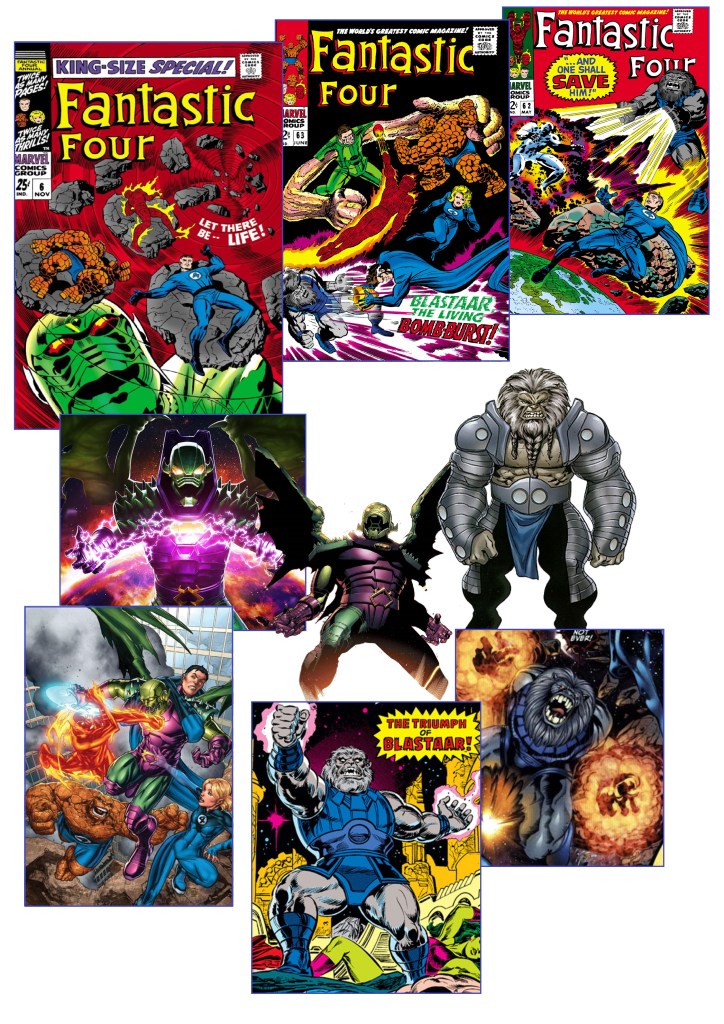
In the swirling entropy of the Negative Zone – where physics folds in on itself and ambition burns brighter than suns – two tyrants rose from the void. Annihilus, the insectoid warlord born from Tyannan spores on the volcanic world of Arthros, clawed his way into sentience by absorbing the knowledge of a crashed alien vessel.
With that knowledge came power: the Cosmic Control Rod, a device capable of manipulating energy, matter, and mortality itself. He debuted in Fantastic Four Annual #6 (1968), interrupting Reed Richards’ desperate quest to save Sue Storm’s pregnancy. From the moment Annihilus grasped the Rod, he feared only one thing – death. And so began his crusade to conquer, consume, and outlast the universe.
Blastaar, by contrast, was no accidental evolution. He was bred for dominance. A native of Baluur, a planet deep within the Negative Zone, Blastaar ruled as monarch with fists of fury and a voice that could shatter steel. His people, weary of tyranny, rebelled and cast him into the void – sealed in a containment suit and left to drift. But Blastaar does not drift. He detonates. He broke free and followed Reed Richards back to Earth, making his explosive debut in Fantastic Four #62 (1967). Where Annihilus is cold calculation, Blastaar is raw combustion. And Earth would never be the same.
Their paths crossed often, first as rivals vying for control of the Negative Zone, then as uneasy allies when the stakes grew cosmic. Annihilus, ever the strategist, launched the Annihilation Wave – a fleet of destruction that tore through the Nova Corps and threatened the fabric of reality. Blastaar, sensing opportunity, joined the fray, not out of loyalty but out of hunger. Together, they became a two-headed hydra of destruction, each seeking dominion over a universe that barely understood them.
But Earth has a way of complicating things. The Fantastic Four, drawn into the Negative Zone by science and circumstance, became recurring thorns in both tyrants’ sides. Reed Richards stole Annihilus’s Control Rod to save Sue’s life. The Thing traded blows with Blastaar across dimensions. And every time the portal opened, chaos spilled through. These villains weren’t just threats – they were metaphors for unchecked power, for the fear of the unknown, for the cost of curiosity.
And yet, they endure. Annihilus has died and been reborn, retaining his memories and his malice. Blastaar has been imprisoned, dethroned, resurrected, and crowned anew. They are the Negative Zone’s eternal storm – raging, scheming, and waiting for the next aperture to crack open. Because in the Marvel cosmos, some villains aren’t just defeated. They’re postponed.




 X-Cess Minutiae
Leave a comment