


Comic books have always thrived on the long game. Multi-part stories aren’t just a format – they’re a promise. A slow burn. A descent into chaos or a climb toward catharsis. They let us live with the consequences, feel the fallout, and watch the ensemble fracture and reform. And when the Fantastic Four face their darkest reflections, it’s never a one-and-done.
Enter the Frightful Four. If the Fantastic Four are built on unity, invention, and emotional resilience, their villainous counterparts are stitched together from envy, manipulation, and brute force. The Wizard is Reed’s bitter echo. Trapster is the failed chemist to Johnny’s hotshot genius. Hydro-Man is chaos where Sue is control. And Medusa? She’s the wild card – the one who doesn’t quite belong, and that’s what makes her dangerous.
Just as the Masters of Evil exist to test the Avengers, and the Brotherhood of Mutants to challenge the X-Men’s ideals, the Frightful Four are the Fantastic Four’s crucible. They’re not just enemies – they’re antitheses. And when Medusa steps into the spotlight, the story shifts. She’s not just a villain. She’s a mystery. A woman with power, history, and a connection to something far older than the Wizard’s petty vendetta.
This is the beginning of something bigger. A saga that stretches beyond villainy into legacy, identity, and the mythic bloodline of the Inhumans. And it all starts with a whisper in the wind.
Medusa has arrived. And nothing will be the same.
Ben Grimm walks toward Alicia Masters’ apartment, gift in hand but heavy in heart. Recently restored to his rocky Thing form, he’s plagued by doubt – worried Alicia will one day move on.
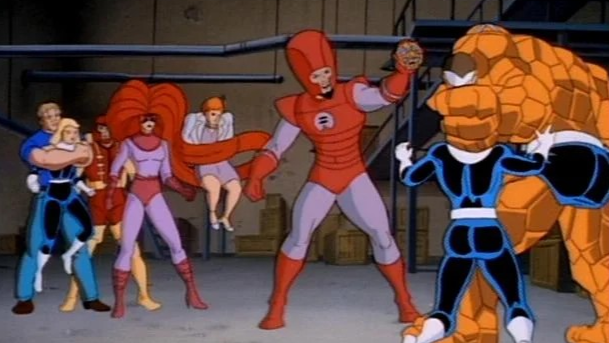
But before he can reach her, a commotion in a nearby alley catches his attention. A woman is being kidnapped. Ben intervenes, smashing into a warehouse to rescue her – only to be ambushed by a group of supervillains. Led by the Wizard, a bitter scientist envious of Reed Richards’ intellect, they call themselves the Frightful Four. Joining him are polymer expert Peter Petruski (the Trapster), water-controlling Morrie Bench (Hydro-Man), and a mysterious woman known only as Medusa, whose prehensile hair is as dangerous as it is mesmerizing.
The Wizard subdues Ben with a device that brainwashes him. Under its influence, Ben Grimm snarls a chilling declaration: “Reed Richards must die!”
Meanwhile, at the newly rebuilt and renamed Four Freedoms Plaza, Reed and Sue Richards worry about Johnny’s unlucky streak in love. Even Ben seems to be doing better, Johnny jokes – until Alicia arrives, concerned. Ben was supposed to meet her the night before, but never showed. Then Ben calls, asking the team to meet him at a warehouse by the docks. The Fantastic Four – and Alicia – head out.
While Alicia waits outside, the team enters the warehouse and is immediately ambushed. Trapster encases Sue in a shrinking paste bubble. Hydro-Man overwhelms Johnny. And Reed finds himself face-to-face with a brainwashed Ben Grimm.
As the Thing prepares to pulverize Reed, the Wizard gloats, pasting Reed to a plank and revealing his plan. But Ben’s rage boils over. He attacks Reed, and Reed uses the moment to reach his friend – trying to break through the conditioning.
The battle escalates. Just as Ben readies to strike the final blow, Alicia’s voice cuts through the chaos. She pleads with him: he’s not worthless, not ugly. It’s the man inside she loves. He can’t hurt his family.
Ben snaps out of it. The spell breaks. He releases Reed and turns on the Frightful Four. The team rallies and defeats the villains – though Medusa escapes, spared by the Torch, who sees something sympathetic in her.
That night, as the Fantastic Four return home to relax, they remain unaware that Medusa is watching them from the shadows. And watching her, from a distance, is a hulking figure with hooves and fury.
His name is Gorgon.
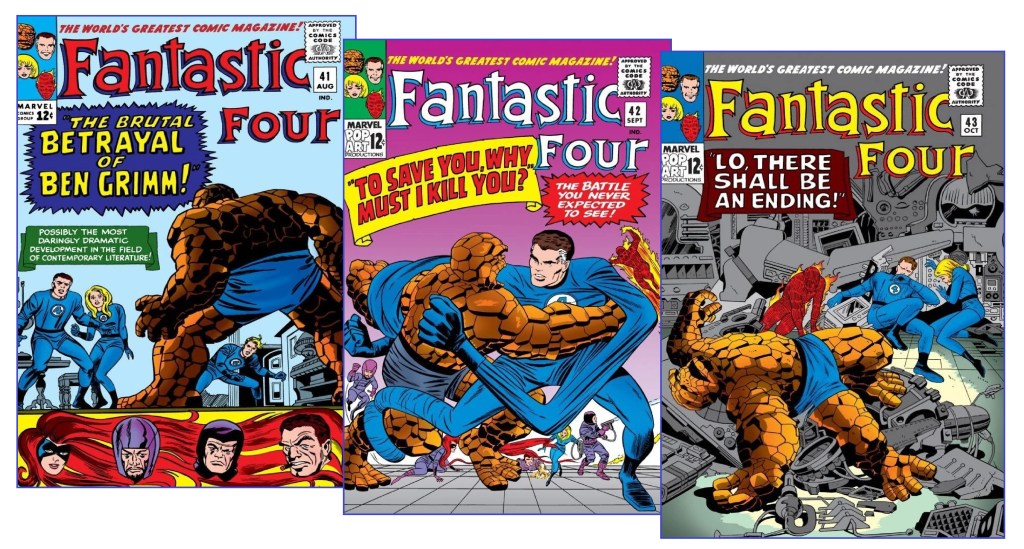
This episode is based on Fantastic Four #36, the first appearance of the team, as well as parts of Fantastic Four #41-43.
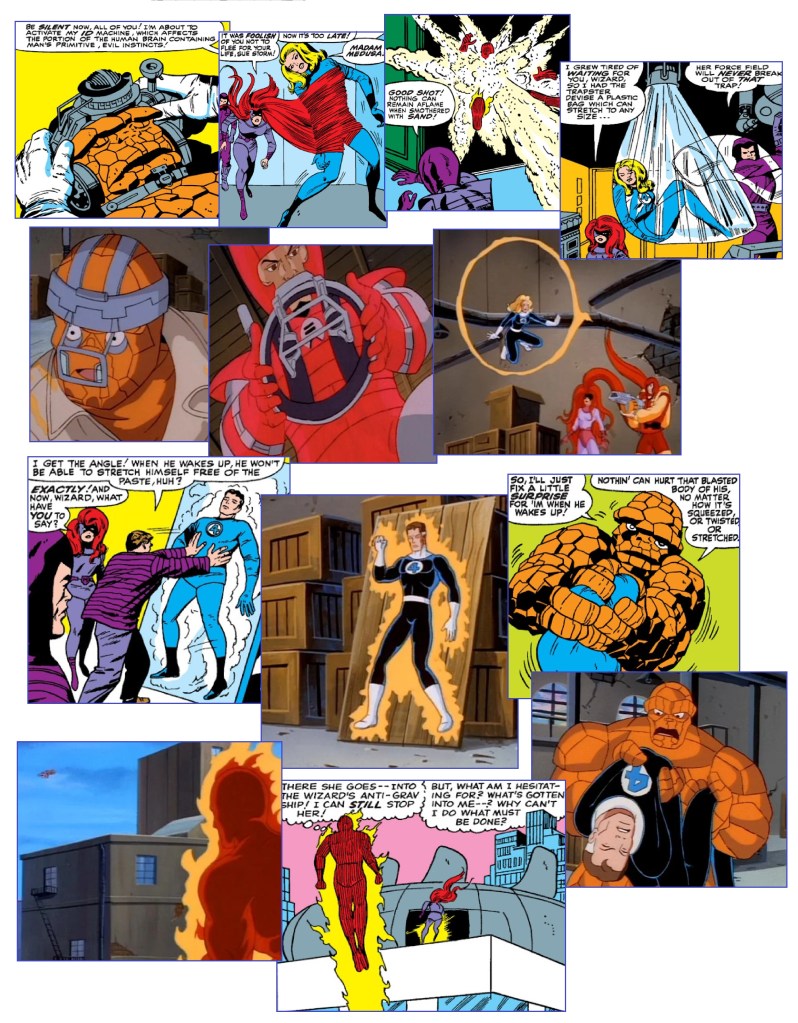
Hydro-Man is better known as a Spider-Man villain, and indeed, had only recently turned up on the Spider-Man series at the time of this episode. He’s used due to complications with the Sandman, who’s character was unavailable to be used in the animation at the time, due to ongoing and, ultimately futile, movie rights.
This is the first appearance of Four Freedoms Plaza in a media outside of the comics. It made it’s comic book debut in Fantastic Four #296.
Medusa is voice by Iona Morris, who first voiced Storm in the first season of X-Men. She also reprises that role later in Spider-Man. Ron Perlman voices the Wizard.
Johnny makes a comment about liking redheads – which is accurate enough. In the comics, he’s dated Alicia, Medusa and Crystal, all of whom have strawberry blonde or red hair.
Whether intended or not, Reed unwittingly uses the Third Doctor’s catchphrase from Jon Pertwee’s Doctor Who era: “Reverse the polarity.”
The Wizard uses his ‘Power Gloves’ against the Human Torch – a weapon first seen in Fantastic Four #36 – called his ‘Wonder Gloves’ on panel.
A DARK REFLECTION: THE FRIGHTFUL FOUR
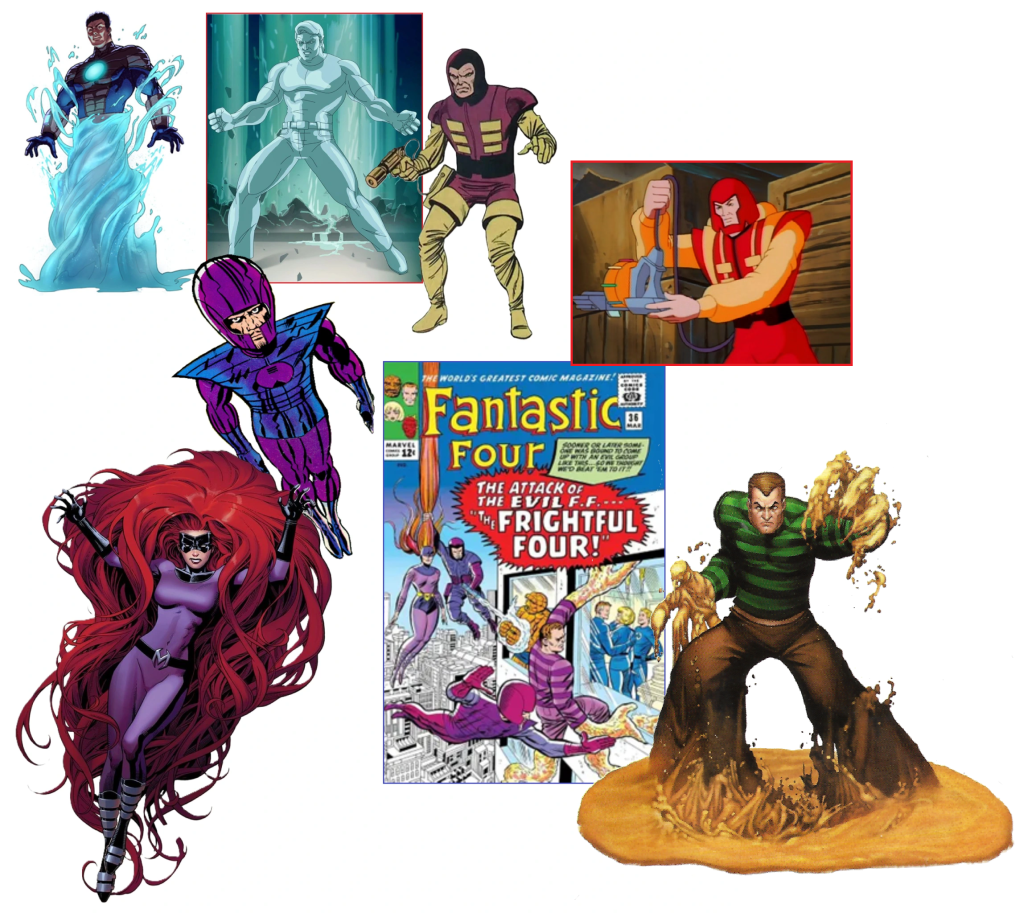
The Frightful Four first appeared in Fantastic Four #36 (1965), created by Stan Lee and Jack Kirby as a villainous mirror to Marvel’s first family. Led by the Wizard – Bentley Wittman, a genius inventor with a chip on his shoulder the size of Reed Richards’ ego – the team was designed to challenge the Fantastic Four not just physically, but ideologically. Where the FF stood for unity, innovation, and family, the Frightful Four were fractured, self-serving, and chaotic. Their debut was a statement: even the brightest heroes cast long shadows.
Joining the Wizard were Paste-Pot Pete (later rebranded as the Trapster), a glue-gun-wielding chemist with a flair for failure; the Sandman, fresh off his Spider-Man villainy and looking for a new gig; and Medusa, the Inhuman queen-to-be, who at the time was suffering from amnesia and manipulated into villainy. Medusa’s hair-based powers and tragic arc gave the team a strange elegance – she wasn’t evil, just lost. Her eventual defection to the heroes added emotional weight to the group’s instability.
Over the years, the Frightful Four became a revolving door of villainy. Hydro-Man, Klaw, Thundra, and even the Brute (an alternate-universe Reed Richards) took turns filling the fourth slot. The Wizard remained the constant – obsessed with proving his superiority to Mr. Fantastic, even as his team fell apart around him. Their schemes ranged from kidnapping to mind control to full-on invasions of the Baxter Building, but they never quite managed to stick the landing. That was the point: they were the Fantastic Four’s cautionary tale.
What makes the Frightful Four compelling isn’t just their failures – it’s their emotional echoes. Ben Grimm’s fear of becoming a monster, Medusa’s struggle with identity, Trapster’s need for validation – they’re all distorted reflections of the heroes they fight. When Ben was brainwashed into joining them, it wasn’t just a plot twist – it was a gut punch. The idea that the Thing could be turned against his family tapped into the deepest insecurities of the team.
Today, the Frightful Four remain a symbol of what happens when brilliance is twisted by bitterness. They’re not just villains – they’re the ghost of what the Fantastic Four could become if they lost sight of each other. And with characters like Medusa and Thundra finding redemption, the team’s legacy is more complex than it first appears. They’re not just frightful – they’re fractured. And that’s what makes them unforgettable.
And a Blind Man Shall Lead Them | The Inhumans Saga (Part 2): The Inhumans Among Us




 X-Cess Minutiae
Leave a comment