


Marvel has always used its superpowered societies to explore real-world anxieties – mutants, aliens, and hidden kingdoms all reflecting the fear of the other. The Inhumans are no exception. Born of Kree experimentation and sealed away in the Great Refuge, they’ve watched humanity evolve from a distance, unsure whether to reach out or retreat further. They don’t hate humanity – they fear it. And with good reason.
This episode dives into that tension. The Inhumans want connection, but centuries of isolation have made them cautious, even xenophobic. Black Bolt’s silence isn’t just power – it’s protection. Medusa leads with grace, but she’s still wary. And Maximus? He weaponizes fear, turning it into policy. When the Fantastic Four arrive, it’s not just a clash of powers – it’s a test of trust. Can two families, shaped by different worlds, find common ground?
Johnny Storm and Crystal offer a glimpse of what’s possible. Their bond isn’t just romantic – it’s symbolic. A spark in the middle of a cultural standoff. They don’t just fall for each other – they choose each other, despite the noise around them.
This isn’t just a battle for Attilan – it’s a question of coexistence. And in true Marvel fashion, the answer isn’t easy. But it starts with empathy. With understanding. With the idea that cooperation beats fear – and that sometimes, the most powerful thing you can do is listen.
The barrier may rise. But the story doesn’t end there.
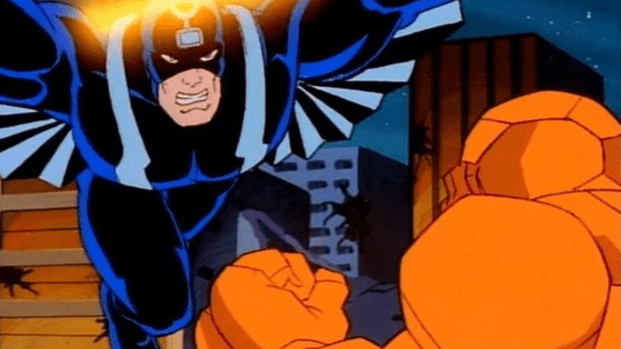
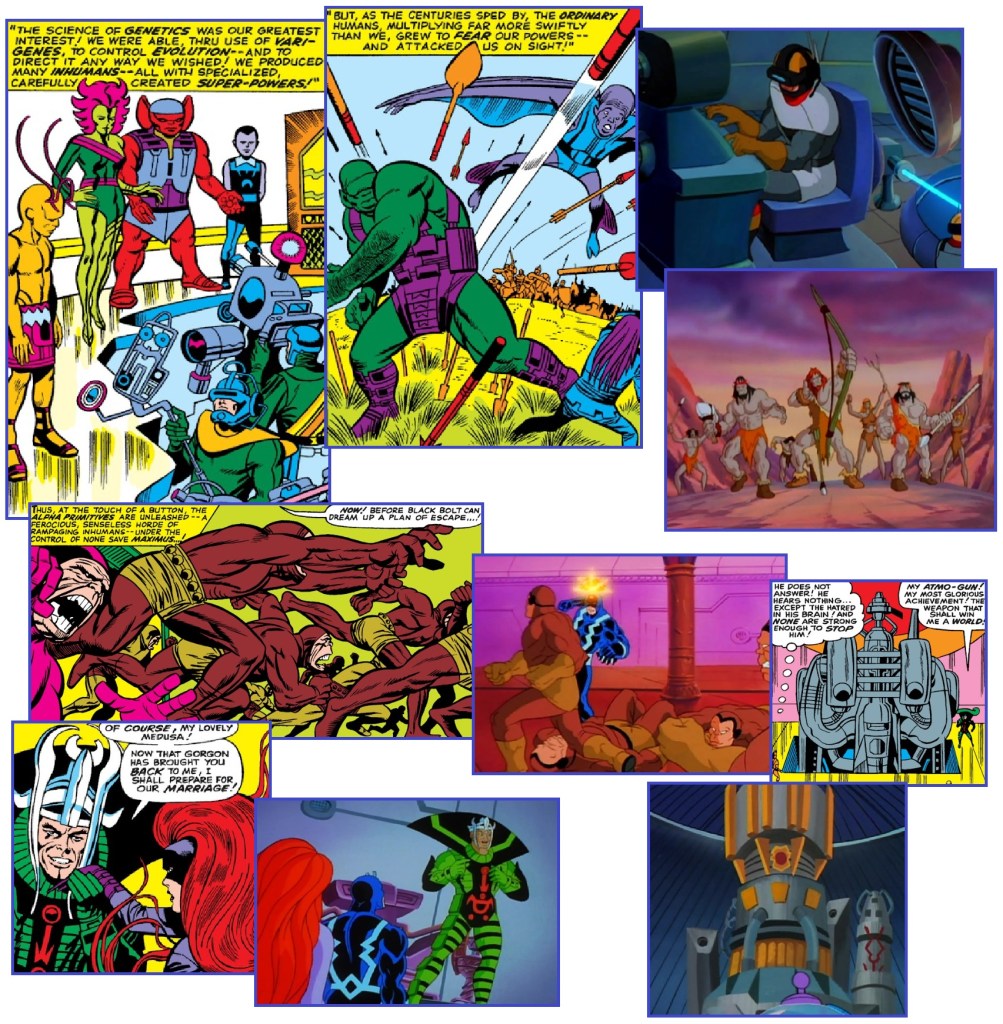
Black Bolt, silent sovereign of the Inhumans, has already put Ben Grimm down once – and he doesn’t hesitate to do it again. The Fantastic Four are caught off guard as the rest of the Inhumans launch their assault. Gorgon charges Johnny Storm, Karnak targets Mr. Fantastic, and Reed – ever the scientist – is stunned by the emergence of a new species. Crystal refuses to fight, until Johnny’s flame is snuffed out by Black Bolt’s devastating power.
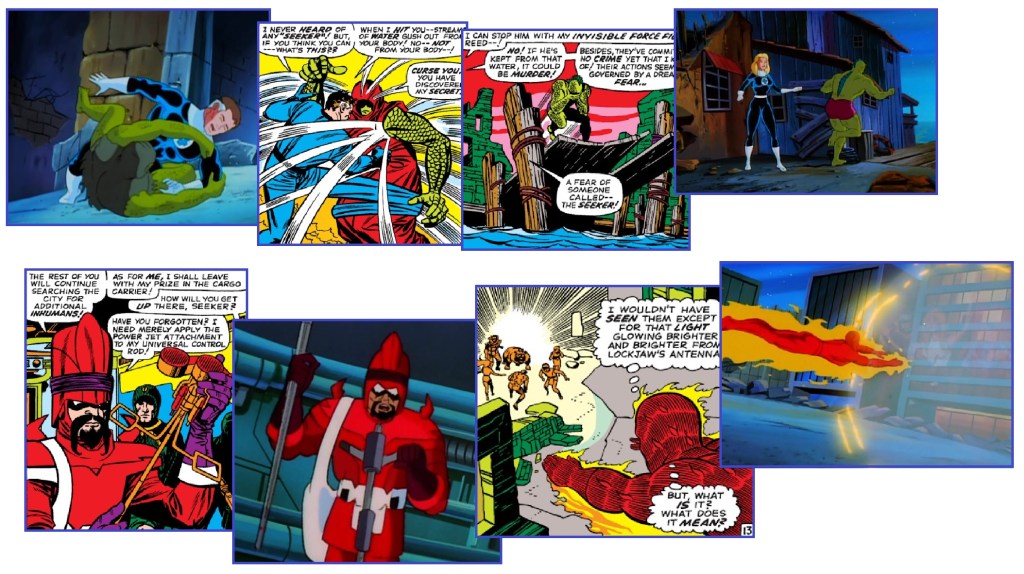
Another cloaked figure tackles Reed, but when the cloak is torn away, the attacker is revealed to be Triton – a green-gilled Inhuman who rushes to the dockside and dives into the Hudson, restoring his ability to breathe. But underwater, Triton is captured by an undersea craft commanded by a mysterious Inhuman known only as the Seeker.
The battle ends in a stalemate, with Black Bolt forcing the Four to a standstill. Then Medusa receives word: their home, the Great Refuge, has been seized by Maximus the Mad – Black Bolt’s twin brother, now self-proclaimed ruler of Attilan. The Inhumans prepare to return and reclaim their kingdom, but Johnny leaps through the portal with them, leaving Sue to watch in horror.
In Attilan, Johnny searches for Crystal. Back in New York, the remaining Fantastic Four are rescued from collapse by the Seeker, who reveals Triton’s imprisonment and the origin of the Inhumans: a race branched off from humanity through Kree experimentation, gifted with powers upon exposure to the Terrigen Mist. The Seeker believes the Four pose no threat – but Reed has planted a tracker on the craft, and the team sets off to reunite with Johnny.
Meanwhile, Maximus prepares to unleash a Terrigen weapon that will flood the Earth, wiping out humanity. When warned of Black Bolt’s return, he releases his Alpha Primitives to attack. With Johnny’s help, the Inhumans fight back, and the Fantastic Four arrive just in time to turn the tide. Maximus is swiftly defeated, and Black Bolt reclaims the crown.
But Maximus still manages to activate the weapon – only for it to fail. Reed explains that humanity and Inhumans share more than they think, and perhaps the time has come to rejoin the world. Before that future can begin, Maximus triggers a negative barrier, encasing Attilan in an unbreakable dome. Crystal tries to follow Johnny, but her family holds her back. As the barrier rises, the lovers are separated once more.
As the Fantastic Four depart, Ben promises Johnny they won’t stop until the Inhumans are free.
And inside the Great Refuge, Crystal weeps for the love she’s lost.
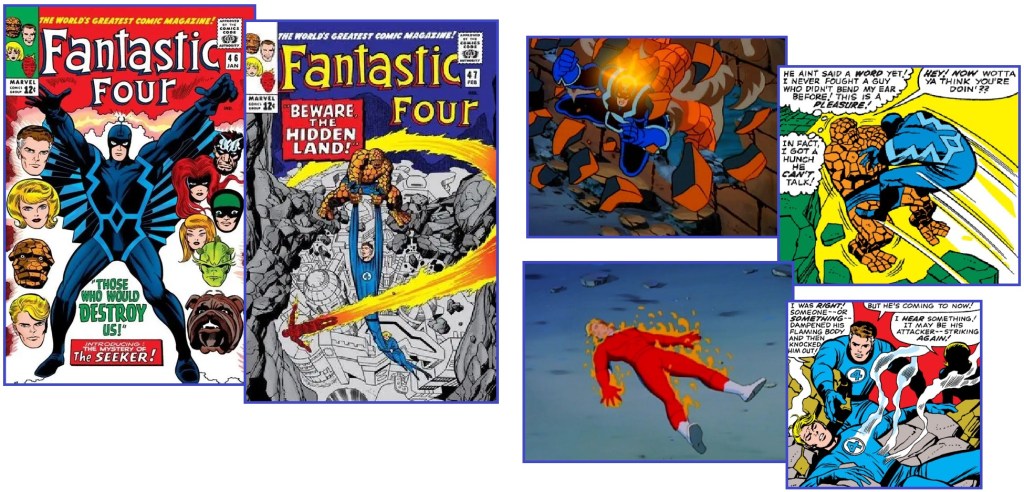
Despite the characters of the Inhumans appearing in other cartoons in the 1970s, this episode marks the first time that Black Bolt has been seen as their leader outside of the comics. In 1978, Medusa led the team onscreen. Black Bolt doesn’t speak, so there’s no actor credited, although in live-action, Anson Mount has played the character.
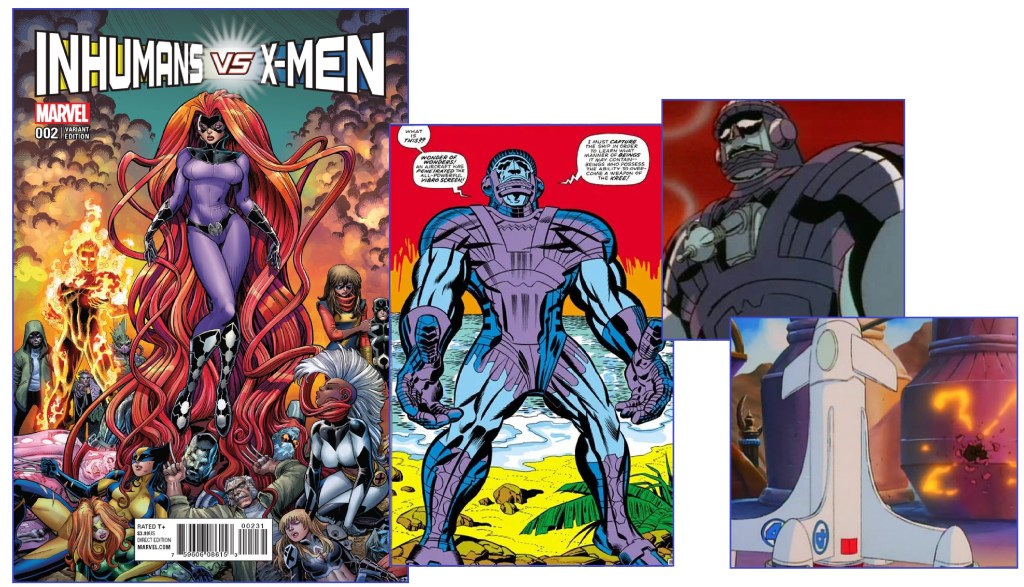
Terrigen Mist was unleashed on Earth in the comic book story Inhumanity. It doesn’t affect all humans, only those with genetic markers that could be Inhuman in nature. It does, however, have a deadly effect on mutant genes, as seen in Inhumans vs. X-Men.
The Fantastic Four have rebuilt, or acquired, a new Pogo Plane, replacing the one destroyed in And A Blind Man Shall Lead Them.
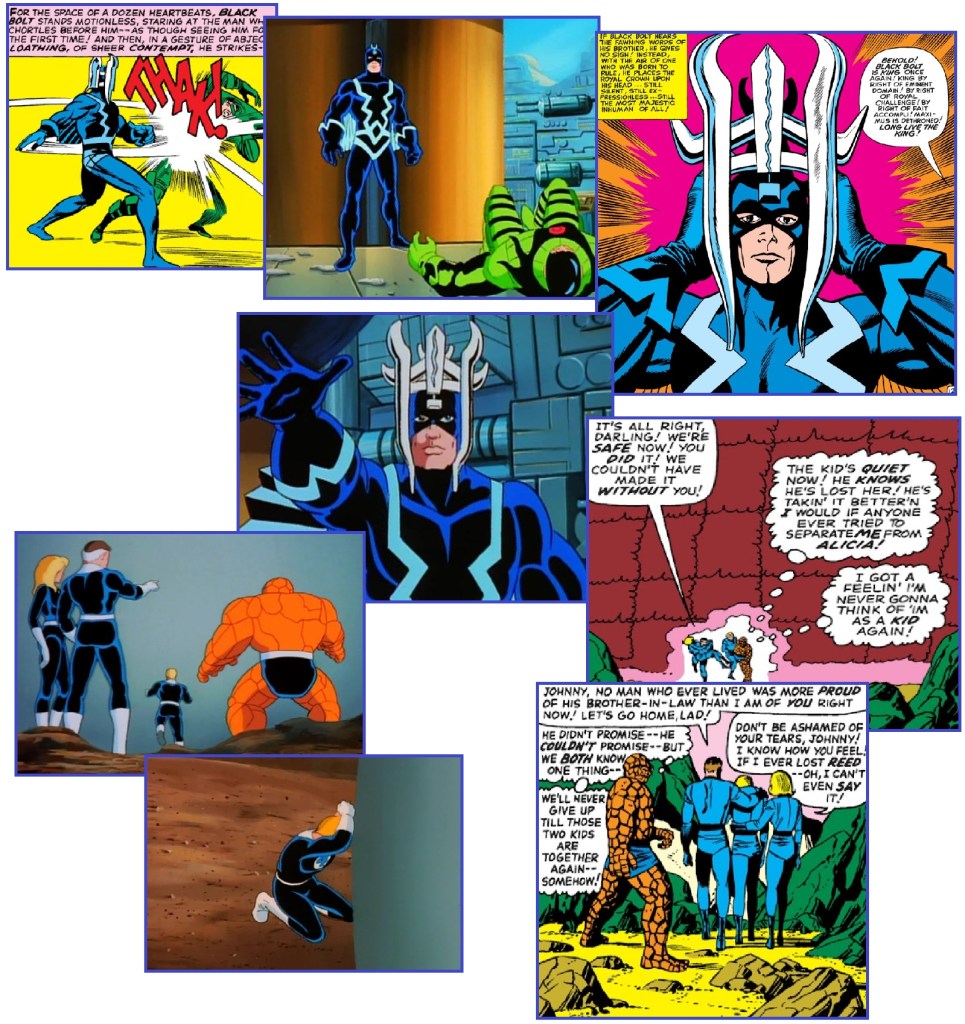
The Kree and their experiments will be explored in The Sentry Sinister.
Recognisable through his work on Star Wars and his voice work on Batman and Spider-Man, Mark Hamill voices Maximus the Mad.
BORN OF MIST, BOUND BY BLOOD: THE LEGACY OF THE INHUMANS
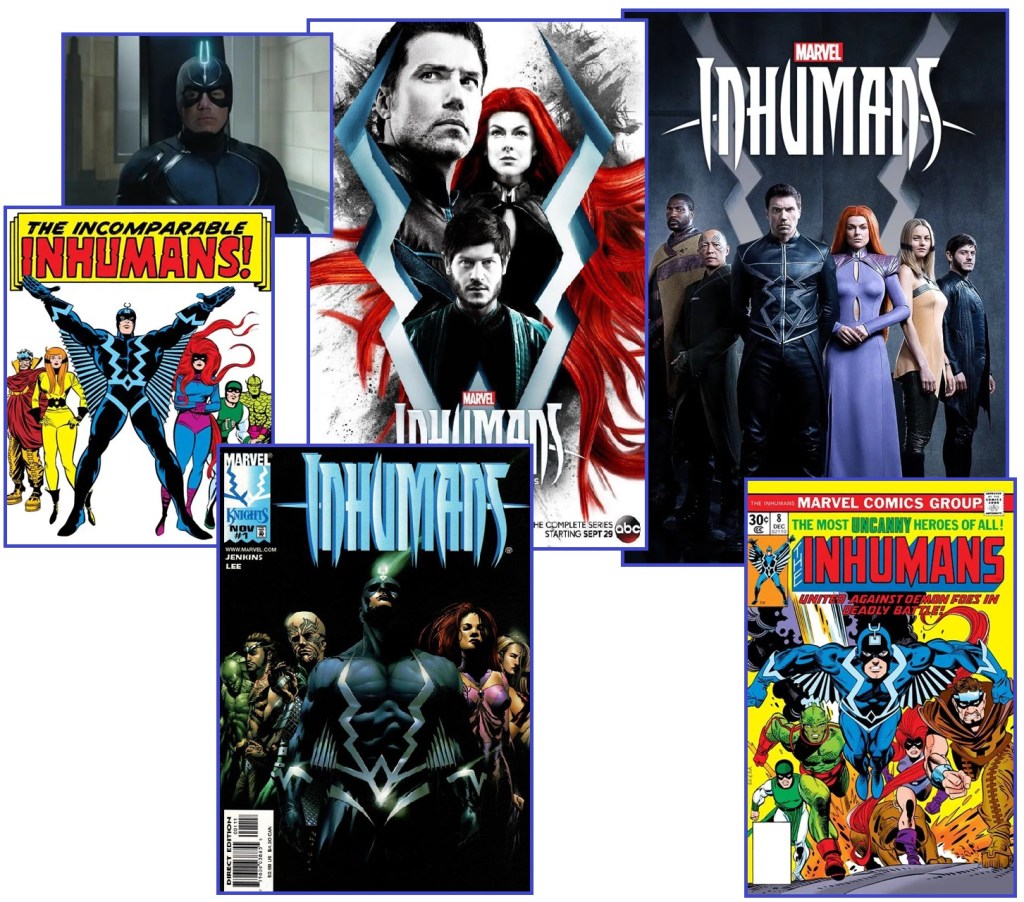
The Inhumans first stepped onto the Marvel stage in Fantastic Four #45 (1965), introduced as a hidden society of superpowered beings – genetic offshoots of humanity, shaped by ancient Kree experimentation. Their powers weren’t random; they were earned through exposure to the Terrigen Mist, a rite of passage that could elevate or deform. Led by the silent and devastating Black Bolt, the Inhuman Royal Family – Medusa, Karnak, Gorgon, Triton, and Crystal – weren’t just another super-team. They were a monarchy. A family. And a myth.
Their early stories were steeped in tragedy and isolation. Black Bolt’s voice could level mountains, so he ruled in silence. Maximus the Mad, his brother, schemed from the shadows. Medusa, once manipulated into villainy by the Frightful Four, found redemption and leadership. Crystal became the bridge – falling for Johnny Storm and later marrying Quicksilver. Their arcs weren’t just about power – they were about identity, loyalty, and the cost of legacy.
Over time, the Inhumans expanded beyond the Fantastic Four’s orbit. They clashed with the Avengers, tangled with the X-Men, and became central players in Marvel’s cosmic sagas. During Infinity and Inhumanity, the Terrigen Mist was unleashed across Earth, awakening latent Inhuman genes and reshaping the Marvel landscape. Kamala Khan – Ms. Marvel – emerged from this new generation, reframing the Inhumans as more than royalty. They were a living legacy.
Onscreen, their journey has been uneven. They appeared in Agents of S.H.I.E.L.D., where the Terrigen arc played out slowly and with emotional weight. In 2017, Marvel launched Inhumans as a standalone series, with Anson Mount as Black Bolt and Serinda Swan as Medusa. The show struggled – tonally and structurally – but still gave us Lockjaw, the teleporting dog who stole every scene. The series may have faded, but the characters lingered. Mount even reprised his role on the big screen, in Doctor Strange in the Multiverse of Madness.
Today, the Inhumans remain one of Marvel’s most mythic constructs. Not just defined by their powers, but by their bonds. They are a family first – fractured, regal, and enduring. Whether trapped behind a negative barrier or scattered across dimensions, they persist. And when the mist clears, they always return.
The Inhumans Saga (Part 2): The Inhumans Among Us | Worlds Within Worlds




 X-Cess Minutiae
Leave a comment