


The Black Panther has always been more than a superhero. In Marvel Comics, he was the first Black mainstream hero – introduced in Fantastic Four #52 (1966) – a king, a scientist, and a warrior who didn’t need saving, didn’t need permission, and didn’t need to explain himself. In animation, in comics, and on screen, T’Challa has stood as a symbol of dignity, intelligence, and quiet power. But in the real world, he became something more: a figure of hope, representation, and possibility.
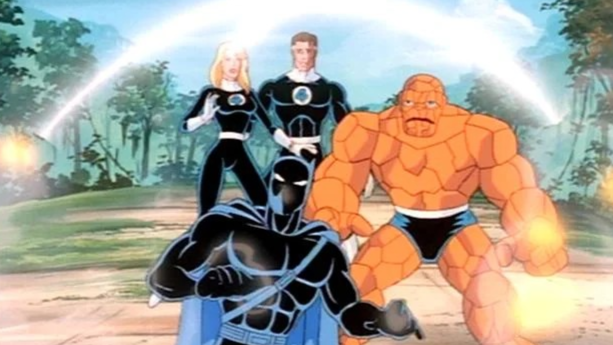
This episode marks one of his most memorable animated appearances, voiced by Keith David, whose performance brings gravitas and warmth to the role. David’s voice is commanding but compassionate, regal but grounded. He gives T’Challa weight – not just as a fighter, but as a man carrying legacy. It’s a portrayal that understands the character’s depth: not just the claws, but the conscience.
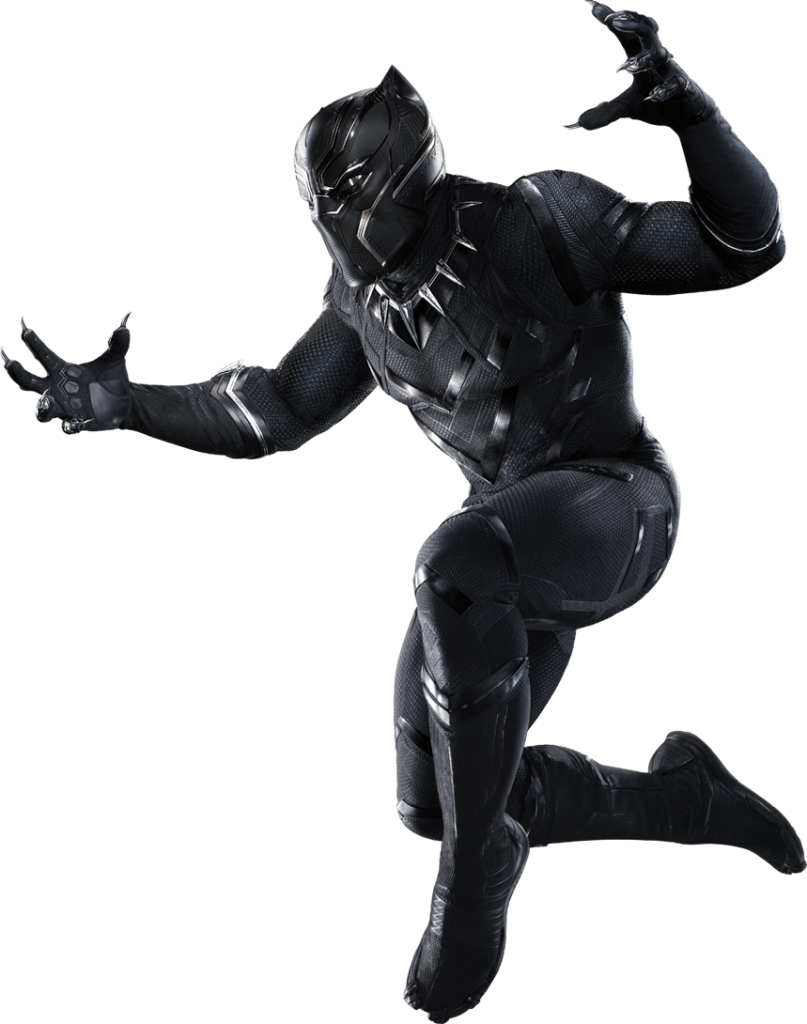
Years later, Chadwick Boseman would embody that same spirit on screen, turning Black Panther (2018) into a cultural milestone. Boseman’s T’Challa was noble, vulnerable, and deeply human. His performance resonated far beyond the MCU, offering young audiences – especially Black viewers – a hero who looked like them, led like them, and inspired like them. His passing left a void, but his legacy endures.
This episode doesn’t just introduce Wakanda – it introduces a philosophy. That strength can be quiet. That leadership can be earned. And that representation isn’t just about visibility – it’s about voice. T’Challa doesn’t just fight alongside the Fantastic Four. He challenges them. Tests them. And ultimately, reminds them – and us – what a true king looks like.
At Four Freedoms Plaza, Johnny Storm struggles with his separation from Crystal, while Reed works tirelessly to dismantle the Negative Barrier trapping the Inhumans. But their quiet night is shattered when a mysterious intruder infiltrates the rooftop hangar – an agile figure in black who defeats Ben and lures the Fantastic Four into a chase across the globe.
Their pursuit leads to Wakanda, a hidden kingdom cloaked in jungle and steel. There, the team is separated and tested by the Black Panther, who uses advanced technology and psychological tactics to challenge each member. Sue is trapped, Johnny is neutralized, and Ben is frozen mid-battle. Reed is the last to fall – until the team regroups and turns the tables, forcing the Panther to reveal his identity: T’Challa, King of Wakanda.
T’Challa recounts the death of his father at the hands of Ulysses Klaw, a sound-obsessed invader who sought Wakanda’s vibranium. The Panther’s hunt was a test – to see if he was ready to face Klaw again. When Klaw returns, now wielding sonic creatures and a monstrous red gorilla, the Fantastic Four join forces with Wakanda to defend the kingdom.
In the final battle, Klaw is absorbed by the vibranium he sought to control. T’Challa prepares to retire the Black Panther mantle, but Sue reminds him the world still needs him. As the Panther statue rises, gleaming in the sun, T’Challa vows to stalk again.
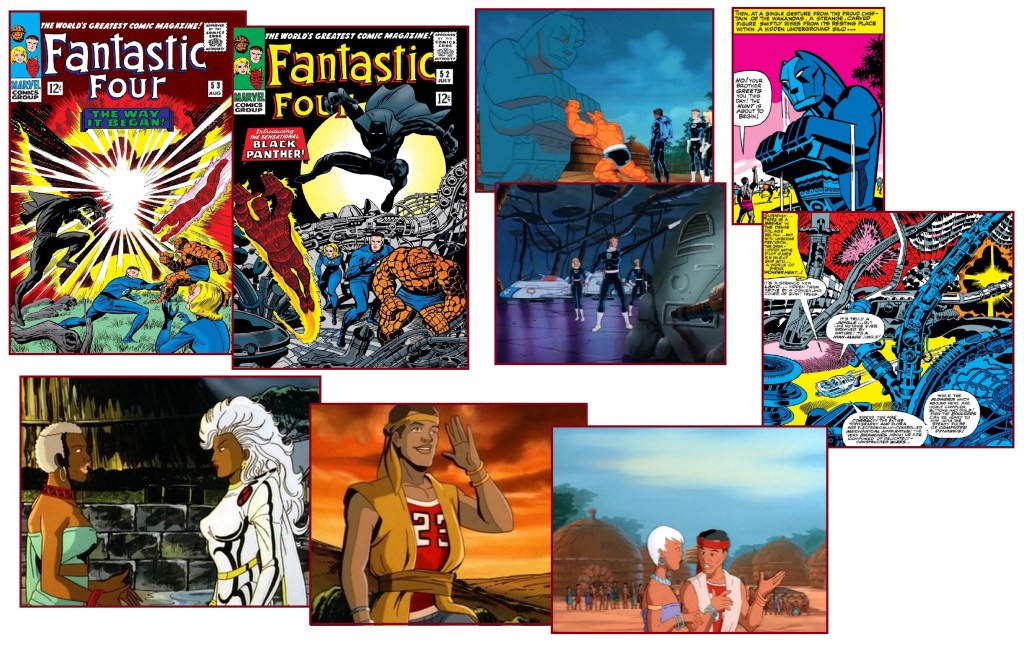
In the comic version of this story, Fantastic Four #52-53, the team is invited to Wakanda and then deceived into undergoing the test. In this version, however, they are taken there by the Panther against their will.
Shani and her son M’Jnari, relations of sorts to the X-Men’s Storm from the X-Men episode Whatever It Takes, appear in the Wakanda village, implying it’s not far from Mt. Kilimanjaro in Tanzania.
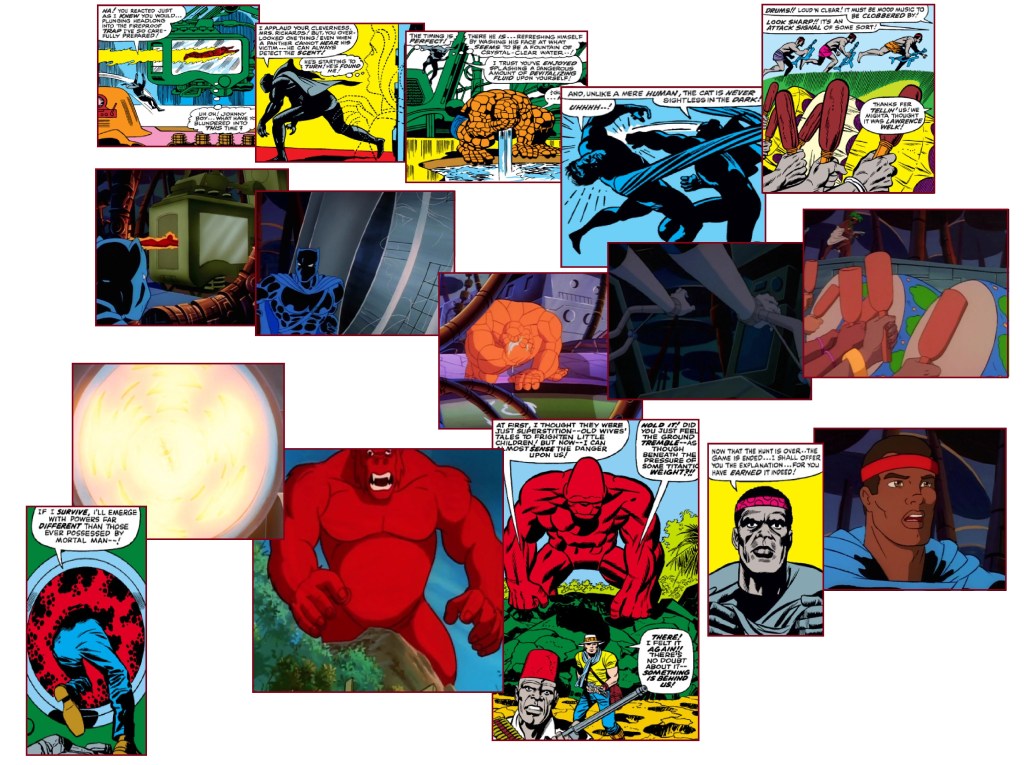
Legendary actor Keith David voices the Black Panther. Producer Larry Houston had every intention of pushing this episode forward as a pilot for a potential animated series following T’Challa, but the series never materialised. In fact, the development of this unmade series was why the director left X-Men in its final season.
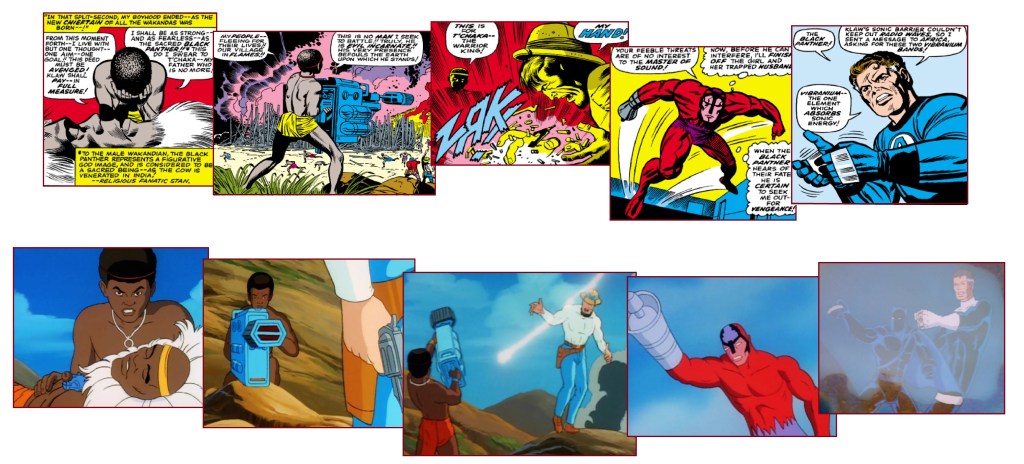
In this version, Reed accidentally pushes Klaw into the sound convertor. In the comic books, the villain climbs in on his own accord.
Ben is aghast when he realises who he’s been fighting: “Chief? Y’Mean I’ve been clobberin’ on the Lion King?”
WAKANDA FOREVER
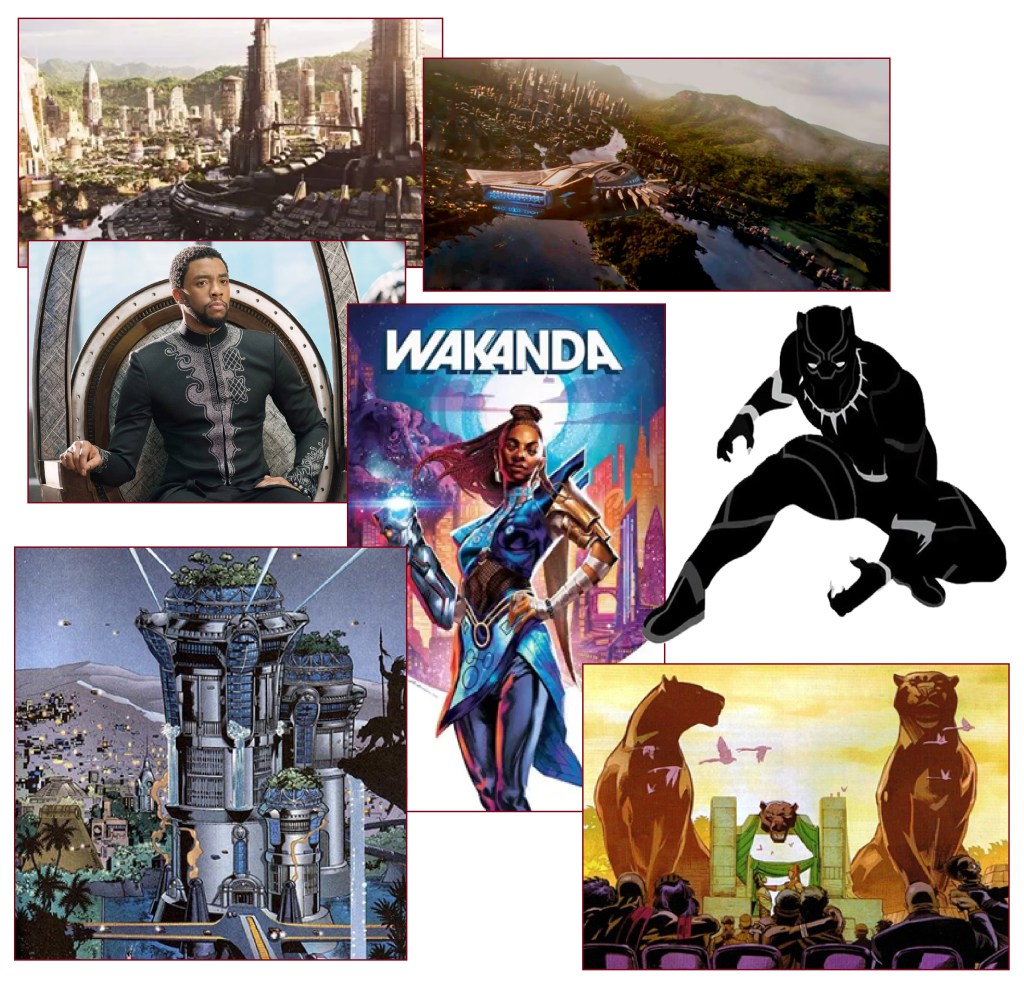
Wakanda first appeared in Fantastic Four #52 (1966), introduced alongside the debut of the Black Panther. Conceived by Stan Lee and Jack Kirby, it was a bold counter-narrative – a technologically advanced African nation untouched by colonialism, hidden from the world and fiercely self-sufficient. Wakanda wasn’t just a setting. It was a statement. A place where science and tradition coexisted, where vibranium powered innovation, and where monarchy didn’t mean stagnation. From the start, Wakanda was mythic.
In the comics, Wakanda has been central to some of Marvel’s most politically charged and emotionally resonant stories. T’Challa’s reign has been tested by invasion, betrayal, and revolution. Writers like Ta-Nehisi Coates expanded the lore, introducing the Intergalactic Empire of Wakanda – a sprawling saga that reframed the nation as both symbol and superpower. Wakanda has clashed with Atlantis, hosted the Avengers, and endured civil unrest. But through it all, it remained a place of legacy, identity, and resilience.
On screen, Wakanda exploded into global consciousness with Black Panther (2018). Ryan Coogler’s film didn’t just adapt the comics – it elevated them. Wakanda became a cultural touchstone, blending Afrofuturism with emotional depth. Chadwick Boseman’s T’Challa was regal, determined, and deeply human. The Dora Milaje, Shuri, and Killmonger added layers to the ensemble, turning a superhero film into a generational event. Wakanda Forever (2022) deepened the mythos, exploring grief, succession, and the cost of isolation.
Beyond the films, Wakanda has appeared in many animated pieces and countless video games. It’s a playable location, a battleground, a sanctuary. And with projects like Eyes of Wakanda, its legacy continues to grow. Wakanda isn’t just a backdrop – it’s a character. A living, breathing nation with history, trauma, and hope.
Wakanda endures because it’s more than vibranium and royal intrigue. It’s about possibility. About what the world could be if power was tempered by wisdom, and tradition embraced progress. In the Marvel Universe, it’s the hidden kingdom. In ours, it’s a mirror – and a challenge.




 X-Cess Minutiae
Leave a comment