


Marvel’s animated universe in the ’90s was more than episodic – it was connective tissue. Characters didn’t just cameo – they migrated. Nightmare in Green, along with Iron Man‘s Hulk Buster, served as unofficial pilots for The Incredible Hulk animated series, laying groundwork in voice, design, and tone. The story begins here, setting the emotional cadence that would carry into his solo run. The crossover wasn’t just clever – it was strategic. Marvel was building something bigger.
This episode doesn’t just drop the Hulk into the Fantastic Four’s orbit – it tests the ensemble. Ben Grimm, already raw from his own monstrous identity, finds himself face-to-face with a creature who embodies everything he fears becoming. Doom manipulates the Hulk, turning raw emotion into weaponized chaos. And while the battle is brutal, the real tension lies in the mirror – two monsters, both misunderstood, both aching for peace.
The crossover works because it’s earned. Hulk isn’t a guest – he’s a catalyst. His presence fractures the team, exposes Doom’s cruelty, and forces Ben to confront his own limits. And when the dust settles, it’s not just the city that’s changed – it’s the characters. The seeds of the Hulk’s solo series are planted in grief, rage, and quiet empathy.
Marvel’s animated continuity was never just about spectacle. It was about resonance. And in Nightmare in Green, the monster gets his moment – and the universe gets a little bigger.
Ben Grimm is feeling the weight of being the Thing. Reed’s obsession with breaking the Negative Barrier around Attilan has side-lined any progress on a cure, and Alicia’s quiet reassurance only deepens his frustration. But their park bench moment is shattered when the Hulk crashes into Central Park, demanding silence. The two titans clash, unaware that Doctor Doom is watching – and plotting.
Doom sees potential in the Hulk’s raw power and manipulates him through gamma exposure and emotional sabotage. He convinces Hulk that Rick Jones has abandoned him for the Fantastic Four, twisting friendship into betrayal. Hulk lashes out, attacking Johnny and Ben, while Reed lies feverish from chemical exposure. Doom’s plan escalates as he captures Bruce Banner and unleashes the Hulk on New York.
Sue intervenes, using her powers to turn Ben invisible and shift the tide. But the battle spirals – Hulk is wounded, Sue is knocked unconscious, and Reed is nearly killed by Doom. It’s Rick Jones who breaks the spell, reminding Hulk of who he is and who truly cares for him. Hulk turns on Doom, destroying his ship and ending the threat.
In the aftermath, Ben collapses. His heart stops. The team mourns – until a final jolt revives him. Reed recovers, cured by the very gamma rays Doom used against them. Alicia reflects on the Hulk’s pain, recognizing a kindred spirit in his loneliness. Ben agrees. And as the eventful day closes, her sculpture of the Hulk stands as a quiet tribute to the monster who just wanted a friend.
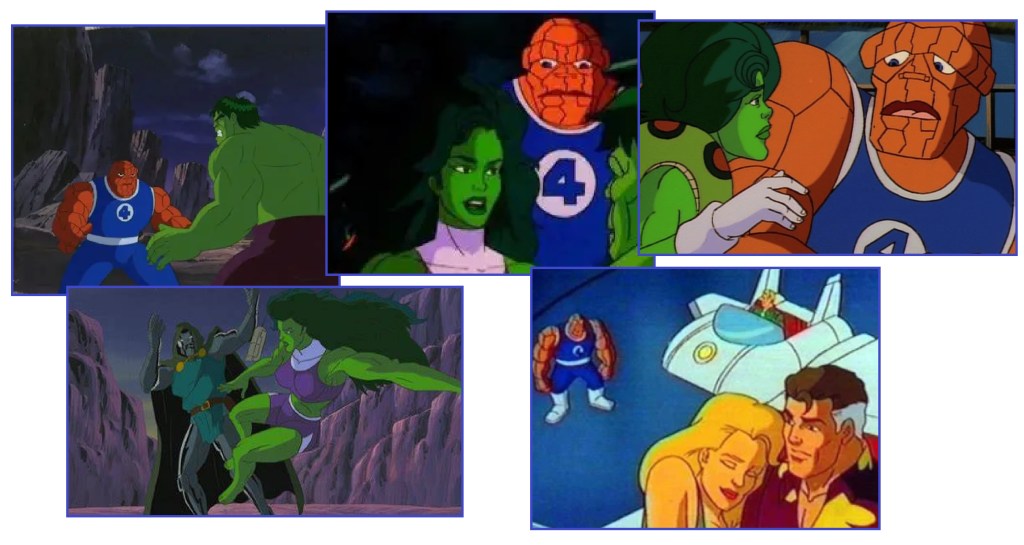
The Thing and the Hulk will have a rematch in The Incredible Hulk episode Fantastic Fortitude, which sees the cast of this series reprise their roles. Bruce Banner and Rick Jones also resemble their eventual designs for the subsequent series.
Simon Templeman’s Doom will also crossover into that series twice. Doctor Doom’s hands are seen to be recovering from Ben crushing them in And A Blind Man Shall Leave Them.
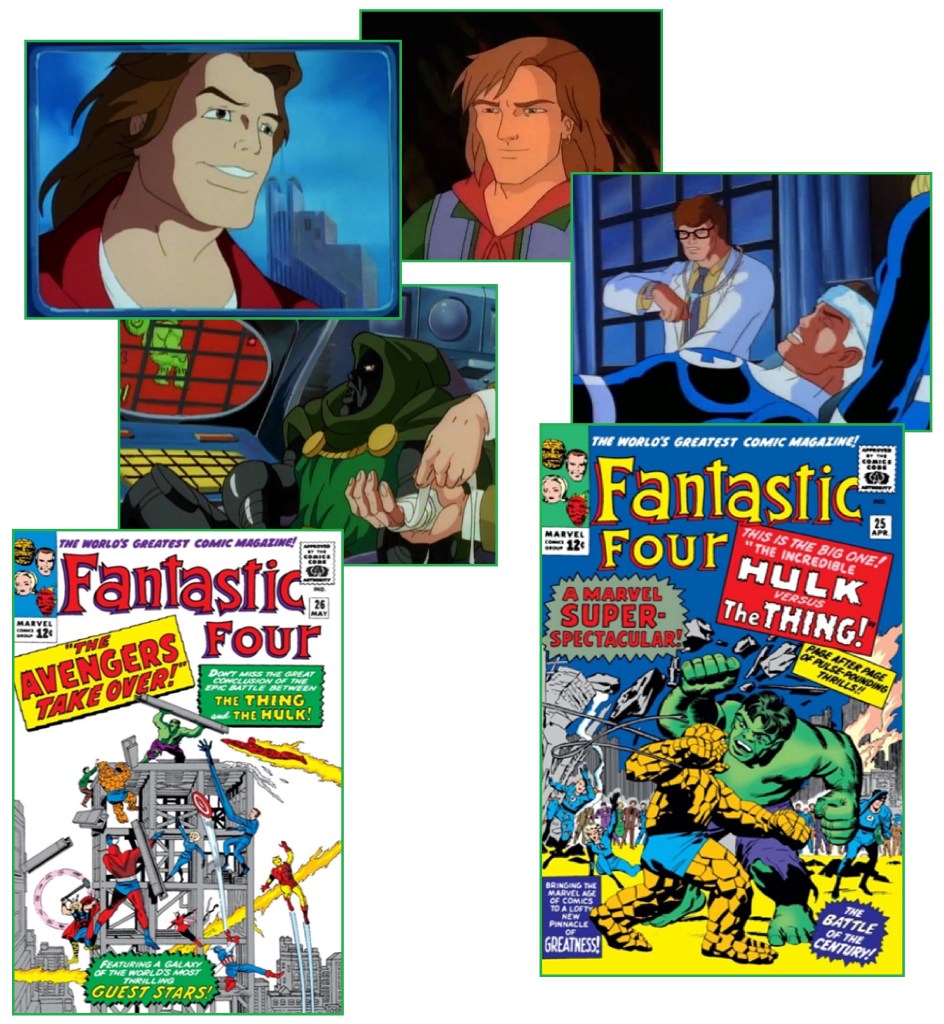
Reed’s sudden illness is taken straight from Fantastic Four #25-26, which was also the first Marvel team-up and saw the Fantastic Four meet the Avengers for the first time!
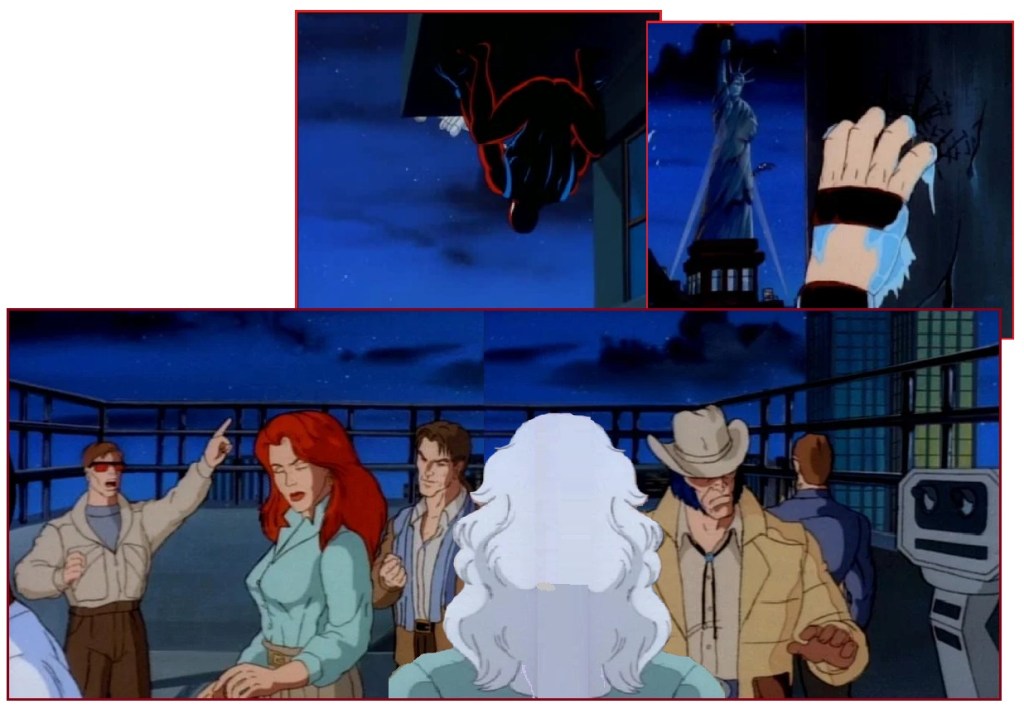
There’s a cameo from Spider-Man clone Ben Reilly, aka the Scarlet Spider. He also makes an appearance in I Really, Really Hate Clones and Spider-Wars in Spider-Man‘s fifth season.
The unstoppable Juggernaut, perirenal X-Men villain, can be seen emerging from the Hudson River. There’s also a shot of the X-Men themselves! In civilian clothing, the same designs from their own series, they can be seen looking for their foe. We can glimpse Cyclops, Jean Grey, Gambit, Wolverine and Storm.
MEAN VS GREEN: HULK VS THE THING
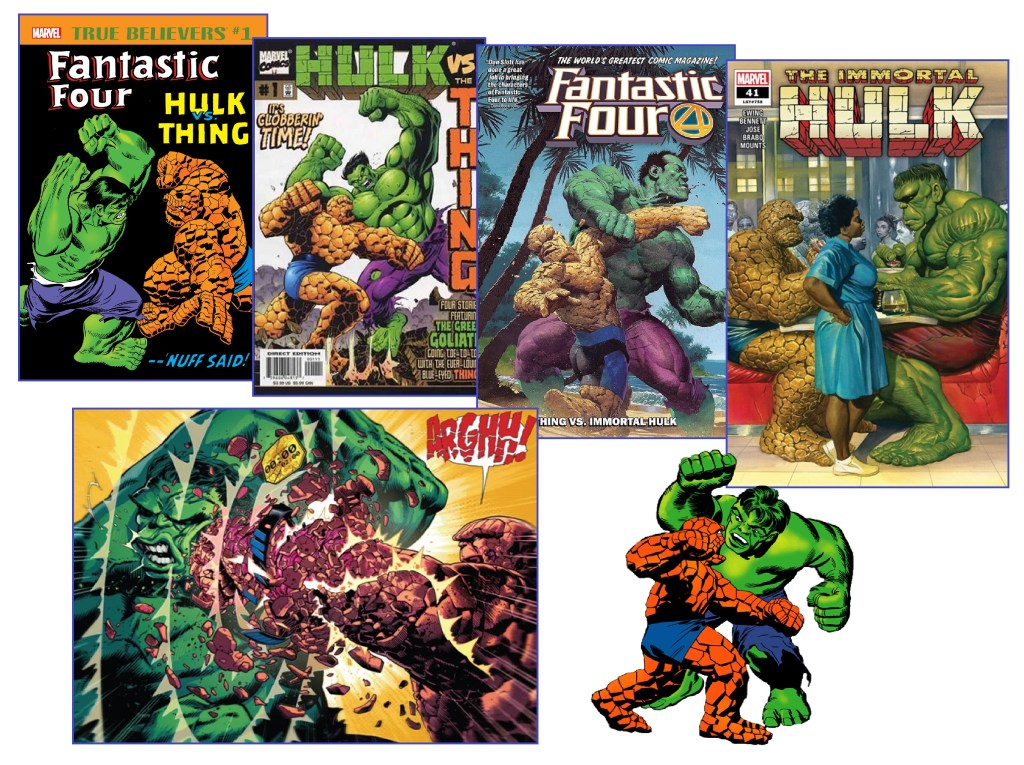
Few rivalries in Marvel Comics carry the mythic weight of Hulk vs. Thing. It began in Fantastic Four #12 (1963), and by Fantastic Four #25–26, the template was set: two titans, both tragic, both monstrous, locked in a battle neither can truly win. Hulk is rage incarnate, the strongest one there is. Thing is heart and grit, the monster who wants to be loved. Their fights aren’t just physical – they’re philosophical. Hulk wants to be left alone. Thing wants to belong. And that difference keeps them clashing.
Over the decades, they’ve fought in streets, deserts, alien worlds, and alternate timelines. Sometimes it’s a misunderstanding. Sometimes it’s manipulation. Sometimes it’s just pride. In Fantastic Four #112 (1971), their battle is so brutal it ends in a vibranium trap and a coma. In Fantastic Four #320, a supercharged Ben Grimm takes on the Grey Hulk (Joe Fixit) and actually wins – one of the rare moments where Thing walks away with the W. But more often than not, it’s a draw. Or a lesson.
Writers have used their rivalry to explore identity and isolation. Ben is part of a team. Hulk is always on the run. When they fight, it’s not just fists – it’s frustration. In Hulk/Thing: Hard Knocks (2004), they trade blows and memories, revealing that their pain runs deeper than any punch. There’s even a moment where Hulk lets Ben fight his grief out after Johnny is presumed dead – a silent act of empathy between monsters.
Their clashes have spilled into animation, video games, and even Secret Empire, where Hulk returns from death and Ben stands alone against him. It’s never just spectacle. It’s legacy. Each fight adds another layer to their mythos – another scar, another moment of understanding. They’re not enemies. They’re reflections. And sometimes, they’re the only ones who understand what it means to be feared by the world they protect.
Hulk vs. Thing isn’t about who’s stronger. It’s about who endures. And in the Marvel Universe, that’s the real fight. Not for victory – but for meaning.




 X-Cess Minutiae
Leave a comment