


This episode is, without a doubt, the emotional crucible of the series. A superhero space opera wrapped around a family tragedy. There’s death – Franklin Storm’s body weaponized, detonated in front of his children. There’s violence – a scuffle, a gunshot, a lifetime of guilt. And there’s grief, abandonment, betrayal. Every unresolved family argument plays out across galaxies. But beneath the cosmic scale, this episode is about loss. Not just of a father, but of a chance. A chance to heal, to reconnect, to rewrite the past. And when that’s stolen, what’s left is pain – and the question of what to do with it.
Morrat is the embodiment of war without growth. He sees power as conquest, not responsibility. And it kills him. Dorrekk, by contrast, evolves. The same emperor who attacked Earth twice in Season One now calls the Fantastic Four allies. That shift matters. It’s not just diplomacy – it’s judgment. It’s the difference between empire and empathy. Between repeating history and rewriting it.
The episode doesn’t flinch from its emotional weight. Reed is paralyzed by fear. Sue is nearly lost. Johnny finds his father only to lose him again. And when the dust settles, revenge beckons. But the show doesn’t indulge it. Morrat dies, yes – but not by the Four’s hand. And Johnny’s final line cuts through the grief: “Revenge only keeps the hurt alive.” It’s not just a lesson. It’s a reckoning.
This isn’t just one of the best episodes of the series – it’s one of the most human. A story about what we carry, what we lose, and what we choose to become in the aftermath. The powers return. The battle is won. But the wound remains. And that’s what makes it matter.
A military base somewhere in the desert is under attack by a Skrull war robot – courtesy of Warlord Morrat. The Fantastic Four swoop in and disable the bot using Mr. Fantastic’s latest invention: a weapon that generates cosmic energy. Morrat is furious. He had hoped to present the Four to Emperor Dorrekk to earn his blessing to marry Princess Annelle.
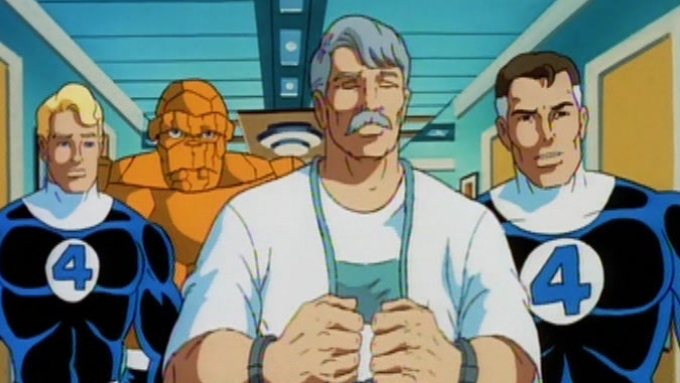
But as he flees, the team faces a more immediate crisis – Sue Richards has been injured in the battle. Rushing her to a nearby hospital, they learn that a piece of shrapnel has embedded in her skull. No doctor is willing to risk experimental surgery. Reed is beside himself, unable to function through the worry. The media latches on. The world watches as news of the Invisible Woman’s condition spreads. In Manhattan, a man sees the broadcast and races to the hospital.
The doctors tell Reed there’s nothing more they can do – except for one surgeon who might have saved her, if he hadn’t vanished decades ago. That man enters the hospital and announces himself: Dr. Franklin Storm – Johnny and Sue’s long-lost father. After successfully completing the surgery, Franklin is embraced by a grateful family, but immediately arrested. He’s wanted for murder. At Sue’s welcome-home party, she reveals the truth: their father, blaming himself for their mother’s death, gambled away his fortune and fell in with dangerous men. A scuffle led to a gunshot and a body. Rather than face Johnny, Franklin chose to disappear.
In Skrull space, Morrat sends another surge of cosmic energy toward Earth, this time releasing the Super Skrull from his volcanic prison on Crater Island. He infiltrates Franklin Storm’s prison cell, abducts him, and takes his place. When Johnny and Sue visit their “father” the next day, they’re stunned – he displays immense power and escapes custody. Calling himself the Invincible Man, he rampages through New York as the Fantastic Four struggle to stop him without causing harm. Realising the powers mirror their own, Reed activates his energy jammer, cutting off Morrat’s beam and depowering the Super Skrull. He contacts Morrat and demands Franklin’s immediate return. But when their father appears on the street before them, Sue and Johnny rush forward – only for the booby-trapped Dr. Storm to explode.
Using the beam’s energy, the Four are transported to the Skrull homeworld, stripped of their powers and surrounded by enemy forces. Reed offers Morrat a “weapon” from the Fantasticar – a cosmic ray generator. The team protests, but Reed insists they trust him. Morrat activates the device, unknowingly restoring their powers. The Fantastic Four break free and battle Morrat’s forces, just as Dorrek arrives and uncovers the coup. Morrat is branded a traitor and killed in the ensuing melee.
With Morrat gone, Reed notes that the Skrull responsible for Franklin Storm’s death has paid the price. But revenge is hollow. As they leave the Skrull homeworld, Johnny struggles with the loss – so soon after finding his father again. As he quietly observes, “Revenge only keeps the hurt alive.”
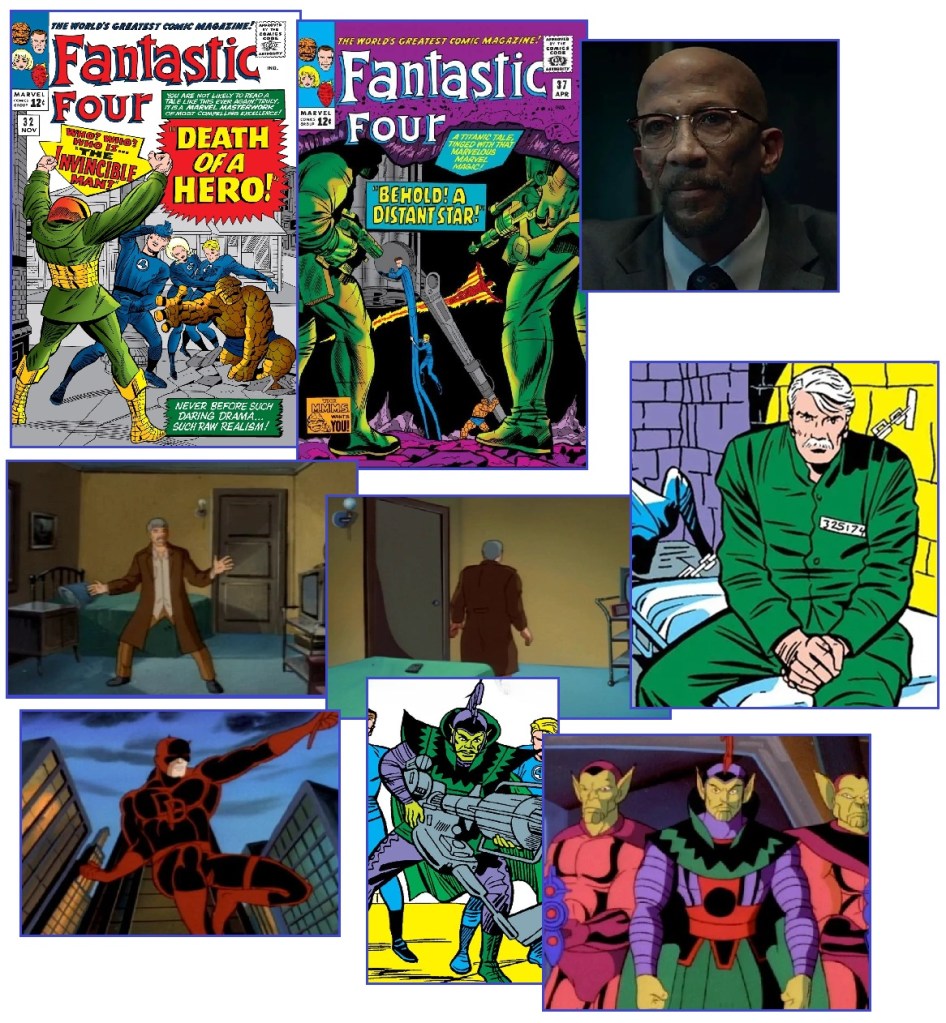
This episode merges the plot lines of Fantastic Four #32 and #37, which shared the title of this episode.
When we first see Franklin watching the news, he may look familiar. He was the same man watching Terrax blow the top off Four Freedoms Plaza in When Calls Galactus. He was played by Reg E. Cathey in 2015’s Fantastic 4.
Johnny mentions the FF’s attorney, Matt Murdock, can help defend his father. Murdock appears in this episode as Daredevil.
The voice cast impresses constantly on this show: Mary Key Bergman, who played Annelle, was the voice of numerous iconic female characters on television. Her roles include Batgirl, Daphne Blake from Scooby-Doo, and Gwen Stacy in Spider-Man, among many others, as well as contributing to a host of Disney movies. She was also the first voice of Sheila Broflovski in South Park and it’s musical movie, one of this author’s favourite works of television.
And it doesn’t end there! Neil Ross is back, this time as the Super-Skrull. Dan Gilvezan, aka Morrat, was Bumblebee in the original Transformers and Peter Parker in Spider-Man and his Amazing Friends.
MARVEL’S FIRST FAMILY: BLOODLINES, BONDS AND BURDENS
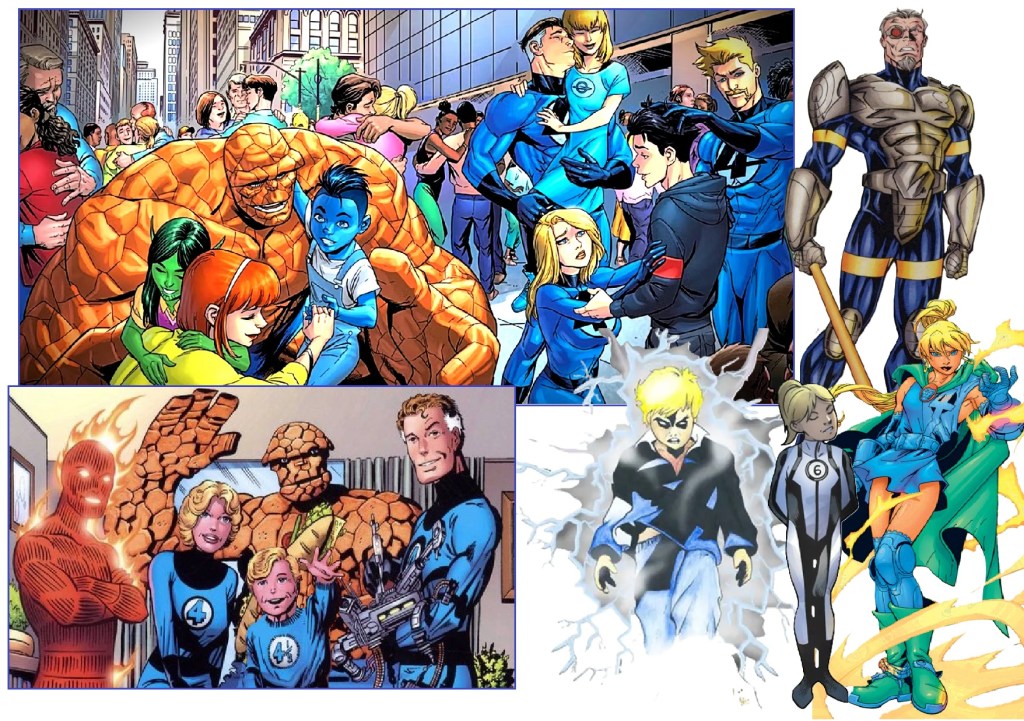
The Fantastic Four aren’t just a team – they’re a family. Reed Richards, Sue Storm, Johnny Storm, and Ben Grimm form the emotional core of Marvel’s mythos, but their roots run deeper. Sue and Johnny are siblings, raised by Dr. Franklin Storm, a gifted surgeon whose tragic past – losing his wife in a car accident and later being imprisoned for manslaughter – cast a long shadow over their lives. Reed’s father, Nathaniel Richards, is a time-traveling genius whose legacy spans centuries and alternate realities. His influence shaped Reed’s intellect, but also left him emotionally distant, always chasing the next equation.
Ben Grimm’s upbringing was forged in hardship. Raised on Yancy Street, Ben lost his older brother Daniel in a gang-related tragedy, and his parents soon after. His Aunt Petunia stepped in, becoming a quiet anchor in his life – a name Ben still invokes with reverence. The Grimm lineage is one of resilience, forged in loss and loyalty. Ben’s bond with Reed began at college, and their friendship became the bedrock of the team’s emotional stability.
The next generation of the Fantastic Four carries cosmic weight. Reed and Sue’s son, Franklin Richards, is a teenager with reality-warping powers. His middle name – Benjamin – is a tribute to the Thing, his godfather. Franklin has aged himself, created pocket universes, and saved the team from extinction more than once. His younger sister, Valeria Richards, was born under extraordinary circumstances – conceived in one reality, raised in another, and delivered with mystical aid from Doctor Doom, who named her. Valeria quickly surpassed Reed in intellect and became a key figure in the Future Foundation.
Ben and Alicia Masters later adopted two alien children – Jo-Venn, a Kree boy, and N’Kalla, a Skrull girl – adding intergalactic nuance to the family dynamic. Together, the extended Fantastic Four live at the Fantastic Farmhouse in Arizona, balancing cosmic crises with school runs and quiet dinners. Their family isn’t defined by blood – it’s defined by choice, sacrifice, and the belief that even in a universe full of gods and monsters, love and loyalty still matter.





 X-Cess Minutiae
Leave a comment