


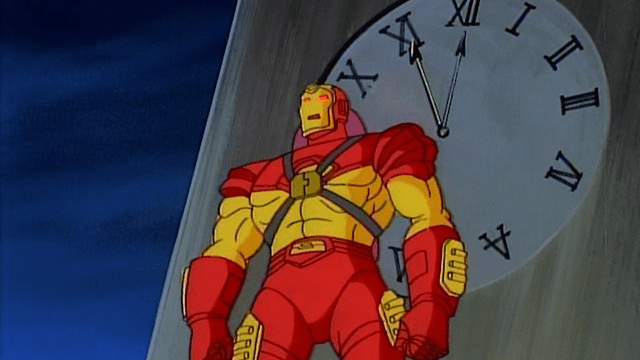
If Part 1 sets the trap, Part 2 springs it with style. This is where the duplicate Iron Man goes from threat to spectacle, and the ensemble finally gets to breathe. The pacing sharpens. The call-backs land. And the villains – bless them – get the best lines. MODOK takes a verbal hit with “Did you get your head caught in a revolving door?” and it’s not just funny – it’s earned. The episode knows when to lean into absurdity without losing tension.
What makes this two-parter work is space. With double the length, the story flows. Force Works isn’t just reactive – they’re proactive, strategic, and emotionally present. Spider-Woman and Scarlet Witch investigate. Hawkeye intercepts the pipeline. War Machine holds the line. Even the villains feel sharper, more layered. Hammer’s smugness, Mandarin’s menace, MODOK’s malfunction – it all clicks.
There’s a rhythm to the call-backs. The Hall of Armour. The satellite. The shoulder flaw. It’s not just continuity – it’s payoff. The episode rewards attention, threading earlier beats into the climax without feeling forced. And when Iron Man finally confronts his double, it’s not just a fight – it’s a reckoning. Identity versus imitation. Precision versus mimicry. The man versus the machine.
And then it ends – not with a twist, but with a team. The imposter falls. The villains retreat. And Force Works stands tall, each member having earned their moment. It’s rare for an ensemble to land this cleanly, but here, it works. Because when the story gives them room, they shine. And when the villains get the punchlines, you know the writers are having fun.
The world reels from the imposter’s televised threat, and War Machine suspects the worst: that Iron Man has been compromised. Force Works mobilises, determined to locate their missing leader before the situation escalates further. In the Peruvian farming village, the villains regroup – joined by the duplicate Iron Man, Justin Hammer, and Living Laser. The crops, already infected with Dark Water Fever, are scorched by Laser’s energy blasts, accelerating the spread.
Back at the Hall of Armour, Spider-Woman and Scarlet Witch search for clues, narrowing down which suit Stark had taken before vanishing. Their investigation leads them underwater, where they find Iron Man mining for minerals – isolated, unaware of the chaos unfolding above. The reunion is short-lived. Living Laser attacks, but is swiftly defeated. Stark learns of the duplicate and the threat it poses, and Force Works prepares for confrontation.
Mandarin, unmoved by the ransom deadline, intends to release the contagion regardless. The villains tighten their grip. Hawkeye intercepts the pipeline moments before it can unleash the virus, buying precious time. Meanwhile, Iron Man confronts his mechanical double in a brutal aerial clash – armour against armour, precision against mimicry.
With Force Works backing him, Iron Man dismantles the duplicate, exploiting its mirrored flaw. The villains retreat, their plan undone. The team regroups, shaken but intact. The threat is neutralised – for now. But the message is clear: the war for technology is far from over, and the cost of imitation can be catastrophic.
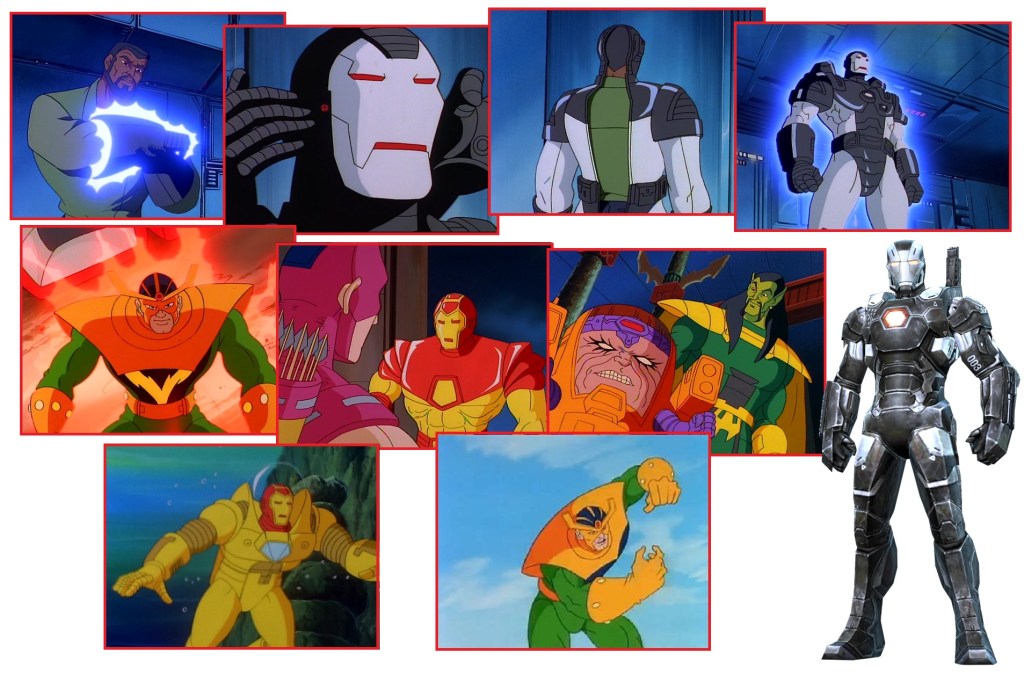
War Machine gets his own transformation in this episode. Dorian Harewood has now come aboard to voice War Machine.
Armour Watch: Tony’s undersea armour makes another appearance.
The Living Laser makes his debut in this episode, the last of Iron Man’s rogues gallery to join the Mandarin’s forces.
Hawkeye and ’Iron Man’ briefly battle in this episode – Clint will have a bigger problem with Tony in season two. A clip from The Defection of Hawkeye is also shown. Hawkeye also takes on Hypnotia again, after she beat him in that episode.
The Mandarin steals the best lines again: he asks MODOK the following question: “And you would teach me the meaning of comic relief?”
But MODOK gives as good as he gets: when the battle is not going their way, he yells “Ace in the hole, my clavicle!” and then when he gets a steely look from his boss, he calls himself “Bad! Bad MODOK!” in response.
THE COST OF LIGHT: THE LIVING LASER
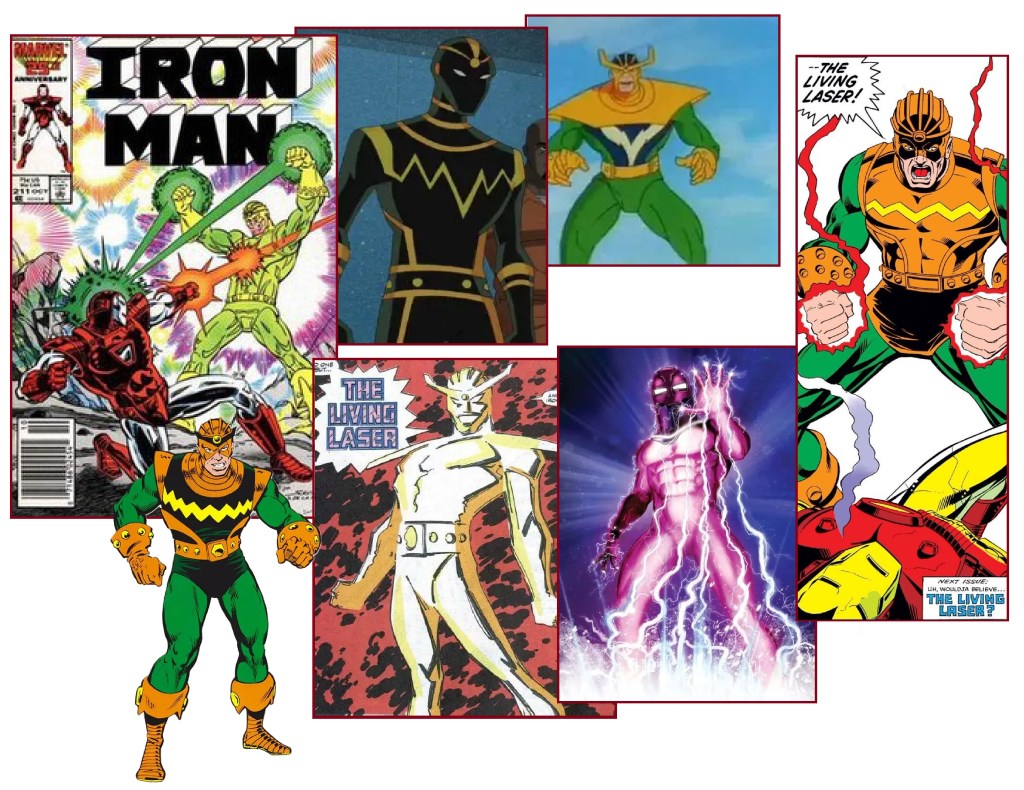
Arthur Parks wasn’t always light on his feet. Originally introduced in Avengers #34 (1966), the Living Laser started out as a disgruntled physicist with a chip on his shoulder and a penchant for weaponised optics. His early tech was clunky – laser wristbands, a bit of bravado – but the ambition was there. He wanted power, recognition, and a seat at the villain table. And like many of Iron Man’s rogues, he got in over his head fast.
Over time, Parks evolved – literally. He upgraded his gear, joined villain teams, and eventually became pure energy. That’s when things got interesting. No longer bound by flesh, he turned into a sentient beam of light, capable of phasing through walls, travelling at light speed, and firing blasts that could level buildings. But with that power came instability. His humanity flickered. His motives blurred. He wasn’t just a threat – he was a tragedy in motion.
He showed up in the 1994 Iron Man series, sporting a sleek design and a voice that leaned into the menace. Later versions in Armoured Adventures and Avengers Assemble retooled him with more visual flair, often leaning into his energy form and existential angst. He’s the kind of villain who works best when he’s not just glowing – but grieving.
Living Laser is part of the texture. Not the loudest, not the most iconic, but always flickering at the edge of something bigger. In a world built on transformation, he’s the one who reminds us that evolution isn’t always progress.
Iron Man to the Second Power (Part 1) | The Origin of Iron Man (Part 1)




 X-Cess Minutiae
Leave a comment