


This feels like the real beginning. Not just a continuation of Part 1, but a statement of intent. The pacing tightens, the ensemble sharpens, and suddenly everyone feels like they belong. Compared to the scattered chaos of And the Sea Shall Give Up Its Dead, this episode knows exactly what it’s doing. It’s suspenseful, character-driven, and surprisingly well-balanced. If this had aired first, the whole season might’ve landed differently.
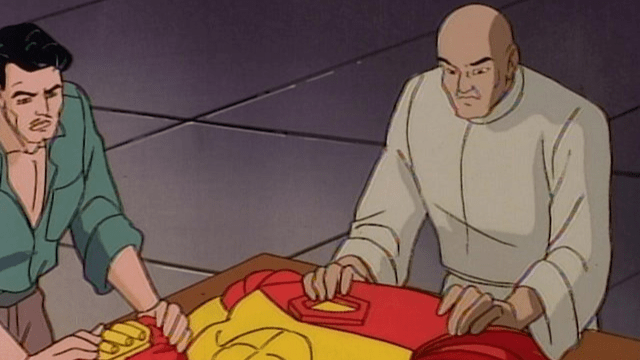
Tony’s flashbacks deepen – not just the trauma, but the transformation. The shrapnel, the captivity, the first suit – it’s all here, but framed with emotional clarity. Yinsen’s sacrifice lands. The escape feels earned. And in the present, the stakes rise. Force Works is active. The villains are coordinated. Fin Fang Foom makes his move. And the cave becomes a crucible, both literal and mythic.
What stands out is how well the characters are handled. War Machine’s loyalty. Spider-Woman’s resolve. Even the villains get texture. There’s no dead weight. Everyone gets a moment, and the rhythm never falters. It’s rare for a two-parter to maintain tension without losing focus, but this one pulls it off. The cave collapses. The ensemble converges. And the season, quietly, begins.
People knock this show for its rough edges, but when it leans into suspense and ensemble dynamics, it shines. This two-parter proves it. Not with flash, but with foundation. And for a series built on armour, it’s the emotional scaffolding that holds.
Trapped beneath the ice and cut off from the world above, Tony Stark continues to relive the moment everything changed. Imprisoned by Mandarin, forced to build a suit of conquest, he and Wellington Yinsen worked in secret – not to empower their captor, but to forge a way out. The escape came at a cost. Yinsen fell. Stark survived. And from that crucible, Iron Man was born.
In the present, the search intensifies. Force Works scours the region, while the villains close in from the opposite flank. Mandarin strikes a deal with Fin Fang Foom: if the beast finds and defeats Iron Man, he’ll be granted access to the mechanical dragons. It’s a dangerous bargain, and one that tips the balance. Deep in the cave, Tony – now fully armoured – encounters the villains just as the cavern begins to collapse. Force Works arrives in time, and the battle erupts.
Mandarin, sensing the tide turning, gives Fin Fang Foom the signal. The dragons are unleashed, and the battlefield shifts again. Force Works holds the line, but the assault is relentless. Ice fractures. Energy blasts ricochet. The cave becomes a warzone.
But power unchecked is power unstable. The dragons’ attack rebounds, destabilising their systems and forcing a retreat. The villains scatter. The cave settles. And Iron Man, once again, walks out of the wreckage – not just repaired, but reaffirmed.
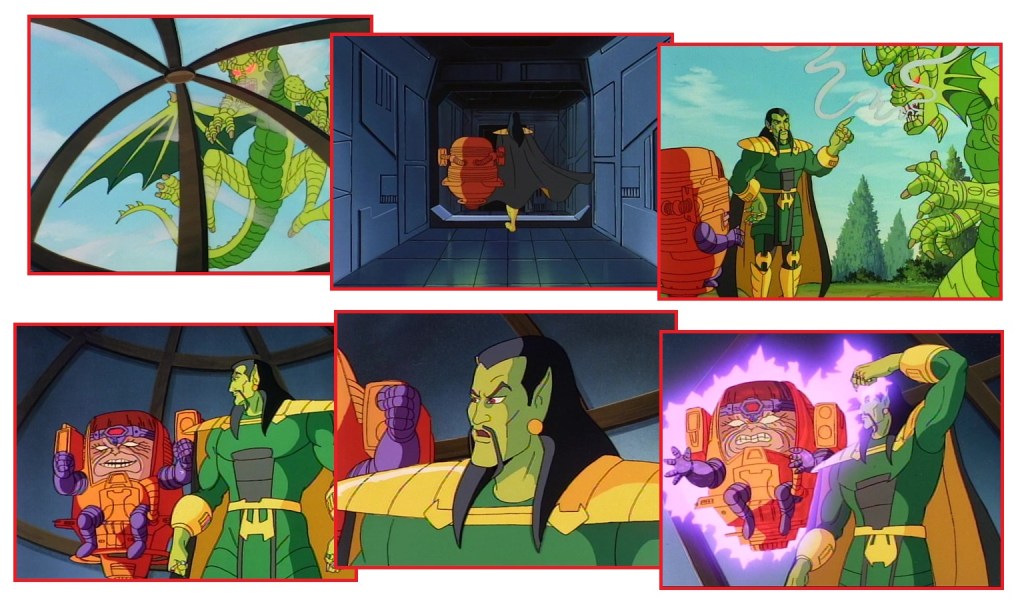
Mandarin hilariously opts to meet Fin Fang Foom in the castle’s gardens – claiming that it took him months to get the dragon’s stench out of the tapestries the last time he visited!
MODOK uses the Daleks’ famous catchphrase: “Exterminate them!” He also argues with the Mandarin when he insists his plan works (“Yes, yes, yes.” “No, no, no!”) – only for the Mandarin to reverse it at his lackey when they start to lose the battle!
THE GREY GARGOYLE: STONE COLD
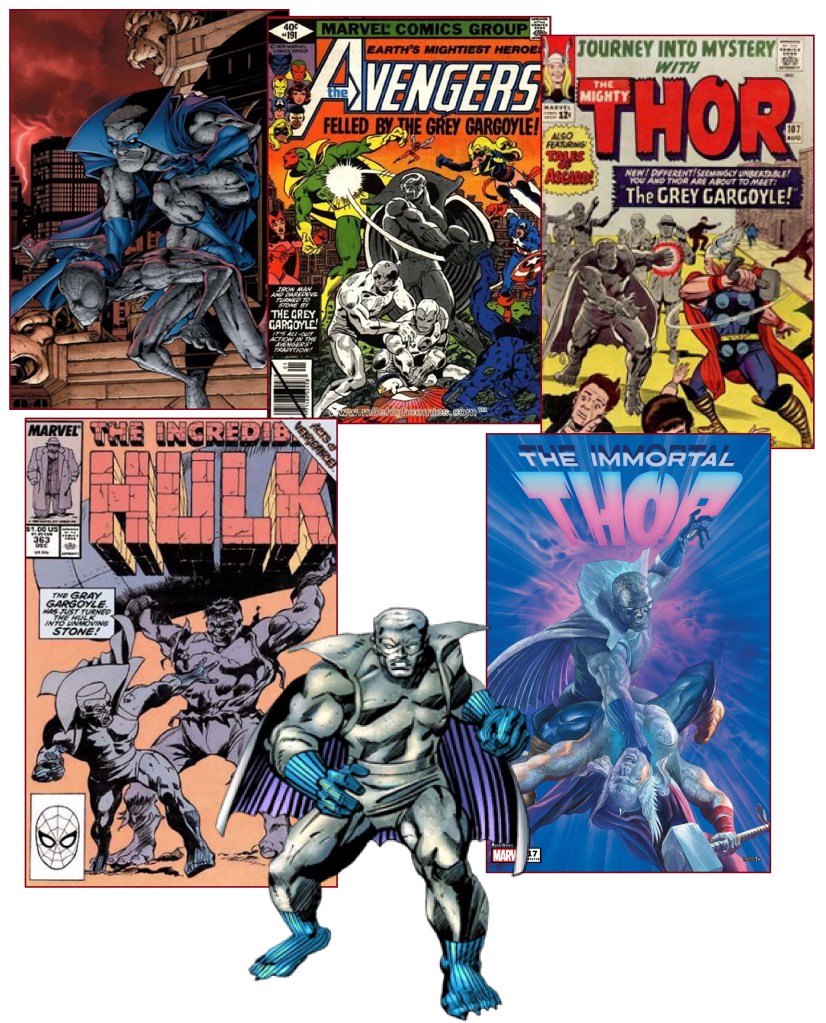
Some villains punch. Others plot. Grey Gargoyle petrifies. First appearing in Journey into Mystery #107, Paul Pierre Duval was a French chemist who accidentally spilled a compound on his hand and gained the ability to turn anything he touched into stone – including himself. With a single touch, he could immobilise heroes, statuesque and helpless. Naturally, he chose crime. And naturally, he chose flair. The cape, the boots, the monologues – Duval never did subtle.
He’s clashed with Thor, Iron Man, and the Avengers, often punching above his weight thanks to that petrification trick. His motivations vary – sometimes he’s chasing immortality, sometimes he’s just bored – but the core remains: he’s a man who turned himself into granite and never quite figured out how to live with it. His best stories lean into that tragedy. He’s not evil so much as stuck. Literally and emotionally.
The animated takes often downplay the existential dread, but the power set remains visually striking. He’s the kind of villain who works best in motion – statues crumbling, heroes frozen mid-pose, tension ticking like a countdown.
The MCU hasn’t touched him yet, but he’s ripe for it. A villain who can turn the strongest Avenger into stone with a handshake? That’s cinematic gold. And if they lean into the loneliness – the idea of a man who can’t touch anything without destroying it – well… There’s pathos waiting to be mined.




 X-Cess Minutiae
Leave a comment