


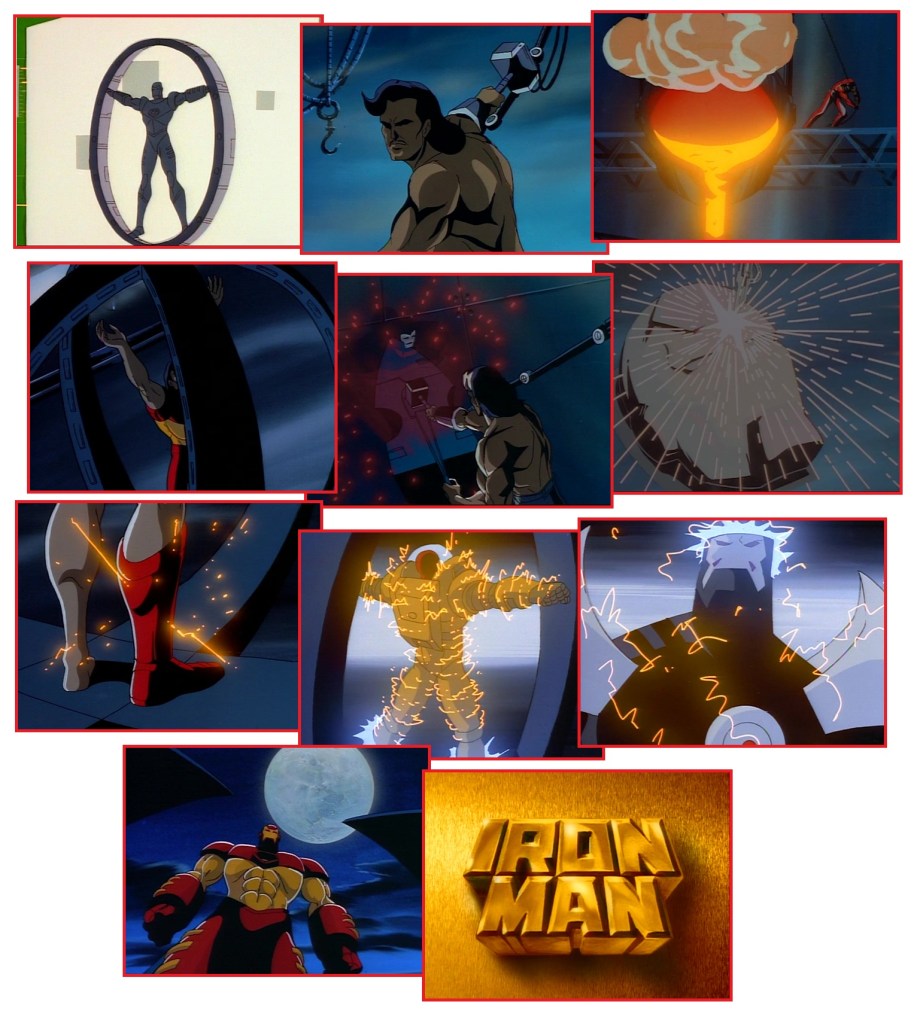
This isn’t just a season premiere – it’s a full metamorphosis. From the first riff of William Kevin Anderson’s new theme, the show declares itself reborn. The electric guitar hits hard, the lyrics punch through (“I Am Iron Man!”), and the tone shifts from ensemble chaos to streamlined myth. It’s no coincidence that echoes of this theme resurface in Iron Man’s solo films – it’s bold, declarative, and unmistakably Stark.
The animation follows suit. Gone is the stiffness of Season 1. What replaces it is cleaner, more fluid, and less cluttered – sacrificing detail for dynamism. The voice cast changes too, just in time to write out Force Works and the recurring rogues Mandarin had summoned week after week. It’s a narrative sweep, clearing the board for something sharper. And it works. The episode trades corporate sabotage for cosmic stakes, and suddenly Iron Man feels like a hero again – not just a CEO in a suit.
The plot is mythic. Tony allies with Mandarin to stop Fin Fang Foom and his brothers, and both pay the price. Stark loses his team – their trust shattered by his faked death. Mandarin loses his rings, nearly his life, and begins a slow-burning saga that plays out in stingers across the season. It’s sacrifice on both sides, and it lands. The stakes are real. The fallout is earned.
Under new producer Tom Tataranowicz, the show finds its pulse. It’s faster, tighter, and more emotionally grounded. The Beast Within doesn’t just kick off a new season – it resets the tone, the stakes, and the soul of the series. Iron Man soars again. And this time, he’s not just flying – he’s leading.
It begins with fire. Tony Stark approaches his car and it explodes in front of him. The attack is surgical, personal, and Stark immediately suspects Justin Hammer. Donning the armour, he confronts Hammer head-on, but the villain is ready. Missiles fly. Iron Man evades, but not for long. Captured and restrained, Hammer attempts to extract the front torso plate under Mandarin’s orders. The procedure fails – Tony escapes – but the intent is clear: they want the armour, and they want it for something far bigger.
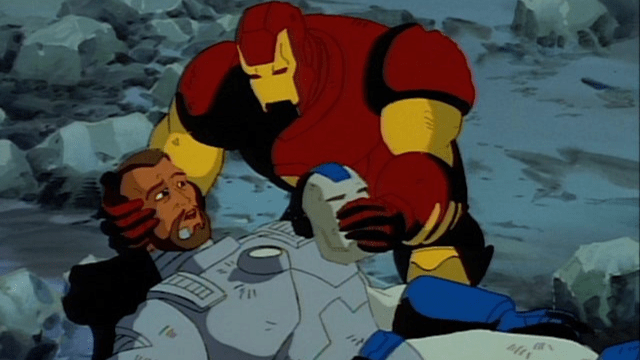
Seeking answers, Stark turns to Nick Fury. Fury presents a photograph – four men in China, one casting a shadow that doesn’t belong to any human. Stark recognises the silhouette: Fin Fang Foom. Stark’s virtual assistant, HOMER, cross-references the image and finds a match from a century ago. Something ancient is stirring. Stark flies to China, but Hypnotia and Blizzard intercept him mid-flight. They plant an explosive on his jet. It detonates. War Machine arrives at the wreckage and finds only the helmet. The assumption is swift and brutal: Iron Man is dead.
In China, Fin Fang Foom returns – not alone, but with his kin. The Kakarantharaians, disguised as humans, are freed by Mandarin in exchange for their allegiance. At Stark Enterprises, Force Works mourns. War Machine confronts Hammer, who confirms the armour was needed for something in China. The pieces begin to align, but the threat is already in motion.
The Kakarantharaians open a portal to their homeworld, Kakaranthara, preparing to conquer Earth. Force Works intervenes but is overwhelmed. Then, in the moment of collapse, Iron Man returns. Alive. Armoured. Ready. He joins forces with Mandarin – an uneasy alliance forged in necessity – and together they repel the invasion. The portal is sealed. The threat is contained. The Mandarin’s rings are thrown into the heavens, landing who knows where, and his threat is seemingly ended for good.
But the cost is personal. Back at Stark Enterprises, Tony reveals he faked his death to protect the team. The revelation fractures the ensemble. Hawkeye, Scarlet Witch, and Century walk away, disillusioned. War Machine and Spider-Woman remain, loyal but shaken. The battle is won, but the family is broken. And Iron Man, once again, stands alone – armoured, burdened, and still rebuilding.
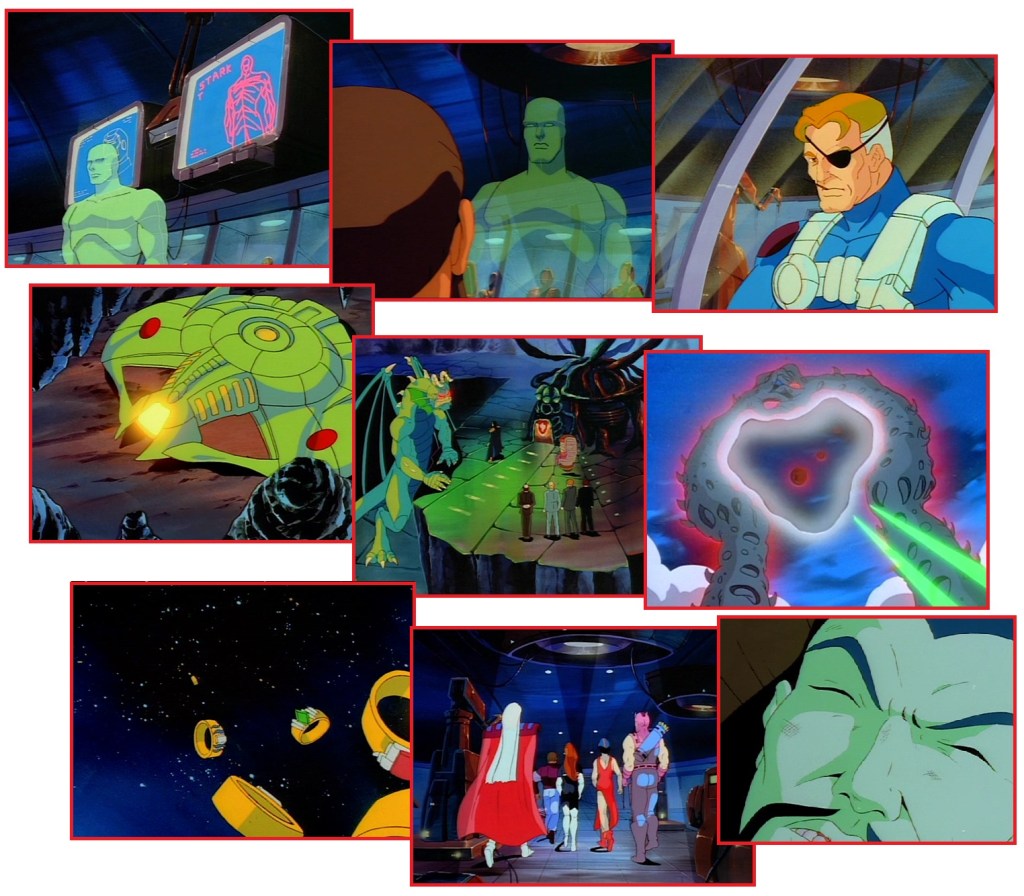
HOMER, Tony’s new AI holographic assistant, makes his first appearance in this episode. He will also feature in The Incredible Hulk. He’s something akin to JARVIS or FRIDAY in the Marvel Cinematic Universe.
The theft of Tony’s tech in this episode is setting up The Armour Wars storyline.
Actress Jennifer Hale now voices Julia Carpenter. For Marvel fans, she’s the Black Cat, aka Felicia Hardy in Spider-Man and Jean Grey in X-Men 97 and Wolverine and the X-Men. She’s a voice acting legend having had roles in everything from Superman, Batman Beyond and Star Wars.
The space ship in the cavern is the same one as the flashbacks seen in The Origin of the Mandarin, confirming the story to be true.
Nick Fury has appeared in multiple Marvel animations, and this continuity is no different. He turns up here, X-Men and Spider-Man, while agents in The Incredible Hulk wear the same uniform and report back to Fury. His voice actor, Phillip Abbott, voices him in all his appearances.
This episode essentially writes out the entire supporting cast: only Iron Man, War Machine and Spider-Woman remain, and the villains are scattered. The Mandarin’s rings, and his quest to find them, will feature in more episodes this season in stingers at the episodes end. Fin Fang Foom also makes his last appearance on the series.
SEASON SHIFT
Season 1 of Iron Man: The Animated Series was loud, busy, and ensemble-heavy. It leaned hard into the Force Works setup, throwing Tony into a team dynamic with War Machine, Spider-Woman, Scarlet Witch, Hawkeye, and Century. The Mandarin was the main villain, flanked by a rotating crew of rogues, and the tone was pure Saturday morning chaos – bright colours, big explosions, and a plot structure that rarely slowed down long enough to breathe. It had charm, but not much depth.
Then came Season 2, and everything changed. The show got a full overhaul – new animation style, sharper writing, and a tighter focus on Tony himself. The ensemble was pared down, the villains got more layered, and suddenly the series had emotional stakes. Tony’s arc deepened, touching on guilt, legacy, and the cost of heroism. War Machine got more screen time, and even the Mandarin was retooled with a bit more menace and mystique. It wasn’t perfect, but it felt like the show had finally found its rhythm.
The shift wasn’t just tonal – it was structural. Season 1 episodes often felt like standalone skirmishes, while Season 2 leaned into continuity, character development, and longer-form storytelling. The suits got sleeker. The stakes got heavier. And the pacing slowed just enough to let the emotional beats land. It was still a kids’ show, but it started asking bigger questions – about power, responsibility, and what it means to lead.
Fans noticed. Critics noticed. And while the series didn’t get a third season, the second left a stronger impression. It’s the version that gets referenced most often, the one that feels closer to the comics, and the one that laid groundwork for how Iron Man would be handled in future adaptations. Plus it has one Heck of a hook…
“I am Iron Man!”




 X-Cess Minutiae
Leave a comment