


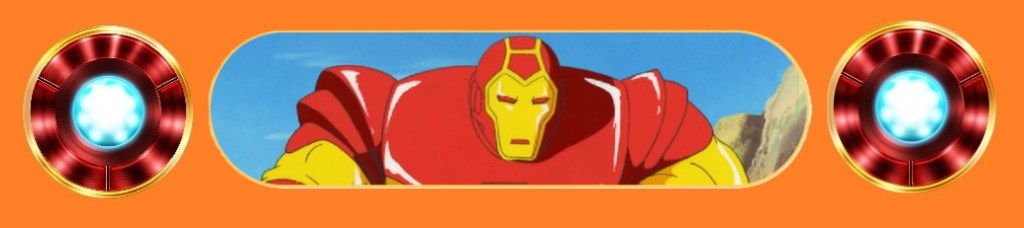
This one cuts deep. The return of Walter Stark isn’t a reunion – it’s a rupture. Legacy doesn’t arrive with warmth. It arrives with doubt, with surveillance footage, with SHIELD’s quiet duplicity. Tony doesn’t believe it at first. And when he does, he doesn’t embrace. He resumes. The dynamic picks up exactly where it left off – fractured, selfish, unaligned. There’s no catharsis. Just the echo of old wounds.
The clone complicates everything. He’s not just a plot twist – he’s a mirror. Built from Tony’s stolen knowledge, weaponised by AIM, and still out there. The confrontation doesn’t bring closure. It brings another loss. Another escape. Another reminder that nothing stays fixed. For the fourth time in as many stories, Tony ends up losing someone. Not to death. Not to betrayal. But to the unresolved.
SHIELD doesn’t come out clean. Fury’s explanation is murky, and the timeline of Walter’s disappearance is riddled with gaps. Trust erodes. The ensemble fractures. And Stark, already reeling from Firebrand, Sunturion, and the fallout of his own crusade, is left with another ghost. Another question. Another scar.
Not Far From the Tree isn’t about reunion. It’s about recognition. That legacy isn’t just what you inherit – it’s what you’re forced to confront. And for Tony Stark, the past doesn’t return to be healed. It returns to remind him what he’s still missing.
Rhodes works alongside SHIELD to locate an AIM facility, but what they uncover is far more personal: a transmission from Walter Stark, long presumed dead. The revelation shakes Tony. He suits up and launches a rescue, retrieving his father from AIM’s grip. But back at Stark Enterprises, the reunion falters. Walter remembers little. When shown footage of Nick Fury and disguised SHIELD agents at his hospital, he reacts with fear. Something isn’t right.
HOMER confirms the suspicion – Walter had been replaced years ago by a SHIELD operative. Determined to uncover the truth, Tony confronts Fury. The explanation is murky: AIM had targeted Walter for a mind-reading experiment. SHIELD intervened, but Fury was told Walter died during the operation. The pieces don’t fit. The shadows deepen.
Then Rhodes calls. AIM has seized Stark Enterprises. Everyone escaped – except Walter. Iron Man and Fury join Rhodes and infiltrate the facility. They find Walter, but the truth unravels. He’s not the man Tony saved. He’s a clone, engineered with Tony’s stolen knowledge and used to empower the Crimson Dynamo. The confrontation is brutal. The clone falls. The deception ends. Retreating, the clone swears revenge.
Far from the emotional wreckage of Stark’s life, the Mandarin retrieves yet another of his rings…

Armour Watch: Iron Man uses two different adaptions in this episode; a Stealth armour mode and a Drill mode.
William Hootkins, the voice of Crimson Dynamo in this episode, was the first X-Wing fighter killed in the original attack on the Death Star in the first Star Wars movie. Howard Stark is voiced by Peter Reneday, known to a generation as Master Splinter in Teenage Mutant Ninja Turtles. Walter Stark is consistently referred to as such, but his initial ‘H’ is used, aligning the first season’s Walter Stark to Howard Walter Stark, as seen in the comics.
Multiple people have wielded the armour of the Crimson Dynamo, this version being based on Yuri Petrovich, who first appeared in The Champions #7.
NICK FURY – THE MAN BEHIND THE CURTAIN

Nick Fury doesn’t lead from the front. He leads from the shadows. Across decades of Marvel continuity, Fury has been the architect of control, the broker of secrets, and the man who knows too much. Whether he’s commanding SHIELD, manipulating global crises, or quietly pulling strings behind the Avengers, Fury operates on a different frequency – one where trust is currency and truth is always provisional.
Created by Stan Lee and Jack Kirby in Sgt. Fury and His Howling Commandos #1 (1963), Fury began as a WWII action hero before being reimagined as the eye-patched spymaster of the Marvel Universe. His transformation in Strange Tales #135 (1965) marked the birth of SHIELD – a high-tech intelligence agency that would become Marvel’s answer to espionage fiction. From there, Fury became the connective tissue between street-level heroes and cosmic threats, always one step ahead, always withholding just enough.
Fury’s legacy is built on duplicity. He’s the one who replaces Walter Stark with a SHIELD operative, who greenlights morally grey operations, and who often knows more than he’s willing to share. In Iron Man, he’s a recurring presence – sometimes ally, sometimes obstacle. He hands Stark the wreckage of Crimson Dynamo’s armour, warns him to stand down during Armour Wars, and ultimately watches as Stark fires his own alter ego. Fury doesn’t intervene. He observes. He calculates.
In other media, Fury’s presence is seismic. Samuel L. Jackson’s portrayal in the MCU redefined the character for a generation – cool, commanding, and quietly ruthless. From Iron Man to Secret Invasion, Fury remains the man with the plan, even when the plan fractures. His animated incarnations – from Earth’s Mightiest Heroes to Avengers Assemble – lean into the same rhythm: the strategist who sees the whole board, even when the pieces rebel.
Nick Fury isn’t a hero. He’s a necessity. He doesn’t fight for glory. He fights for stability. And in a universe built on masks and myth, he’s the one who reminds us that control always comes at a cost.




 X-Cess Minutiae
Leave a comment