


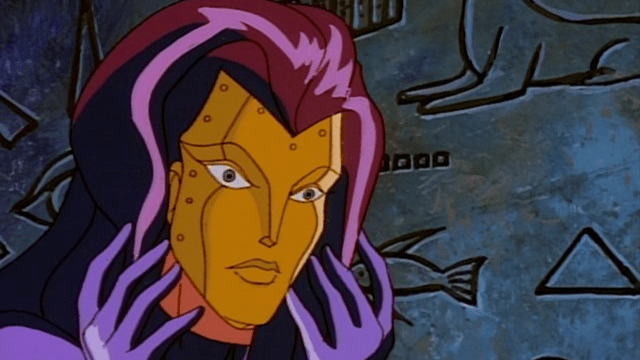

There’s a great deal to share on vanity in this episode – not the surface kind, but the kind that corrodes from within. Whitney Frost wants her face back. Tony Stark wants to be the one who fixes everything. And Rhodes wants to believe he’s past the point of playing hero. Each of them is chasing an image – of themselves, of their worth, of what they think they’ve lost. And none of them see the damage until it’s already done.
Masque’s obsession is framed as tragedy, but it’s also selfish. Her pain is real, but her pursuit of the Eye of Isis turns personal grief into global threat. Tony, meanwhile, doesn’t just feel guilty – he feels responsible. For her scars. For her descent. For the fallout. But his insistence on solving the problem alone pushes Julia away, and he doesn’t even notice. The ensemble fractures under the weight of individual pride.
Rhodes, side-lined and self-aware, questions whether the armour still fits. Whether the role still matters. It’s a quiet subplot, but it echoes through the season. And when Masque transforms into Isis – a goddess of beauty unbound – the fairy tale curdles. The wish is granted, but the cost is catastrophic. Power without empathy. Restoration without restraint.
Beauty Knows No Pain doesn’t just critique vanity – it understands it. The need to be seen. The fear of being forgotten. The danger of chasing perfection. It’s a warped myth, but one that anyone who’s ever looked in the mirror can feel.
At a refinery deep in Egypt, Julia Carpenter inspects Stark-supplied tunnel borers when the earth turns against them. The tunnel collapses. Julia saves who she can but is trapped beneath the rubble. Iron Man and War Machine arrive, searching for survivors and their missing ally. But the descent is interrupted – Iron Man is ambushed by Madame Masque and Maggia operatives, drawn not by sabotage, but by obsession.
Masque reveals her prize: the Eye of Isis, a jewel said to restore what’s been broken. She wants it for herself – to erase the scars that define her. Julia becomes leverage. Iron Man is forced into the depths, navigating ancient traps and unstable terrain to retrieve the gem. The tunnel collapses again, but Stark breaks through. He returns with the Eye, and Masque’s face is healed in an instant. But the cost of restoration is transformation.
The Eye doesn’t just heal – it awakens. Masque becomes Isis, a goddess reborn, and ascends to the surface in a storm of power. War Machine and Spider-Woman arrive, the ensemble reformed, but their combined strength falters. Isis is too fast, too strong, too divine. She tries to seduce Iron Man, offering power and absolution. Stark uses the moment to strike, destroying the Eye and severing the transformation. Masque returns to her scarred form, defeated and diminished.
Far from the chaos, arriving in a destroyed market place, the Mandarin secures another of his rings from a dead merchant.
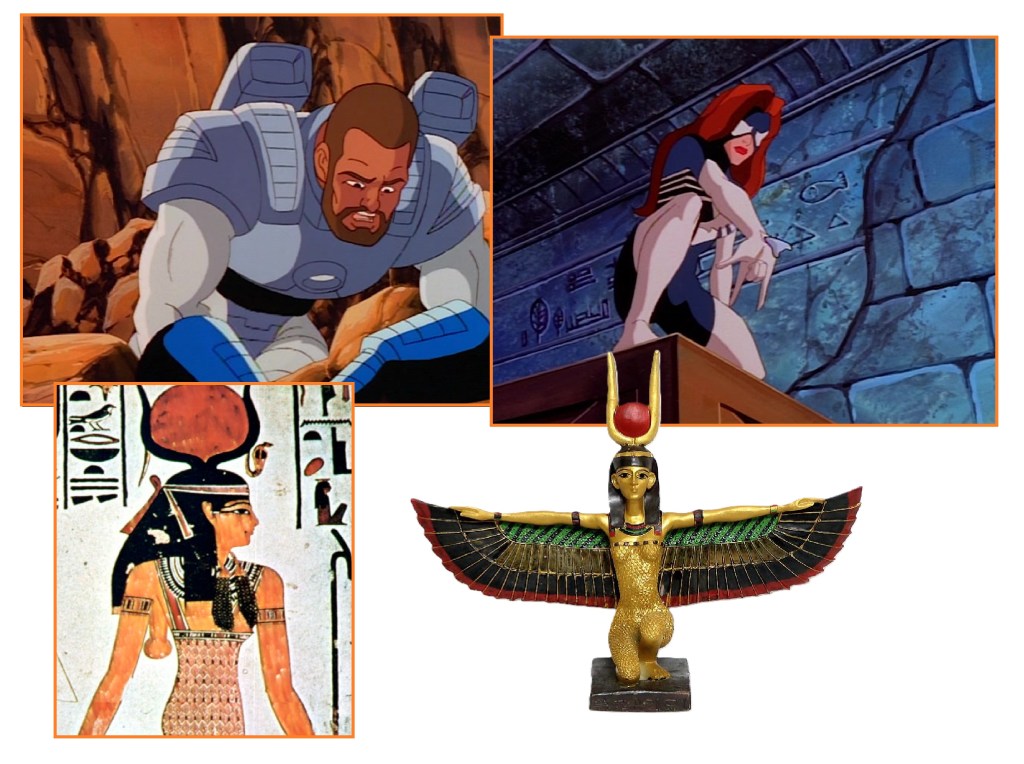
In the opening scenes during the cave-in, Julia wears a web-shooter and even makes the Spidey hand gesture as she swings. In the comics, they’re psychic webs, so no need for a web shooter – and the device itself only appears on her bare arm for a moment before vanishing completely!
James Rhodes refuses to get into the War Machine armour – which he refused to wear again after Fire and Rain.
The goddess Isis is from ancient Egyptian texts, known for her role in the myth of Osiris, where she resurrected her husband and became the divine mother of Horus. She’s often associated with motherhood, magic and fertility.
MADAME MASQUE: THE COUNT’S DAUGHTER
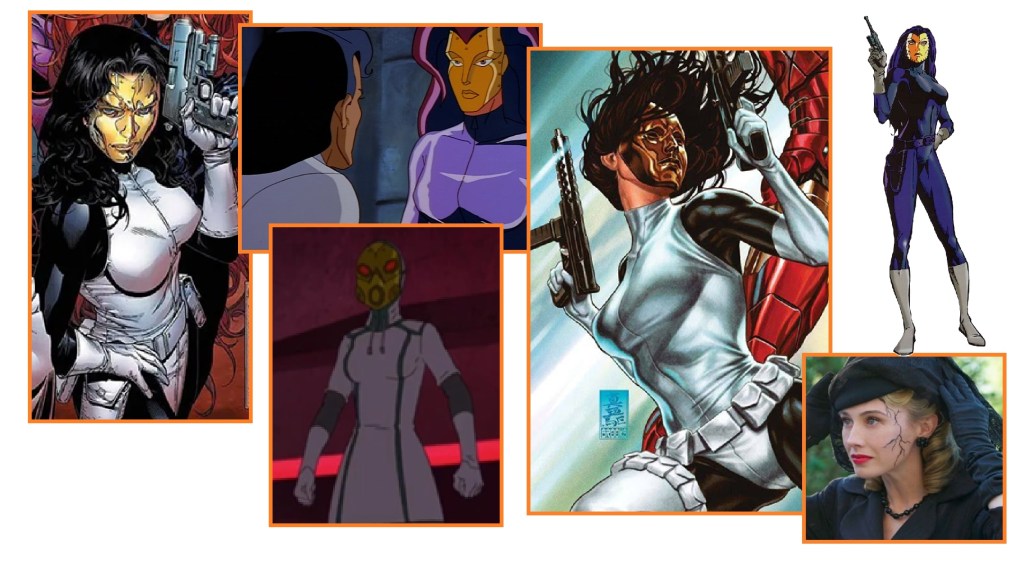
Madame Masque isn’t just a villain. She’s a wound. Born Giulietta Nefaria, later Whitney Frost, her story is one of masks, mirrors, and the slow erosion of self. In the comics, she’s the daughter of Count Nefaria, raised in secrecy, trained in science, and scarred – literally and emotionally – by betrayal. Her golden mask isn’t just a disguise. It’s a boundary. Between who she was, who she became, and who she’ll never be again.
Introduced in Tales of Suspense #98 (1968), Masque quickly became one of Iron Man’s most complex adversaries. She’s not driven by conquest or chaos. She’s driven by identity – by the loss of it, the reconstruction of it, and the rage that comes when even love can’t restore it. Her relationship with Tony Stark is mythic in its tragedy: two brilliant minds, drawn together by intellect and pain, torn apart by legacy and loyalty. She’s been a lover, a saboteur, a reluctant ally, and a ghost in Stark’s machine.
On screen, Iron Man: The Animated Series gives her a spotlight in Beauty Knows No Pain, voiced with icy precision and emotional depth. Her quest for the Eye of Isis isn’t just about power – it’s about restoration. She wants her face back. Her self back. And when the Eye transforms her into Isis, the goddess of rebirth, it’s not a triumph. It’s a warning. Power without healing only deepens the fracture. Her descent is operatic, her defeat earned. And when the mask returns, it’s not just a reset – it’s a reminder.
She’s been part of the Hood’s syndicate, tangled with Kate Bishop, and even led her own criminal empire. But beneath every plot is the same question: who is Whitney Frost when the mask comes off? Because Madame Masque isn’t just a character. She’s a motif. A mirror. A reminder that identity, once fractured, doesn’t always mend. And in a mythos built on masks, hers is the one that never lets go.




 X-Cess Minutiae
Leave a comment