


Tony Stark doesn’t spiral – he implodes. Quietly. Methodically. His stolen tech isn’t just a breach. It’s a betrayal. And his response isn’t strategic – it’s personal. He shuts down the ensemble. He shuts out Julia. He shuts off the part of himself that listens. What’s left is a man in armour, pushing through walls, refusing help, and chasing control like it’s the only thing keeping him upright.
There’s no mention of addiction, but the symptoms are there. Obsession. Isolation. The refusal to rest. The need to fix everything alone. It’s mental health rendered in circuitry – Saturday morning storytelling with emotional truth baked in. Robert Hays plays it brittle, Dorian Harewood adds quiet weight, but it’s Jennifer Hale who steals the scene. Julia’s heartbreak isn’t melodrama – it’s earned. Her speech to Tony is raw, precise, and devastating. She doesn’t beg. She breaks.
Rhodey watches from the margins, unsure whether to intervene or retreat. HOMER tries to help, but Tony’s not listening. The mission becomes a crusade. The crusade becomes a collapse. And the episode, brisk and relentless, never lets the tension drop. It’s not just about tech. It’s about trust. And Tony, for all his brilliance, can’t see the difference.
Armour Wars (Part 1) doesn’t just spotlight Stark – it isolates him. The ensemble fractures. The rhythm tightens. And the emotional stakes rise. This is the beginning of a reckoning, and the armour isn’t just protection. It’s prison.
Under SHIELD directive, Iron Man intercepts a nuclear launch in Russia, targeting Crimson Dynamo and Soviet forces. The strike misfires. Stark’s missile hits the warhead itself, triggering a nuclear detonation. The fallout is immediate. Across the globe, Iron Man is condemned. The world sees a hero turned hazard.
As the United Nations moves to censure him, Nick Fury delivers the remnants of Crimson Dynamo’s armour. Stark analyses the wreckage and finds his own designs embedded within. The theft is clear. The betrayal, personal. Enraged, Stark commissions HOMER to build Negator Packs – devices capable of disabling any suit derived from Stark tech.
Iron Man begins a campaign. Blacklash. Blizzard. Beetle. Controller. Stilt-Man. Each encounter ends with a shutdown. The Negator Packs work. But the cost is rising. Justin Hammer watches from the shadows, pleased. Ghost, his agent, sold Stark’s designs to the very enemies now being dismantled. Hammer wants condemnation. Stark delivers escalation.
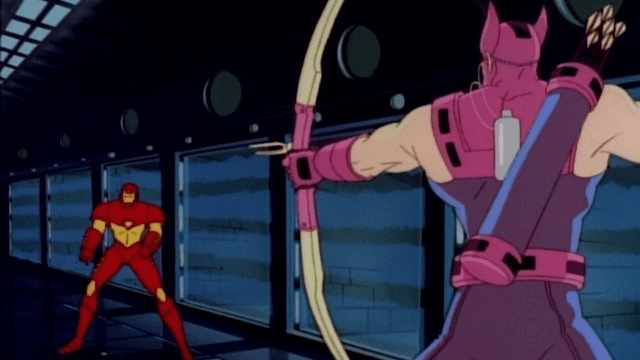
The crusade leads Iron Man to a super-villain prison. The Mandroids fall. Hawkeye intervenes. The clash is brief, but the fracture deepens. Fury warns Stark to stand down. Instead, Stark holds a press conference and announces that Iron Man is no longer affiliated with Stark Enterprises. The separation is symbolic. The damage, real.
As the world starts to turn against the armoured hero, elsewhere, the Mandarin acquires another ring. There are only three remaining…

Armour Watch: There’s a refrigeration mode used to stave off the nuclear explosion. the Radiation mode is also used.
Nick Fury and Tony Stark have an adversarial relationship in this series, much the same as their big-screen versions in Iron Man 2.
Blizzard and Blacklash are back in crime together, this time armoured up. They’re sent to the Vault in this episode, joining Grey Gargoyle and Whirlwind, who can briefly be seen.
The journalist bares more than an passing resemblance to regular reporter Sam Jaggers from season one.
This episode marks Ghost’s only appearance in the series. The character will turn up on the big-screen as Ava Starr, most notably in 2025’s Thunderbolts*.
In the comics, Iron Man takes on Captain America at the Vault. Due to movie rights at the time, Hawkeye is used instead.
The Disney+ version of this episode contains Stan Lee’s original introduction to the episode, broadcast as part of the Marvel Action Hour.
COMICS TO SCREEN: THE ARMOUR WARS
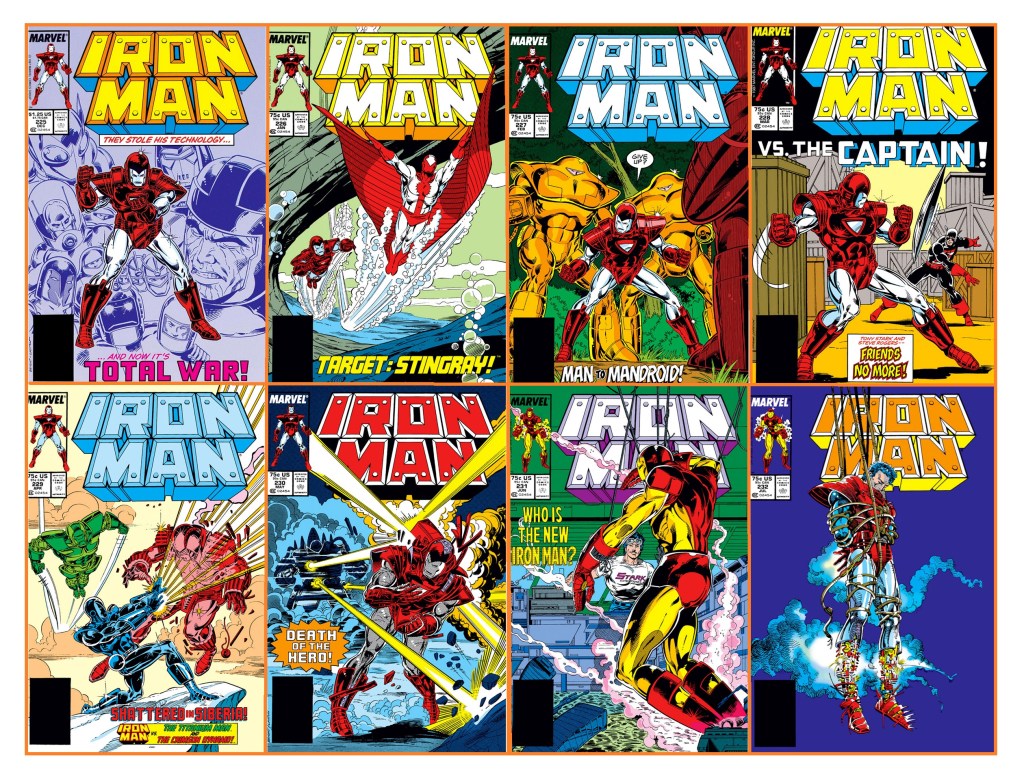
In the comics, Armour Wars is a crucible. Running through Iron Man #225–232, it’s Tony Stark at his most paranoid, most principled, and most destructive. When he discovers his tech has been stolen and weaponised, he doesn’t call the Avengers. He doesn’t go to court. He goes to war. Friend or foe, if they’re wearing stolen Stark tech, they’re a target. It’s a solo descent – righteous, brutal, and deeply isolating. Rhodey walks. Steve Rogers confronts him. And Tony, haunted by guilt and driven by control, burns every bridge to protect his legacy.
The 1994 animated version reframes the arc. Condensed into two episodes – The Armour Wars – it trades moral ambiguity for ensemble tension. Tony’s mission is still personal, but the fallout is shared. Julia Carpenter, Rhodey, and HOMER all play active roles. The Crimson Dynamo and Titanium Man are folded in as echoes of the Cold War, while Justin Hammer becomes the architect of escalation. The tone is brisk, the stakes are clear, and Tony’s descent is softened – not erased, but tempered by the rhythm of Saturday morning storytelling.
The biggest divergence is structural. In the comics, Tony fakes his own death to continue his crusade. In the animated series, he’s fired from Stark Enterprises and forced to operate independently, but the mask remains intact. The show leans into identity, not anonymity. And when Tony confronts Hammer, it’s not just about stolen tech – it’s about betrayal, legacy, and the cost of being the man behind the armour. The emotional beat lands differently, but it still lands.
What the animated version loses in nuance, it gains in clarity. The ensemble holds. The pacing hums. And the arc, though abbreviated, still resonates. Tony’s obsession with control, his fear of misuse, and his inability to trust even those closest to him – all remain intact. It’s a mythic echo, reshaped for a younger audience, but never diluted. The moral weight is still there. Just refracted.
Armour Wars in any form is a story about boundaries – between heroism and hubris, protection and paranoia, legacy and liability. The comic burns. The animated version simmers. But both remind us that when you build the future, you’re also responsible for what it becomes.




 X-Cess Minutiae
Leave a comment