


Tony Stark doesn’t just push people away – he lashes out. The guilt has curdled. The obsession has taken root. And when he attacks Rhodey, it’s not strategy. It’s collapse. The moment is brutal, unflinching, and deeply personal. Stark isn’t just losing control – he’s losing himself. He rants to empty rooms. He questions his own identity. Has he fired Iron Man to continue the mission? Or has he split – man and mask, crusader and casualty?
The episode doesn’t flinch. Soldiers toss his helmet like a toy, believing there’s a head inside. The words “IRON MAN IS DEAD” are declared by Stark himself, not as a tactic, but as a truth. It’s vicious. It’s high-octane. And it’s emotionally precise. The ensemble watches from the margins, powerless to intervene. Julia’s heartbreak lingers. Rhodey’s silence speaks volumes. And Tony, for all his brilliance, is burning through the last of his restraint.
Firepower arrives as the final threat – nuclear, armoured, and unapologetically lethal. But Tony doesn’t disarm him. He doesn’t outthink him. He smashes him. It’s not elegant. It’s not clean. It’s survival. And it’s the clearest sign yet that Stark’s mission has stopped being about protection. It’s become punishment.
Armour Wars (Part 2) isn’t a resolution – it’s a rupture that begins to mend. The tech is reclaimed, but the damage runs deeper. Stark’s crusade leaves scars, but the team reforms, not with fanfare, but with quiet resolve. Julia stays. Rhodey returns. Even HOMER recalibrates. The ensemble, fractured by obsession, begins to realign.
And while Stark rebuilds, Mandarin waits. No speeches. No spotlight. Just shadows and silence, gathering power piece by piece. The armour may be back in Stark’s hands – but the war is far from over.
The crusade continues. HOMER alerts War Machine and Julia Carpenter that Iron Man is targeting Stingray next, believing his suit to be built on stolen Stark tech. Rhodes intervenes, but Stark presses forward. The confrontation with Stingray reveals no theft – his suit is clean. But when Iron Man turns to War Machine, the truth stings. Rhodes’ armour is Stark-built. The fight is brutal. Stark wins. The fracture deepens.
Justin Hammer seizes the moment. He offers his facilities to the military, positioning himself as the solution to the Iron Man problem. His weapon: Firepower, a mechanised titan built to destroy Stark’s legacy. Iron Man confronts the machine and confirms the betrayal – Hammer orchestrated the theft, selling Stark’s designs to his enemies. The Negator Pack fails. Firepower launches a missile. The armour explodes. The world believes Iron Man is dead.
Julia mourns. Then the call comes. Stark, alive, reveals he was piloting remotely. The death was staged. The war, still raging. He begins work on a new suit – larger, stronger, more versatile. As Hammer sends Firepower to destroy Stark Enterprises, Iron Man returns. The battle is fierce. The stakes, existential. Firepower prepares to detonate a neutron bomb at the future site of Stark Towers. Stark stops him. The machine falls. Hammer’s campaign collapses.
In London, a cloaked man demands to see a ring, newly arrived in a pawn shop. He threatens the man’s life and takes the ring… the Mandarin is one step closer to the endgame…
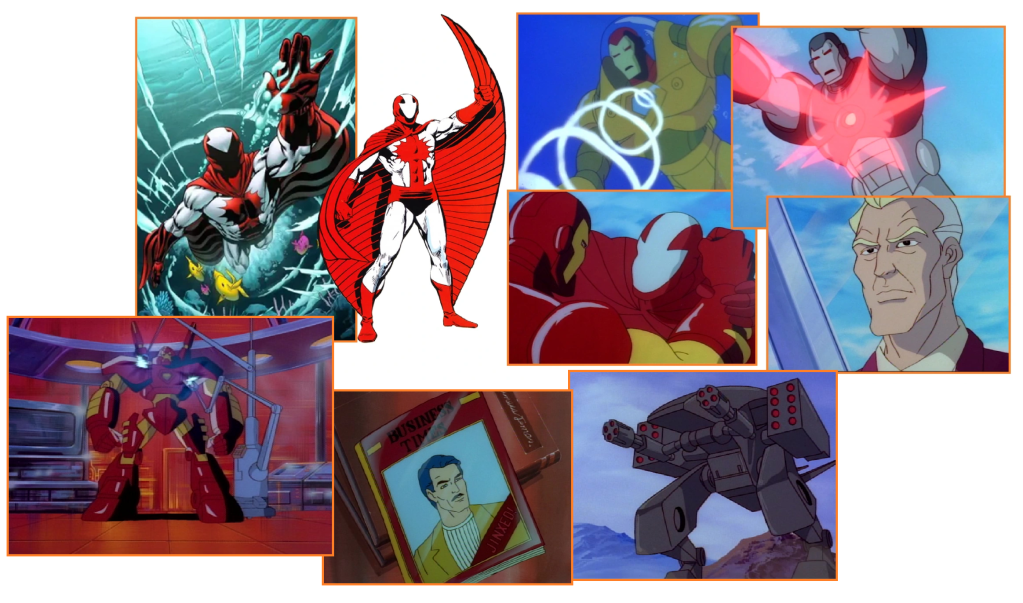
Stingray, aka Walter Newell, is a Marine Navy Officer who has used his hydro armour as a member of the Avengers, first appearing in Tales to Astonish #95.
Armour Watch: Hydro armour is used to battle both Stingray and War Machine. Tony also uses Stealth mode to evade Rhodey. There’s also the souped up Exo-Armour, that will he reconfigured by season’s end.
Justin Hammer is now being voiced by Efrem Zimbalist Jr, who also voiced Doctor Octopus on Spider-Man. He voices the Firepower robot as well.
Tony Stark’s season one look can be seen on the front of the Business Times.
Tony’s middle initial is said to be ‘B’ in this episode again, instead of ‘E’ for Edward.
THE VILLAINS OF
CRIMSON DYNAMO – THE RED SHADOW
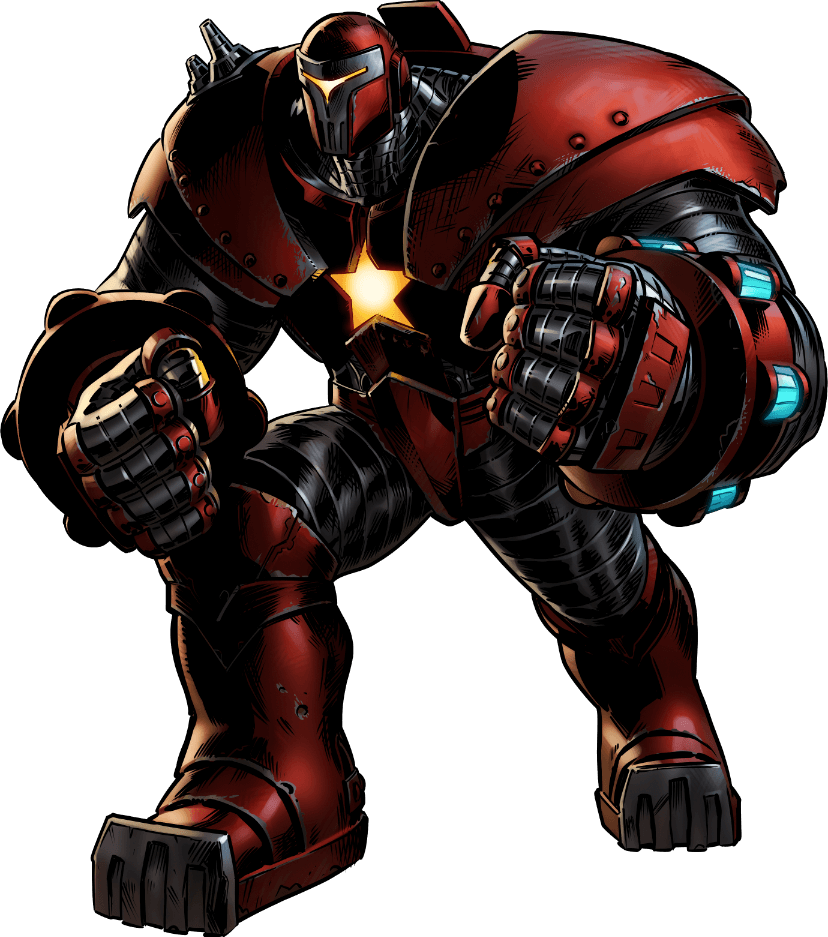
In the comics, Crimson Dynamo is a mantle, not a man. First worn by Anton Vanko in Tales of Suspense #46, the armour was the Soviet Union’s answer to Iron Man – bulky, powerful, and ideologically charged. Over the years, the identity passed through multiple hands: Boris Turgenov, Alex Nevsky, Dmitri Bukharin, and more. Each Dynamo brought a different temperament, but the core remained: state-sponsored power built to rival Stark’s autonomy. The suit glows red, the mission is nationalistic, and the rivalry is mythic.
In Armour Wars, the Dynamo barely gets a moment. He dies in a nuclear explosion at the start of Part One – an offscreen demise that’s both shocking and symbolic. The Cold War spectre is erased before the plot even ignites, and his death sets the tone: this isn’t a story about ideological conflict. It’s about stolen tech, personal guilt, and the cost of control. The Dynamo’s absence echoes louder than his presence, and the fallout lingers across the arc.
THE CONTROLLER: POWER THROUGH SUBMISSION
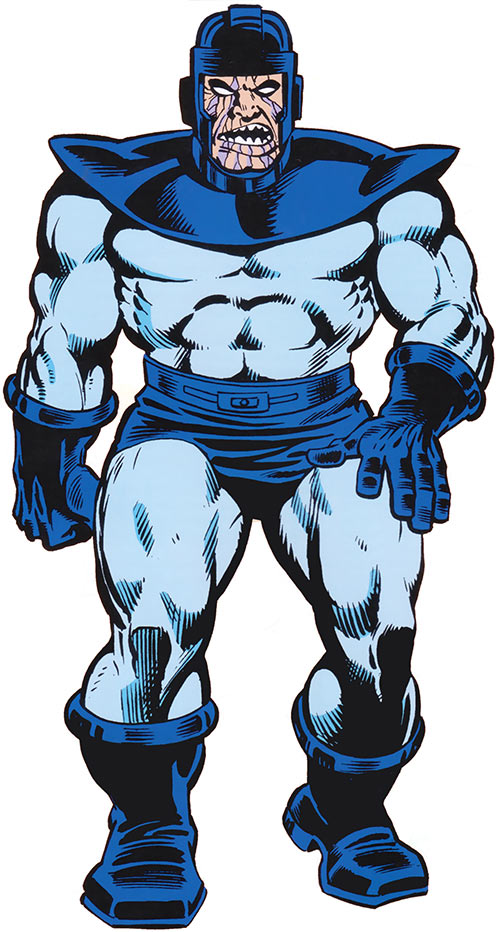
Created by Archie Goodwin and George Tuska in Iron Man #12 (1969), Basil Sandhurst was a brilliant scientist with a god complex. After a lab accident, he developed a system of slave discs – devices that allowed him to siphon strength and willpower from others. The Controller isn’t just a bruiser. He’s a metaphor for manipulation, for control disguised as protection. His clashes with Iron Man are psychological as much as physical, and his presence always signals a loss of autonomy.
In the animated Armour Wars, the Controller is one of the few villains who gets a proper showcase. His tech is clearly derived from Stark’s stolen designs, and his slave discs are rendered with eerie precision. He’s not just a threat – he’s a reflection of Tony’s worst fears: that his inventions could be used to strip others of agency. The fight is brief, but the thematic weight is heavy. The Controller doesn’t just steal power. He corrupts it.
THE BEETLE – A SPIDER-MAN ROGUE IN STARK’S CROSSHAIRS
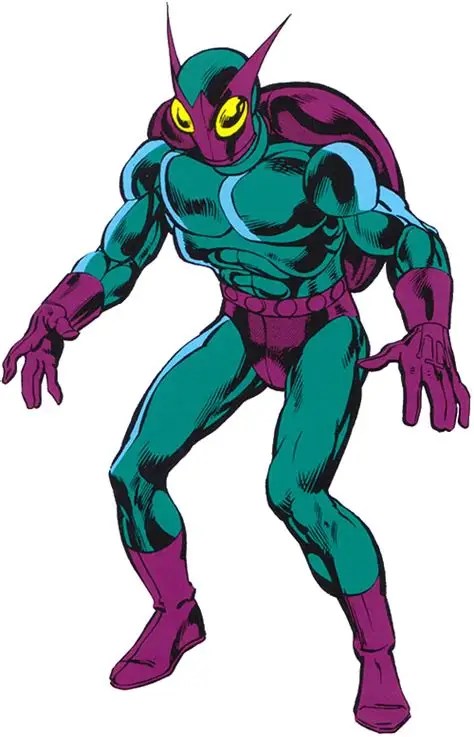
Abner Jenkins debuted as the Beetle in Strange Tales #123, originally a foe for the Human Torch and Thing before settling into Spider-Man’s rogue’s gallery. His suit is sleek, insectoid, and built for infiltration. Over time, Jenkins evolved – joining the Thunderbolts as MACH-1 and slowly shifting from villain to anti-hero. But in his early years, the Beetle was pure opportunist: tech-savvy, ambitious, and always looking for the next score.
In Armour Wars, the Beetle makes a surprise appearance – never seen in Spider-Man, but dropped here as part of the stolen tech sweep. His suit is clearly Stark-derived, and his inclusion feels like a nod to the wider Marvel animated universe, even if the continuity doesn’t quite align. He’s a one-off, but a memorable one – slick, fast, and just dangerous enough to warrant a takedown. It’s a cameo with teeth.
STILT MAN – THE TALLEST PUNCHLINE

Wilbur Day first appeared in Daredevil #8, a disgraced engineer who built hydraulic stilts into a suit of armour to commit high-rise crimes. Stilt-Man is often mocked – his design is absurd, his tactics clumsy – but he’s endured. Over the years, others have taken up the mantle, and while he’s rarely a serious threat, he’s a persistent one. He’s the kind of villain who shouldn’t work, but somehow keeps showing up.
In Armour Wars, Stilt-Man makes what may be his first animated appearance – a blink-and-you’ll-miss-it cameo that’s played for spectacle more than substance. He towers over the city, gets swiftly dismantled, and exits without fanfare. But his inclusion is a quiet triumph: a nod to the deep bench of Marvel’s rogues, and a reminder that even the punchlines have a place in the mythos. He’s ridiculous. He’s real. And he’s part of the tapestry.
GHOST – THE ONE WHO SLIPS THROUGH
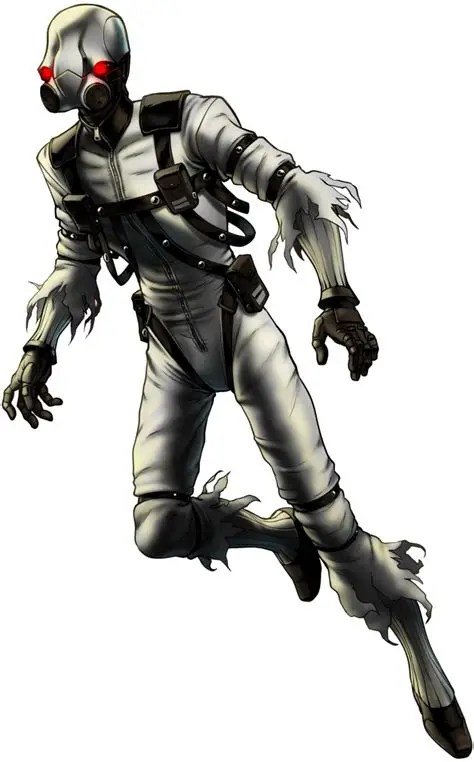
Ghost is a mystery. First appearing in Iron Man #219, they’re a corporate saboteur turned anarchist, armed with stealth tech that allows them to phase through walls and vanish at will. Their motives are opaque, their identity unknown, and their presence always unsettling. The Ghost’s not driven by greed or conquest – they are driven by ideology, by the belief that unchecked capitalism must be dismantled. They’re one of Iron Man’s most cerebral foes, and one of the most enduring.
In Armour Wars, Ghost barely registers – a fleeting appearance, more suggestion than substance. But the legacy has grown. The character appears in Ant-Man and the Wasp, reimagined as Ava Starr, and returns in Thunderbolts*, now a key player in Marvel’s cinematic ensemble. The animated series may have missed the chance to explore them deeply, but the myth has caught up. Ghost isn’t just a saboteur. She’s a spectre. And her time has come.




 X-Cess Minutiae
Leave a comment