


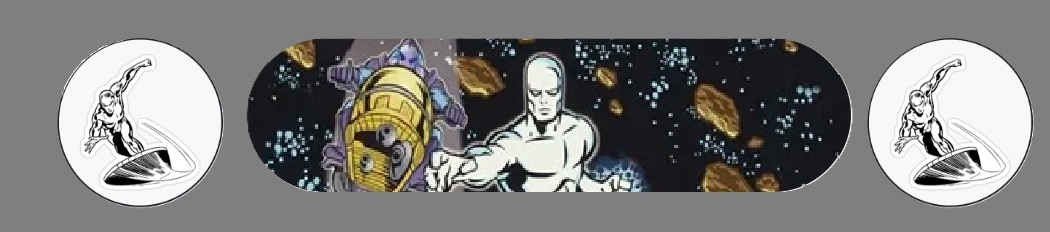
The Silver Surfer is no longer Galactus’ herald — but the universe doesn’t care. Wherever he goes, he is met with scorn, fear, and fury. Worlds remember the destruction, not the sacrifice. And so he drifts, searching for Zenn-La, searching for redemption, and finding only hatred.
On Morovus, he finds something worse. The Kree have built a system where life is manufactured for labour — and discarded without thought. The Trolls are not citizens. They are stock. When they rebel, the Kree do not mourn. They reload. “That’s what they were created for,” says the Intelligence, and the line lands like a blade. The Surfer, once a tool of cosmic hunger, now faces a machine that sees sentience as surplus.
But something shifts. The Surfer does not just resist — he liberates. He frees the enslaved, confronts the architects of cruelty, and turns annihilation into rain. And in the end, he gains something he never expected: a companion. Pip the Troll, irreverent and loyal, chooses to walk beside him. Not because of destiny. Because of choice.
The episode echoes scripture — a lone figure freeing the oppressed, facing down empire, and walking into the stars with a friend. But it also exposes the machinery beneath the myth. The Kree do not fear rebellion. They budget for it. And in that cold calculus, the Surfer finds his purpose: not to be worshipped, but to witness. To intervene. To remind the cosmos that even those made to die can choose to live.
Haunted by Zenn-La’s disappearance, a raging Silver Surfer vents his grief in destruction, shattering asteroids across the void. Two cosmic entities, Eternity and his sister Infinity, observe him from afar, wondering if this tormented wanderer might be the Champion they seek.
The Surfer arrives at a space station, but its inhabitants, including a bounty-hunting Skrull named Raze, greet him with scorn. He is known only as the bringer of Galactus, the World Devourer — and is not welcome. A whispered rumour leads him to the planet Morovus, ruled by the Kree. But as he approaches, he is shot down by planetary defences and crashes into captivity.
He awakens on Morovus, shackled by a control collar that suppresses his will. The planet’s enslaved population — the Trolls — labour under Kree command, observed remotely from Morovus Prime, the neighbouring world. Among them, Kili and Pip explain that the collar cannot be removed. But when the Surfer tries, he hears the voice of the Master of Zenn-La. Drawing on his teachings, the Surfer absorbs the collar’s energy and frees the Trolls from their bindings. The rebellion begins.
Summoning his board and soaring to Morovus Prime, the Surfer confronts a holographic interface of the Kree Combined Intelligence — a vast, calculating mind. The Intelligence has captured the Master of Zenn-La and absorbed his consciousness, including his teachings of peace and compassion. The Master, who left Zenn-La before its disappearance, was inspired by Norrin Radd’s sacrifice. Though his influence begins to overtake the Intelligence, he cannot prevent the launch of a massive energy beam meant to annihilate Morovus and its people.
The Surfer races to intercept the blast. Guided by the Master’s voice, he remembers his ability to transmute energy. He unleashes the Power Cosmic — and the deadly beam becomes rain. Gentle, nourishing, impossible. It falls across Morovus, saving the Trolls and washing away the shadow of destruction.
The Master of Zenn-La, using his superior intellect, dismantles the Combined Intelligence from within. The Surfer mourns — he is still no closer to finding his lost homeworld. But he has gained a companion. Pip the Troll, asks to join him on his journey. The Surfer accepts. And together, they leave Morovus behind — two wanderers bound for the stars.
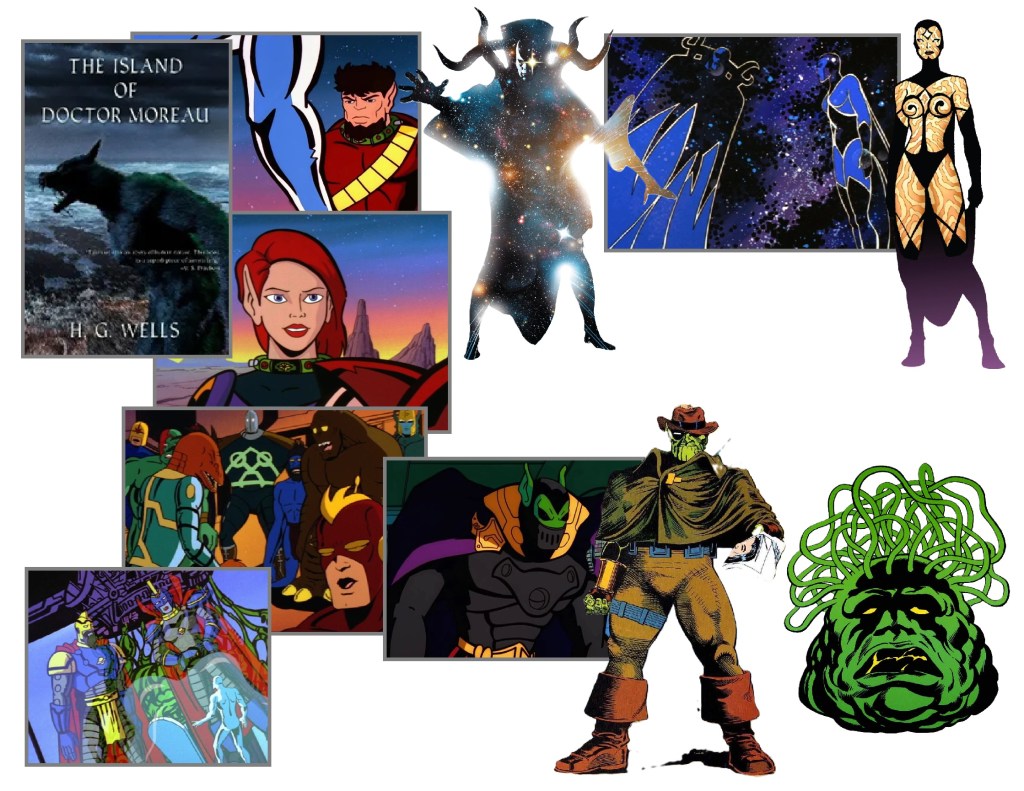
The episode’s title comes the The Island of Dr. Moreau by H.G. Wells, which sees a man shipwrecked on an island with human/animal hybrids.
This episode marks the first appearance of many characters that will play recurring roles on the series, starting with Pip the Troll (see Outbox), Kili, Eternity and Infinity.
Unlike Pip, Kili is a an original character created for the series. She turns up again in Second Foundation.
A Nova Corp member can be seen in the crowd of aliens that confront the Surfer at the episode’s opening.
The Skrull in the bar, is Raze, a bounty hunter, who originated in the comics in Silver Surfer #89 (1993).
The Kree Governor’s Combined Intelligence is similar to The Supreme Intelligence, the conscience of the Kree empire, first seen in Fantastic Four #65.
COSMIC FUNNY MAN: PIP THE TROLL
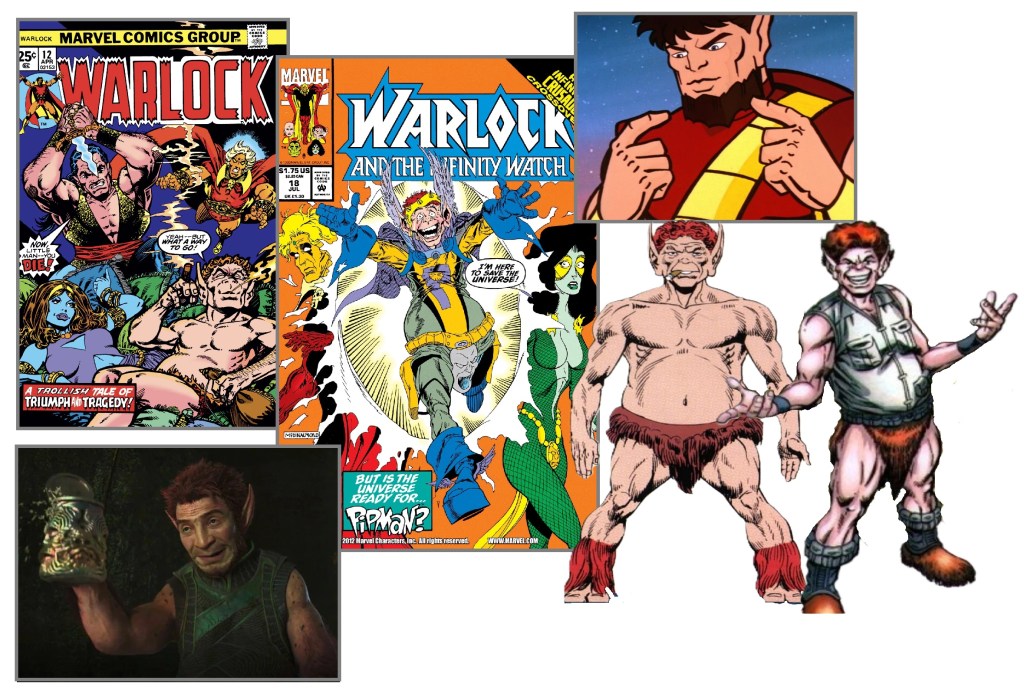
First appearing in 1975’s Strange Tales #129, Pip the Troll wasn’t born to be a hero. He was born to be a prince — until a night of drunken revelry mutated him into something short, sharp, and utterly ungovernable. Banished from Laxidazia, Pip became a cosmic wanderer, trading royal robes for sarcasm and survival. But it was his alliance with Adam Warlock that rewrote his myth. Pip didn’t just tag along — he anchored Warlock’s saga, offering irreverence where others offered awe. He was the fool who saw the truth, and the friend who never flinched.
Through the Infinity Watch era, Pip became more than comic relief. He held one of the Infinity Gems. He stood beside Moondragon, Drax, and Gamora. He survived Thanos, outwitted Mephisto, and navigated the madness of cosmic politics with a drink in hand and a plan half-formed. He wasn’t powerful. He was present. And in a mythos built on gods and galaxies, that mattered.
On screen, Pip arrived late but loud — voiced by Patton Oswalt in Eternals (2021), appearing alongside Starfox in a post-credit ripple that hinted at future chaos. He’s crude, confident, and already divisive. But the essence remains: Pip is the wildcard. The one who doesn’t fit the mould. And in a universe that often forgets its heart, he’s the reminder that loyalty isn’t always noble — sometimes it’s messy, stubborn, and exactly what the story needs.
Animation gave him a different rhythm. In Silver Surfer, he’s a rebel, enslaved by the Kree and defiant to the end. He joins the Surfer not out of destiny, but out of choice — a cosmic hitchhiker with nothing to prove and everything to say. That version of Pip isn’t just comic relief. He’s resistance. And when the rain falls on Morovus, it’s Pip who chooses to stay beside the one who made it happen.
Pip the Troll isn’t a punchline. He’s a pressure point. A reminder that in the vast machinery of cosmic storytelling, sometimes the smallest voice carries the biggest truth. And whether he’s holding a Gem, cracking a joke, or wheeling through a battlefield in a cooking pot, Pip endures. Not because he’s meant to. But because he chooses to.
The Origin of the Silver Surfer (Part 3) | Learning Curve (Part 1)




 X-Cess Minutiae
Leave a comment