


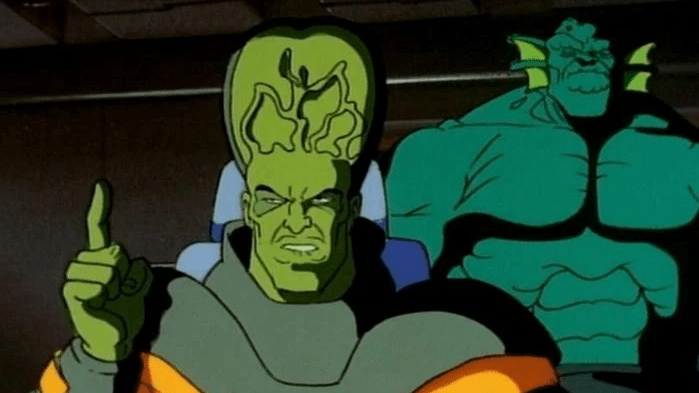

The chase slows, but the story burns hotter. This isn’t just a battle of fists — it’s the eternal question: who is the monster, and who is the man? The army hunts Hulk like a weapon gone rogue. Ross leads the charge, not out of duty, but obsession — “front and centre, green gleam in his eye,” as Betty puts it. Talbot plays the bully, sneering at Bruce, coveting Betty, and masking insecurity with rank. And the Leader? He wants Hulk’s power, and he’ll kill, manipulate, and violate to get it.
But in the desert, among the mutated and the malformed, Bruce finds something unexpected: company. “Who would have thought I would find comfort with these abnormal creatures,” he says — and it lands like a whisper from the heart. These monsters don’t chase him. They don’t want to use him. They simply exist beside him. And in that quiet, Bruce finds a kind of peace.
This episode doesn’t roar — it broods. The action pulses, but the emotional stakes rise. Hulk is caught between those who fear him, those who want to own him, and those who simply see him. And in that crucible, the question sharpens: is the monster the one who breaks things, or the one who refuses to feel?
Hulk, cornered by General Ross and his Omega Laser, is urged by Betty to let go of his rage. Her voice reaches him — briefly. But Ross fires, again and again, until the weapon overheats and Hulk lies buried in smoke and debris. Soldiers surround him. Ross celebrates. But Hulk’s eyes snap open. He rises. The ground shakes. Talbot calls in “hammer time.” A cannon blast carves a crater. Helicopters swarm. Missiles rain. Hulk punches through the barrage and leaps into the desert.
In the canyon, Bruce finds refuge among the Outcasts — mutated creatures who offer him something rare: acceptance. But the moment is shattered when Abomination crashes into the cave, collapsing the roof and seizing Bruce. The Outcasts dig their way out. Betty and Rick follow the trail. Meanwhile, Bruce wakes in Leader’s lair, trapped behind glass. Gargoyle pleads for help, but Leader reveals his true plan: siphon Hulk’s gamma energy, empower himself, and leave Bruce a husk.
Back at the cave, the Outcasts and humans break free. Betty and Rick race after Bruce. Inside the lair, Bruce is tortured — jolted, mocked, provoked. Leader wants rage. Gargoyle complies, reluctantly. Bruce resists. But the pain builds. Just then, the HUMVEE crashes through the wall. Drones swarm. The Outcasts arrive. Chaos erupts. Betty fights her way to Bruce’s chamber. Leader releases Abomination. Bruce watches, helpless, as Betty is struck down.
The siphon begins. Hulk emerges — weak, shrinking. Leader absorbs the energy, his body expanding, armour cracking. Betty pleads with Hulk not to give up. Abomination grabs Rick. Consoles explode. Hulk pounds the glass. Power feeds back. The cell cracks. Hulk roars. The glass shatters. Leader collapses, hairless and broken. Hulk breaks free and smashes Abomination into fire. Gargoyle escapes with the databanks, laughing — “So says the Gargoyle.”
The Outcasts flee into the desert. Hulk grabs Betty and Rick and escapes as the lair explodes behind them. On a distant ledge, they regroup. Rick congratulates Hulk. Betty thanks the Outcasts as they vanish into the woods. She begs Hulk to stay — says they can make it work. Hulk takes her hands, but turns toward the approaching helicopters. He says he’s sad, but must go. She kisses his cheek. Rick salutes him. Hulk apologises and leaps away.
Ross arrives, watching Hulk disappear into the sunset. He clenches his fist and vows that Hulk’s reckoning will come — that it is destiny. Betty promises to find a cure. Rick swears to follow. And Hulk runs across the desert, the sun behind him, the rage within him, and the world still unsure whether to fear him or let him go.
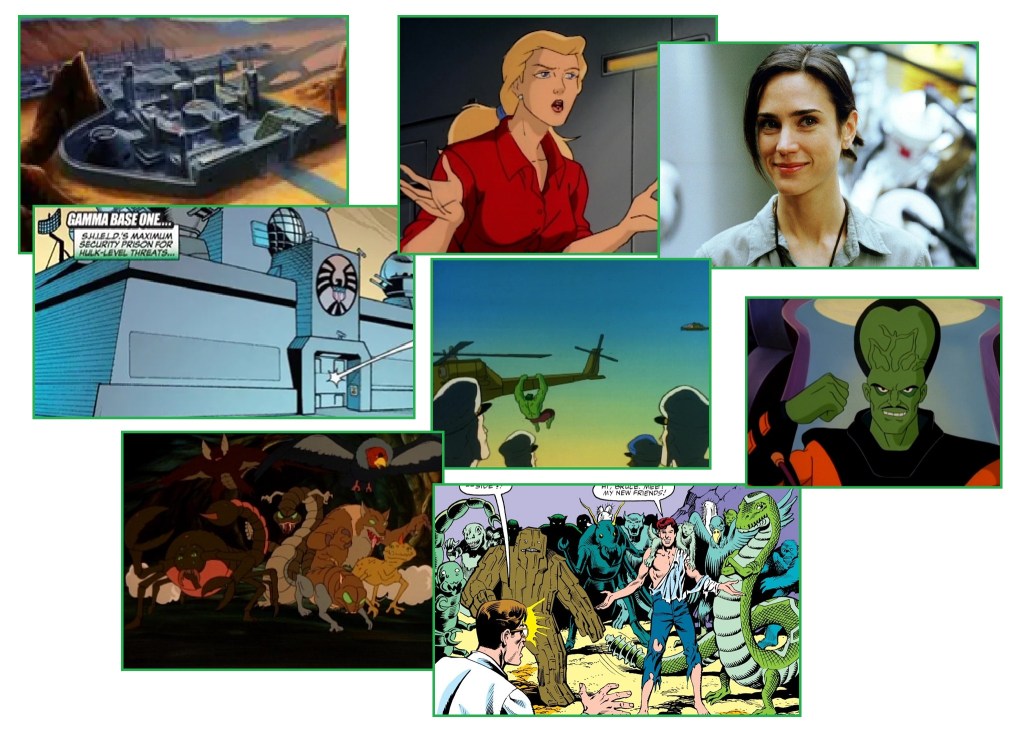
Gamma Base is located in the New Mexico desert and is frequently referred to as Hulk Buster Base. It first appeared in Incredible Hulk #145.
This is the first version of Betty to be named as an expert in gamma mutation. Later versions of the character, such as Jennifer Connelly’s in Ang Lee’s Hulk have been experts as well. This is not the case in the original comic.
Hulk destroys another helicopter in this episode, and footage is shown of him destroying at least two more.
The Outcasts have only ever appeared once in the comics, specifically Incredible Hulk #357.
This episode marks the first instance of the Leader’s catchphrase: “So says the Leader!”
THE HULK’S OPPOSITE: THE ABOMINATION
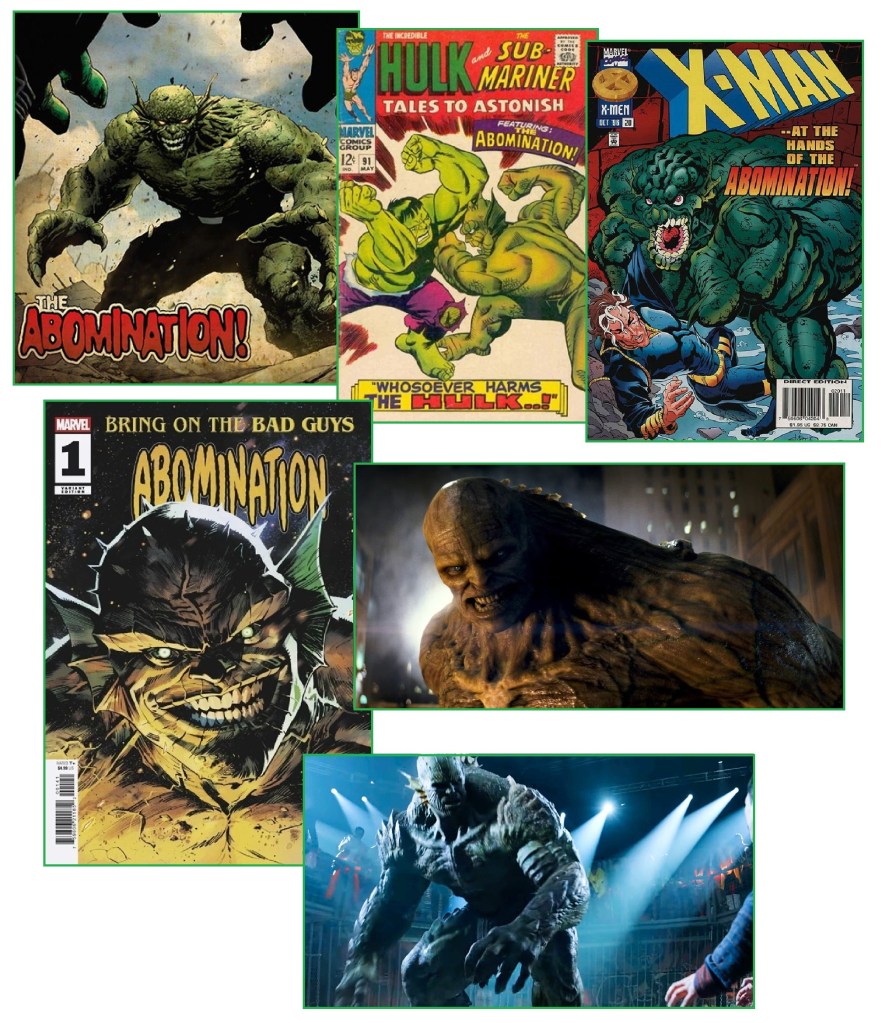
Abomination wasn’t born — he was built. Emil Blonsky, a KGB agent with ambition and no restraint, exposed himself to gamma radiation in an attempt to replicate the Hulk’s power. What emerged was stronger, uglier, and permanently transformed. Unlike Banner, Blonsky couldn’t revert. The Abomination was locked in — a creature of brute force and bitter envy, with none of the pathos that made Hulk tragic. He didn’t want redemption. He wanted dominance.
Introduced in Tales to Astonish #90 (1967), Abomination quickly became one of Hulk’s most enduring foes. He wasn’t just a mirror — he was a mockery. Smarter than Hulk, crueler than Banner, and driven by a need to prove superiority. Over the years, he clashed with Thor, Silver Surfer, and the Avengers, but always returned to Hulk. Their battles weren’t just physical — they were philosophical. Hulk broke things because he felt too much. Abomination broke things because he could.
On screen, Abomination first appeared in The Incredible Hulk (2008), played by Tim Roth. That version leaned into military obsession — Blonsky as a soldier chasing relevance, injecting himself with power he couldn’t control. The transformation was grotesque, the fight brutal, and the fallout lasting. He returned years later in Shang-Chi and the Legend of the Ten Rings (2021), reimagined with restraint and a hint of rehabilitation — but the monster still lingered beneath the surface.
Animation gave him a broader canvas. He appeared in The Marvel Super Heroes, The Incredible Hulk (’80s and ’90s), and ensemble shows like Avengers: Earth’s Mightiest Heroes. Always the heavy. Always the brute. But never the heart. Abomination isn’t a tragic figure. He’s a warning — that power without empathy becomes cruelty, and that some monsters don’t want to be saved.




 X-Cess Minutiae
Leave a comment