


It begins like a classic quest — beacon-hunting across hostile worlds, chasing the promise of ultimate knowledge. Mentor and Drax risk everything to find the key to the Universal Library, a place whispered about in legend, where the Watchers stored the sum total of cosmic truth. But by the time they reach it, the truth proves overwhelming. Knowledge doesn’t just enlighten — it incapacitates.
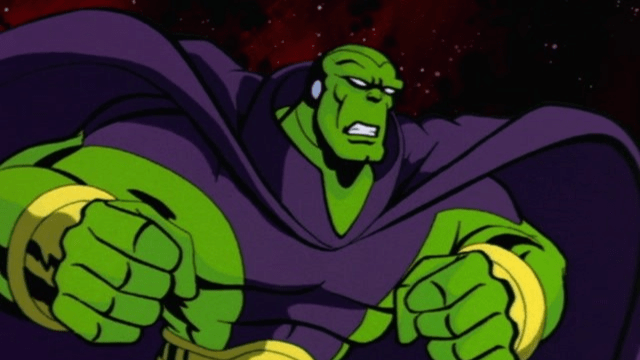
For newcomers raised on the MCU, this is a revelation. Drax isn’t a bruiser with a laugh — he’s an android with an organic brain and a haunted edge. Nebula isn’t a tragic daughter — she’s a ruthless space pirate with profit in her veins and betrayal in her wake. The Silver Surfer series gives these characters room to breathe, long before they were household names. It’s a glimpse into the mythic deep cuts — the days when only comics fans knew their names.
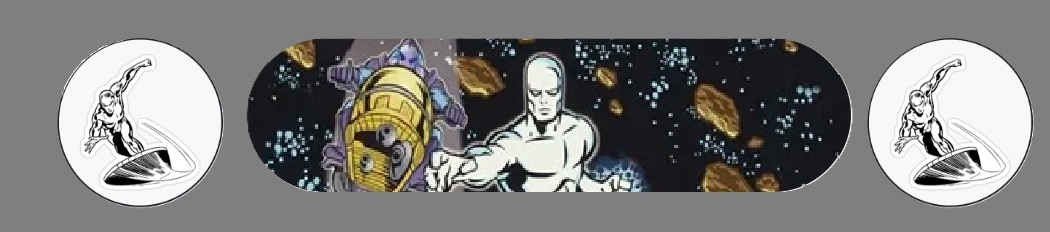
And then there’s the plasma jump. Silver Surfer guiding Mentor and Drax’s ship through that swirling vortex of colour and energy is pure visual poetry. The animation — part hand-drawn, part digital shimmer — is sublime. It’s one of those rare moments where the medium matches the message: cosmic, beautiful, and terrifying.
But this isn’t just spectacle. It’s a story about obsession, sacrifice, and the cost of chasing answers. The Surfer nearly dissolves inside the jump. Mentor chooses compassion over conquest. Drax fights through pain. And Pip — ever the comic relief — ends up praying. The Library doesn’t welcome them. It assaults them. And the question becomes not “what will they learn,” but “will they survive learning it?”
The pacing is deliberate, the tone mythic. The Watchers loom, silent and endless. The Library pulses with memory. And somewhere beyond the stars, Eternity and Infinity watch — wondering if the Surfer’s longing for Zenn-La will save the universe, or doom it.
The only flaw? We have to wait for Part Two.
The Watcher speaks of a lost civilisation — the Watchers, once devoted to gathering knowledge across the stars. Their Universal Library, hidden and protected, is reachable only by those deemed worthy. Mentor and Drax, driven by purpose, survive the planet’s trials and claim the beacon. But their triumph is short-lived. Nebula, watching from afar, steals the crystal with a precision strike. Drax launches himself toward her ship, but is repelled. Nebula escapes through a wormhole, leaving Mentor and Drax adrift in space.
The Silver Surfer and Pip find them crashed on a nearby moon. The Surfer lifts the wreckage and offers aid, but Drax misreads the gesture and attacks. Their clash ignites the air, until Mentor intervenes. Introductions are made — a scholar, an android, a troll, and a cosmic wanderer. Mentor speaks of the Library, and the Surfer agrees to lead them. His Power Cosmic detects a trail. They follow. Silver Surfer reflects on Zenn-La’s wisdom and its limits. He never knew of the Library, nor that there were once many Watchers. But now, there is hope.
Nebula’s crew grumbles — they know plunder, not knowledge. She kicks one down and rallies the rest, reframing the mission: knowledge is power, and power is profit. The crystal glows. The ship enters the wormhole. The Silver Surfer and Mentor arrive at the same point in space, but find nothing. Silver Surfer recognises the plasma jump and opens it with his energy. It pulls him in, draining him. Drax races to help. The Surfer remembers Zenn-La’s teachings — peace comes to those who walk with the wind. He surrenders, unleashes a blast, and escapes.
The group passes through the jump and emerges in a realm of Watchers — towering, silent, endless. The Surfer collapses. His energy is gone. Pip prays. A flare bathes the ship in red light. The Silver Surfer’s colour returns. He rises, joking through the pain. They’ve made it. The Library lies ahead. But as they approach, a beam strikes the ship. Images flood their minds — galaxies, sea life, species, events. Galactus rises in flame. The visions accelerate. Mentor realises this is not just a library — it’s an assault.
The Surfer calls for Drax’s help, but Drax collapses. The ship hurtles forward. Above, the last Watcher is summoned. Eternity and Infinity appear, embodiments of time and space. They warn of a coming crisis. Eternity believes the Surfer can face it. Infinity doubts. She fears his obsession with Zenn-La may doom not just himself, but the universe. Inside the ship, the Silver Surfer stands — shaken, silent — as the Library pulls them deeper.
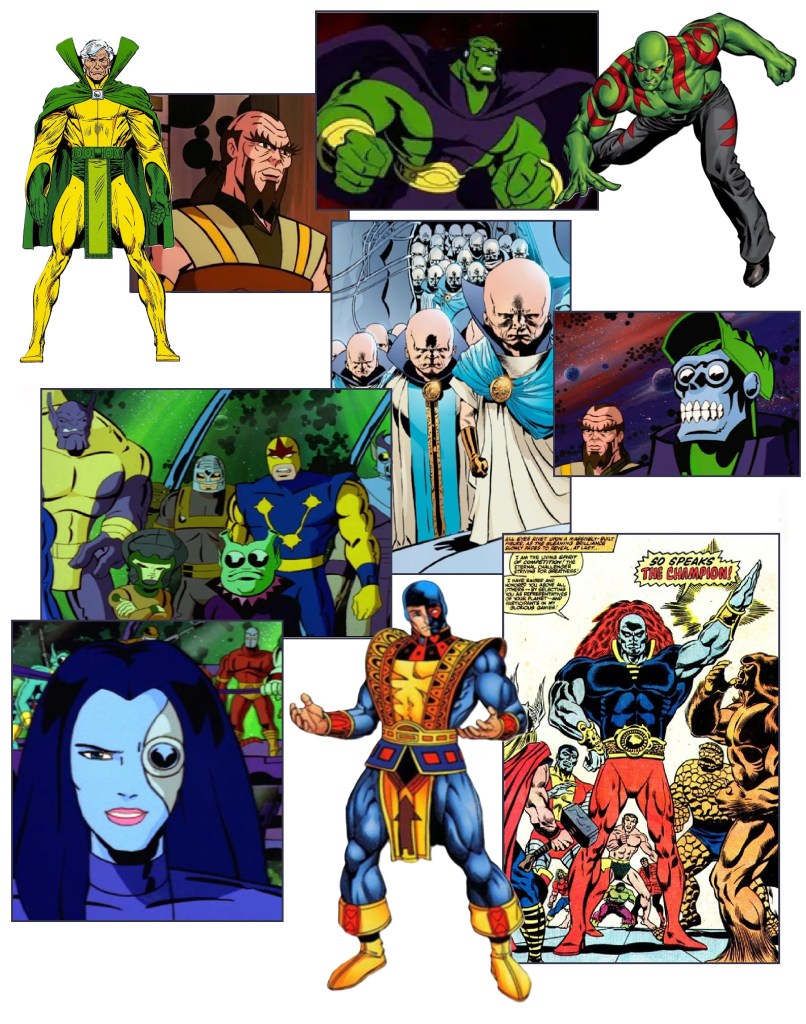
Mentor is an Eternal from the planet Titan. In this continuity, he’s Thanos’ older brother, but in the comics continuity, he’s his father.
Drax the Destroyer first appeared in Invincible Iron Man #55. In this episode, he’s an android with an organic brain – a far cry from the big-screen version played by Dave Bautista in the MCU. More on Drax soon…
In this continuity, Uatu is the only Watcher still in existence.
Amongst Nebula’s pirate crew is a Nova Corpsman, a Rigellian, the cosmic wrestler known as the Champion and the Avenger Jack of Hearts.
NEBULA: PIRATE QUEEN
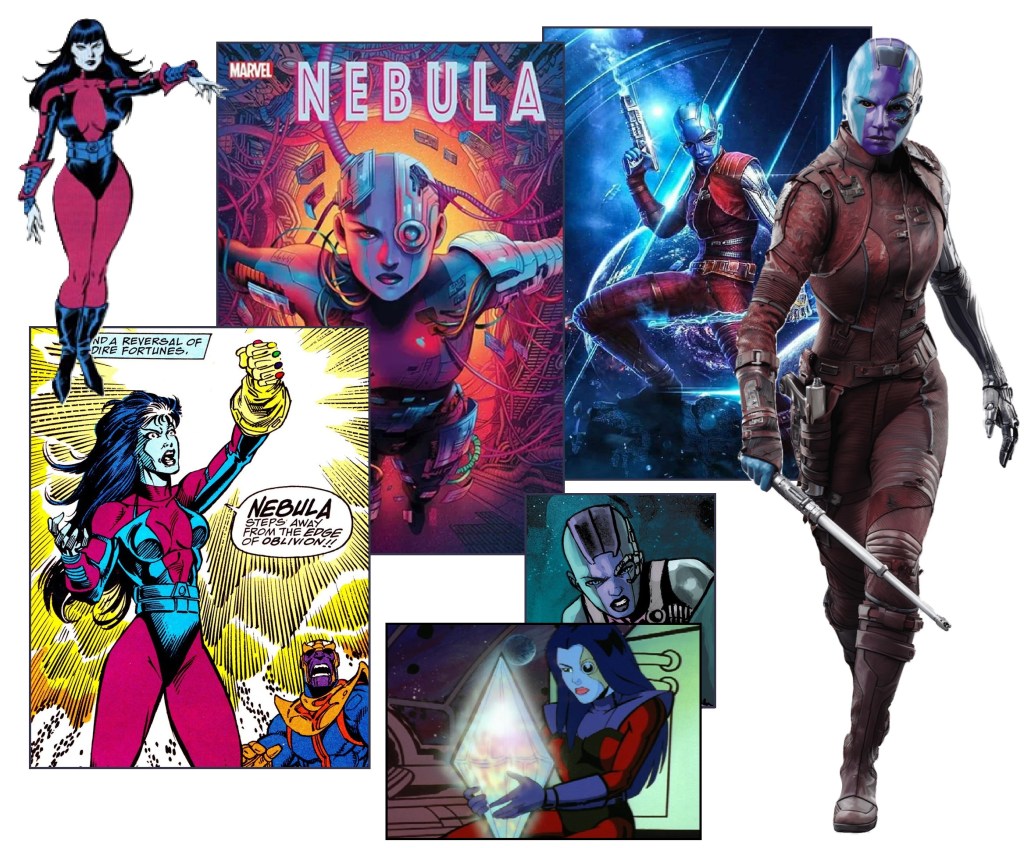
Nebula entered Marvel Comics in Avengers #257 (1985), a space pirate with ambition and a claim to Thanos’ legacy. She wasn’t his daughter — not yet — but she was dangerous, calculating, and determined to carve her name into the stars. Over time, her backstory twisted. She became Thanos’ granddaughter, then his daughter, then something more mythic: a survivor of his cruelty, a weapon forged by neglect.
In the comics, Nebula was never soft. She seized control of Sanctuary II, wielded the Infinity Gauntlet, and burned worlds to prove she mattered. Her arc was jagged — part tyrant, part victim, always volatile. She clashed with the Avengers, the Silver Surfer, and even Thanos himself. But beneath the firepower was a hunger for identity. Nebula didn’t just want power. She wanted to matter.
On screen, Karen Gillan’s Nebula redefined the character. Introduced in Guardians of the Galaxy (2014), she became a tragic foil to Gamora — another daughter of Thanos, but one who bore the scars. Literally. Every defeat meant a new cybernetic replacement. Her rage wasn’t performative. It was earned. Across the Guardians films and Avengers: Infinity War and Endgame, Nebula evolved — from antagonist to ally, from weapon to woman. Her pain didn’t vanish. But she chose who she became.
Animation gave her scattered appearances — in Avengers Assemble, Guardians of the Galaxy, and other ensemble shows. Often a villain, sometimes a wildcard. But the emotional depth came later. Nebula isn’t just a fighter. She’s a survivor. And in a universe full of gods and monsters, she’s the one who clawed her way out of hell and kept walking.




 X-Cess Minutiae
Leave a comment