



This is the series’ finest hour so far — not just in spectacle, but in writing. Every beat is deliberate. Every silence carries weight. The script threads emotional truth through mythic stakes, balancing gamma science with raw human longing. It’s a story about mistaken identity — not just in the literal sense, but in the emotional one.
Hulk is misread as Sasquatch. Langkowski hides behind science while denying the beast within. The townspeople lash out at what they fear, and a boy’s simple kindness becomes the episode’s moral compass. The writing honours each perspective — even the monstrous ones — without flattening them into cliché.
At its heart, this is a tale of monstrous kinship. Two gamma-born titans, shaped by isolation, both yearning for control. Banner seeks a cure. Sasquatch seeks absolution. But neither finds what they’re looking for — because the cure isn’t chemical. It’s relational. It’s about being seen, being spared, being saved.
The final clash is brutal, but the emotional fallout is quieter: guilt, grace, and the ache of being misunderstood. SHIELD arrives, but the townspeople stand in their way. Hulk walks off into the snow — not as a threat, but as a protector. Misunderstood, yes. But not unloved.
This episode earns its title. It’s not just man versus beast — it’s man as beast, beast as man, and the fragile line between them. And the writing never flinches.
Banner heads north — deep into the Canadian wilderness — seeking Dr Walter Langkowski and the promise of a cure. But the snow is unforgiving. He falls through the ice, drowning in freezing water, until stress forces the transformation. Hulk saves himself. Alone in the cold, he finds a puppy — a flicker of warmth. The pup leads him to a nearby town, where its young owner welcomes him. But the townsfolk panic, mistaking Hulk for the legendary Sasquatch. They attack. Hulk holds back — until the puppy is hurt. Then he erupts, levelling the town before vanishing into the wild.
Ross and Gabriel catch wind of a Sasquatch sighting and mobilise, convinced it’s Hulk. Meanwhile, Banner reverts and collapses in the snow. The real Sasquatch finds him and drags him to Langkowski’s cabin. Langkowski claims he’s found a cure. But Banner discovers a video journal — Langkowski is Sasquatch. The creature returns, furious at being exposed. They agree to test the cure together. Two chambers. One chance. But the experiment fails. The boy and his puppy arrive, triggering Banner’s transformation. Hulk destroys the machine to protect them and flees, leaving Langkowski bitter and broken.
Sasquatch hunts Hulk and the boy, blaming them for the failure. Their clash is brutal. The boy is knocked into icy water. Hulk dives in and saves him. The townspeople witness the truth — Hulk is not Sasquatch. They thank him. Sasquatch, guilt-ridden, drifts away on an iceberg, quietly accepting the monster he’s become.
SHIELD arrives, but the townspeople block their pursuit. Hulk walks away once more — not as a threat, but as a protector misunderstood.
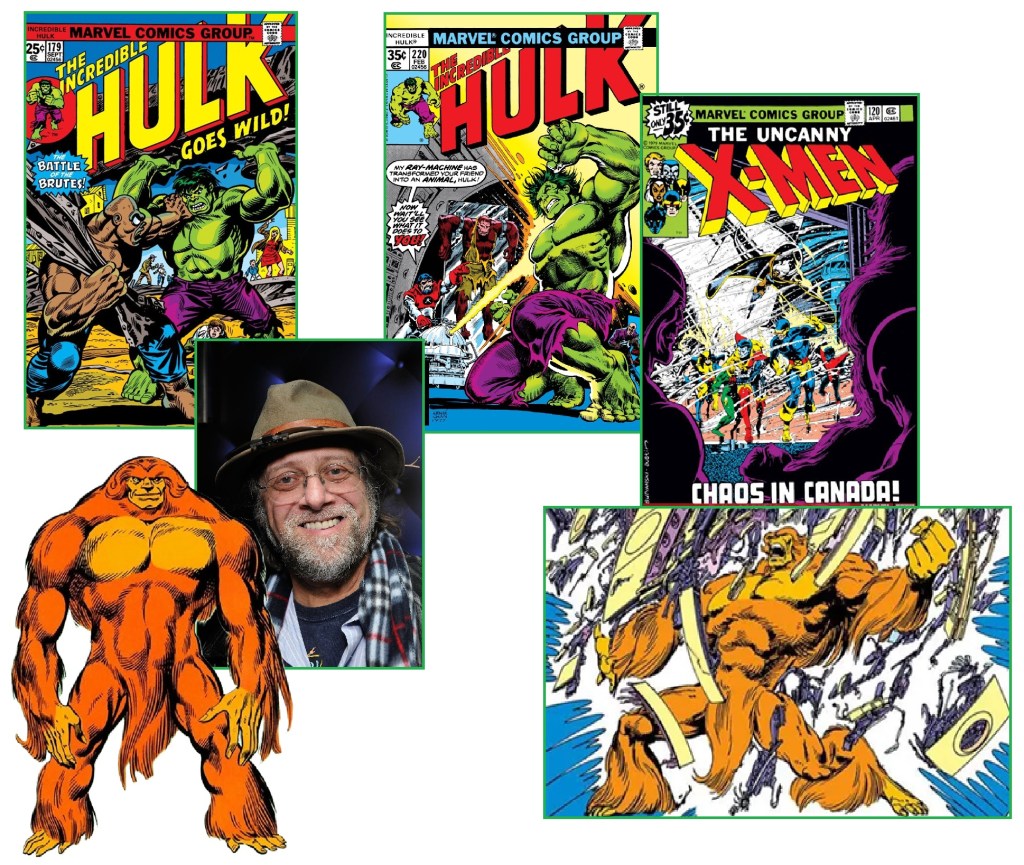
Walter Langkowski is better known in the comics as Alpha Flight’s Sasquatch. In the comics, he’s far more pleasant than the version seen in this episode. He first appeared in Uncanny X-Men #120.
Len Wein, the writer of this episode, has worked on many a great comic book, including a very lengthy and memorable run on the Incredible Hulk from #179-220, which is most famous for it’s introduction of Wolverine.
FRANKENSTEIN’S SHADOW AND THE MONSTER REIMAGINED
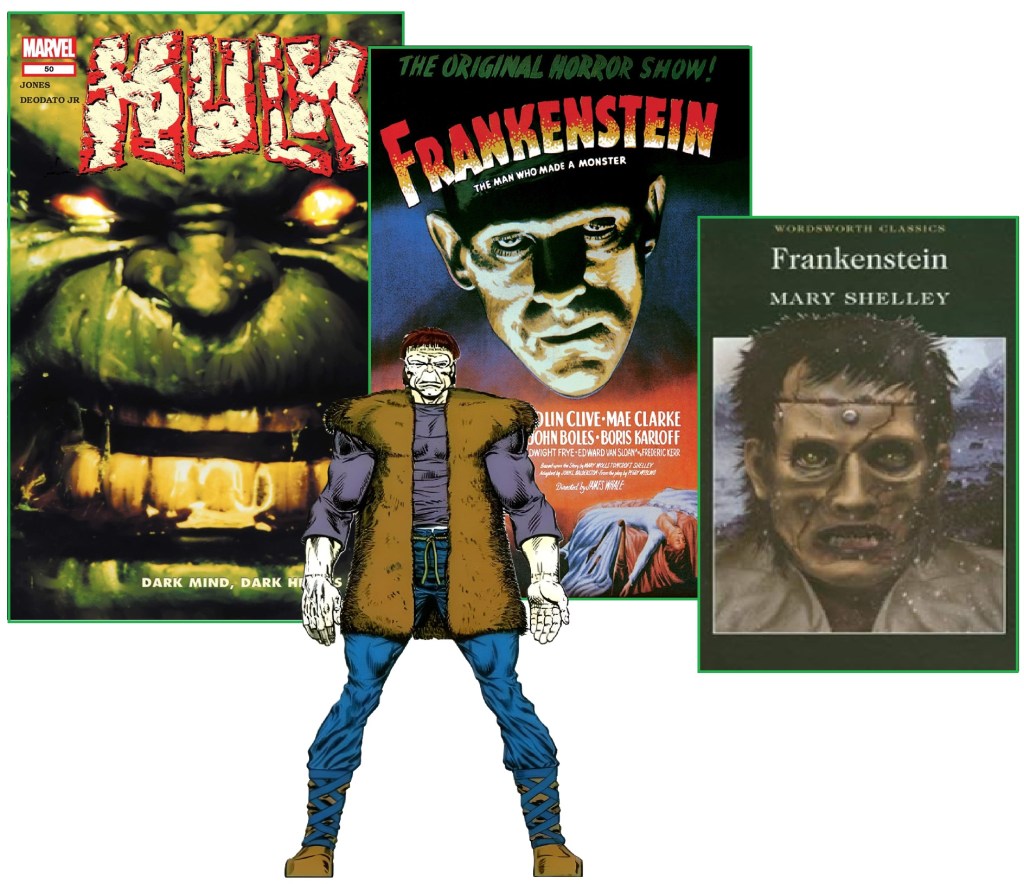
Stan Lee didn’t just create the Hulk — he translated him. From Mary Shelley’s Frankenstein, he borrowed the soul of the misunderstood creature: feared, hunted, and yearning to be left alone. The Hulk is not Victor’s creation, but he carries the same ache — the same exile, the same rage at being misread. And in Man to Man, Beast to Beast, writer Len Wein leans into that lineage with precision.
The villagers in this episode — shovels raised, fear in their eyes — echo Shelley’s mob with pitchforks and torches. They mistake Hulk for Sasquatch, just as Frankenstein’s creature is mistaken for a demon. But Hulk doesn’t kill the boy. He saves him. His concern for the child and the puppy mirrors the creature’s protection of his companion — a flicker of humanity in a body built for destruction.
The frozen Canadian wilderness becomes the Arctic — the place where Victor Frankenstein finds himself marooned, broken, and alone. Walter Langkowski, once a man of science, becomes Sasquatch and, after hurting a child, concedes himself to nature. He drifts away on an iceberg, not unlike Shelley’s monster, unwilling to be among humans again. It’s not just homage — it’s emotional architecture.
Marvel has always drawn from literary aspiration. Iron Man is Jekyll and Hyde in a suit of armour. Thor is mythic poetry given voice. Spider-Man is Peter Parker’s guilt echoing Hamlet’s indecision. But Hulk — Hulk is Shelley’s creature reimagined. Not stitched together, but irradiated. Not abandoned by his maker, but hunted by his own self.
This episode doesn’t just nod to Frankenstein — it embodies it. It asks what makes a monster, and whether the answer lies in the body, or in the way the world responds to it. And in the end, it’s not the science that fails. It’s the inability to see the soul inside the beast.





 X-Cess Minutiae
Leave a comment