


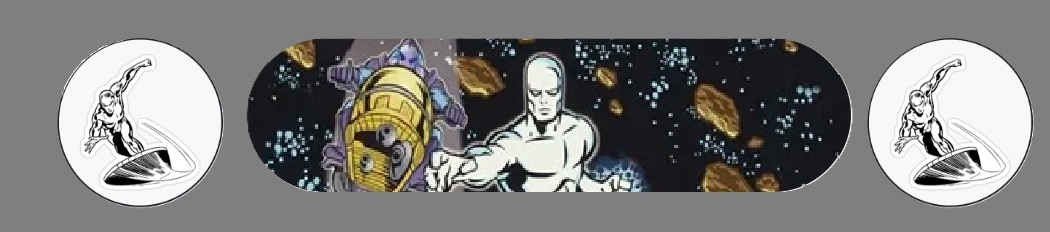
This episode doesn’t just challenge the Silver Surfer — it indicts him. Gamora and the Wanderers, survivors of Galactus’ hunger, see the Surfer not as a hero, but as a consolation prize. If they cannot punish the Devourer, they’ll punish his herald. Their justice is radical, and their sentence is cruel: exile to a barren planetoid, stripped of the Power Cosmic, left to die.
The irony is sharp. Norrin Radd lost Zenn-La. He lost everything. Just like them. But they refuse to see the distinction — that he is a victim too. Their pain blinds them, and their vengeance nearly destroys them. The device they use to drain the Surfer’s power destabilises the twin suns, threatening to collapse into a black hole. And who saves them? The Surfer. Recharged, reborn, and still thinking of others first.
It’s not just a rescue. It’s a lesson in grace. The Surfer forgives. Not because he must, but because he chooses to. And in doing so, he rises above the trial, the punishment, and the pain.
A powerful episode — one that understands that true justice isn’t retribution. It’s mercy.
While drifting alone through the cosmos, the Silver Surfer’s solitude is shattered — ensnared in a trap orchestrated by Gamora and the Wanderers. Taken aboard their vast vessel, he’s placed on trial before the survivors of Galactus — the remnants of worlds devoured, the voices of the lost. Gamora leads the prosecution, wielding the Surfer’s past as Galactus’ herald like a blade. She recounts the destruction, the silence left in Galactus’ wake, and demands accountability.
The Surfer defends himself with dignity, recounting the sacrifice of Norrin Radd — a man who gave up his life and planet to save his people. But his words fall on deaf ears. The Wanderers do not want understanding. They want justice.
His punishment is cruel and calculated. Stripped of the Power Cosmic, the Surfer is exiled to a barren planetoid, left to suffer as the Wanderers observe from afar. Yet the device draining his power is unstable — powered by twin suns now on the brink of collapse. Norrin Radd, weakened but watchful, sees the danger. A black hole is forming, and the Wanderers are too late to stop it.
With nothing but resolve, he fights to reclaim his stolen gifts. He shuts down the device, summons his board, and races to the Wanderers’ ship. In a final act of grace, he opens a wormhole and saves the lives of those who condemned him. Gamora watches, silent — left not with victory, but with questions.

Gamora uses the Surfer’s aiding of Galactus in Antibody to justify his capture. There is also footage of the Draconian planet’s loss in Origin of the Silver Surfer (Part 2).
Another member of Nova Corp can be seen in the vast crowd of aliens, as can Ronan the Accuser.
“TO ME, MY BOARD!”
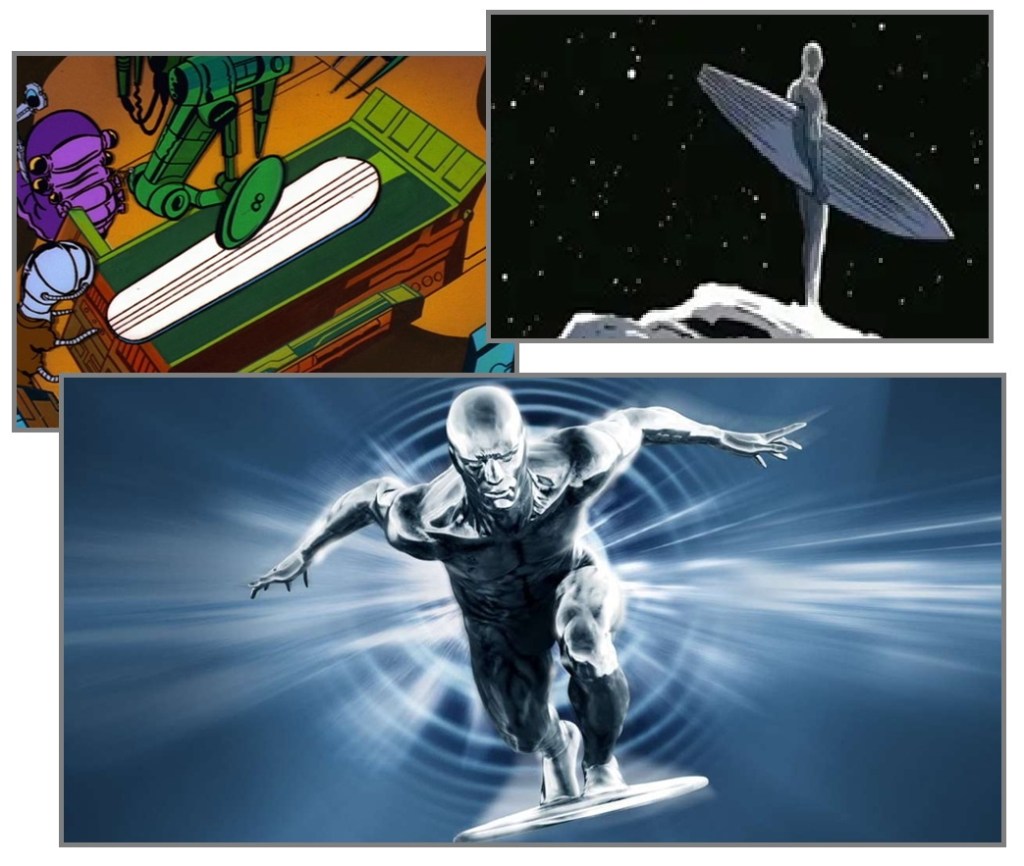
The Silver Surfer’s board first appeared alongside him in Fantastic Four #48, the opening chapter of the legendary Galactus Trilogy. It wasn’t named, but it was unmistakable — a sleek, silent companion, forged from the Power Cosmic and bound to Norrin Radd’s very essence. The board isn’t a vehicle. It’s an extension of the Surfer’s soul — responsive to thought, capable of interstellar travel, and nearly indestructible. It obeys a single command: “To me, my board.” A phrase that became iconic, echoing through decades of cosmic storytelling.
On panel, the board has been destroyed, reformed, even briefly stolen — but it always returns. It’s not just loyal. It’s part of him. When separated, the Surfer is diminished. When reunited, he’s whole. The bond is metaphysical, emotional, and deeply personal.
In later years, the board earned a nickname: “Toomie.” A playful nod to the Surfer’s summoning phrase, it first surfaced in Silver Surfer (Vol. 3) and was later embraced in Marvel Adventures and other lighter fare. It’s a rare moment of levity in a mythos often steeped in solitude and sorrow — a reminder that even cosmic wanderers need companionship.




 X-Cess Minutiae
Leave a comment