


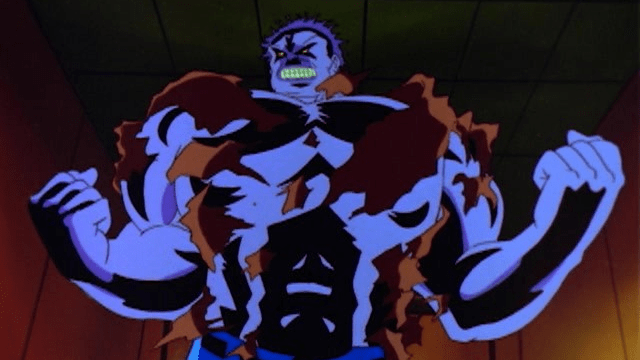

Doctor Strange isn’t the first name you’d pair with gamma radiation. He’s a sorcerer, not a scientist — a guardian of dimensions, not a therapist for rage. And yet, this crossover works. Because if any Marvel character needs a doctor — magical, psychological, or otherwise — it’s Bruce Banner.
This episode is the season’s standout. It doesn’t just explore Hulk’s fractured psyche — it detonates it. An unnamed entity hijacks Bruce’s mind, bypasses the usual internal struggle, and births a new threat: Dark Hulk. Vicious, calculating, and terrifyingly fast, he’s on a rampage before anyone can blink. The stakes are cosmic, but the conflict is intimate — Green and Gray Hulks forced to reckon with each other as the mindscape collapses.
She-Hulk and Strange navigate Banner’s consciousness with flair, but tonal dissonance creeps in. She-Hulk’s humour is dialled up — not just quippy, but self-parodic. It’s the second episode in a row where she’s reduced to fighting in a skimpy bikini and impractical heels, and even she seems aware of it. The restrained, comic-accurate version from season one is gone, replaced by a sassier, more stylised foil to Hulk’s gravitas. It’s a choice — but not always a coherent one.
Still, the psychology lands. Watching Green and Gray prepare to team up — not out of unity, but necessity — is genuinely thrilling. The mindscape becomes a battlefield, a therapy session, and a mythic crucible all at once.
It’s not perfect. But it’s bold. And in a season that’s struggled to find rhythm, Mind Over Anti-Matter dares to ask: what darker monsters lie even further beneath the surface?
In a fractured dimension beyond time, Doctor Strange battles a sentient force — a glowing red entity with no name, no mercy, and a hunger for Earth. The sorcerer is overwhelmed and hurled through a portal, crashing back into reality. But the creature follows.
It arrives as a burning orb, searching for a mind strong enough to possess. One man fails the test. The orb exits, frustrated. It finds a military base instead — warheads, missiles, destruction waiting to be unleashed.
Nearby, Jennifer Walters and Bruce Banner are at a carnival. Jennifer wins the high striker. They board a ride called Dante’s Inferno. That’s when the orb finds Bruce. It enters his mind.
Inside, Bruce sees it — the alien force, watching as the green Hulk and Gray Hulk battle for dominance. The creature defeats them both. It begins erasing Bruce’s memories, rewriting his identity. Bruce collapses.
Doctor Strange arrives. He warns She-Hulk: Bruce is possessed. If they don’t act, the world ends. He transports them to the Sanctum Sanctorum, then deeper — into Bruce’s mind. They arrive at the outer fringe of his consciousness. The alien is heading for the id. If it reaches it, Bruce is lost.
The chase begins. Strange warns She-Hulk: if the creature touches her, she’ll be erased. They escape into Bruce’s fantasy realm — memories of Betty Ross flicker like ghosts. The alien grows stronger. They reach the memory vault. It’s a barren wasteland. Deeper still, they arrive at the day of the gamma blast. They flee before the bomb detonates.
But the alien finds them. Strange casts a shield — it shatters. They fall into the core of Bruce’s mind. The alien holds both Hulks captive. It takes control of Bruce’s body and emerges as a new entity: Dark Hulk.
He storms New York. The military responds. They fail. Inside Bruce’s mind, Strange and She-Hulk fight back. They’re outmatched. Dark Hulk heads for the military base and activates a nuclear bomb — one minute to detonation.
The Hulks break free. Green and gray unite. They fight the alien. Strange, exhausted, creates illusions of himself and She-Hulk. The alien wastes energy attacking shadows. The Hulks and She-Hulk strike together. Strange banishes the creature to another dimension.
Bruce regains control. He stops the bomb — with one second left. Strange and She-Hulk exit Bruce’s mind. He teleports them out before the soldiers arrive.
Later, they return to the carnival. Doctor Strange rides the roller coaster. Even sorcerers need a moment to breathe.
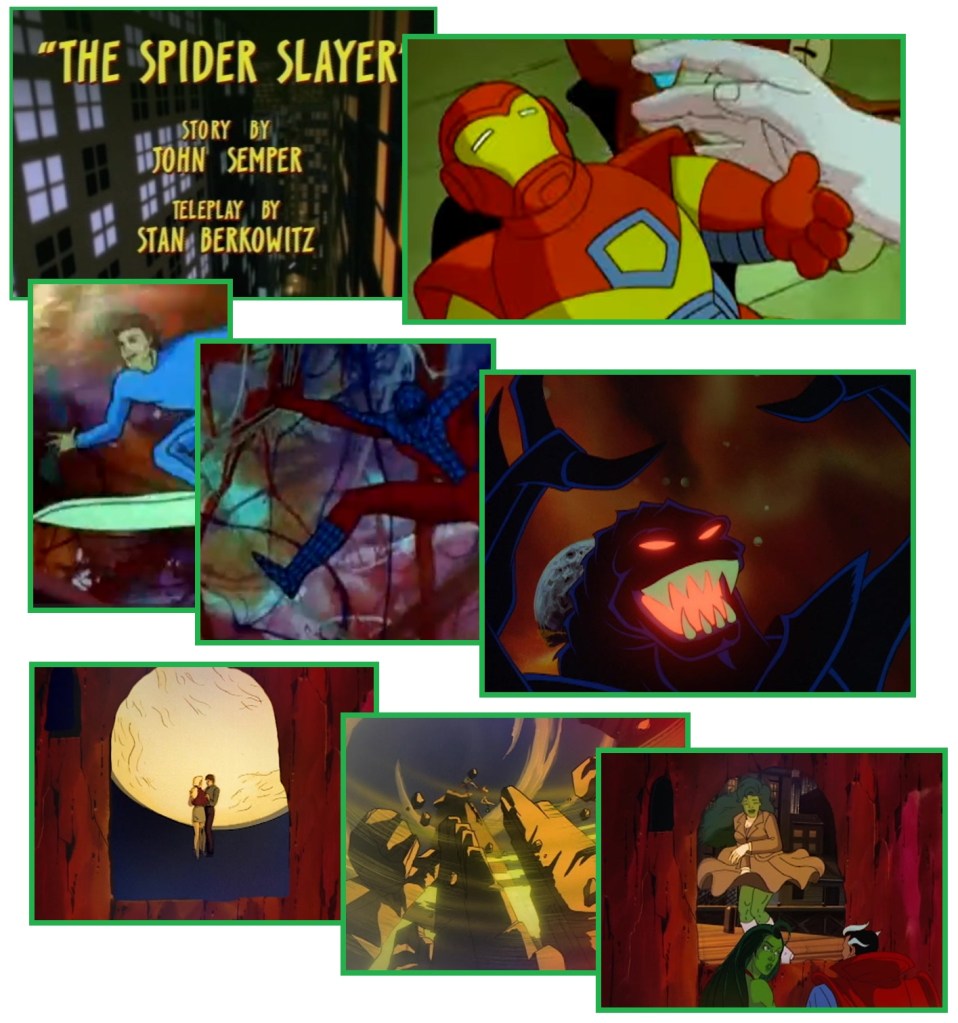
This episode of the series is written by John Semper, who was the lead producer and head writer on Spider-Man. A colour-inversed Spider-Man can be seen inside Bruce Banner’s mind, along with Bruce riding a surf board that resembles the Silver Surfer’s.
She-Hulk wins an Iron Man toy at Coney Island.
The entity from the other dimension is never named. Strange refers to him as an alien, presumably for censor reasons involving the word ‘demon’.
She-Hulk sees memories of Bruce and Betty – the shots seen are the shots of Betty that were featured in the season one opening credits.
When She-Hulk sees her costume from last season’s Fantastic Fortitude, she asks Doctor Strange what she was thinking: this is a reference not just to her uniform (which is her comic accurate attire), but the voice actress changeover in between seasons.
THE MONSTER IN THE MIRROR: THE DEVIL HULK
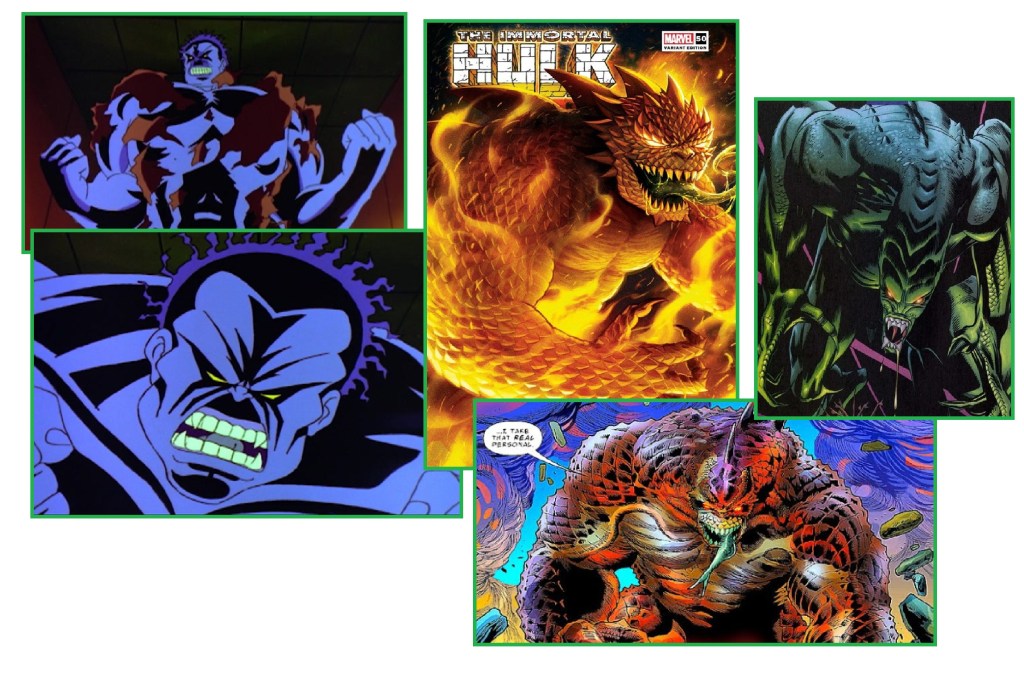
The Devil Hulk first emerged in Incredible Hulk (vol. 2) #13, created by Paul Jenkins and Ron Garney a few years after this episode debuted. But in truth, he’d been waiting far longer — buried deep in Bruce Banner’s fractured psyche, a primal force of rage, protection, and vengeance. Unlike the savage Hulk or the cunning Gray, the Devil Hulk isn’t a child or a bruiser. He’s the shadow — the part of Bruce that hates the world for hurting him, that wants to burn it all down to keep him safe.
Where other Hulks reflect trauma or intellect, the Devil Hulk is something more mythic. He speaks in whispers and roars, a serpentine presence with a voice like prophecy. He doesn’t want to smash — he wants to rule. And yet, paradoxically, he sees himself as Bruce’s protector. In his own twisted way, he loves Bruce. That’s what makes him dangerous.
For years, the Devil Hulk was locked away, chained in the depths of Bruce’s subconscious. But during the Immortal Hulk era, he rises — not as a villain, but as a central figure. Al Ewing’s run reframes him as the dominant Hulk persona, a dark messiah with a terrifying clarity. He’s not just a monster. He’s the truth Bruce has been running from: that anger can be righteous, and monsters can be saviours.
In animation, the Devil Hulk hasn’t yet made a direct appearance, but he was clearly influenced by this episode. Elements of his persona echo in Hulk and the Agents of S.M.A.S.H. and Avengers Assemble, especially in moments where Hulk’s rage becomes protective or prophetic. The animated series flirted with the idea of multiple Hulks, but never quite reached the psychological depth Devil Hulk represents.
Because in the end, the Devil Hulk isn’t just a monster. He’s the part of Bruce that refuses to be broken.




 X-Cess Minutiae
Leave a comment