



This final season of The Incredible Hulk — now with added She-Hulk — has been a frustrating watch. Because you know what the series, the show, and the writers are capable of. Big names like John Semper and Bob Forward, masters of their Saturday morning craft, should be reaping the rewards of a cleverly written, darkly relevant first season.
Instead, we’ve had high school reunions, fashion parades, Chicago gangsters, demonic aliens, and cyborg ninjas. A far cry from season one’s existential questions with no easy answers about the nature of man and his actions.
And that’s why Mission: Incredible is so damn frustrating.
It’s a damn good episode.
It brings back the season one regulars. It tones down She-Hulk’s exuberance — this is the only episode where her grating “Situation: Green” catchphrase is mercifully absent. The villain is a human woman, accidentally transformed into a parasitic threat. It’s not her fault. Even Gabriel Jones, who’s been a thorn in our side since the beginning, turns a new leaf and takes Jen on a date.
And then, at the end, General Ross wakes from his coma, announces his retirement, and casually calls Bruce his “son-in-law.” We don’t know whether to smile or scream. It’s resolution. It’s closure.
But damn, we could’ve used more episodes like this to get there.
Such a let down.
At the hospital, Betty visits her comatose father, General Ross. But something is wrong. A nurse — infected by a parasitic organism — transfers the creature to Ross. He awakens, seemingly healed, and follows Betty through the corridors.
She’s overjoyed. Until it’s too late. The parasite leaps from Ross to Betty. Now wearing her face, it manipulates Banner — convincing him to sabotage a new wave-based weapon being tested by Gabriel and SHIELD at Seabase.
Banner, Betty, and She-Hulk devise a plan. They descend in a small submarine to the underwater facility. Once inside, they split up. Banner lowers himself into the depths — but the rope snaps. Fear grips him.
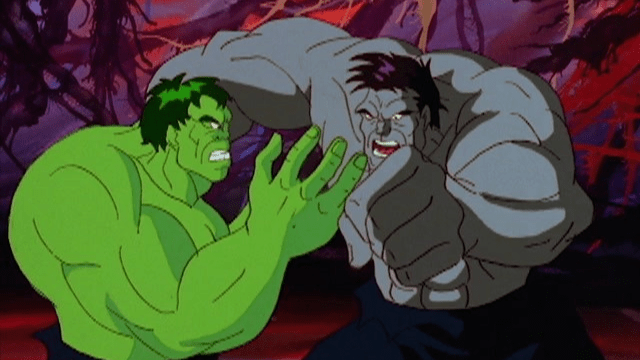
Inside his mind, Green Hulk and Gray Hulk battle for control. Gray Hulk wins. He emerges — cunning, brutal, and now infected.
Gray Hulk, Betty, and She-Hulk regroup, only to be captured by Gabriel and SHIELD. The parasite jumps from Betty to Gray Hulk. Now it has strength and strategy. Gray Hulk ejects Gabriel, She-Hulk, and the agents in escape pods, sealing himself and Betty inside. He seizes control of the base and prepares to unleash the weapon.
Outside, Gabriel reveals the truth: the parasite is Diana — a former SHIELD agent turned double agent. She was injured while stealing a mutagenic organism and became one with it. Now she wants revenge.
Inside the base, the power core overloads. The rage is too much. Gray Hulk’s fury forces the parasite out — and Green Hulk returns. Betty escapes. Hulk and She-Hulk push the base into a deep ocean trench. It detonates far below, sparing the surface.
Gabriel thanks them. General Ross arrives — awake, restored — and calls Banner his future son-in-law.
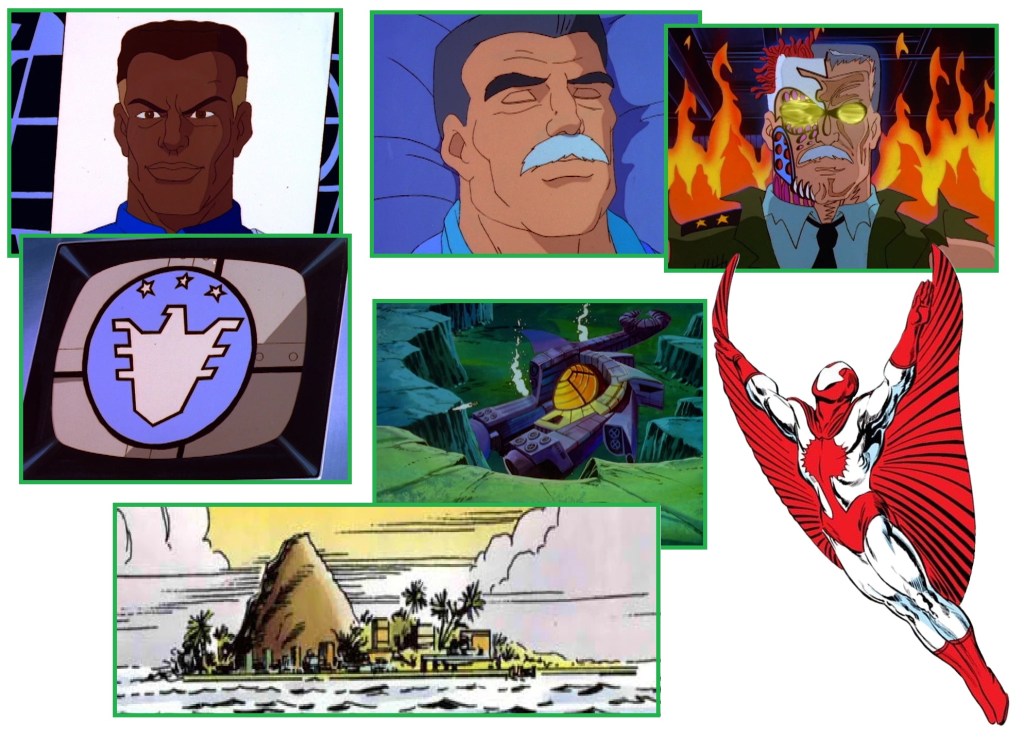
SHIELD Agent Gabriel Jones, not seen since season one, makes a last minute reappearance for the finale. The SHIELD logo flashes on the viewscreen when he cuts his call off from Betty.
Thunderbolt Ross is seen for the first time since Hulk of a Different Colour. It seems he’s been comatose since that episode.
Seabase was the lab base of Avenger Stingray, encountered in Iron Man‘s The Armour Wars (Part 2). In the comics, the Hydrobase also once served as Avengers Island, their ocean headquarters. A ‘Diane Newell’ was also based there.
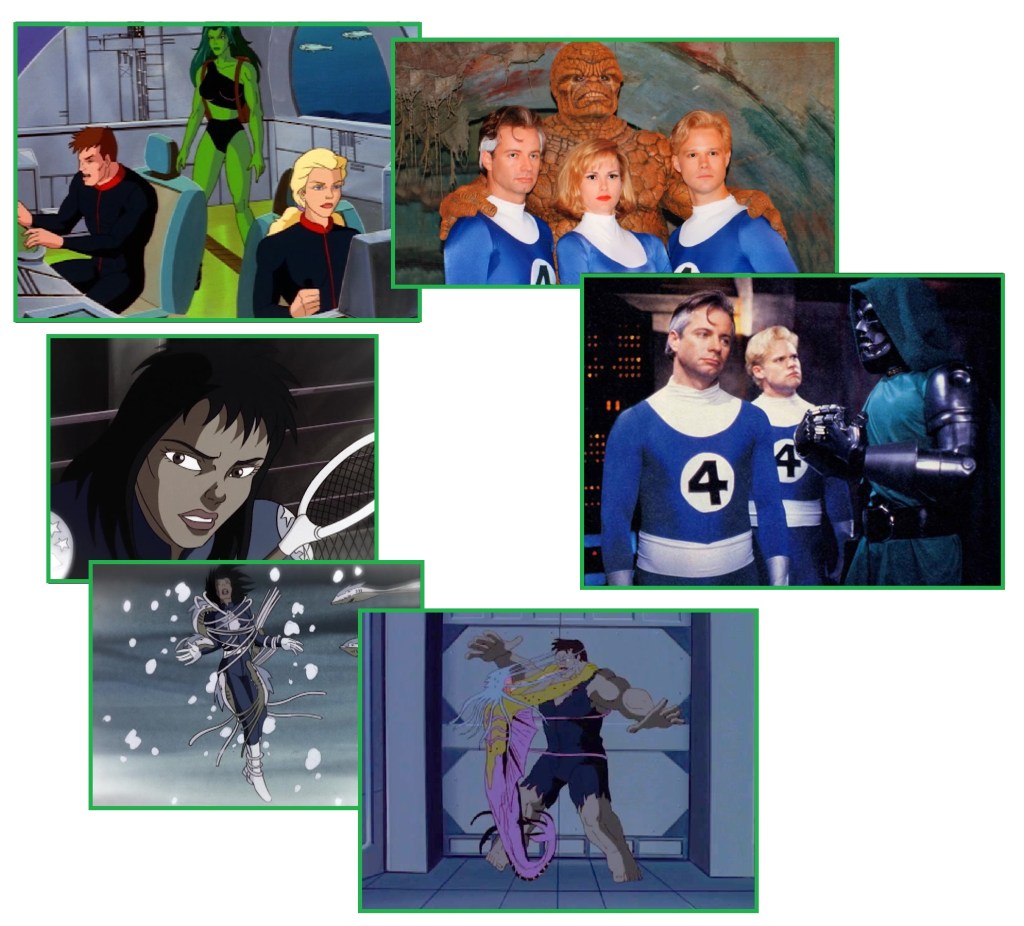
For some absurd reason, She-Hulk doesn’t wear a wetsuit in this episode, like every other character. She’s fighting in black underwear. Again! She also compares their underwater scenario to a Roger Corman flick – the legendary director who, amongst many others, directed the never released 1994 Fantastic Four movie!
Despite the comic-book style origin, Diana (no surname is given) is an original SHIELD agent created for this episode, as is the parasitic Hybrid.
HITTING HOLLYWOOD: THE HULK OF THE MCU
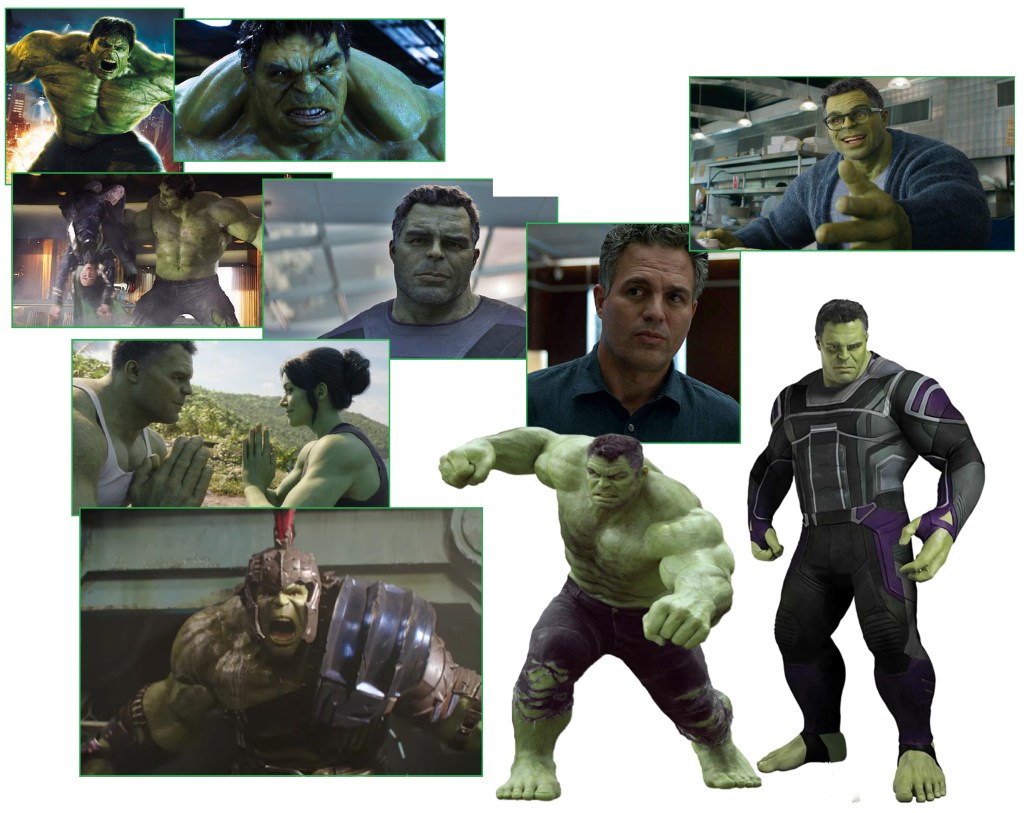
The Hulk first smashes into the Marvel Cinematic Universe in The Incredible Hulk (2008), portrayed by Edward Norton. It’s a fugitive’s tale — haunted, raw, and more horror than heroism. But the MCU’s Hulk is not static. He evolves. Recasts. Reframes. By the time The Avengers (2012) arrives, Mark Ruffalo steps into the role, and the Hulk becomes something else: a mythic wildcard, the monster the gods call when the sky falls.
Across the Infinity Saga, Hulk is the ensemble’s emotional faultline. He’s not the strongest Avenger — he’s the most unstable. In Age of Ultron, he’s a weapon of mass regret. In Thor: Ragnarok, he’s a gladiator lost to rage and isolation. And in Endgame, he becomes the “Smart Hulk” — a synthesis of Banner’s intellect and Hulk’s power. But even then, the tension remains. The MCU Hulk is never fully at peace. He’s always negotiating identity, agency, and control.
Unlike his comic counterpart, the MCU Hulk rarely gets solo space. His arc is threaded through others — Natasha’s quiet empathy, Thor’s chaotic friendship, Banner’s scientific guilt. He’s the monster in the mirror, the cost of power made flesh. And yet, he’s also the one who brings everyone back. It’s Hulk who survives the Snap’s radiation. Hulk who wields the Infinity Gauntlet. Hulk who restores half the universe.
In animation, Hulk appears in Avengers Assemble, What If…?, and Hulk and the Agents of S.M.A.S.H., each version exploring different facets — rage, humour, camaraderie. But the MCU’s live-action Hulk remains the most layered: a creature of myth, science, and sorrow.
His future is uncertain. Rights issues have kept him from leading his own saga. But with She-Hulk: Attorney at Law introducing legacy, and Captain America: Brave New World teasing gamma echoes, the door is open.
Because the Hulk isn’t just a punchline or a powerhouse. He’s the question the MCU keeps asking: what happens when the monster refuses to be monstrous?
The Lost Village | –




 X-Cess Minutiae
Leave a comment