


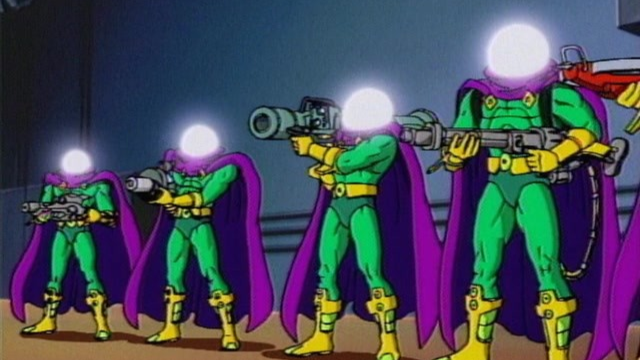

The Menace of Mysterio is a sleight-of-hand episode — a dazzling display of misdirection, identity, and perception. On the surface, it’s a monster-of-the-week caper: a new villain with a flair for theatrics frames Spider-Man for a string of high-profile crimes. But beneath the smoke and mirrors, the episode is about trust — how fragile it is, how easily it’s manipulated, and how hard it is to rebuild once broken.
Enter Quentin Beck, a special effects wizard turned illusionist saboteur. Mysterio isn’t just a villain with gadgets — he’s a narrative disruptor. He rewrites the story in real time, casting Spider-Man as the villain and himself as the hero. It’s a clever inversion, and one that hits Peter where it hurts: his public image, his sense of justice, and his already-precarious relationship with authority. The city turns on him. Even Jameson, usually content to bark from the sidelines, becomes an active participant in the takedown.
But the episode’s real surprise isn’t Mysterio — it’s Lieutenant Terri Lee. Introduced here as a no-nonsense NYPD officer, she cuts through the noise with clarity and conviction. She doesn’t fall for the illusion. She investigates. She listens. And in doing so, she becomes one of the few authority figures in Peter’s world who sees the man behind the mask. Terri Lee isn’t just a supporting player — she’s a counterweight to Jameson, a future ally, and a welcome addition to the ensemble.
By the end, the mask is restored, but the damage lingers. Peter wins the day, but not the trust of the city. Mysterio is defeated, but the idea he planted — that Spider-Man could be the villain — will echo for episodes to come. In a show that thrives on dual identities, The Menace of Mysterio reminds us that the greatest threat isn’t always physical. Sometimes, it’s the story being told about you.
Spider-Man is accused of stealing a priceless Egyptian artefact from the Metropolitan Museum. Peter wakes to the news — and a call from Mary Jane, eager for another date. But Peter knows he’s been framed. At the museum, Jameson prepares a broadcast while Peter finds a strand of webbing that hasn’t dissolved. Lieutenant Lee catches him. Mysterio appears, declares he’ll capture Spider-Man, and vanishes in a collapsing illusion.
On the bus home, Peter hears of another crime by “Spider-Man” at the Brooklyn Bridge Mall. He arrives in costume, confronts the imposter, but Mysterio intervenes and hurls him into the river. Everyone assumes he’s dead. Peter misses his date with MJ and considers quitting. But Lee arrives, convinced Spider-Man’s been framed. Her accusation — that Peter’s more coward than hero — triggers a memory of Uncle Ben. Peter suits up again.
Together, Spider-Man and Lee trace Mysterio’s grudge to a film crew incident at the Brooklyn Bridge. Peter remembers exposing a corrupt special effects artist: Quentin Beck. They deduce Beck is Mysterio. Meanwhile, Jameson receives a fax from Spider-Man directing him to Wonder Studios.
At the studio, Spider-Man uncovers Beck’s plans and the fake spider suit. Mysterio attacks with robots and illusions. Lee and Jameson arrive but are captured. Spider-Man breaks free, rescues them, and uses his spider sense to defeat Mysterio.
The next day at ESU, Peter and MJ reconnect — both apologising, both still circling something real.
ROGUE’S GALLERY
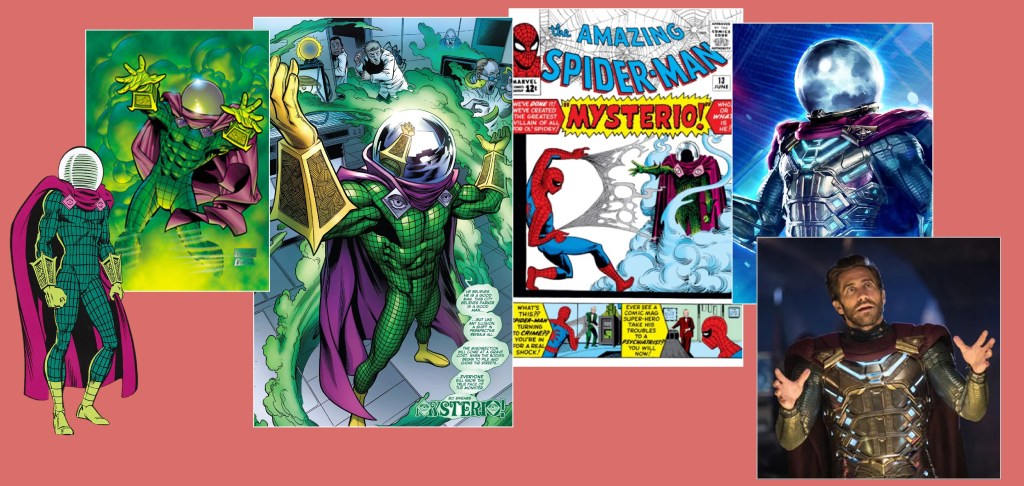
MYSTERIO
He was never meant to be real. Quentin Beck was a stuntman, a special effects wizard, a master of illusion — and that was the point. He didn’t want to fight Spider-Man with strength or speed. He wanted to rewrite reality. When he first appeared in Amazing Spider-Man #13 (1964), it was as a false hero, framing Peter for crimes he didn’t commit, then swooping in to claim the spotlight. Beck didn’t just want victory. He wanted applause.
But beneath the smoke and mirrors lay something darker. Mysterio wasn’t just a trickster — he was a narcissist with a vendetta, a man who believed that deception was power. His illusions weren’t just visual; they were psychological. He made Peter doubt himself, question his senses, fear his own mind. In animation, especially the 1994 series, Mysterio became a recurring threat — theatrical, cunning, and always one step removed from reality. He didn’t need to touch Spider-Man to hurt him. He just needed to make him believe.
And that’s what makes him dangerous. Mysterio is a villain of perception, a reminder that truth can be twisted, that fear can be manufactured, and that even the strongest heroes can be undone by doubt. He doesn’t break bones — he breaks trust. And in a world built on masks and secrets, that makes him one of the most insidious enemies Spider-Man has ever faced.
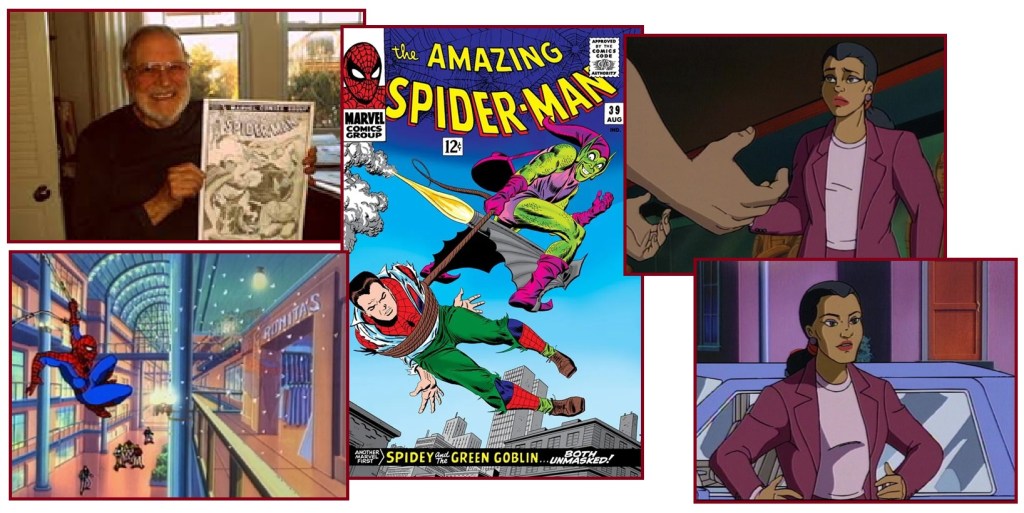
One of the stores in the mall is named ‘Romita’s’, after comic book artist John Romita. He took over from original artist and co-creator Steve Ditko with Amazing Spider-Man #39.
Police Detective Terri Lee, a series creation, makes her first appearance in this episode. She’ll appear multiple times. She’s voiced by Dawnn Lewis, who’s also the voice of Captain Carol Freeman on Star Trek: Lower Decks.
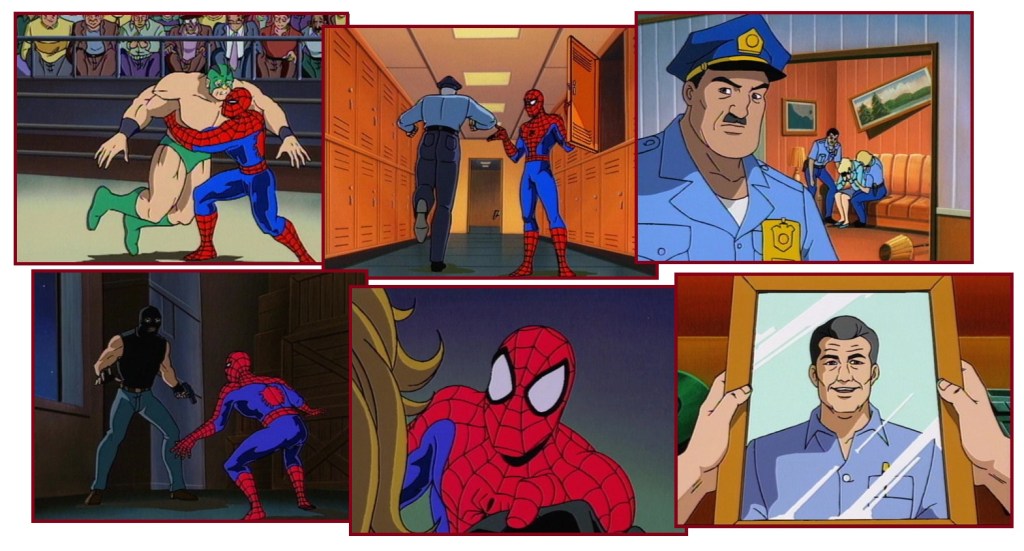
Peter’s origin as Spider-Man, including the murder of his Uncle Ben, is flashbacked to in this episode for the first time. It comes from Amazing Fantasy #15. We’ll see it again in Make a Wish.
Thwip Quip: “Mysterio, they don’t have anything to do with this. Let them go. Well, Jameson you can keep.”
Return of the Spider Slayers | Doctor Octopus: Armed and Dangerous




 X-Cess Minutiae
Leave a comment