


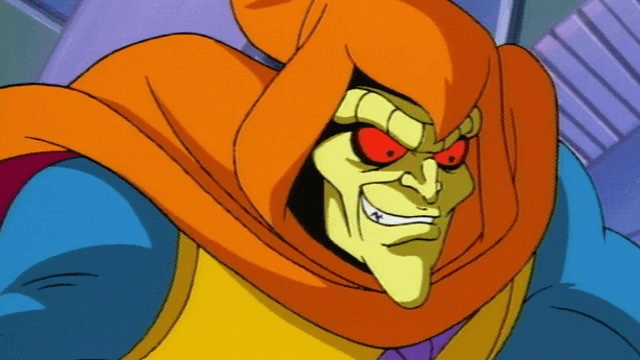
The Hobgoblin (Part 1) introduces chaos with a smirk. Unlike the tortured legacy of Norman Osborn, this goblin is a mercenary — stylish, strategic, and utterly unpredictable. His bombs aren’t just weapons. They’re statements. And his arrival fractures the power structure of the city in ways no villain has before.
The episode thrives on ensemble tension. Kingpin, Norman Osborn, and Spider-Man are all caught in the Hobgoblin’s orbit, each trying to manipulate or survive him. The Hobgoblin doesn’t want control. He wants leverage. And that makes him dangerous. He’s not mad. He’s methodical.
Peter’s world begins to unravel. Aunt May’s hospitalisation, MJ’s concern, and Norman’s evasiveness all collide with the Hobgoblin’s rise. The episode balances humour — especially in Jonah’s bomb-strapped panic — with genuine dread. The Hobgoblin isn’t just a new threat. He’s a new rhythm. One that doesn’t play by the old rules.
By the end of Part I, alliances are shifting, secrets are surfacing, and Spider-Man is no longer the only wildcard in town. The goblin has landed — and he’s not here to play.
Hobgoblin suits up and takes flight. At Fisk Tower, Kingpin and Alistair Smythe discuss a press event designed to soften Fisk’s image. Peter and Harry arrive, discussing their new apartment. Norman Osborn hosts. Jameson and Robbie are present. As Fisk takes the stage, Hobgoblin attacks. Peter saves Fisk from a laser blast, slips away, and returns as Spider-Man. The aerial chase ends with Peter out of web fluid, falling — but surviving. Hobgoblin escapes.
Later, Norman meets Hobgoblin at Oscorp. It’s revealed Norman hired him to take out Fisk. Displeased with the botched job, Norman fires him and threatens exposure. In Queens, Peter and Aunt May watch the news. They discuss Peter moving out, and May living with Anna Watson. At Harry’s housewarming, Peter reconnects with MJ and settles into his new life.
Hobgoblin breaks into Fisk’s building, is captured, and learns Fisk’s true identity. They strike a deal. Hobgoblin reveals Norman was behind the attack. The next morning, Aunt May visits Peter — but Hobgoblin strikes again, injuring her and kidnapping Harry. Peter rushes May to hospital. Kingpin demands Norman hand over his inventions in exchange for Harry’s life.
At the hospital, MJ comforts Peter. He begins to suspect Hobgoblin’s true target was Harry all along. At Oscorp, Norman and Hobgoblin plot to take down Fisk. Smythe watches via drone. Peter arrives, sees Hobgoblin, and suits up. The fight spills into the streets. Hobgoblin’s new glider and smart bombs corner Spider-Man. The building explodes. Hobgoblin laughs — convinced the hero is dead.
ROGUE’S GALLERY
THE HOBGOBLIN
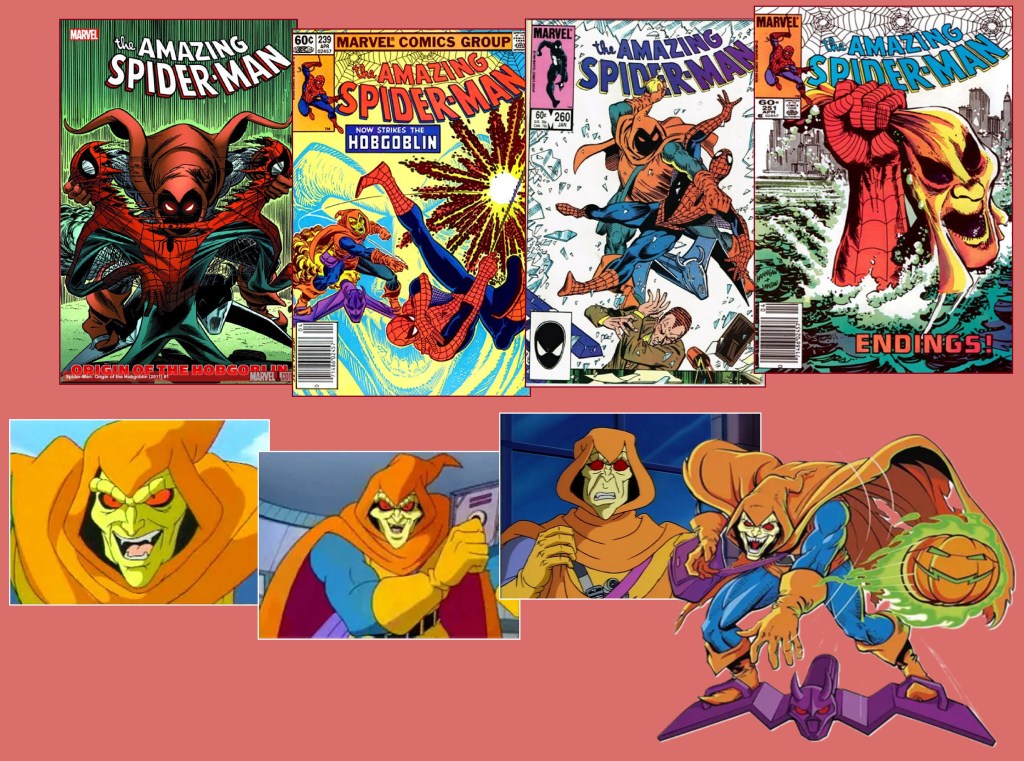
He wasn’t the original — and that was the point. Hobgoblin didn’t burst onto the scene with a tragic backstory or a chemical accident. He stole it. In The Amazing Spider-Man #238 (1983), a shadowed figure unearthed Norman Osborn’s Goblin gear and reimagined it with precision and flair. New colours. New tech. New ruthlessness. Where the Green Goblin was chaos incarnate, Hobgoblin was calculated — a villain who studied legacy, then weaponised it.
His identity was a mystery for years, a narrative knot that twisted through the comics like a slow-burning fuse. But the man beneath the mask — Roderick Kingsley — wasn’t mad. He was methodical. A fashion tycoon with a flair for manipulation, Kingsley used the Hobgoblin persona to eliminate rivals, destabilise power structures, and keep Spider-Man guessing. In animation, especially the 1994 series, Hobgoblin arrived before Norman, voiced with theatrical menace and armed with upgraded gliders and pumpkin bombs. He wasn’t a pale imitation — he was a strategic evolution.
And that’s what makes him dangerous. Hobgoblin isn’t driven by obsession or madness. He’s driven by control. He doesn’t want to destroy Spider-Man — he wants to outmanoeuvre him. To rewrite the rules. To prove that legacy isn’t about who came first, but who plays the long game. In a rogues’ gallery full of fractured minds and tragic origins, Hobgoblin stands apart — not as a copy, but as a calculated echo.
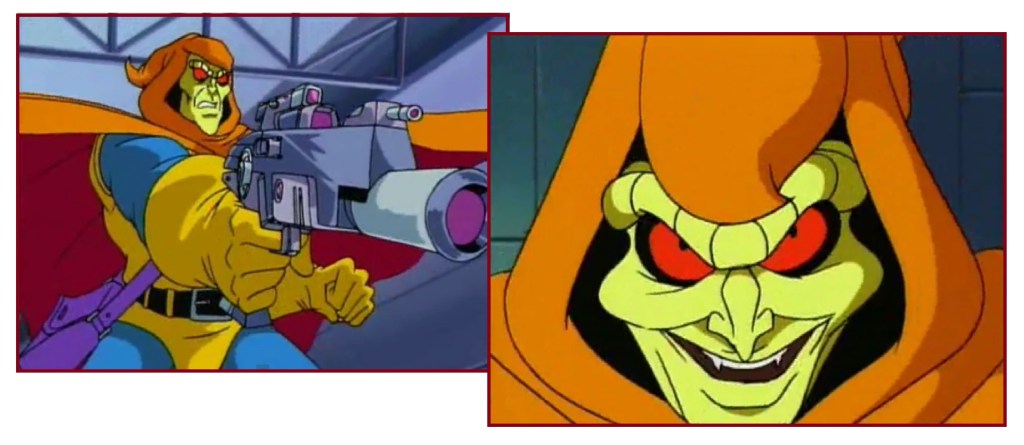
Mark Hamill, famous as Luke Skywalker, voices the Hobgoblin.
Thwip Quip: “How do I manage to find all these nutcases? Where do they come from? And how do I get ’em to go back?”
BY A FRIEND BETRAYED: THE STORY OF HARRY OSBORN
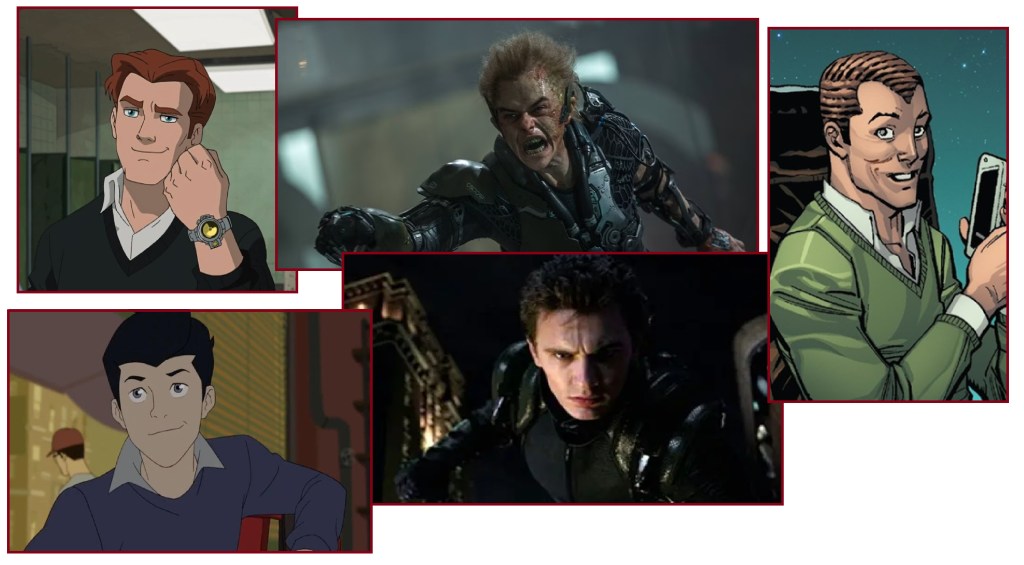
Harry Osborn first appears in Amazing Spider-Man #31, created by Stan Lee and Steve Ditko. He’s introduced as Peter Parker’s college roommate — a wealthy, aloof young man with a chip on his shoulder and a complicated relationship with his father, Norman Osborn. At first, Harry is more foil than friend, embodying the privilege and pressure Peter lacks. But over time, he becomes one of Peter’s closest allies, even as his family legacy begins to unravel.
In the comics, Harry’s arc is one of inheritance and instability. He struggles with addiction, identity, and the shadow of the Green Goblin. After Norman’s death, Harry eventually takes up the mantle himself, becoming the second Green Goblin in Amazing Spider-Man #136 (1974). His descent is tragic — driven by grief, jealousy, and a desperate need to prove himself. Yet even in villainy, Harry is never truly lost. His love for Peter and his own son, Normie, anchors him. He dies in Spectacular Spider-Man #200 (1993), sacrificing himself to save Peter — a final act of redemption.
On film, Harry’s journey is mythic and multifaceted. James Franco’s portrayal in Raimi’s trilogy charts a slow burn from best friend to bitter enemy, culminating in a redemptive death in Spider-Man 3 (2007). Dane DeHaan’s version in The Amazing Spider-Man 2 (2014) is more abrupt — a sickly heir turned monstrous, lacking the emotional groundwork. Both versions grapple with legacy, but only Franco’s Harry feels truly earned. His arc is Shakespearean: love, betrayal, madness, and sacrifice.
In animation, Harry often plays the role of friend-turned-foe. Spider-Man keeps him in Norman’s orbit, while Spectacular Spider-Man (2008) gives him a more active descent — manipulated by Oscorp, haunted by expectation. Across media, Harry Osborn is the emotional faultline in Peter’s life. He’s the friend who knows too much, the son who inherits too much, and the boy who breaks under the weight of what he was never meant to carry.




 X-Cess Minutiae
Leave a comment