


THE NEOGENIC NIGHTMARE
Chapter III
Hydro-Man isn’t just the arrival of a new villain — it’s the embodiment of toxic attachment, the refusal to let go of the past. Morrie Bench doesn’t become water; he becomes fixation made flesh. His powers are fluid, but his emotions are rigid, locked in the memory of Mary Jane. Every wave, every flood, is less about crime and more about control.
The episode plays out like a cautionary tale. Mary Jane’s rejection of Morrie is clear, decisive, and brave — but his response is to drown her in his need. Spider-Man’s battle against Hydro-Man is less about fists and webs than about suffocation. The water isn’t just a weapon; it’s a metaphor for obsession, for the way someone’s unresolved desire can engulf and consume.
Spider-Man himself is weakened, his mutation gnawing at him, his powers unreliable. That fragility makes the fight sharper: he isn’t just battling a villain, he’s battling the fear of drowning in his own failing body. Hydro-Man’s floods mirror Peter’s inner collapse, the sense that both hero and villain are being undone by forces they cannot control.
The climax isn’t about Spider-Man’s victory. It’s about Mary Jane’s autonomy. She lures Hydro-Man to the rooftop, away from his element, and forces him to confront the truth: without water, he is nothing. His disintegration isn’t just physical — it’s symbolic. Obsession evaporates when denied, leaving only emptiness behind.
This episode isn’t about water. It’s about possession, rejection, and the danger of being defined by someone else’s need. Hydro-Man reminds us that monsters aren’t always born from science or mutation. Sometimes, they’re born from the inability to let go.
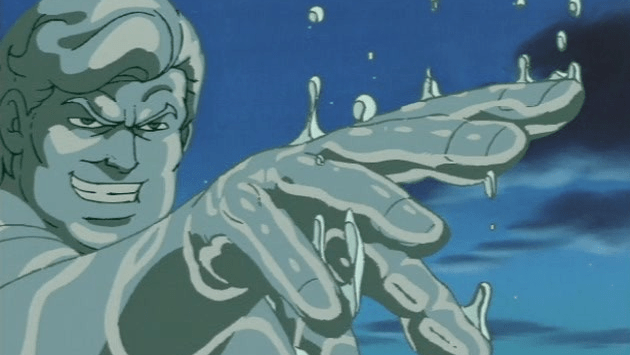
A string of robberies across the city points suspicion towards Spider-Man, until a watery assailant strikes at an aquarium museum. When Spider-Man intervenes, he is overwhelmed and forced to retreat, realising he faces a new foe.
Meanwhile, Peter’s date with Mary Jane is interrupted by a call from Morrie Bench. Though she insists she wants nothing to do with him, Morrie reveals his transformation into Hydro-Man, using his powers to pursue her. Spider-Man confronts him, but Hydro-Man’s strength and fury prove too much, nearly drowning the hero before he escapes with Mary Jane.
Mary Jane confides that she once dated Morrie, while Peter prepares new web-shooters to counter Hydro-Man’s abilities. The villain soon kidnaps her, revealing himself as the thief behind the recent robberies and threatening to flood the city unless she accepts him. Spider-Man arrives, using his new webbing to fight back, though Hydro-Man reforms again and presses the attack.
In the final battle, Mary Jane lures Hydro-Man to the rooftop, far from any water source. Enraged, he lunges at Spider-Man but crashes to the ground, dissolving into a puddle before evaporating. With the danger passed, Peter takes Mary Jane to the fair, their bond reaffirmed after the ordeal.
ROGUE’S GALLERY
HYDRO-MAN
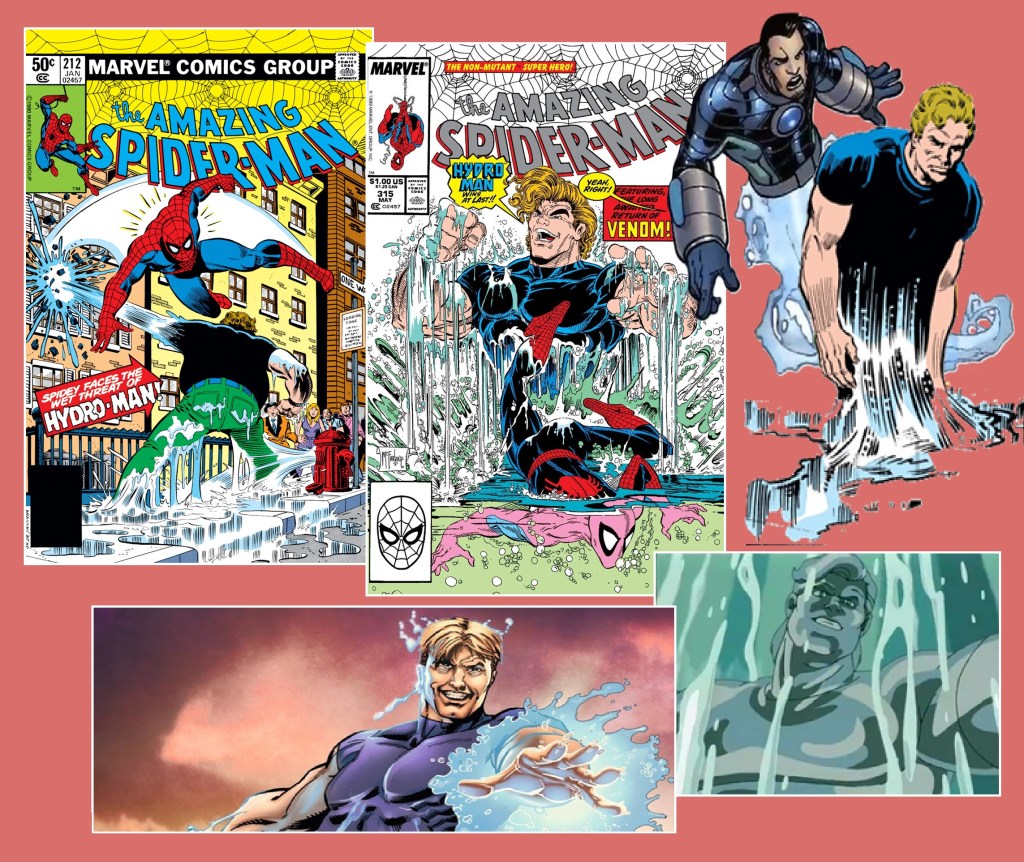
Hydro-Man first appears in Amazing Spider-Man #212, created by Dennis O’Neil and John Romita Jr. Morris Bench is a dock worker accidentally transformed during an experimental accident involving a generator and Spider-Man. The result is a man whose body becomes living water — a power that makes him formidable but also unstable.
In the comics, Hydro-Man is rarely a mastermind. He’s muscle, often paired with other villains like Sandman or the Sinister Syndicate. His powers make him a constant nuisance, but his lack of ambition keeps him from rising above the role of hired gun. Still, his watery form allows for inventive battles, and he remains a recurring thorn in Spider-Man’s side.
On television, Hydro-Man makes his mark in Spider-Man, where his origin is tied to Mary Jane, adding emotional weight. His obsession with her becomes a tragic subplot, culminating in MJ’s clone storyline. Later animated versions keep him as a brute, but the ’94 series gives him rare depth.
On film, Hydro-Man is teased in Spider-Man: Far From Home (2019), though only as an illusion created by Mysterio’s drones. The real Morris Bench has yet to appear in live-action. Across media, Hydro-Man endures as a villain defined less by ambition than by obsession — a man whose powers are vast, but whose vision is small.

Ned Leeds’ name is seen on a Bugle byline – two whole seasons before he shows up in person in season four.
Due to movie negotiations, two Spider-Man villains, Sandman and Electro, were unable to be added to this series’ villains roll call, at least at the beginning. While Electro (dramatically changed) turns up in season five, Sandman never appears and Hydro-Man is used to replace him here.
Despite his apparent death in this episode, Hydro-Man may survive this episode – a few weeks later he once again took the Sandman’s place, this time in an episode of Fantastic Four. However, as season five tells us, Hydro-Man can be cloned easily…
Thwip Quip: To Hydro-Man, on his villain name: “Did you say Hydrant-Man? The dogs must love you.”
LIZ ALLEN: THE GOBLIN’S GIRL
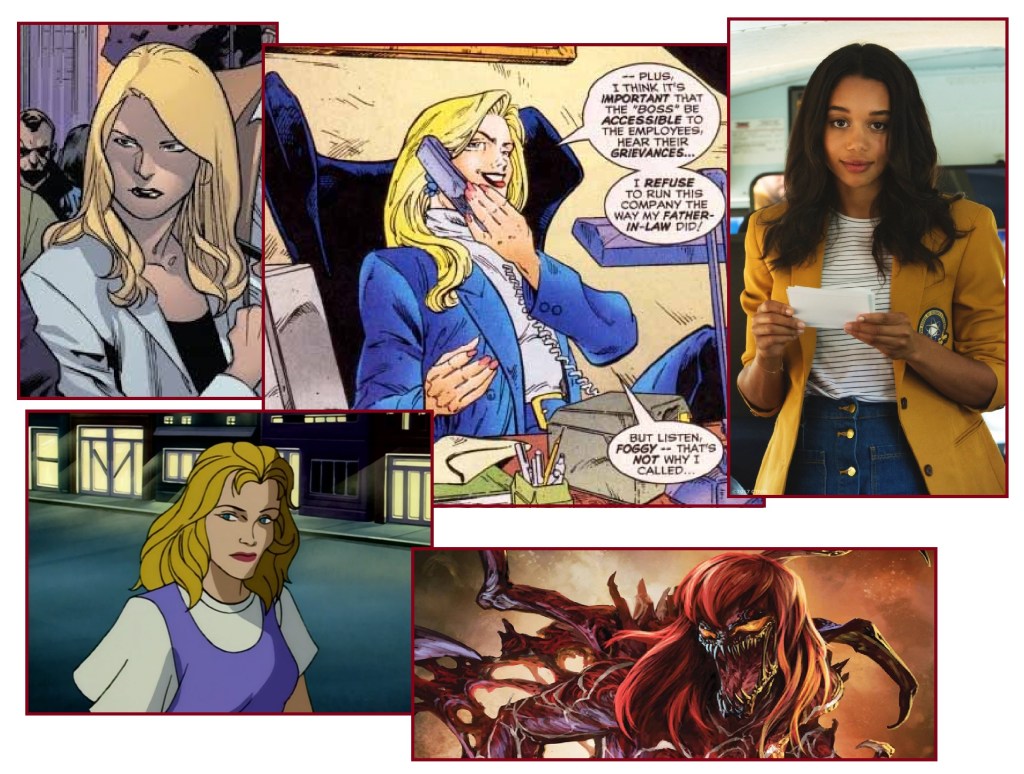
Liz Allen first appears in Amazing Fantasy #15 (1962). She is introduced as a popular Midtown High student, part of Flash Thompson’s circle, and one of Peter Parker’s early crushes. In those formative issues, Liz embodies the unattainable girl-next-door, highlighting Peter’s outsider status.
In the comics, Liz evolves beyond the high school archetype. She later marries Harry Osborn, becoming entwined with the Osborn legacy and the tragedies of Norman and Harry. As Harry’s wife and the mother of Normie Osborn, Liz becomes a figure of resilience, navigating the chaos of supervillain legacies while trying to protect her family. Her journey reflects the human cost of Spider-Man’s world.
On television, Liz appears in Spider-Man as part of Peter’s college circle, though with limited focus. In Spectacular Spider-Man (2008), she is given greater depth, becoming Peter’s girlfriend for a time. This version highlights her warmth and loyalty, making her one of the most grounded portrayals of Peter’s romantic life.
On film, Liz is reimagined in Spider-Man: Homecoming (2017), portrayed by Laura Harrier. Here, she is Peter’s high school crush and the daughter of Adrian Toomes, the Vulture, adding dramatic tension to the story. Across media, Liz Allen endures as a symbol of normalcy within Spider-Man’s mythos — a reminder of the ordinary lives caught in extraordinary webs.




 X-Cess Minutiae
Leave a comment