


THE NEOGENIC NIGHTMARE
Chapter IV
This episode takes Spider-Man’s mutation crisis and magnifies it through the lens of the X-Men, turning personal dread into a universal struggle. Peter isn’t just worried about losing his powers — he’s terrified of losing himself, of becoming something monstrous. His desperation drives him to Xavier’s mansion, but instead of sanctuary he finds suspicion, restraint, and rejection. The episode makes clear: the fear of change isn’t only his. It’s society’s.
The clash with the X-Men isn’t about fists or webs. It’s about philosophy. Spider-Man wants a cure, a way back to normality. Xavier offers acceptance, a way forward into difference. That tension cuts deep. For Peter, mutation is a disease. For the X-Men, it is identity. The episode forces him to confront the possibility that what he sees as horror, others see as selfhood. It’s not a crossover for spectacle — it’s a collision of worldviews.
Herbert Landon embodies the darker side of that fear. His promise of a cure masks a genocidal intent, the belief that mutants must be eradicated to end their suffering. He represents prejudice disguised as science, ideology dressed as progress. Against him, Spider-Man’s desperation feels uncomfortably close — the line between wanting to be cured and wanting others erased is thinner than Peter realises.
The episode is about what happens when fear of change collides with the demand for acceptance. The Mutant Agenda asks whether mutation is curse or identity, and whether Peter can live with the answer. The danger isn’t just that he might become a monster. It’s that in seeking a cure, he might become complicit in a world that sees difference as something to destroy.
Haunted by the fear that his powers may be mutating him into a monster, Spider-Man seeks help from Professor Charles Xavier. Arriving at the X-Mansion, he is mistaken for a threat and restrained by the defence systems, only to clash with the X-Men before escaping into the Danger Room. After a brief skirmish, Xavier intervenes, but disappoints Spider-Man by explaining that he cannot offer a cure — his role is to train mutants to accept themselves.
Meanwhile, Herbert Landon meets with the Hobgoblin, who threatens to expose Landon’s duplicity with the Kingpin unless paid off. Landon attempts to kill him but fails, before reassuring Kingpin that his plans will be revealed at a press conference. Later, Beast tells Spider-Man that Landon is working on a cure for mutantcy, but is soon captured by agents seeking to imprison mutants.
The following day, Wolverine tracks Beast’s scent and mistakenly concludes that Spider-Man has betrayed him. At the Brand Corporation conference, Hobgoblin disrupts proceedings, and Spider-Man narrowly avoids disaster thanks to an unknown telekinetic force. Landon, meanwhile, reveals to the captive Beast that his “cure” is in fact a weapon designed to eradicate mutants.
When Spider-Man confronts Hobgoblin, he learns the truth of Landon’s plan. Wolverine arrives mid-fight, furious at Spider-Man over Beast’s disappearance, and the two clash. As tensions rise, Hobgoblin prepares to destroy them both with a pumpkin bomb, leaving Spider-Man caught between mutant allies and enemies alike.
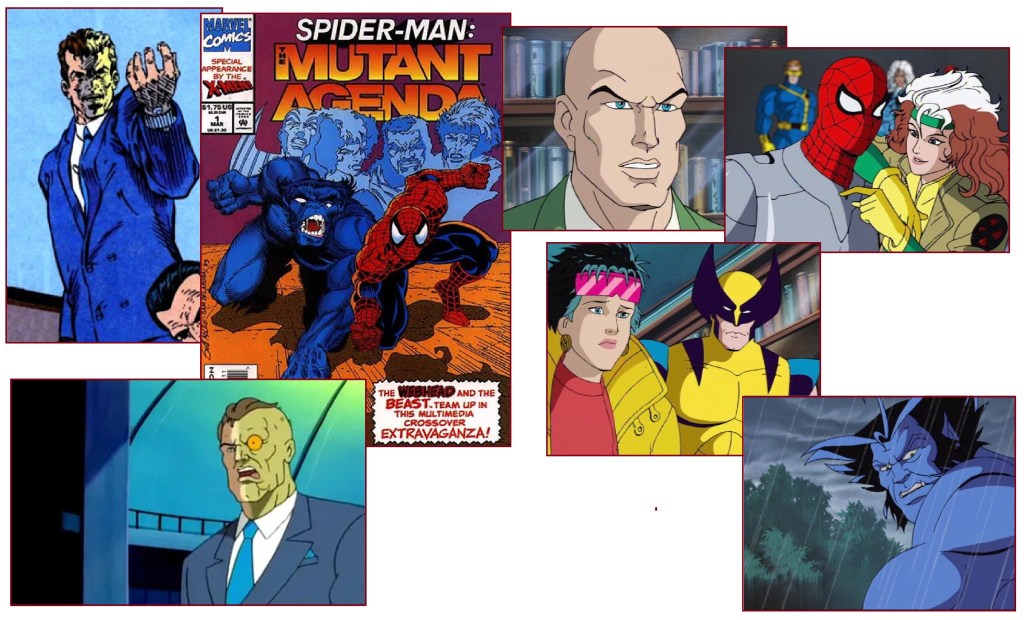
Herbert Landon is voiced by the late, great British thespian David Warner. Landon himself first appeared in comics in Spider-Man: The Mutant Agenda #1 in 1994. This two-parter is based on the story.
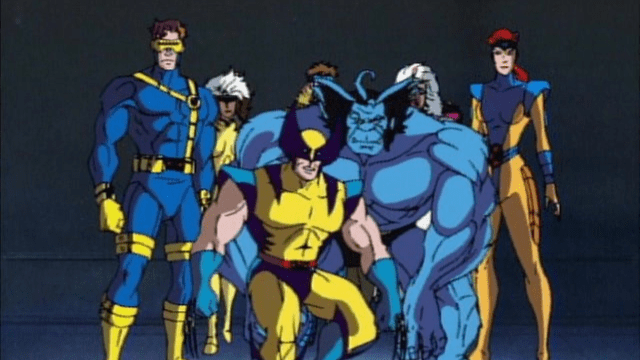
This two-parter was expensive to make – primarily due to the fact that the producers had to fly the voice cast of X-Men from Toronto to Los Angeles. Every member of the team appears in the two-parter, complete with their theme and their musical cues. One of the henchmen in the episode is named Lewald, after head X-Men writer Eric Lewald.
Thwip Quip: Spidey, imitating Storm: “Um, power of web shooters get real sticky!”
SPIDER-MAN AND THE X-MEN
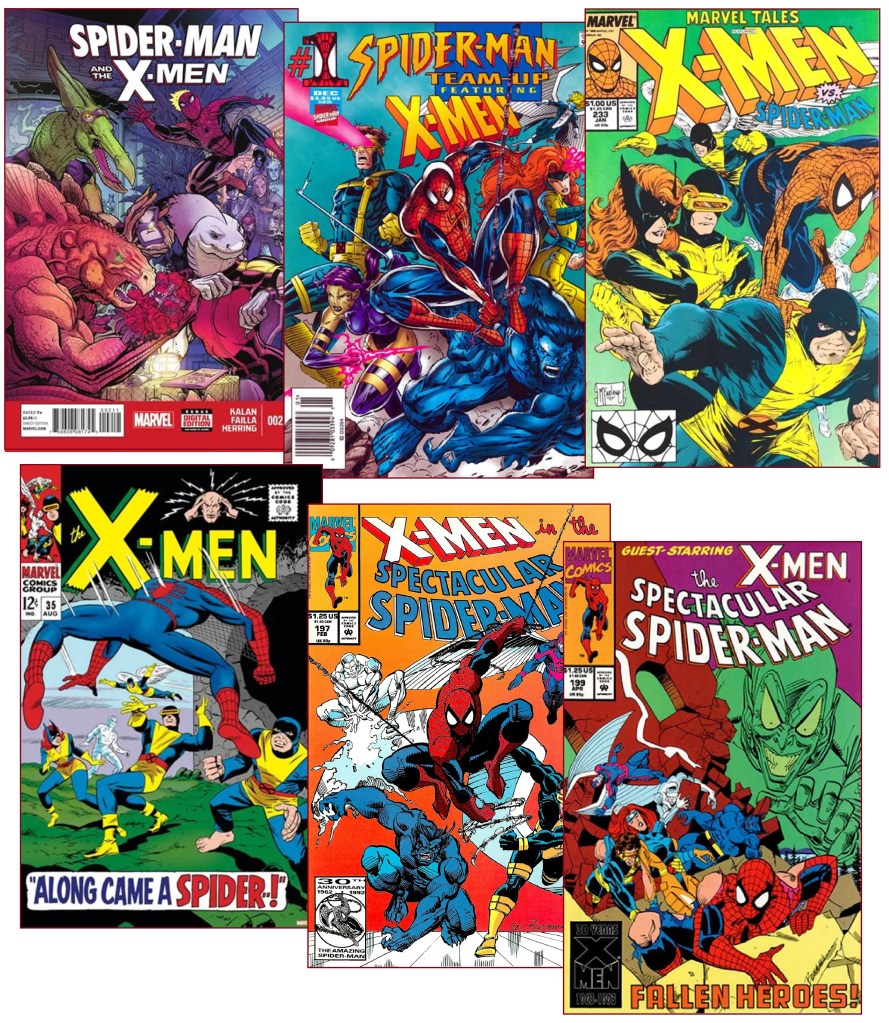
The crossover between Spider-Man and X-Men: The Animated Series in 1995 was ground-breaking. For the first time, two separate Marvel cartoons shared continuity, with the full X-Men cast appearing alongside Spider-Man. This was a huge deal at the time, validating the idea of a connected Marvel universe on television years before the MCU.
The episodes showcased the original voice actors and characterisations from X-Men, preserving the tone and personalities fans already knew. Seeing Spider-Man interact with Wolverine, Cyclops, Storm, and the rest of the team gave the crossover weight, making it feel like a genuine expansion rather than a cameo.
Beyond spectacle, the crossover highlighted thematic resonance. Spider-Man’s fear of mutation mirrored the X-Men’s struggle against prejudice, tying his personal crisis to their broader fight. It wasn’t just a guest appearance — it was a bridge between mythologies, showing how Marvel’s heroes could share space and stories.
The impact was lasting. For fans in the mid-90s, this crossover proved Marvel’s animated universe could be interconnected, planting seeds for future crossovers and team-ups. It remains one of the most celebrated arcs of Spider-Man: The Animated Series, remembered less for its plot than for the cultural moment it represented.




 X-Cess Minutiae
Leave a comment