


THE NEOGENIC NIGHTMARE
Chapter VII
Enter the Punisher marks the moment Spider-Man’s mutation spirals into monstrosity, and the world responds not with compassion but with hunters. Peter sprouts four extra arms, his body betraying him, his humanity slipping further away. The serum he took too soon has left him grotesque, and the ordinary life he craves — dates with Mary Jane, safety in Aunt May’s home — is suddenly impossible. The episode isn’t about mutation alone. It’s about what happens when weakness invites predators.
The Punisher arrives as the embodiment of absolute judgement. His philosophy is stark: criminals cannot be redeemed, only eliminated. Where Spider-Man fights to save, Punisher fights to end. His rescue of a hostage is brutal, efficient, and chilling — a reminder that his war on crime is not about justice, but eradication. When the media brands Spider-Man a predator, Punisher listens, convinced that the wallcrawler belongs in his crosshairs.
Morbius prowls the city, draining plasma, his hunger mistaken for Spider-Man’s crimes. The parallel is deliberate: two men defined by mutation, one cursed by science, the other condemned by perception. When Punisher confronts Spider-Man, immobilising him, the clash is more than physical. It is ideological. Spider-Man resists killing, even in his monstrous state. Punisher insists killing is the only solution. Their battle is not just hunter versus hero — it is mercy versus vengeance.
The episode isn’t about victory. It’s about escalation. Spider-Man’s mutation accelerates, his body twisting into the feral Man-Spider, and the hunters close in. Punisher sees a monster to be destroyed. Peter sees a self he cannot control. We end not with resolution, but with fracture: the hero transformed, the hunter relentless, and the question lingering — when the world sees you as a monster, how long before you become one?
Peter Parker’s mutation reaches breaking point. Sprouting four extra arms, he hides from Aunt May, terrified of being discovered. A phone call from Mary Jane only deepens the crisis: she wants a date, he wants to flee. The serum he took too soon against Dr. Mariah Crawford’s advice has left him monstrous, and the ordinary life he craves is slipping further out of reach.
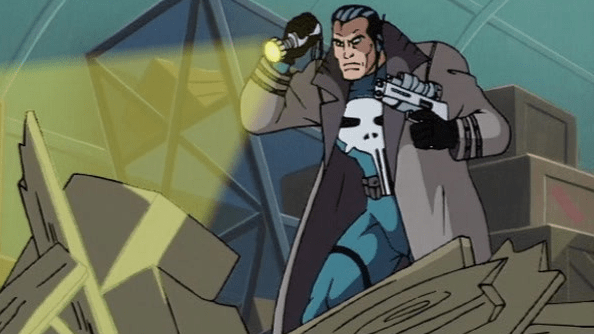
Meanwhile, the Punisher makes his entrance. In a warehouse, he rescues a wealthy hostage, dispatching her captors with brutal efficiency. His philosophy is stark: criminals must be eliminated, not rehabilitated. When one thug escapes justice, Punisher vanishes into the shadows, his war on crime relentless, his morality absolute.
Elsewhere, Morbius continues his descent, draining plasma from victims across the city. His disappearance from hospital leads the media to blame Spider-Man, with J. Jonah Jameson branding him a predator. In his Battle Van, Punisher listens, convinced Spider-Man is the true threat. When Morbius appears outside the hospital, mistaken for Spider-Man, the stage is set: Spider-Man fights Morbius, Punisher hunts Spider-Man, and chaos erupts.
Spider-Man tracks Morbius through sound recordings, but Punisher remains on his tail. At Morbius’s hideout, the vampire nearly drains Peter’s plasma before fleeing into the night. The chase ends violently: Punisher fires a rocket, sending Spider-Man crashing through a warehouse roof. There, his mutation accelerates beyond control. Peter Parker is gone. In his place stands the monstrous Man-Spider — a gigantic, feral creature that turns on Punisher with primal fury.
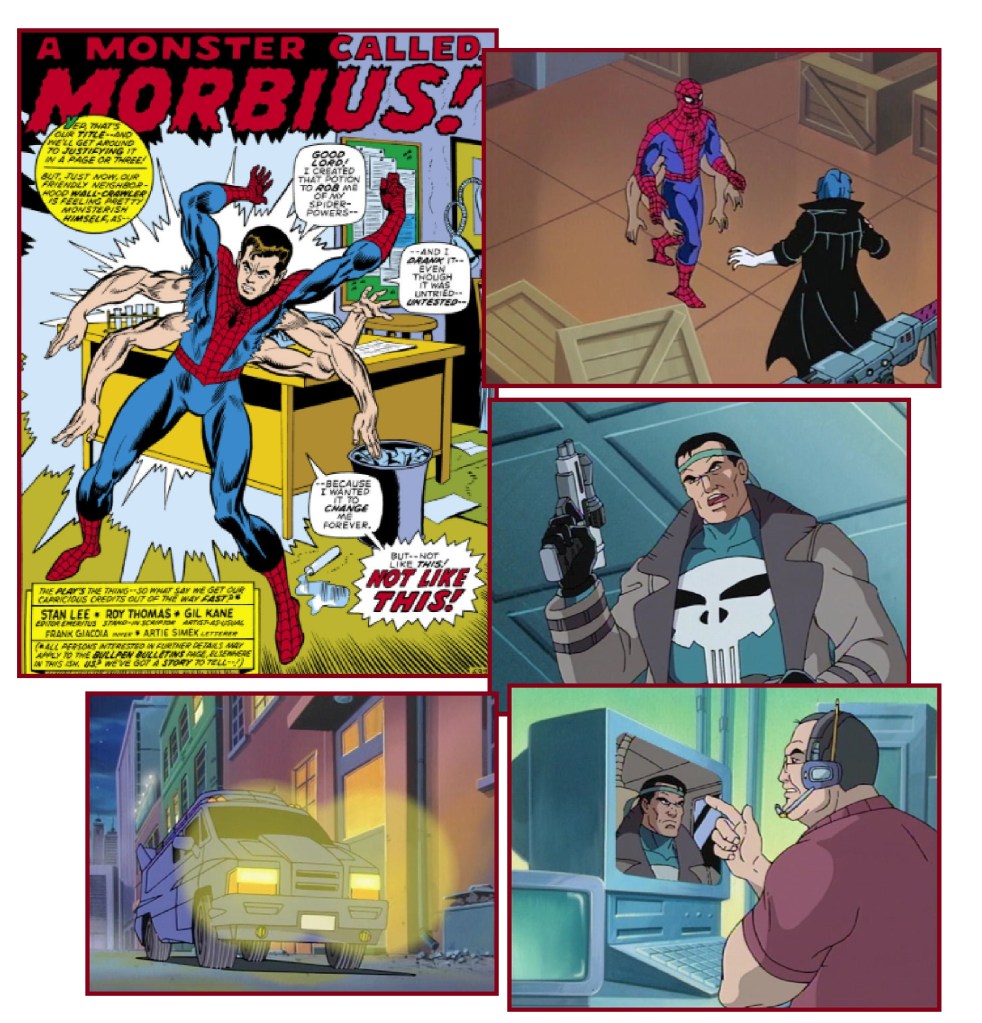
Spidey developed four extra arms in Amazing Spider-Man #101.
Carl Potts, writer of this episode, also wrote a run on The Punisher comic book. Censorship also changes the Punisher. His costume is made more toy friendly, as is his battle van. Microchip, who appears to assist Frank in this episode, is only referred to as ‘Chip’.
Thwip Quip: When Morbius asks him how he found him: “Well lets say figuring that out drove me batty. now I’m going to take you where you can get help.”
THE PUNISHER: TAKING OUT THE GUILTY
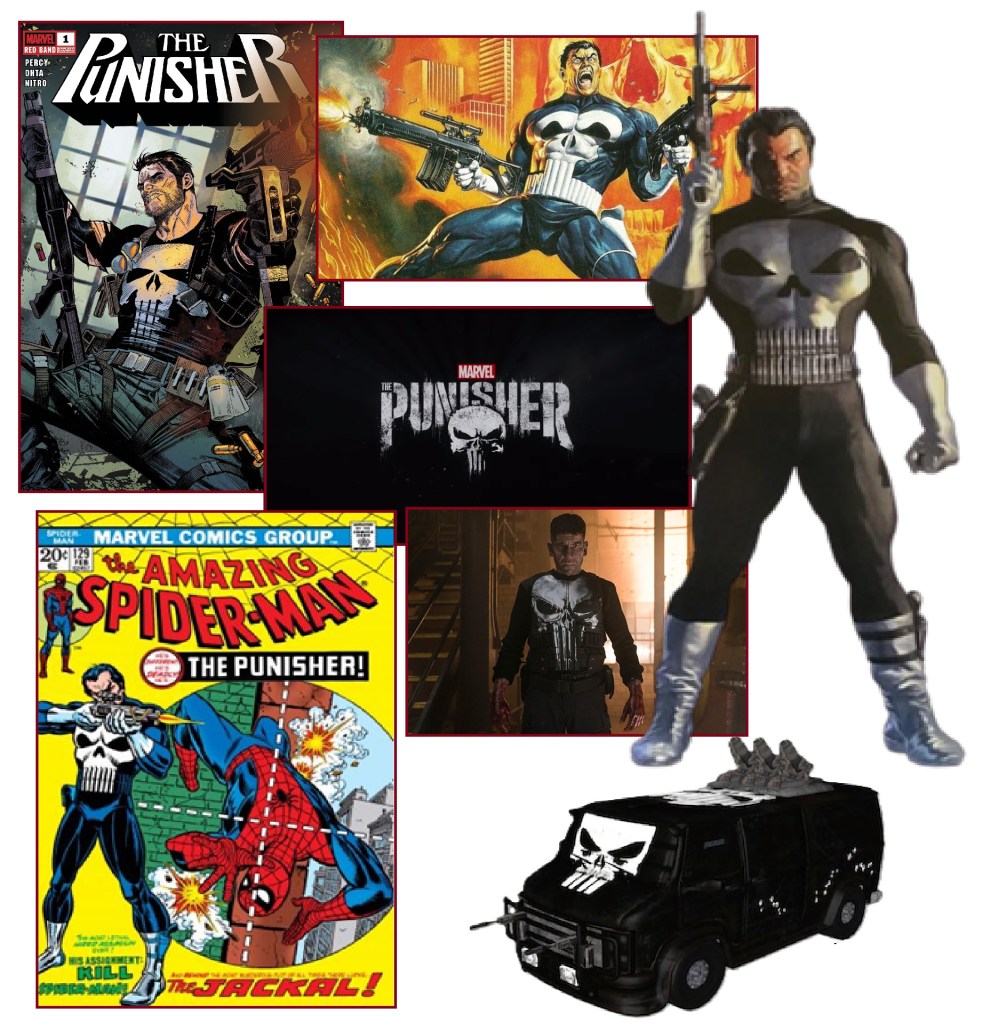
The Punisher first appears in Amazing Spider-Man #129 (1974), created by Gerry Conway, Ross Andru, and John Romita Sr. Frank Castle is introduced as a vigilante assassin hired to kill Spider-Man, believing him to be a criminal. His skull emblem and arsenal of weapons mark him as a stark contrast to Spidey’s moral code — a hero who kills rather than saves.
In the comics, Castle evolves from antagonist to anti-hero. His tragic origin — the murder of his family by mobsters — drives his relentless war on crime. Unlike Spider-Man, Daredevil, or other street-level heroes, the Punisher refuses compromise. His methods alienate allies, but his presence forces moral debates about justice, vengeance, and the limits of heroism.
On television, the Punisher is most memorably portrayed by Jon Bernthal in Daredevil (2016) and The Punisher (2017–19). This version captures his complexity: brutal yet principled, haunted yet unyielding. Earlier adaptations, like Spider-Man: The Animated Series, softened his violence for younger audiences, but still emphasised his relentless pursuit of criminals.
On film, Castle has appeared in multiple incarnations — from Dolph Lundgren’s 1989 take to Thomas Jane (2004) and Ray Stevenson (2008). Each emphasises his war on crime, though with varying tones. Across media, the Punisher endures as a symbol of uncompromising vengeance — a man who embodies the question of whether justice without mercy is justice at all.




 X-Cess Minutiae
Leave a comment