


THE NEOGENIC NIGHTMARE
Chapter IX
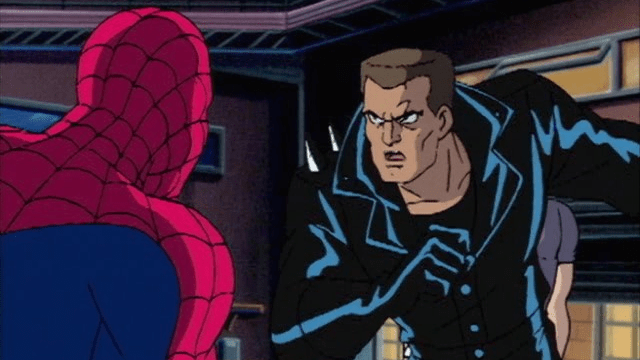
Blade, the Vampire Hunter marks the moment Marvel’s Daywalker stepped out of the shadows and into the limelight. Introduced in 1973, Blade had long been a cult figure in comics — a relentless hunter defined by trauma and duality. But here, in Spider-Man, he was given a stage that reached far beyond the page. His arrival on a motorcycle, armed with garlic gas and silver weapons, was more than spectacle. It was a declaration: Blade was not just another supporting character. He was a force.
The episode thrives on collision. Morbius, cursed by science, feeds on plasma. Spider-Man, cursed by mutation, fights to preserve his humanity. Blade, cursed by vampirism, hunts without mercy. Their triangle is not simply hero versus villain. It is ideology versus ideology. Spider-Man resists killing, Blade insists it is necessary, and Morbius embraces his monstrous immortality. The clash is brutal, but it is also thematic: three men defined by mutation, each choosing a different path.
Blade’s presence reframes the narrative. For Spider-Man, he is both ally and threat, a hunter who sees monsters everywhere. For the audience, he is something new — darker, sharper, more dangerous than the usual animated hero. His partnership with Whistler, his origin as a dhampir, and his refusal to compromise gave him a mythic weight that resonated beyond Saturday morning television. This was not just a guest star. This was a character being tested for something larger.
And larger came. Blade’s animated spotlight helped propel him into cinema, where Wesley Snipes’s portrayal in Blade (1998) redefined superhero films with grit, violence, and gothic style. The trilogy that followed proved Marvel’s characters could dominate the big screen, paving the way for the modern superhero boom. Blade, the Vampire Hunter is not remembered only as an episode of Spider-Man. It is remembered as the moment a cult figure became an icon, the spark that lit the path from comics to film.
Michael Morbius prowls the city, his hunger for plasma unrelenting. Spider-Man intercepts him, but their battle is interrupted by a new force: Blade, the Vampire Hunter. Arriving on his motorcycle, Blade seeks not to cure but to slaughter. Morbius flees into the night, Blade gives chase, and Spider-Man intervenes, unwilling to let the hunter destroy a man still trapped in mutation. The clash between them is sharp, Blade convinced by newspaper reports that Spider-Man himself is a vampire. Garlic gas fills the air, but when Peter survives, Blade realises the truth — the wallcrawler is no monster. Yet even as Blade departs, Peter’s mutation flares again, driving him to Dr. Connors for treatment.
The city turns against Spider-Man, the public convinced he is responsible for the plasma victims. Morbius ambushes him, declaring his intent to remain as he is, immortal and unrepentant. As Morbius prepares to drain him, Blade strikes once more, determined to end the vampire’s reign. But Spider-Man, caught between hunter and hunted, resists Blade’s lethal intent. Their conflict escalates, Blade even turning his weapons on Spider-Man for standing in his way, forcing Peter to escape into the night.
At Blade’s base, Whistler enters the story. Spider-Man, having planted a tracer, arrives to confront the hunter. Another fight erupts, but Whistler halts it, explaining Blade’s origin and their mission as vampire hunters. The Neogenic Recombinator becomes the new battleground: Spider-Man warns it can create vampires, Blade insists it must be destroyed, and Whistler counters that it might cure Blade himself, whose own physiology grows ever closer to vampirism. The tension is not just about Morbius — it is about Blade’s identity, and whether his curse can be undone.
Meanwhile, Peter’s personal life fractures further. Mary Jane calls, inviting him to a student meeting about the plasma disorder. Felicia Hardy mourns Morbius’s disappearance, and when Mary Jane sees Peter comforting her, she turns away, choosing Harry Osborn instead. In the shadows, Morbius steals the Recombinator from E.S.U., ambushing Blade and nearly killing him before Spider-Man intervenes. At last, hunter and hero unite, their rivalry set aside as they prepare to face Morbius together.
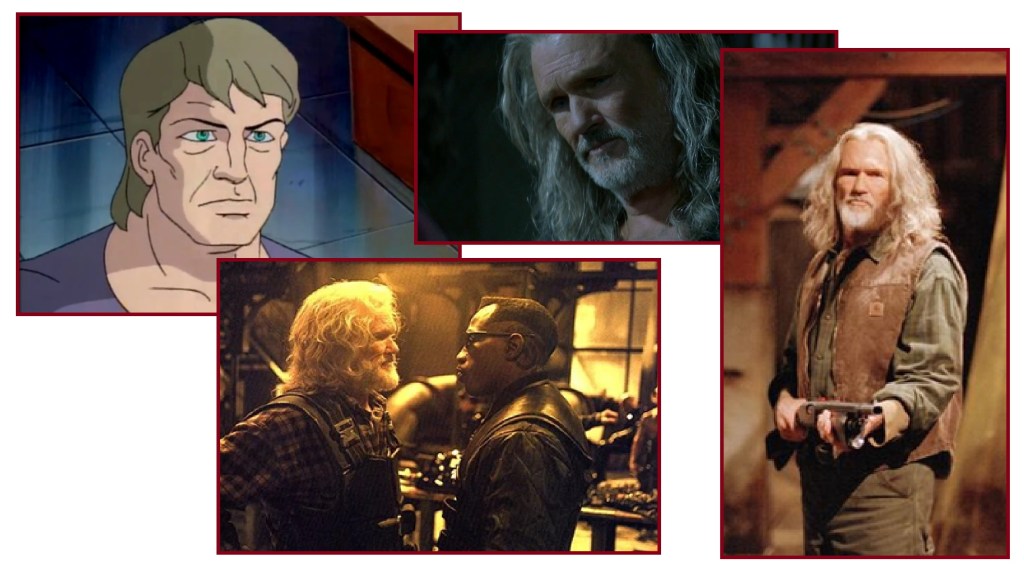
Like Firestar before and X-23 after, Abraham Whistler was an original character created for this series. Voiced by the legendary Malcom McDowall, the character turned up less than five years later for a big-screen adaption of Blade where Kris Kristofferson played the character for three movies.
John Semper introduced Blade into this series as he wanted to feature an African-American hero. This episode’s script was seen by the writers of the Blade movie.
Thwip Quip: Whilst searching for Morbius: “Where’d that flying blood bank go too?”
BLADE: THE ORIGINAL SLAYER
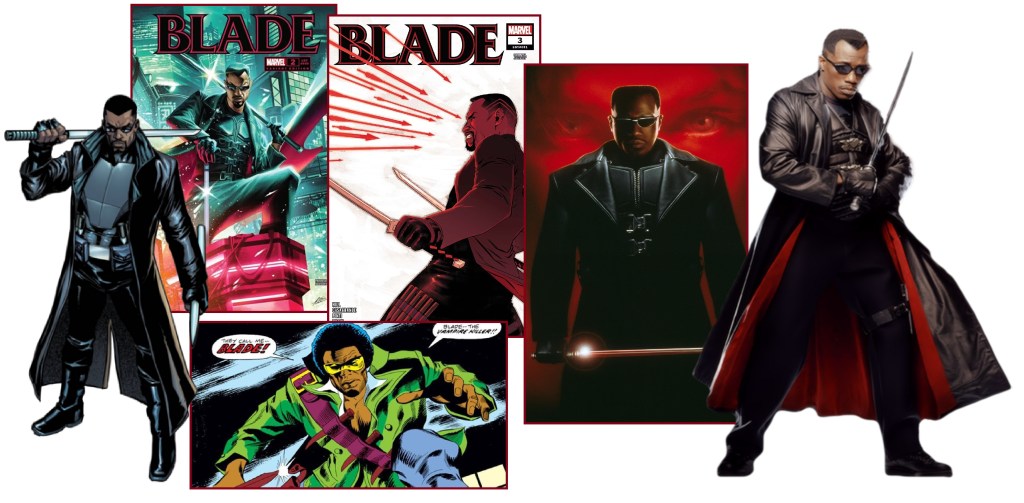
Blade first appeared in Tomb of Dracula #10 (1973), created by Marv Wolfman and Gene Colan, introduced not as a superhero but as a vampire hunter defined by vengeance. Born Eric Brooks, his mother was bitten by Deacon Frost during childbirth, leaving him a dhampir — half-human, half-vampire. From the beginning, Blade was a liminal figure, cursed by the very creatures he hunts, embodying both predator and protector.
His powers — superhuman strength, speed, agility, heightened senses, and accelerated healing — are not blessings but burdens. What makes Blade formidable is not only his physiology but his discipline. Trained by Jamal Afari, he mastered martial arts, weaponry, and strategy, wielding his silver-edged sword as both symbol and boundary. Every strike is more than combat; it is defiance, a refusal to surrender to the darkness that birthed him. Blade’s war is solitary, his trust hard-earned, his mission endless.
Blade’s resonance grew exponentially through other media. Wesley Snipes’s portrayal in Blade (1998), Blade II (2002), and Blade: Trinity (2004) transformed him into a cinematic icon, redefining superhero films with a darker, grittier tone. The trilogy proved Marvel characters could succeed on screen, paving the way for the modern superhero boom. Blade later appeared in Blade: The Series (2006), portrayed by Sticky Fingaz, and has featured in animated series such as Spider-Man and Ultimate Spider-Man, often as a mentor or rival to other heroes. His legacy continues with Mahershala Ali set to portray him in the upcoming Marvel Cinematic Universe reboot.
Blade matters because he reframes heroism. His powers are born of trauma, of violation, of curse — yet he weaponises the wound, turning pain into purpose. His narrative asks whether identity is defined by origin or by choice. Across comics, film, and television, Blade chooses humanity, even when humanity fears him. He is not simply a hunter of vampires. He is proof that the monster can fight for us.




 X-Cess Minutiae
Leave a comment