


THE SINS OF THE FATHER
Chapter IV
The writers knew that the Green Goblin should precede the Hobgoblin in Spider-Man’s mythology, yet by reversing the order they achieve something remarkable. Having already introduced the Hobgoblin, the series leaves us guessing who the Goblin truly is. Suspicion falls naturally on Harry Osborn, but the mask conceals Norman — a twist that shocks, unsettles, and reframes the story.
The theme is danger deferred. Norman’s transformation is not final; his memory slips away, leaving him unaware of his actions. Yet that is the peril — he could remember at any time, and when he does, the strike will be devastating. The Goblin is not simply a villain revealed, but a threat suspended, a sword hanging over Peter’s world.
The episode thrives on ensemble. Nearly every regular character is woven into the narrative: Harry, Mary Jane, Felicia, Anastasia Hardy, J. Jonah Jameson, Detective Terri Lee, and the Kingpin. Each plays a part in the unfolding drama, their threads drawn together into one cohesive strand. It is a masterclass in balancing the series’ cast, ensuring that the Goblin’s arrival reverberates across every corner of Spider-Man’s world.
The Goblin does not strike at random; he targets Oscorp’s board, Jameson, Hardy, even Mary Jane. His war is against betrayal, against those he blames for his downfall, and Spider-Man is caught in the centre of that vendetta. The mask conceals not only Norman’s face but his fury, his obsession, and his willingness to destroy anyone who stands in his way.
Enter the Green Goblin is the finest episode so far. It sets the stage for everything to come — the looming threat of Norman’s return, the tension between Peter and Harry, and the shadow of betrayal that will haunt the series. It is not simply an introduction, but a promise: the Goblin has entered, and the world will never be the same.
Under pressure from the Kingpin, Norman Osborn and his partner Mendel Stromm labour to perfect a volatile gas formula, intended as a weapon. Norman, frantic after Kingpin’s threats, rushes the process and triggers an explosion at Oscorp. Spider-Man rescues Stromm, but Norman is nowhere to be found. Harry, searching desperately through the flames, is saved by Spider-Man, yet left devastated, believing his father has perished.
Two weeks later, Oscorp’s board convenes to discuss succession. Harry, furious at their opportunism and convinced his father may still live, storms out. Kingpin, undeterred, orders Stromm to continue the work. Soon after, a goblin begins abducting Oscorp board members. When J. Jonah Jameson is taken, Spider-Man intervenes but is defeated, his web-shooters crushed. Suspecting a link to Oscorp’s weaponry, he investigates and finds Harry prowling the wreckage, leading Peter to fear his friend may be the goblin.
Detective Terri Lee confirms that all the victims are Oscorp’s board. Spider-Man races to warn Anastasia Hardy, but the goblin strikes first, kidnapping her and Felicia. Spider-Man saves Felicia, but Anastasia is taken, and even Kingpin is seized from his own helicopter. Mary Jane voices her suspicions that Harry is involved, and Peter, torn between loyalty and doubt, secretly plants a tracer on her to keep her safe.
Mary Jane discovers Harry at Oscorp, but loses sight of him as the goblin appears and abducts her. She is taken to an underwater fortress, where the board members are held captive. The goblin condemns them for Norman’s supposed death and prepares to drown them. Spider-Man arrives, frees the hostages, and confronts the goblin. In the ensuing battle, he unmasks Norman Osborn, revealed to have survived the explosion, enhanced by the gas and armed with the Hobgoblin’s weaponry. Norman’s strength falters, and Spider-Man saves him from the collapsing fortress, aided by Harry, who uncovers his father’s escape route.
Norman soon re-emerges, announcing his return to the public. At the gathering, Mary Jane thanks Peter for standing by Harry, while Felicia entrusts him with a note for Spider-Man. When he visits her apartment, Felicia expresses her gratitude for his protection of her mother, and in a moment of passion and sincerity, she lifts his mask halfway and kisses him!
ROGUE’S GALLERY
THE GREEN GOBLIN
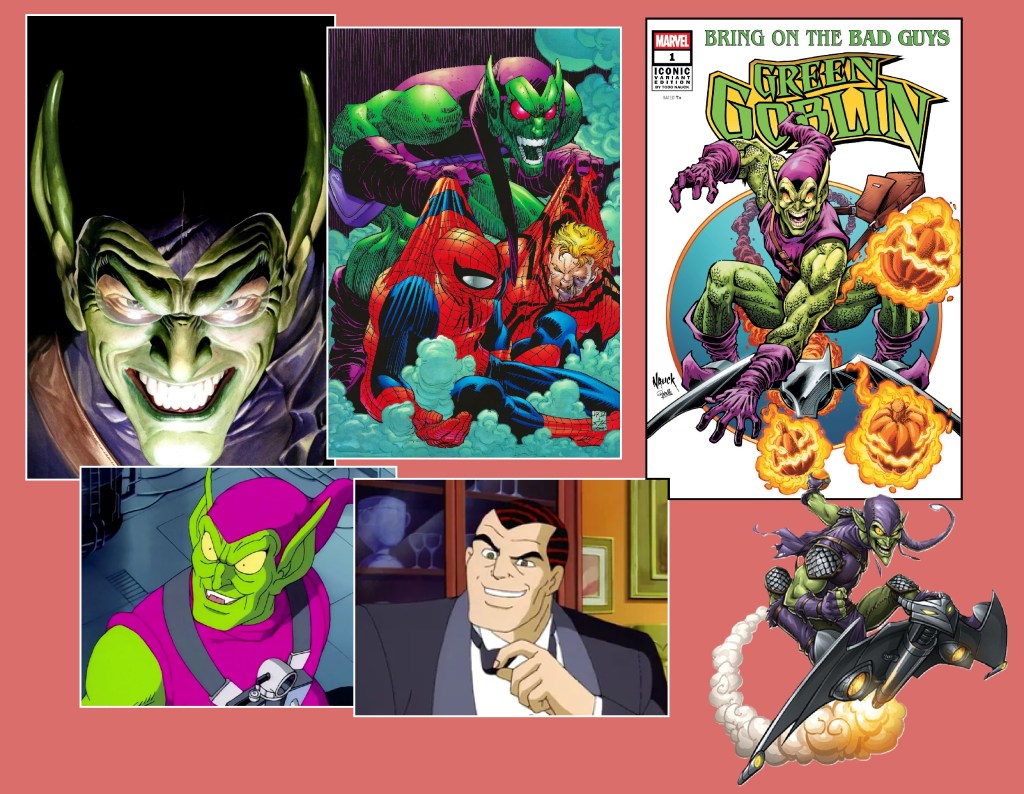
The Green Goblin is more than a costumed villain — he is the shadow that haunts Peter Parker’s life. Norman Osborn, a brilliant industrialist, enhanced himself with a dangerous chemical formula that granted superhuman strength, speed, and resilience, but at the cost of his sanity. Armed with his Goblin Glider, pumpkin bombs, and a twisted sense of theatrical menace, he became Spider-Man’s archenemy, responsible for some of the darkest chapters in Peter’s story.
First appearing in Amazing Spider-Man #13, his identity unknown, his legacy is defined by personal devastation. The Goblin is not simply a criminal mastermind; he is the man who discovered Spider-Man’s identity and used it to strike at Peter’s heart. Most infamously, Norman caused the death of Gwen Stacy, a moment that shattered Peter’s world and remains one of the most defining tragedies in comic book history. The Goblin’s war against Spider-Man is not about territory or wealth, but about obsession — a relentless drive to break the hero both physically and emotionally.
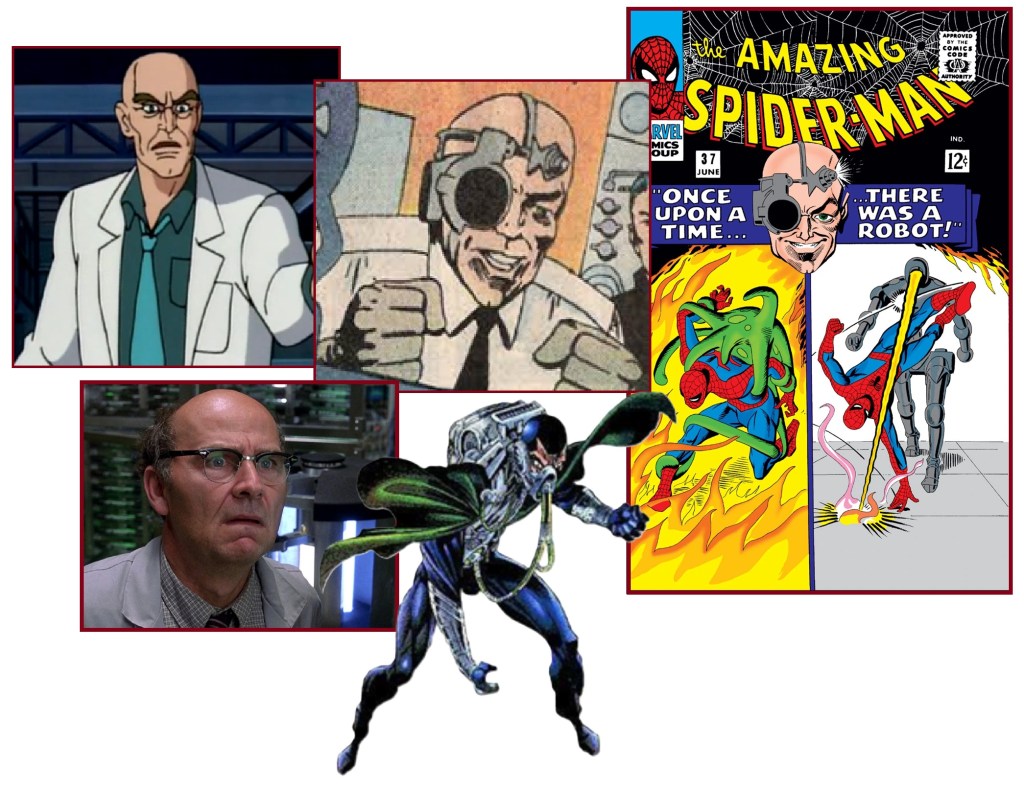
Mendel Stromm, Osborn’s assistant, first appeared in comics in Amazing Spider-Man #37. Years after his perceived death, he returned, first in the guise of the Robot Master, and later, during the Clone Saga, as Gaunt.
Thwip Quip: Regarding the Green Goblin grabbing JJJ: “Now there are two goblins? And what does this one want with old flattop?”
THE OSBORN LEGACY
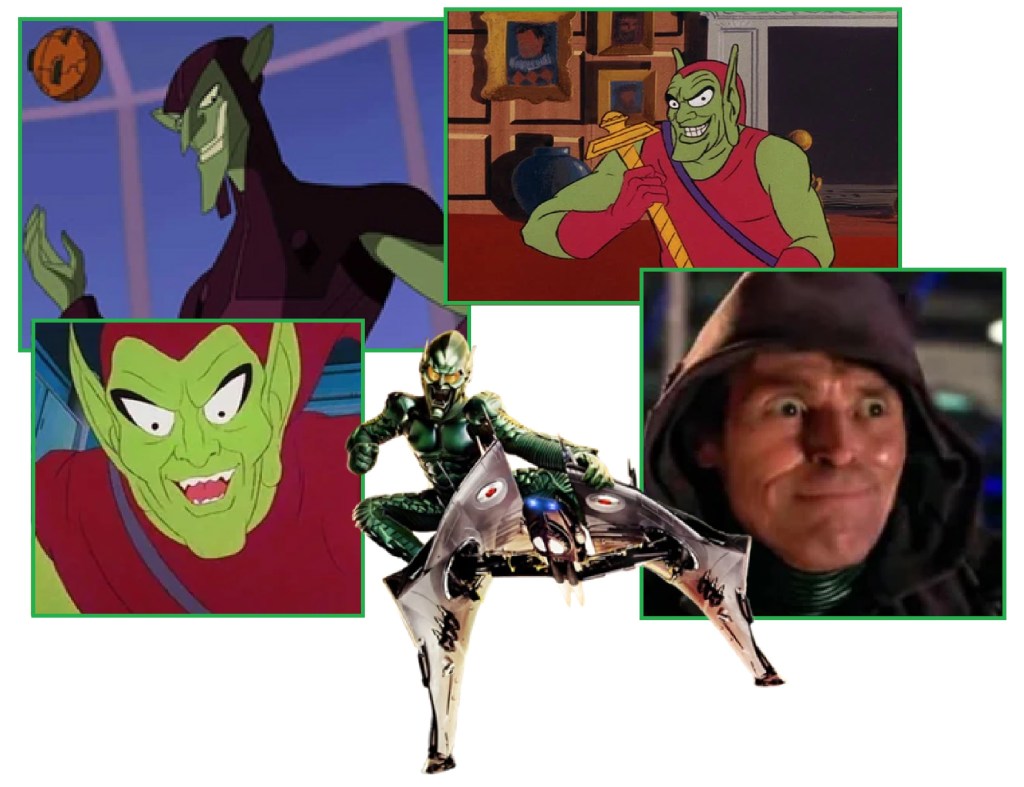
The mantle of the Goblin has passed to others, including Harry Osborn, Bart Hamilton, and Phil Urich, each adding their own dimension to the legend. Yet Norman remains the definitive figure, his blend of genius and madness ensuring his place as Spider-Man’s most enduring foe. His aliases have evolved — Goblin King, Red Goblin, Gold Goblin — but the essence remains: a man consumed by power and vengeance.
Beyond the comics, the Green Goblin has appeared in nearly every major Spider-Man adaptation. Willem Dafoe’s portrayal in Spider-Man (2002) and Spider-Man: No Way Home (2021) captured Norman’s duality — the calculating businessman and the deranged monster. Animated series from the 1960s onward have featured him as a recurring antagonist, and video games consistently place him among Spider-Man’s most dangerous adversaries.
The Green Goblin endures because he is the perfect mirror to Spider-Man. Where Peter represents responsibility, Norman embodies corruption. Where Spider-Man fights to protect, the Goblin fights to destroy. He is not simply a villain, but the embodiment of chaos in Peter’s ordered world — a reminder that sometimes the greatest battles are not against strangers, but against those closest to us.




 X-Cess Minutiae
Leave a comment