


THE SINS OF THE FATHER
Chapter VI
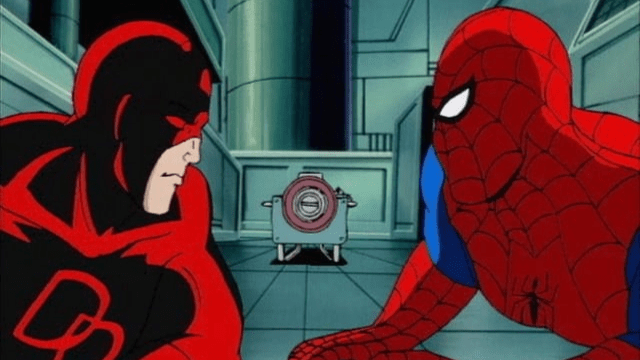
This is justice. Framed marks the long-awaited moment when Spider-Man and Daredevil finally unite onscreen. Two heroes of New York, both misunderstood, both burdened by dual identities, come together not in triumph but in crisis. Peter Parker is accused of crimes he did not commit, and it is Daredevil — lawyer and vigilante — who recognises the truth and stands beside him. Their alliance is not spectacle, but solidarity: two men who understand the cost of masks and the weight of responsibility.
Peter’s framing is orchestrated by the Kingpin, whose empire thrives on manipulation and deceit. Yet the story deepens when Richard Fisk, the Kingpin’s son, is revealed as part of the generational cycle of crime. Father and son embody the legacy of corruption, a dynasty of power that Spider-Man and Daredevil must confront. The episode reminds us that villainy is not always born anew; it is inherited, passed down, and perpetuated.
The framing of Peter Parker is more than a plot device — it is a test of identity. Stripped of trust, hunted by the law, Peter must rely on Daredevil’s faith in him. Their partnership is forged in adversity, a bond that transcends costume and creed. Daredevil’s presence elevates the narrative, grounding Spider-Man’s plight in the broader struggle for justice in a city where truth is easily twisted.
Framed is one of the series’ most significant episodes. It threads ensemble and theme into a cohesive whole, balancing Peter’s personal crisis with the larger mythos of New York’s criminal underworld. It is not only the first true team-up of Spider-Man and Daredevil, but a declaration: justice may be fragile, but when heroes stand together, it endures.
Peter Parker is accused of treason, denied bail, and taken into custody — only for “Spider-Man” to attack the convoy, knock him out with gas, and abduct him. When Peter wakes, he recalls how Richard Fisk lured him into working at Fisktronics, only for federal agents to ambush him and police to arrest him for selling secrets. In his cell, he meets his lawyer, Matt Murdock.
The impostor Spider-Man is revealed as the Chameleon, working with Richard Fisk to frame Peter. Left to suffocate in a cell, Peter is rescued by Daredevil, who spirits him to Murdock’s apartment. There, Matt shares his own story — his blindness, his father’s murder, and his belief that the Kingpin is behind Peter’s downfall.
Meanwhile, Aunt May suffers a stroke from the strain of Peter’s conviction, and Mary Jane calls for help. Peter, determined to clear his name, investigates Fisktronics as Spider-Man.
At the building, Daredevil mistakes him for the Chameleon and attacks. Their clash is interrupted by Kingpin’s men, who open fire and plant a bomb to erase the evidence.
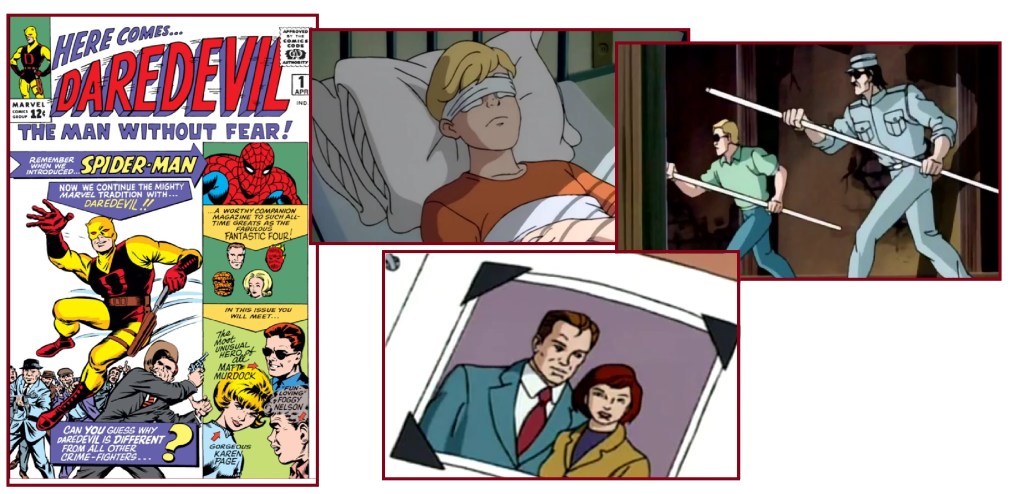
We receive a perfect flashback of Daredevil’s origin, from Daredevil #1. This, and the second part, were considered a back-door pilot for a potential Daredevil animated series.
Richard Fisk mentions Peter’s parents, Richard and Mary Parker. This is explored more in season five’s Six Forgotten Warriors arc.
Thwip Quip: “Now you wouldn’t be trying to destroy evidence, would you?”
Jonah’s Jibes: “Quit? You ungrateful upstart. I took you in when you were just a kid off the street! I sweated blood teaching you the news business! An for all my troubles you do this to me? You can’t quit. You wanna know why? Because you’re fired!”




 X-Cess Minutiae
Leave a comment