


THE SINS OF THE FATHER
Chapter XIV
This is tragedy. Turning Point brings Spider-Man to the edge of despair, as the Green Goblin strikes at Peter’s heart. Just as he has found love with Mary Jane, she is torn from him — hurled from a bridge in a cruel echo of Gwen Stacy’s fate. His desperate web line catches nothing but air, and the moment is shrouded in uncertainty: has he saved her, or lost her again, perhaps forever?
The Goblin’s reign of terror culminates here, his madness leaving scars that will never fade. Though Norman Osborn falls – not impaled by his own glider to death, but pushed through a portal by it – the shadow of the Goblin lingers: a legacy of obsession and ruin that haunts Peter’s life.
In the end, it’s not just about loss. This is the story of love found and love endangered, of victory that tastes like defeat. The Goblin’s end is only temporary, but the wound he leaves in Spider-Man’s soul is eternal.
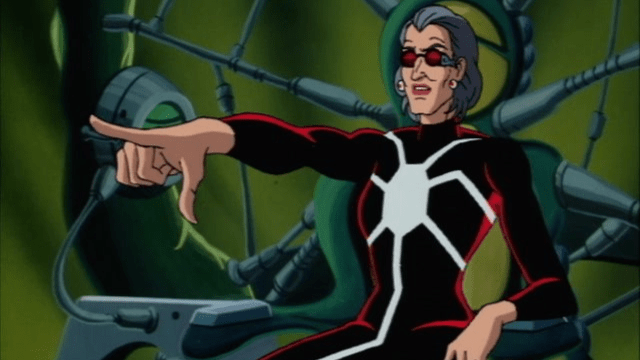
Spider-Man rejects Madame Web’s guidance, but she warns him of a “two-headed monster” to come. Norman Osborn, consumed by his Green Goblin persona, repairs the time dilation accelerator and begins wreaking havoc to draw Spider-Man out. Using the device, the Goblin stalks him unseen — and learns Peter Parker’s true identity.
At Harry Osborn’s birthday party, Norman plays the genial host, dropping hints about Peter’s secret. Harry lashes out at Peter, while Norman’s behaviour unsettles him further. To protect his identity, Peter sparks a fire as a diversion.
The Green Goblin abducts Peter, taking him to the George Washington Bridge. After a brief fight, he targets Aunt May but instead kidnaps Mary Jane. At the bridge, Spider-Man battles him, but Mary Jane falls from the bridge and, unknown to all, through a portal into limbo. Believing she has drowned, Spider-Man attacks in fury.
The Goblin’s device destabilises, pulling him toward the portal. Norman briefly resurfaces, but the Goblin regains control and tries to kill Spider-Man. Struck by his own glider, Osborn is dragged into limbo alongside Mary Jane.
In the aftermath, Spider-Man is left bitter and broken, telling Madame Web he never wants her counsel again.
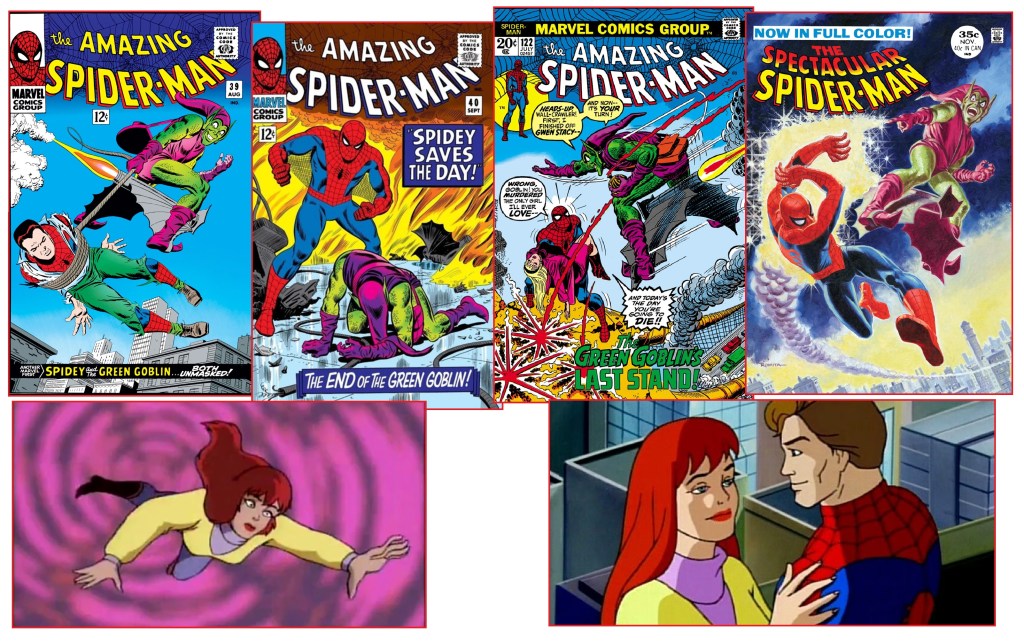
This episode takes points from Amazing Spider-Man #39-40 and Spectacular Spider-Man Magazine #2, which was the dinner party where Norman confronted Peter for the first time. The kidnapping of Mary Jane, and the sequence on the bridge, is all from Amazing Spider-Man #121-122. For more info, see box out.
Technically, this episode marks the final appearance of Mary Jane Watson in the series. Kind of.
Thwip Quip: “Now let’s try this little tango again shall we?”
THE NIGHT GWEN STACY DIED
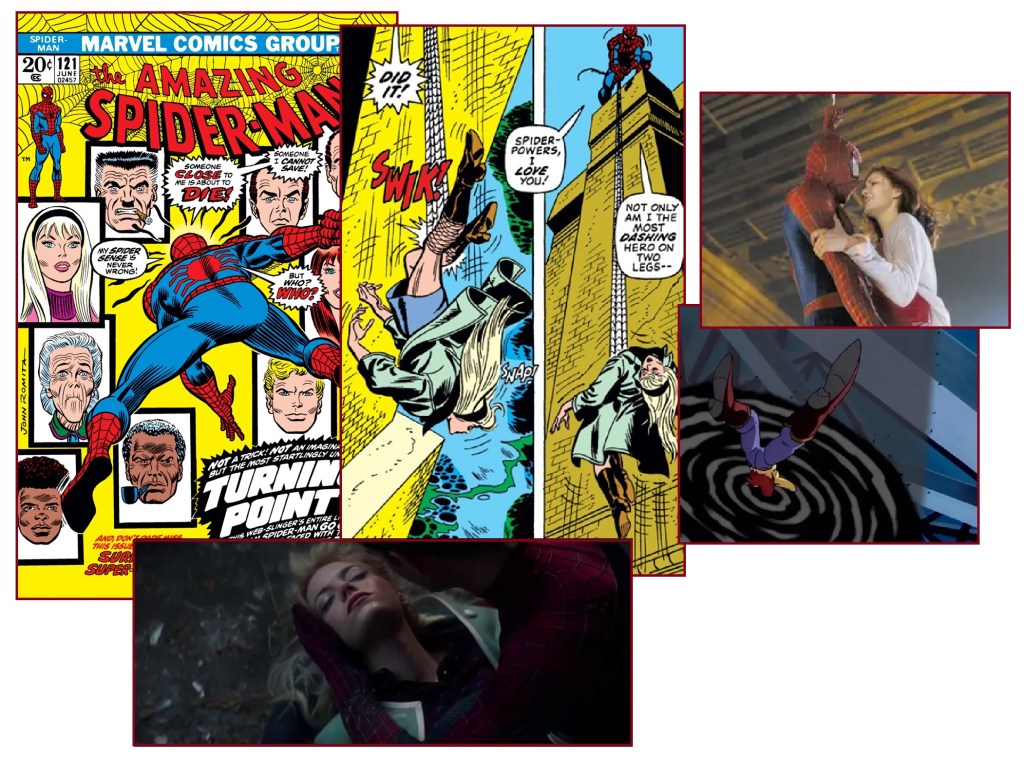
The Night Gwen Stacy Died unfolds in Amazing Spider-Man #121–122 (1973), written by Gerry Conway with art by Gil Kane. It is one of the most defining tragedies in Spider-Man’s history, a story that shattered the innocence of superhero comics and marked the end of the Silver Age.
The arc begins with Norman Osborn, consumed once more by his Green Goblin persona, striking at Peter Parker through his greatest vulnerability — Gwen Stacy. In issue #121, the Goblin abducts Gwen and takes her to the George Washington Bridge. Spider-Man arrives, but in the ensuing battle Gwen is hurled from the heights. Peter’s desperate web line catches her, yet the sudden stop snaps her neck. In that moment, Spider-Man learns the cruel truth: even his power cannot save everyone.
Issue #122 follows with fury and grief. Spider-Man hunts the Goblin through the city, driven by rage. Their final confrontation ends with the Goblin impaled by his own glider — a death that mirrors his hubris. Yet victory brings no solace. Gwen is gone, and Peter is left broken, forced to carry the weight of responsibility in its harshest form.
This story redefined superhero comics. It stripped away the illusion of safety, proving that even beloved characters could die, and that Spider-Man’s world was one of consequence. Gwen’s death became the mythic wound at the heart of Peter Parker’s life, shaping his relationships, his choices, and his enduring sense of responsibility. The Night Gwen Stacy Died remains not just a tale of loss, but the moment Spider-Man grew up — and comics themselves changed forever.




 X-Cess Minutiae
Leave a comment