


PARTNERS IN DANGER
Chapter XI
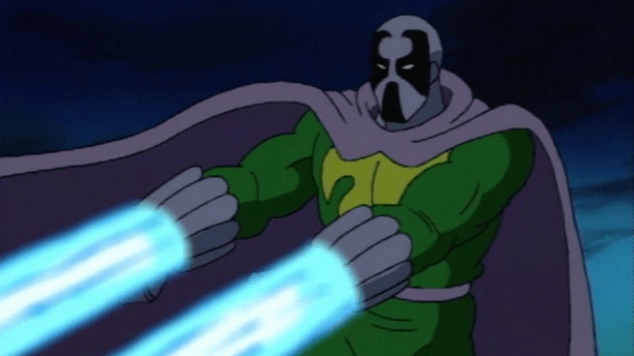
A new figure rises in New York’s shadows — the Prowler. Born not from villainy but desperation, Hobie Brown dons the mask to escape poverty and circumstance, his inventions turning him into a force the city cannot ignore.
The episode becomes a meditation on choice. Unlike the rogues who seek power, Hobie’s path is shaped by survival and dignity. His clash with Spider-Man is not of good versus evil, but of misunderstanding, as two men in masks confront the weight of responsibility.
Family and belonging thread through the story. Hobie’s struggle reflects the desire to protect those he loves, even as his methods place him at odds with the law. Spider-Man, recognising the humanity beneath the mask, becomes not just an opponent but a guide, offering a chance at redemption.
The Prowler’s tale is one of transformation. From outlaw to ally, his journey shows that identity is not fixed, but forged in the choices we make.
At its heart, The Prowler is about the possibility of change. It is a story of a man who steps into the shadows to protect his world, and of a hero who sees beyond the mask to the person within.
Peter discovers Hobie Brown in his apartment, where Hobie pleads for Spider-Man’s aid and recounts his troubled past. When the crime lord Iceberg learns Hobie feels cheated, he orders his men to kill him. Hobie narrowly escapes, but desperation drives him to steal a purse — Mary Jane’s, as she and Peter search for a flat. Spider-Man intervenes, and Hobie is jailed for breaking parole.
Behind bars, Hobie saves Richard Fisk from an assassination attempt. In gratitude, the Kingpin arranges his release through a powerful lawyer and equips him with a special suit, transforming him into the Prowler. With his new identity, Hobie strikes back at Iceberg, reclaiming his dignity through force.
Yet victory brings peril. The Kingpin, displeased that Hobie has defeated Iceberg, offers to “fix” the situation, tightening his grip on the Prowler. Hobie realises that his freedom is once again compromised, his suit a chain binding him to Kingpin’s will.
Spider-Man, watching from the shadows, suspects the Kingpin is tampering with Hobie’s suit. Together, Spider-Man and Hobie strike back against Kingpin’s men. Their alliance is uneasy, but Hobie proves his courage, turning his skills to the cause of justice rather than crime. The Prowler sheds his chains, reclaiming his identity from Kingpin’s shadow.
In the aftermath, Hobie vows to walk a new path. No longer Kingpin’s pawn, he embraces redemption, his inventions now a force for good.
ROGUE’S GALLERY

THE PROWLER
The Prowler first appeared in The Amazing Spider-Man #78 (November 1969), created by Stan Lee and John Buscema with art by Jim Mooney. Hobie Brown, the original incarnation, was introduced as a young inventor from the Bronx. Frustrated by poverty and circumstance, he designed a high-tech suit to commit robberies. His plan was short-lived, however, when Spider-Man intervened and redirected Hobie’s talents toward heroism rather than crime.
From the beginning, Hobie stood apart from Spider-Man’s rogues gallery. He was not driven by greed, vengeance, or madness, but by desperation and survival. This made his story unique — a tale of redemption rather than villainy. Spider-Man’s compassion transformed Hobie from adversary to ally, and the Prowler became one of the earliest examples of a foe turned friend in Peter Parker’s world.
Over time, Hobie’s role expanded. He became a street-level hero, representing the working-class struggle and the ingenuity of ordinary people thrust into extraordinary circumstances. His inventions and resourcefulness allowed him to stand alongside Spider-Man in battles against larger threats, proving that heroism is not defined by powers but by choices.
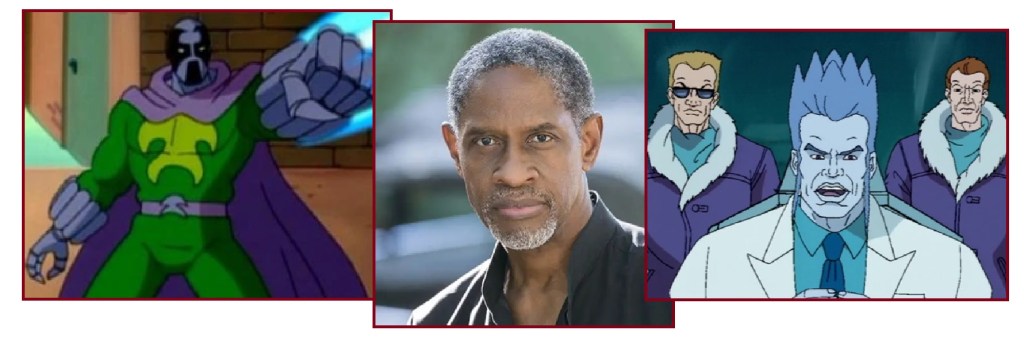
Star Trek‘s Tim Russ voices Hobie Brown.
Iceberg is an original villain, created for this series. He is extremely similar in ways to Batman villain Mr. Freeze.





 X-Cess Minutiae
Leave a comment