


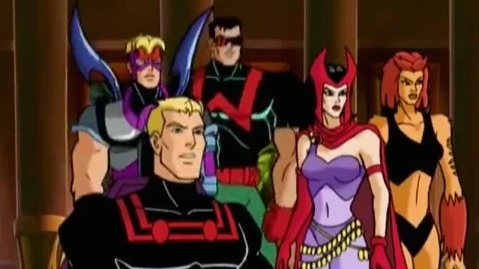
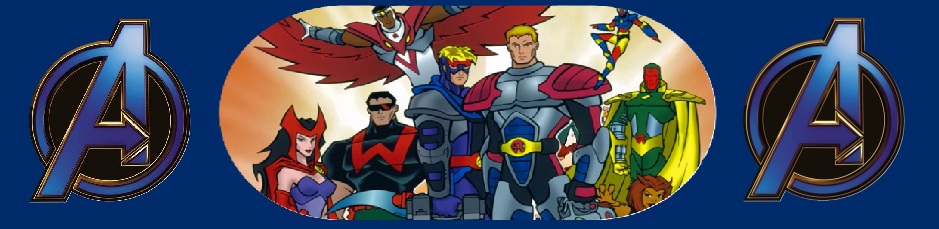
The Avengers rise in a world of science-fact, their battles framed by technology as much as heroism. Civilians and rescue workers wield advanced tools, while the team themselves don armour that transforms them into warriors of the age — a reflection of the late 1990s, when superheroes were expected to “power up” like the Power Rangers before facing their foes.
Yet this is no familiar roster. At the time of airing, the line-up was jarring: Ant-Man, Wasp, Hawkeye, Vision, Wonder Man, Tigra. Today, thanks to the MCU, all but two are household names, but in 1999 they were curiosities, a strange mix of heroes asked to carry Marvel’s flagship team. Their presence underscores the show’s late arrival, a series caught between comic legacy and pop culture trends.
Despite being fully formed, these Avengers are fractured. They operate less as a team than as ill-prepared soldiers, clashing with one another and stumbling through their mission. They save the president only with outside help from Falcon, a hero Hawkeye dismisses as unworthy of the big leagues. Doubt gnaws at Henry Pym, bickering flares between him and Janet, and the promise of unity dissolves into mistrust.
Behind it all, the government liaison presses for a more “cultured” team, recruiting Falcon without saying outright that diversity and diplomacy are as important as strength. The episode becomes a study in tension — heroes armoured against the world, yet unarmoured against each other, their flaws exposed even as they stand together under the banner of Earth’s Mightiest Heroes.
Ultron creates Vision — a perfect, immortal android — and declares Ant-Man the final obstacle to humanity’s destruction. As the U.S. President prepares to honour the Avengers in Central Park, Wasp reassures Henry Pym of his worth. Wonder Man spars Witch, Hawkeye with Tigra, until Ant-Man calls the team to assemble. The President’s chopper is shot down. The Avengers launch from the Quinjet.
Falcon sees the chaos from his apartment and sends Redwing into action. Tigra is wounded in battle, saved by Falcon. Vision brings down the helicopter and commands Ultron’s army to fire on the Quinjet. Hawkeye protects the President while Vision shrugs off attacks, phasing through Wonder Man’s assault. Falcon saves the President again. Hawkeye destroys the armed vehicles. Ultron recalls Vision.
Hawkeye delivers a downed robot to Ant-Man, but Henry reprimands him — leaving his post nearly cost the President his life. Government agent Sikorski announces the President wants Hawkeye out and Falcon in. Ant-Man agrees, reluctantly. Hawkeye storms off. Wonder Man follows. Jarvis delivers the robot to Henry’s lab. Tigra sets off to find Falcon.
Ant-Man scans the robot, but it activates a self-destruct. The Avengers head to Central Park, but the robots stop fighting. They realise Ant-Man is exposed. The Mansion alarm blares. Ant-Man fends off attackers. Vision fires — but Wonder Man takes the hit. The countdown reaches zero.
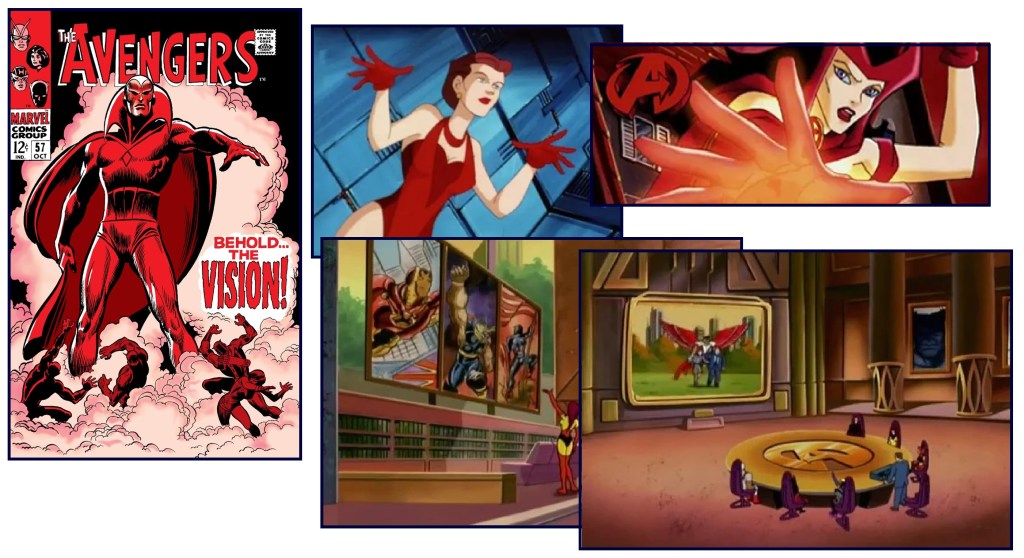
The Avengers have been formed for quite some time when the series begins. Ultron has already been created and it fully formed. His creation of the Vision and his sending him against the Avengers is from the classic Avengers #57.
The Scarlet Witch has a European accent, just as she did in Iron Man. Hawkeye’s gruff attitude is still intact from that show.
Comic book art of Captain America, Thor and Iron Man can be seen in Hank’s work room at the start of the episode. When Sikorski gives them all their orders, pictures of past Avengers can be seen in the background, including Hulk, Black Panther, Namor, Beast, Quicksilver and, bizarrely, the Silver Surfer!
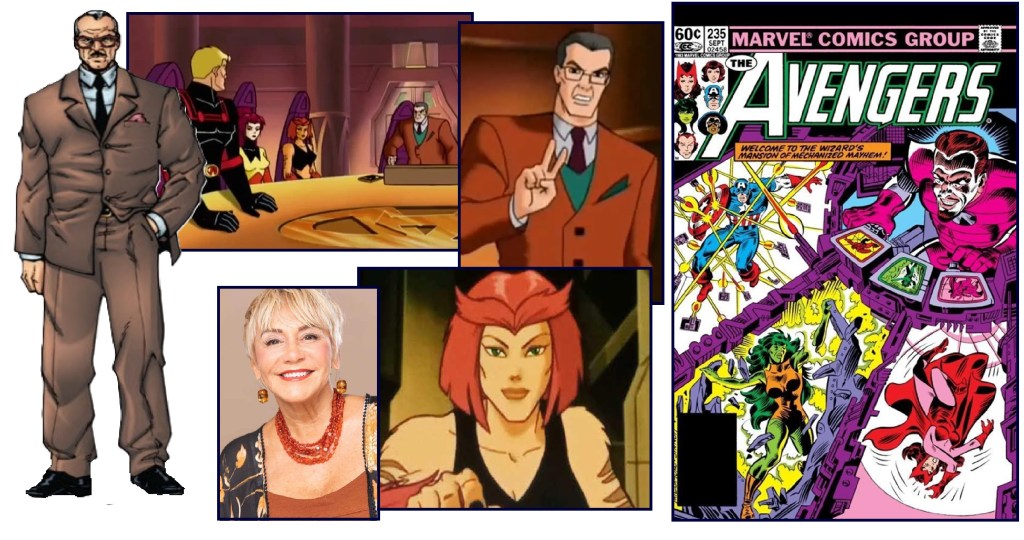
Raymond Sikorski was a government official who worked as a liaison to the Avengers in the comics, who first appeared in Avengers #235. His headline about the President comes from the Daily Bugle.
Does Tigra sound familiar? That’s Lenore Zann, who also voiced Rogue on X-Men. Eric and Julia Lewald, producers of that show, also came aboard to work on this one.
AND THERE CAME A DAY UNLIKE ANY OTHER…
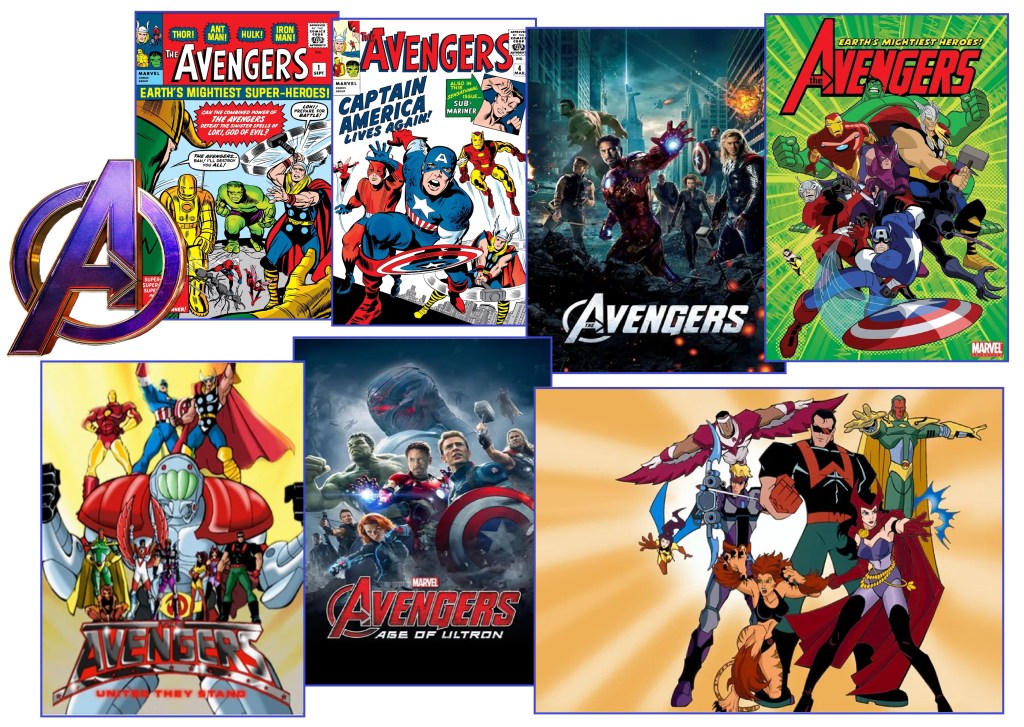
The Avengers were born in The Avengers #1 (1963), created by Stan Lee and Jack Kirby as Marvel’s answer to the Justice League. Unlike their rivals at DC, the Avengers were not a pre-assembled pantheon but a gathering of disparate heroes brought together by circumstance. Iron Man, Thor, Hulk, Ant-Man and the Wasp united to face Loki, and from that moment the concept of Earth’s Mightiest Heroes was established. What made them unique was the idea of rotation — members could leave, return, or be replaced, ensuring the team was always evolving and reflecting the wider Marvel Universe.
Their impact on Marvel was profound. The Avengers became the connective tissue of the company’s storytelling, a place where solo heroes could converge and where cosmic threats demanded cooperation. The team gave Marvel a mythic centre, balancing personalities and egos in a way that mirrored real-world tensions. Captain America’s revival in The Avengers #4 cemented the group’s legacy, tying Marvel’s Golden Age to its Silver Age and ensuring the Avengers were not just a team, but a symbol of continuity and resilience.
By the 1990s, the Avengers had become a cornerstone of Marvel’s publishing line, their stories ranging from galactic wars to intimate struggles of loyalty and leadership. Yet while Spider-Man and the X-Men had already conquered television animation, the Avengers lagged behind. Their complexity, constant roster changes, and less immediate popularity with younger audiences meant they were slower to reach the screen. When they finally did, it was in the form of Avengers: United They Stand, a series that arrived late in the decade, long after the animated boom had peaked.
Avengers: United They Stand debuted in 1999, focusing on a line-up led by Ant-Man, the Wasp, Hawkeye, Vision, Tigra and Wonder Man, with Iron Man and Captain America largely absent. Its timing was awkward, arriving just as superhero animation was shifting towards darker, more stylised fare like Batman Beyond. The show struggled to capture the grandeur of the comics, but it remains a curious artefact — a late attempt to bring Marvel’s flagship team to television before the cinematic universe transformed them into global icons.




 X-Cess Minutiae
Leave a comment