


SIX FORGOTTEN WARRIORS
Chapter I
Presumably needing one last epic before the series’ conclusion, the next five episodes form a single, unified arc. Unlike the multi‑threaded sagas before it, this storyline narrows its focus, allowing the series to delve deep into Marvel’s wartime history — material that had rarely, if ever, been brought to screen. It is both a bold expansion of Spider‑Man’s world and a bridge between personal mystery and global stakes.
We begin with intrigue. Keene Marlow arrives, an old friend of Ben Parker, whose presence unsettles Peter immediately. May’s strange reaction to the mention of Peter’s parents only heightens suspicion, hinting at secrets long buried. The tension becomes personal when Marlow is revealed as a SHIELD agent, in direct contact with Nick Fury. Suddenly, Peter’s private search for answers is tied to the machinery of espionage and international power.
The journey takes Spider‑Man to Russia, a new and unfamiliar stage for the series. Here, the narrative shifts from domestic drama to global mystery, plunging into the shadows of World War II. The suggestion of forgotten heroes and hidden weapons sets the tone for what is to come — a reunion of legends, a reckoning with history, and a confrontation with villains who seek to twist the past into their own advantage.
Six Forgotten Warriors is ambitious, laying the foundation for a saga that blends personal legacy with Marvel’s mythic wartime lore. It is the threshold episode, opening the door to a storyline that promises scale, resonance, and revelations that will test Spider‑Man’s place in history itself.
In Moscow, Silver Sable strikes first, catching Dr. Grotizick off guard. Back in America, Keene Marlow visits May, an old friend of Ben’s, and Peter is introduced. While searching, Peter uncovers his parents’ passports, a relic of Richard and Mary Parker’s past. May urges him to put them away, but Peter overhears her hushed words with Keene — secrets she cannot keep forever. Troubled, Peter resolves to seek answers in Moscow.
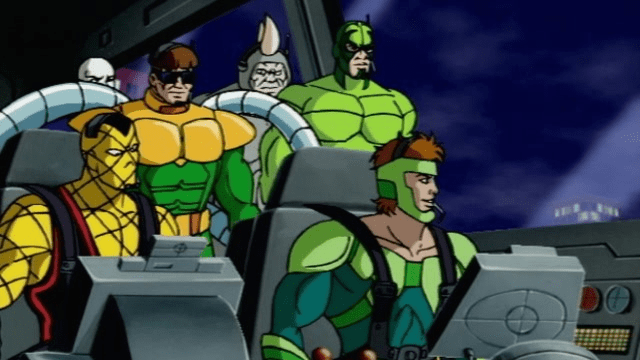
Robbie Robertson, with business of his own in Russia, persuades Jameson to send them overseas. Peter fuels the plan with a lie, claiming Spider-Man intends to topple the Russian government, and the Bugle must cover it. Meanwhile, Kingpin gathers the Insidious Six once more, the Vulture stepping in for Mysterio, their hunt fixed on a doomsday weapon tied to the mystery.
Spider-Man shadows Robertson to an informant’s house, but Silver Sable and the Wild Pack descend. They seize the informant, leaving Spider-Man and Robertson battered, unconscious, and trapped beside a ticking bomb.
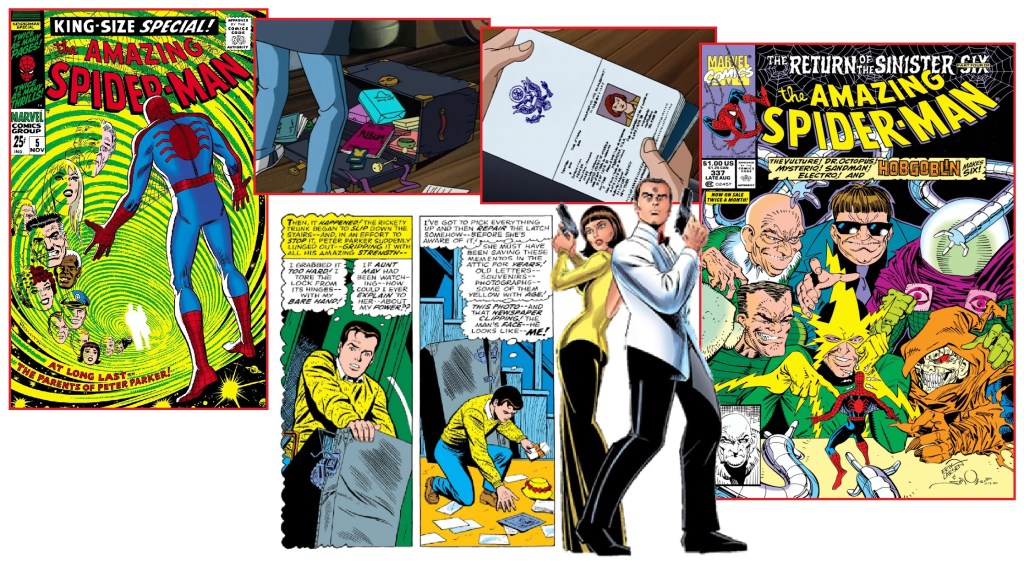
This episode borrows from Amazing Spider-Man Annual #5, where Peter Parker learns his parents were accused of being traitors to the U.S. and sets out to clear their names. Similarly, in this episode, Peter uncovers their alleged betrayal after stumbling upon a hidden newspaper clipping in a chest. The subplot of Doctor Octopus reuniting the Sinister Six comes from Amazing Spider-Man #334-337.
RICHARD AND MARY PARKER: SUPER SPIES
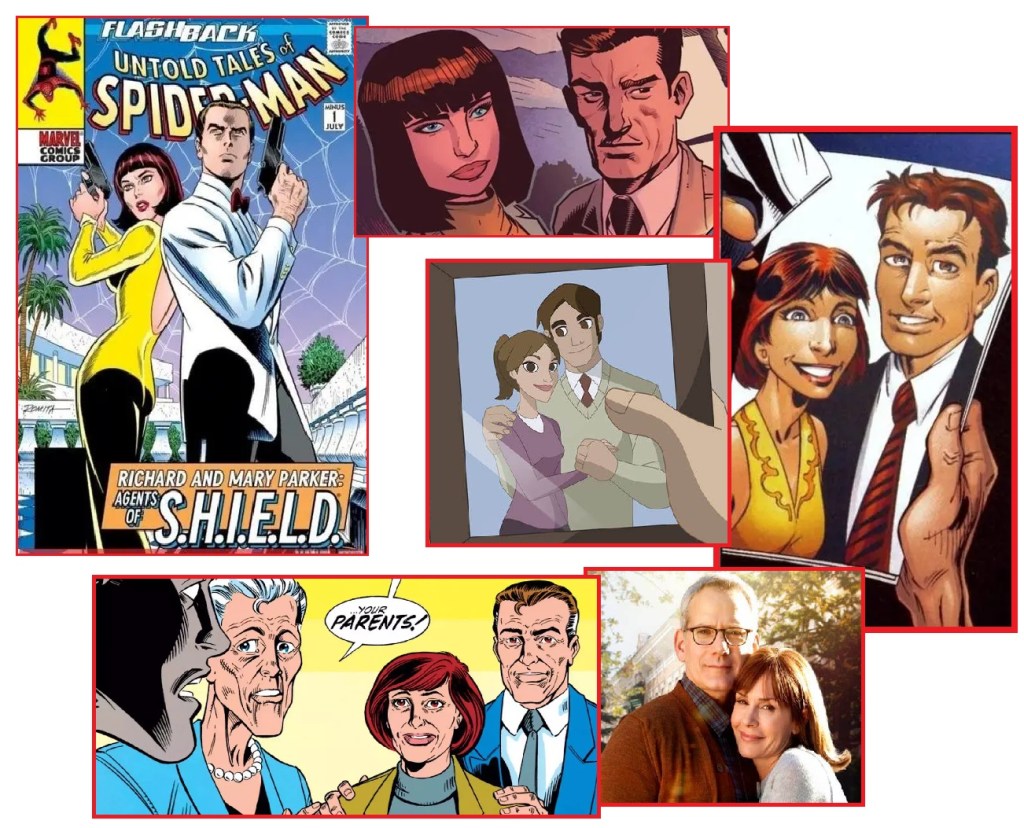
Mary and Richard Parker are ghosts in Peter’s story, shadows that linger at the edges of his life. For years they were simply the parents who died too soon, leaving him in the care of Aunt May and Uncle Ben. But Marvel later revealed a darker truth — they were spies, agents who lived in secrecy and died in betrayal, their plane brought down by the Red Skull.
That revelation reframed Peter’s past. He was not just the orphaned boy who stumbled into power, but the son of people who had already lived in danger, already carried the burden of responsibility. Their lives tied him to the wider Marvel tapestry, linking Spider-Man’s small, personal world to the grander stage of espionage and war.
Yet their story has always been uneasy. Sometimes they return as echoes, robotic doubles or conspiracies, reminders that the past is never settled. Each reappearance unsettles Peter, forcing him to confront the idea that his family history is as complicated and fragile as his own double life.
For readers, the spy origins were divisive. Some saw it as depth, others as distraction. But the truth remains: Peter Parker’s life was shaped not only by the bite of a spider, but by the shadows of parents who lived and died in secrecy. Their absence defined him, and their mystery continues to haunt the mythos.




 X-Cess Minutiae
Leave a comment