


SIX FORGOTTEN WARRIORS
Chapter II
It is always risky to take a superhero out of their natural habitat. Spider-Man is to New York what clogs are to the Dutch — inseparable, iconic, defined by the city’s rhythm. Yet here he is, far from the skyscrapers and familiar faces, with only Robbie Robertson at his side. No Aunt May’s gentle counsel, no Mary Jane’s worry, no Jonah’s bluster. Just Peter Parker, alone, chasing ghosts of his parents and trying to quiet the conscience that has never stopped asking questions.
This chapter is a cracker, layering personal mystery with political thriller. For Saturday morning television, it is unusually ambitious: secrets of Peter’s parents, the looming specter of the Doomsday Device, and the shadow of Cold War intrigue all collide. The tone shifts from superhero adventure to espionage drama, reminding us that Spider-Man’s story is not only about masked battles but about history, legacy, and the dangerous rhetoric of power.
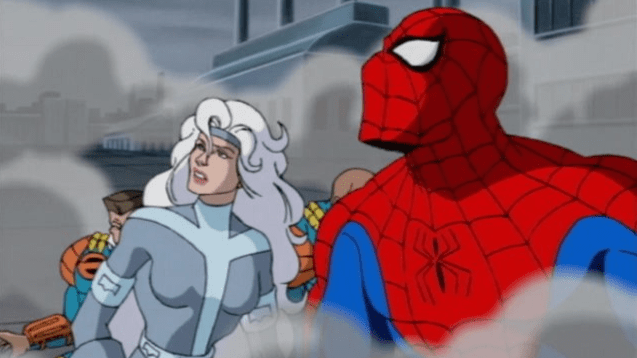
The twists are relentless. Spider-Man is lured into a trap, handed over to villains, only for Silver Sable to seize them — and then herself be betrayed when her ally is revealed as the enemy. Each reversal raises the stakes, stripping away certainty and leaving Peter with more questions than answers. And then comes the most chilling revelation: the Red Skull. He may not overwhelm with brute force, but his ideology, his rhetoric, is the true danger. It is a reminder that words can wound as deeply as weapons, and that Spider-Man’s fight is not only against fists and machines, but against ideas that corrupt and consume.
Chapter II leaves us unsettled, raising the curtain on a saga where history itself becomes the battlefield.
Spider-Man rescues Robertson from the blast, and the next day they seek answers in Moscow. Boris Pushkin, a police officer and old friend, claims to have known Peter’s parents, but Chief Kragov interrupts, threatening arrest if they remain. Boris passes them an address, leading to Grotizick’s daughter, where Peter learns his parents were not spies. Yet her husband reveals himself as the Chameleon, luring Spider-Man into a trap.
Defeated and unconscious, Spider-Man is delivered to Kingpin by the Insidious Six, who boast of their plans to wield the Doomsday Device. But Silver Sable and the Wild Pack storm the building, seizing all involved. The captives are taken to Chernobyl, where the Red Skull appears — only to be unmasked as Kragov, his son. Kingpin notes the deception, knowing the true Skull would never have been caught.
Kragov collapses the fortress and escapes. Kingpin and the Six flee, leaving Sable and her Wild Pack bound. Spider-Man breaks their shackles, and together they escape the ruins, the mystery of his parents still unresolved.
SILVER SABLE
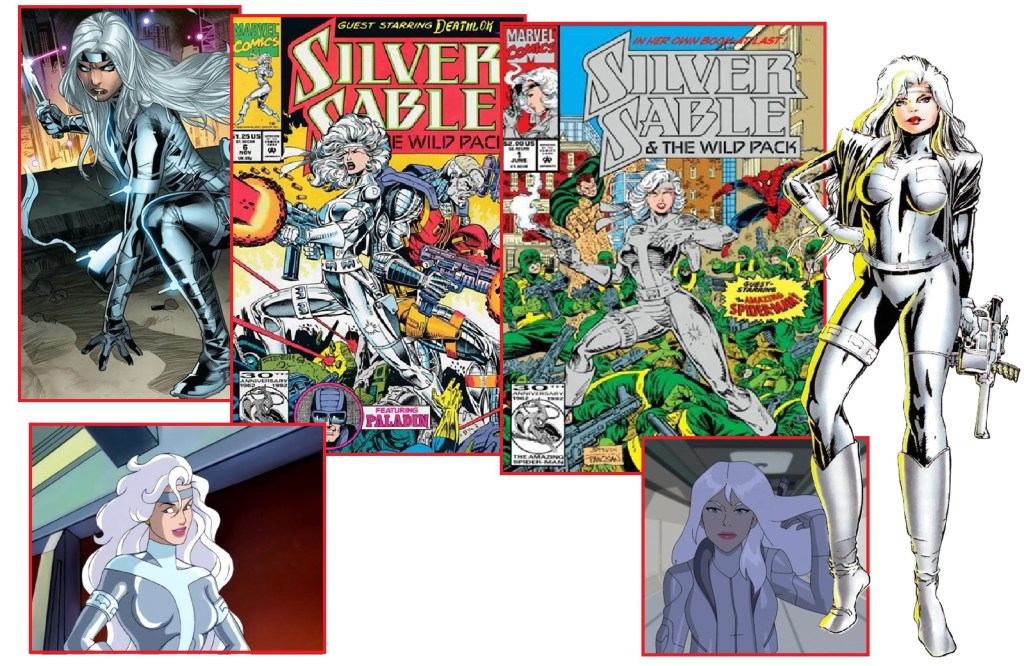
Silver Sable enters Spider-Man’s world not as a villain, but as something more complicated. First appearing in Amazing Spider-Man #265 in 1985, she was introduced as the leader of the Wild Pack, a mercenary group hired to hunt down war criminals. Her homeland of Symkaria gave her purpose, and her missions were always tied to duty rather than malice. For Peter Parker, she was a figure who blurred the line between ally and adversary — a woman whose goals sometimes aligned with his, and sometimes clashed, depending on the cost of justice.
Her presence in the mythos added a new texture. Silver Sable was not driven by personal vendetta or chaos, but by pragmatism. She represented the mercenary’s creed: justice as contract, morality as negotiation. Yet beneath the armour and the cold exterior was a patriot, someone who believed in protecting her people even if it meant walking the knife’s edge of legality. For Spider-Man, she was a reminder that not all battles are fought in black and white, and that allies can come from unexpected places.
Over the years, she became a recurring figure in his stories, sometimes hiring him, sometimes fighting alongside him, and sometimes standing in his way. Their uneasy alliance reflected the tension between idealism and realism — Peter’s instinct to save everyone versus Sable’s willingness to make hard choices. In her, readers saw a mirror of the world beyond Spider-Man’s neighbourhood, a global stage where power and politics shaped the fight as much as morality.
Silver Sable’s impact lies in her ambiguity. She is neither hero nor villain, but something in between, a mercenary bound by loyalty to her homeland and her own code. In Spider-Man’s mythos, she reminds us that justice is not always pure, and that sometimes the people who walk beside him are as dangerous as those he fights against.





 X-Cess Minutiae
Leave a comment