


SIX FORGOTTEN WARRIORS
Chapter V
The final chapter of the saga almost sticks the landing. The changed origin of its lead villain aside, it delivers spectacle on every front: a knockout battle between the Red Skull’s forces and the Warriors, SHIELD entering the fray with disastrous consequences, and the disbanding of the Insidious Six, neatly tying off Kingpin’s subplot. It feels like the culmination of threads woven across the arc, bringing together heroes, villains, and institutions in one sprawling clash.
At its heart, though, the episode is about sacrifice and legacy. Electro flaunts his newfound power before the United Nations, declaring himself not merely master of energy but energy incarnate. Against him, Captain America and Spider-Man confront the Skull, and Cap makes the ultimate sacrifice — throwing himself into the vortex alongside his old enemy, ensuring that he and the Skull are locked in eternal battle. It is a mythic ending for the Star-Spangled Avenger, a reminder that some fights never truly end.
Yet the pacing falters. Electro, power personified, is tricked into the vortex and vanishes without a trace, leaving fans of the villain with little more than frustration. The climax feels rushed, the resolution abrupt. But the message endures: the Forgotten Warriors save the day, and their example inspires Spider-Man to carry on in their stead, protecting his wife and his world.
The Price of Heroism may stumble in execution, but thematically it closes the saga with resonance. It is about heroes who persist, villains who are consumed by their own ambition, and the enduring truth that the world will always need champions. For Spider-Man, the lesson is clear: legacy is not only inherited, it is lived — day by day, vow by vow, promise by promise.
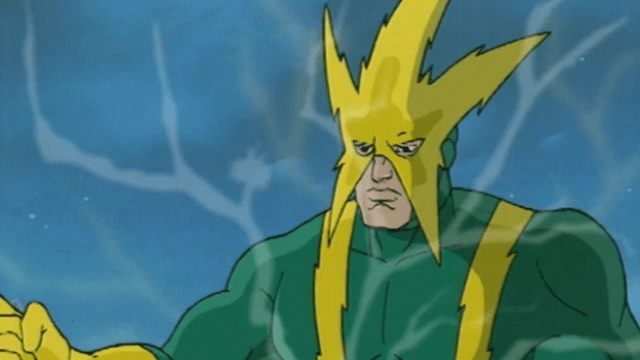
Silver Sable and Spider-Man pursue the Skull and Kragov, but are trapped as the Doomsday Device is revealed. Kragov is strapped into the device, flooded with electricity, and reborn as Electro. He smashes Captain America aside, brings Kingpin to his knees, and hurls the heroes into the air with a vortex before his unstable powers falter. The Insidious Six scatter, Fisk is taken to hospital, and Sable is dismissed — her war is done.
Electro rejects his father, declares himself beyond control, and hijacks the world’s broadcasts. “I am not power’s master — I am power,” he proclaims, freezing Manhattan in place and demanding tribute from the United Nations. The Warriors rally, but Mary Jane, racing to Peter’s side, is caught in the crossfire and electrocuted. Spider-Man is shaken, yet Captain America’s words steel him to fight on.
Electro storms the UN with Skull’s warbots, SHIELD’s Helicarrier falls from the sky, and the city trembles. At the vortex, Spider-Man and Cap confront the Skull, but are overwhelmed. In the final moment, Captain America hurls himself into the vortex with the Skull, sacrificing himself to end the threat. Electro bends the energy to his will, but Spider-Man tricks him into overloading the machine. The vortex collapses, consuming Electro.
The Forgotten Warriors, weary and broken, destroy their old headquarters and disband. Spider-Man takes a single photo to preserve their legacy, then returns to Mary Jane, promising he will always be there — for her, and for the world.
ROGUE’S GALLERY
ELECTRO
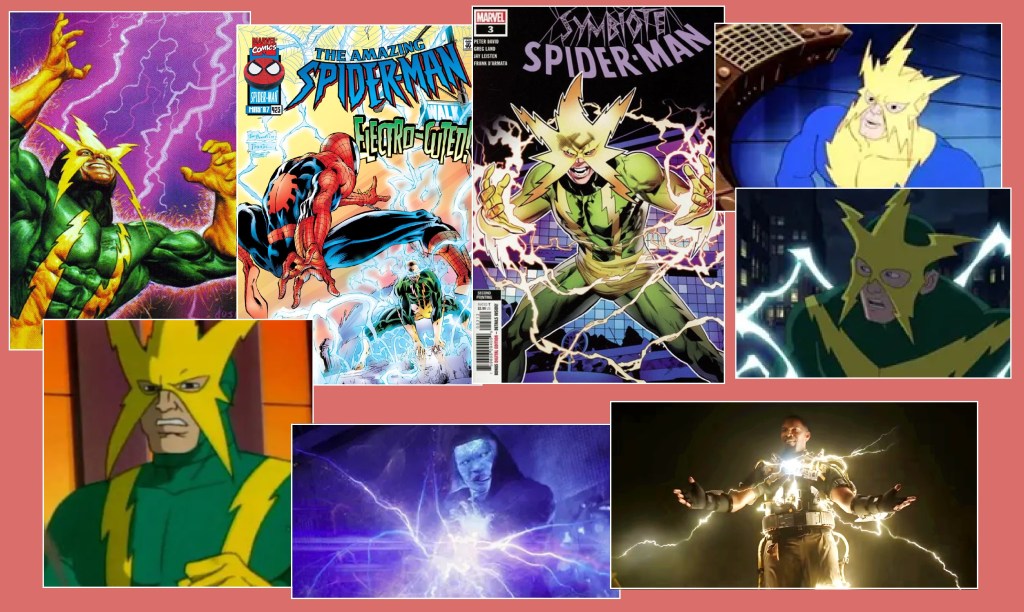
Electro, born Max Dillon, first crackled into Marvel’s pages in The Amazing Spider-Man #9 back in 1964. A lineman struck by lightning while working on a power cable, he emerged with the ability to control electricity itself. In the comics, Dillon was a petty crook elevated by accident into something far more dangerous, a man whose greed and bitterness made him one of Spider-Man’s most enduring foes. His green-and-yellow costume became iconic, a jagged reflection of the power coursing through him.
Yet the animated series of the 1990s took a very different path. In Spider-Man, Electro appeared not as Max Dillon but as Reinhold Kragov, the son of the Red Skull. His backstory was rewritten entirely, tying him to the legacy of Nazi villainy rather than the accident of fate. The only resemblance to his comic counterpart lay in the costume, which was carried over as a visual nod. Otherwise, the character was transformed into something unrecognisable, a plot device to serve the larger arc of the Skull and the Forgotten Warriors.
This divergence was striking. Where the comic Electro was a street-level villain, flawed and human beneath the power, the animated version was a cipher, defined by heritage rather than personality. It was a choice that jarred with fans familiar with the source material, but it also underscored the series’ willingness to reshape Marvel’s mythos to fit its own narrative. Electro in the cartoon was not Dillon at all, but a shadow wearing his clothes, a reminder that adaptation often bends characters until they are almost unrecognisable.




 X-Cess Minutiae
Leave a comment