


SECRET WARS
Chapter I
This episode marks one of the boldest swings the Spider‑Man animated series ever attempted. Years before the Marvel Cinematic Universe would make crossovers commonplace, the show dared to unite heroes and villains from across Marvel’s animated landscape in a single storyline. It is, in essence, a proto‑MCU moment — a Saturday morning experiment in shared universes that felt unprecedented at the time.
Thematically, the episode is about testing ideals. The Beyonder’s experiment pits good against evil, forcing Spider‑Man to step into the role of leader, strategist, and moral compass. He is no longer just the lone hero swinging through New York; here, he must rally icons like the Fantastic Four, Iron Man, Captain America, and Storm against a coalition of villains led by Doctor Doom and the Red Skull. The clash is cosmic, but the heart of the story is about cooperation, trust, and whether unity can overcome division.
It also explores identity and redemption. The Lizard, initially a pawn of evil, is restored to Curt Connors’ consciousness and joins Spider‑Man’s side, showing that even those consumed by darkness can be brought back to the light. Madame Web and the Beyonder watch from above, judging not only the outcome of battles but the choices Spider‑Man makes as a leader.
In retrospect, this episode feels like a blueprint — a daring crossover that foreshadowed the interconnected storytelling Marvel would later perfect on the big screen. For fans, it was a thrill to see so many heroes and villains collide in one place, proof that Spider‑Man’s world was part of something much larger.
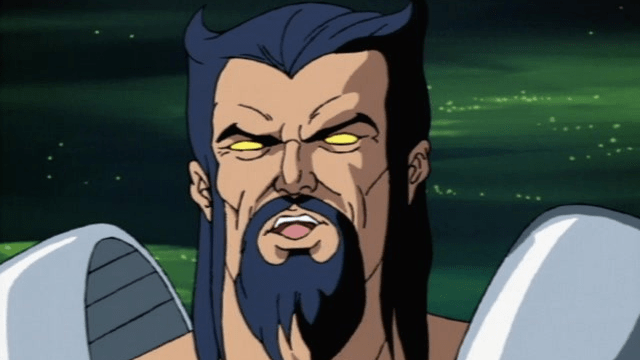
Madame Web transports Spider‑Man into another dimension, where he is brought before the cosmic being known as the Beyonder. The Beyonder has chosen Spider‑Man to participate in a grand experiment: to determine whether good is truly stronger than evil. To test this, the Beyonder creates a paradise planet, then selects Doctor Octopus, Doctor Doom, Alistair Smythe, the Lizard, and the Red Skull as the villains who will invade and corrupt it. By accelerating time, the Beyonder shows Spider‑Man that the planet has already fallen under their control.
Spider‑Man is tasked with leading a team of heroes to reclaim the world. Using an abandoned laboratory and a transporter device, he summons reinforcements: the Fantastic Four — Mister Fantastic, Invisible Woman, Human Torch, and the Thing — along with Iron Man, Captain America, and Storm of the X‑Men. Their arrival marks the beginning of a desperate struggle to restore balance.
The Lizard attacks Spider‑Man, but the heroes subdue him as alien worms swarm the battlefield. Storm and Invisible Woman combine their powers to recharge the failing laboratory, while Iron Man and Mister Fantastic work together to harness alien technology. Their efforts succeed in reactivating the human side of the Lizard’s mind, restoring Dr. Curt Connors’ consciousness. Now in control of himself, Connors joins Spider‑Man’s team, strengthening their ranks.
As the heroes unite, Madame Web and the Beyonder observe with approval. The experiment has only begun, but Spider‑Man’s leadership and the cooperation of his allies suggest that good may indeed prove stronger than evil.

Producers of the show originally wanted more characters to appear in the Secret Wars chapters. There were plans to include the X-Men, as well as characters like Magneto and Mister Sinister. They also planned to use the Hulk and She-Hulk. Unfortunately, costs meant the casts were unavailable and the Hulk rights belonged to Universal at the time.
Iona Morris voiced Storm in Season One of X-Men. She was redubbed and replaced by Alison Seeley-Smith in Season Two. The rest of the X-Men can be seen on the video screens.
Robert Hays reprises his role as Iron Man. Quentin Flynn returns as the Human Torch from Fantastic Four, but is the only member of the cast to return.
The Fantastic Four are wearing their Heroes Reborn uniforms.
Obviously, the symbiote/black costume element has been removed from the story.
SECRET WARS

Secret Wars began in May 1984 and ran until April 1985, marking Marvel’s boldest experiment to date. The premise was simple yet mythic: the Beyonder, a godlike being, transported Earth’s greatest heroes and villains to a patchwork planet called Battleworld, commanding them to fight. The line‑up was vast — Avengers, Fantastic Four, X‑Men, Spider‑Man, Hulk, Magneto, Doctor Doom, Galactus, Ultron, and more — all thrown together in a clash that tested alliances and rivalries alike.
The inspiration behind the event was commercial as much as creative. Toy manufacturer Mattel wanted a new Marvel action figure line to rival DC’s Super Powers, and requested a comic tie‑in that would showcase a broad cast of characters. Marvel responded with Secret Wars, which not only supported the toy line but became the best‑selling comic series in 25 years. What began as a marketing exercise evolved into a landmark in storytelling, proving that crossovers could be both profitable and narratively ambitious.
Its impact was lasting. Secret Wars introduced the alien symbiote that would later become Venom, reshaped Doctor Doom’s mythos, and set a precedent for future crossover events. It showed that Marvel’s universe could be unified under a single narrative, and that readers would follow sprawling, interconnected sagas across multiple titles. Though born of commercial necessity, Secret Wars became a mythic cornerstone, the prototype for every Marvel event that followed.
The Return of Hydro-Man (Part 2) | The Gauntlet of the Red Skull




 X-Cess Minutiae
Leave a comment