


SPIDER-WARS
Chapter II
The final episode of Spider‑Man: The Animated Series carries the weight of legacy. By bringing Ben Parker and Gwen Stacy into the story, it offers Peter a glimpse of the people who shaped his life and the ones he could never save. Their presence makes this finale feel special, almost mythic — a reminder that Spider‑Man’s journey is defined as much by loss and memory as by triumph.
Thematically, the episode is about closure and the lack of it. Spider‑Man proves himself worthy, saves reality, and is promised reunion with Mary Jane, yet the series ends on a cliff‑hanger that has haunted fans for decades. That unresolved note is both frustrating and poignant: it mirrors Peter’s life, where victories are never absolute and personal happiness is always just out of reach.
Despite the unfinished ending, Farewell, Spider‑Man is a finale to a series that remains the definitive animated adaptation of the character. It introduced a generation to Peter Parker’s world, embracing the complexities, soap‑opera entanglements, and moral dilemmas that defined the comics. It dared to tell serialized stories with emotional depth, balancing superhero spectacle with human drama.
The voice cast elevated it further, with performances that gave life and nuance to every character, ensuring the series resonated long after its run. For many, this finale cemented the show as the Spider‑Man cartoon to beat — a bold, ambitious adaptation that captured the heart of the hero better than any animated series before or since.
The Spider‑Men succeed in stopping Spider‑Carnage in his home dimension, but he escapes into the high‑tech Spider‑Man’s world. After the heroes save the civilians there, the Beyonder vanishes, teleporting Man‑Spider away, while Madame Web imprisons the alternate Kingpin back on his Earth. With her powers diminished, Madame Web sends the primary Spider‑Man to remain in this dimension, since the high‑tech Spider‑Man is still paralyzed by his own actions.
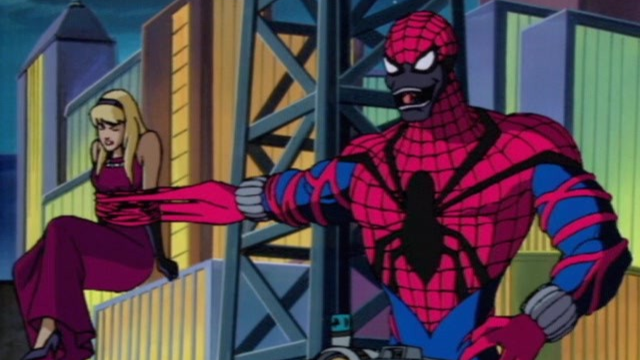
In this reality, Peter Parker’s life has taken a remarkable turn. His identity is public, he has founded the Peter Parker Science Foundation, J. Jonah Jameson no longer despises Spider‑Man, Kingpin serves as his lawyer, he is engaged to Gwen Stacy, and Mary Jane is alive. Yet this paradise is threatened when Spider‑Carnage arrives, manipulating this world’s Kingpin into aiding him until his deception is exposed.
Seeking a way to reach his corrupted counterpart, Spider‑Man discovers that this reality’s Ben Parker is still alive. With Ben’s guidance, he manages to draw out the true Peter Parker buried within Spider‑Carnage. But the Carnage symbiote proves too strong, and Spider‑Carnage hurls himself into an unstable portal, destroying himself in the process.
With the crisis ended, all the Spider‑Men are returned to their home dimensions. The actor who had joined them explains that in his world, Spider‑Man is only a fictional character. Curious, Spider‑Man travels there and meets his creator, Stan Lee, whom he takes web‑swinging across the city as thanks for bringing him to life. Finally, Madame Web rewards Spider‑Man for saving reality by promising to guide him to Mary Jane.

The episode ends the series on a rather unfortunate cliff-hanger – a cliff hanger that would not be resolved until 2025 in both a follow-up comic and a cameo in X-Men ’97. Plans for a sixth season included finding Carnage lost in the past – and finding Mary Jane in Jack the Ripper’s London.
THE FINAL GIRL: GWEN STACY
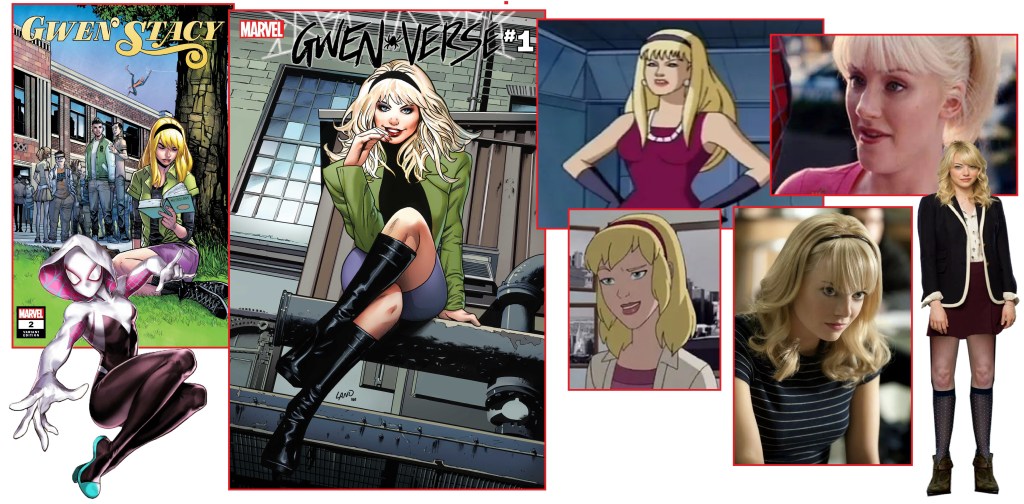
Gwen Stacy’s story begins in the pages ofThe Amazing Spider‑Man in the 1960s, where she was introduced as Peter Parker’s first great love. Her death at the hands of the Green Goblin in The Night Gwen Stacy Died (ASM #121, 1973) became one of the most defining and tragic moments in comic book history, a turning point that reshaped Spider‑Man’s world and cemented her as a symbol of loss and consequence. For decades, Gwen remained frozen in memory, a character referenced but rarely revived, her absence haunting Peter’s journey.
Yet in the last decade, Gwen Stacy has undergone a remarkable transformation. The Spider‑Verse comics of 2014 reimagined her as Spider‑Gwen, an alternate‑universe heroine who was bitten by the radioactive spider instead of Peter. Rebranded later as Ghost‑Spider, she quickly became a breakout star, headlining her own series and appearing in major crossover events. This reinvention gave Gwen agency and power, turning her from a tragic figure into a modern icon.
Her resurgence has been amplified across other media. Emma Stone’s portrayal in The Amazing Spider‑Man films brought her warmth, intelligence, and tragic fate to a new generation. Hailee Steinfeld’s voice work in Spider‑Man: Into the Spider‑Verse and Across the Spider‑Verse made Spider‑Gwen central to the multiverse saga, her character resonating with audiences worldwide. Video games and animated series have embraced her too, often presenting her as a playable hero rather than a supporting character.
What makes Gwen’s revival so striking is how it reframes her legacy. Once remembered only as Peter’s doomed girlfriend, she now stands as a fully realized heroine in her own right. Her popularity reflects a broader shift in comics and culture, where characters once defined by tragedy are reimagined as symbols of empowerment. Gwen Stacy embodies both sides of that coin: the loss that shaped Spider‑Man’s earliest stories, and the rebirth that has made her one of Marvel’s most beloved figures today.
Stan Lee cameos as himself. He mentions the Fantastic Four and finds Madame Web ‘exotic’ – a neat in-joke considering voice actress Joan Lee is his wife.
Ben Parker is voiced by actor Brian Keith in this episode. The actor passed away shortly afterwards. This episode also marks the only appearance of Gwen Stacy.
SPIDER-MAN: MOVIE STAR!
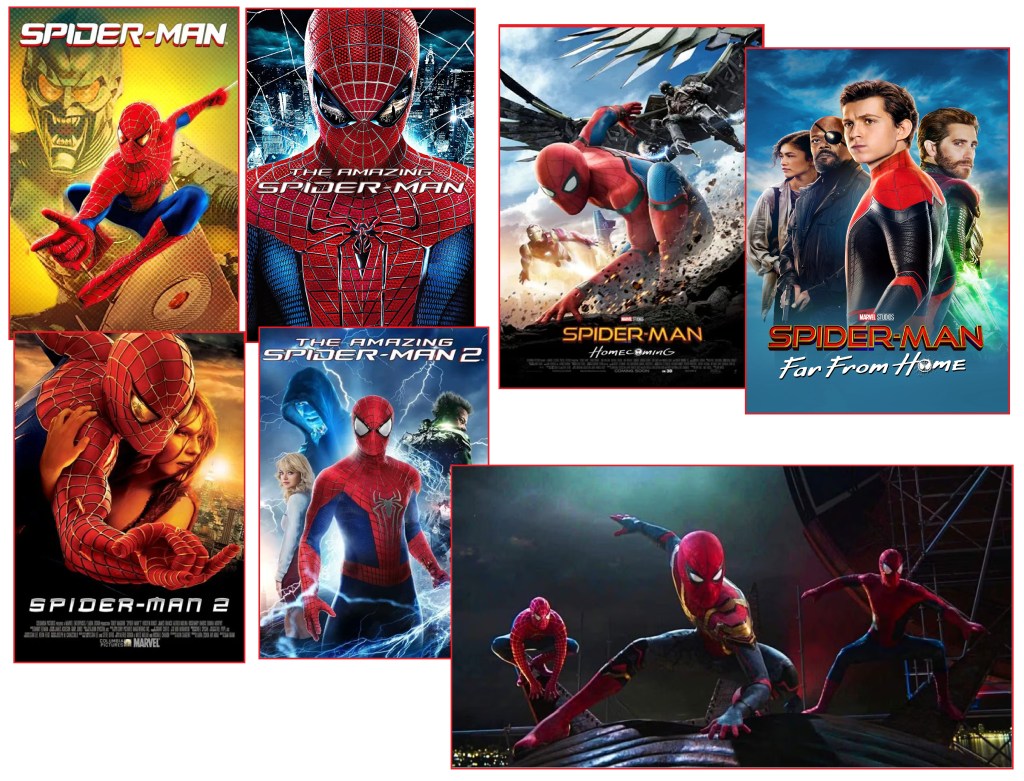
Since his creation in 1962, Spider‑Man has remained one of the most relatable heroes in popular culture. Every generation has found its own Peter Parker, each actor embodying the timeless lesson that with great power must also come great responsibility.
Tobey Maguire was the first to bring Spider‑Man to the big screen in Sam Raimi’s trilogy beginning in 2002. His portrayal captured the earnestness and vulnerability of Peter Parker, grounding the character in themes of sacrifice and duty. For many, Maguire’s Spider‑Man was their introduction to the hero, and his films set the standard for modern superhero cinema.
Andrew Garfield followed in The Amazing Spider‑Man films, bringing a sharper, more restless energy to the role. His Peter was witty, emotional, and deeply human, wrestling with grief and love in ways that resonated with audiences who saw him as a more contemporary reflection of the character. Though his tenure was brief, Garfield’s Spider‑Man left a lasting impression, particularly in his chemistry with Emma Stone’s Gwen Stacy.
Tom Holland then redefined the role for the Marvel Cinematic Universe. His youthful exuberance and vulnerability made him the most “teenaged” Spider‑Man yet, a hero still learning the ropes while balancing school, friendship, and the weight of responsibility. Holland’s Spider‑Man became central to the MCU, embodying the idea that even in a world of gods and titans, the smallest hero can carry the greatest heart.
Together, these portrayals demonstrate Spider‑Man’s enduring relevance. He is not bound to one actor, one era, or one interpretation. Instead, he evolves with each generation, reflecting the struggles and hopes of the time. Whether it is Maguire’s sincerity, Garfield’s emotional depth, or Holland’s youthful optimism, each Spider‑Man teaches the same lesson: power is meaningless without responsibility.
That is why Spider‑Man remains as vital today as he was when Stan Lee and Steve Ditko first created him. He is the hero of the everyday, the champion of the ordinary person thrust into extraordinary circumstances. And as long as new generations continue to discover him, there will always be a Spider‑Man to remind us of the responsibility that comes with power.




 X-Cess Minutiae
Leave a comment