


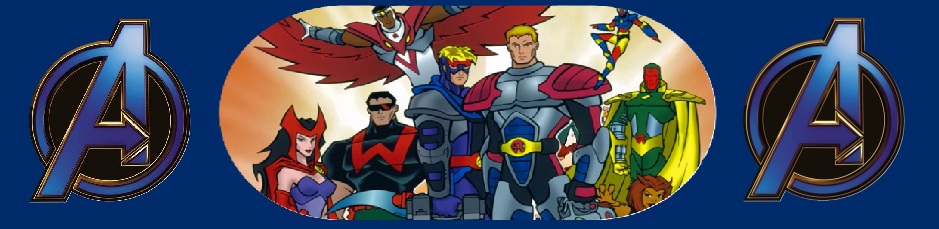
This episode explores the fragile boundary between man and machine, life and legacy. Wonder Man’s critical injury forces the Avengers into a desperate gamble: to preserve Simon’s consciousness within Vision’s synthetic body. What follows is a meditation on identity, grief, and the cost of survival. Scarlet Witch must confront her love for Simon while facing the possibility that he now exists only as fragments within Vision. Ant‑Man and Wasp wrestle with the ethics of science, while Hawkeye and Falcon clash over trust and leadership.
At its heart, the story is about rebirth and responsibility. Vision, torn between Ultron’s programming and Simon’s humanity, must choose who he truly is. Ultron’s assault reminds the team that technology without conscience is a weapon, while Vision’s defiance proves that even artificial life can embrace compassion and loyalty. The episode closes on a bittersweet note: Simon’s body is lost, but his spirit lingers, inspiring Hawkeye to honour his friend’s legacy and Scarlet Witch to believe in the man Vision might become.
This is not just an Avengers battle — it is a story of identity, loss, and the enduring hope that even in the face of grief, something new can rise.
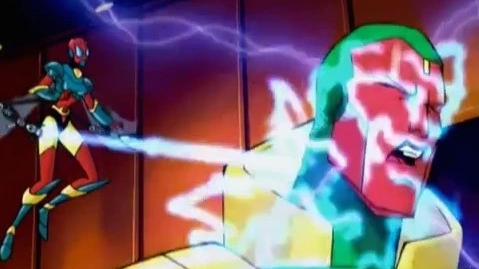
Vision’s attack leaves Wonder Man critically wounded. Scarlet Witch pleads for Simon to respond, while Ant-Man struggles to stabilise him. Tigra and Wasp subdue Vision briefly, and the team retreats to the infirmary. Hawkeye arrives, demanding answers. Hank admits Simon may be beyond saving.
Janet proposes a radical solution: transfer Simon’s consciousness into Vision’s synthetic body. Scarlet Witch, torn, agrees. Ant-Man journeys into Vision’s neural core to install the module. Ultron watches, preparing to reclaim his creation and destroy the Avengers.
Vision awakens — and attacks. The team initiates lockdown. Falcon arrives, invited by Tigra, but clashes with Hawkeye. Vision hesitates, recognising Hawkeye and recalling fragments of Simon. The team restrains him, uncertain if the transfer worked.
Ultron launches a drone assault, targeting Ant-Man and Wonder Man’s body. The Avengers rally. Vision, caught between programming and emerging humanity, defies Ultron and blasts him. Ultron retreats — but steals Simon’s body.
In the aftermath, Hank inducts Vision and Falcon into the Avengers. Falcon accepts with caution. Vision grapples with identity. Scarlet Witch senses Simon within him, but mourns the loss. Hawkeye recommits, vowing to honour his friend’s legacy.
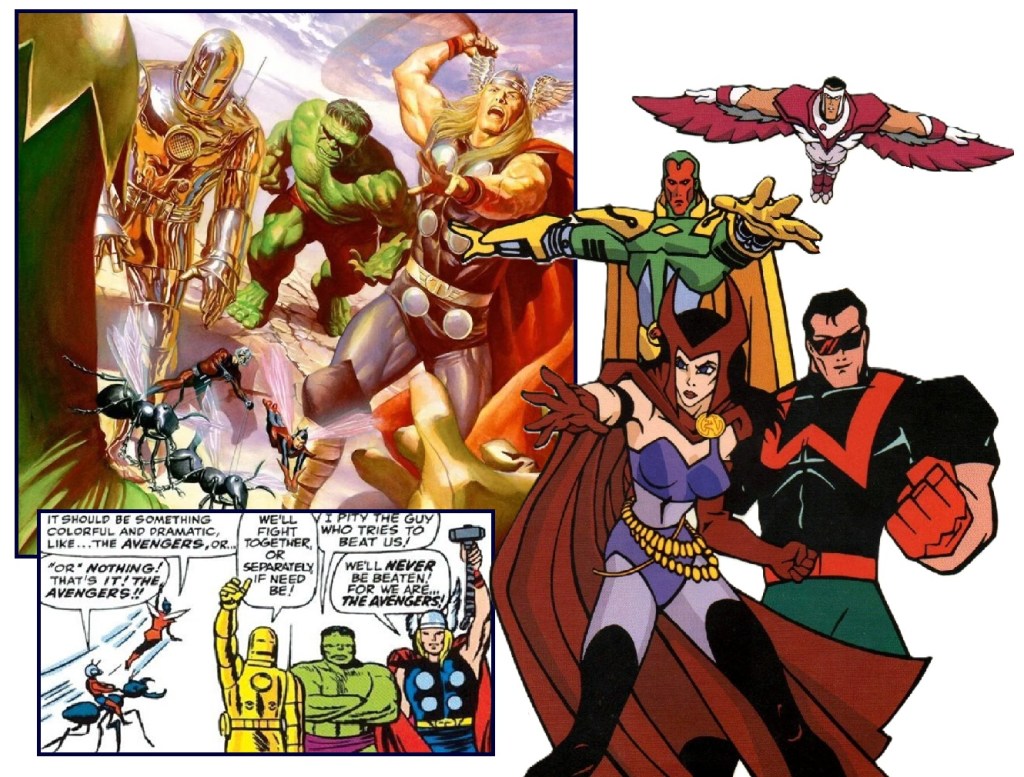
This episode establishes that the founding Avengers in this universe were Ant-Man, the Wasp, Iron Man and Thor. There is no mention of the Hulk – possibly due to his own show on UPN at the time.
Falcon and the Vision officially join the team in this episode.
WONDER MAN: IONIC HERO
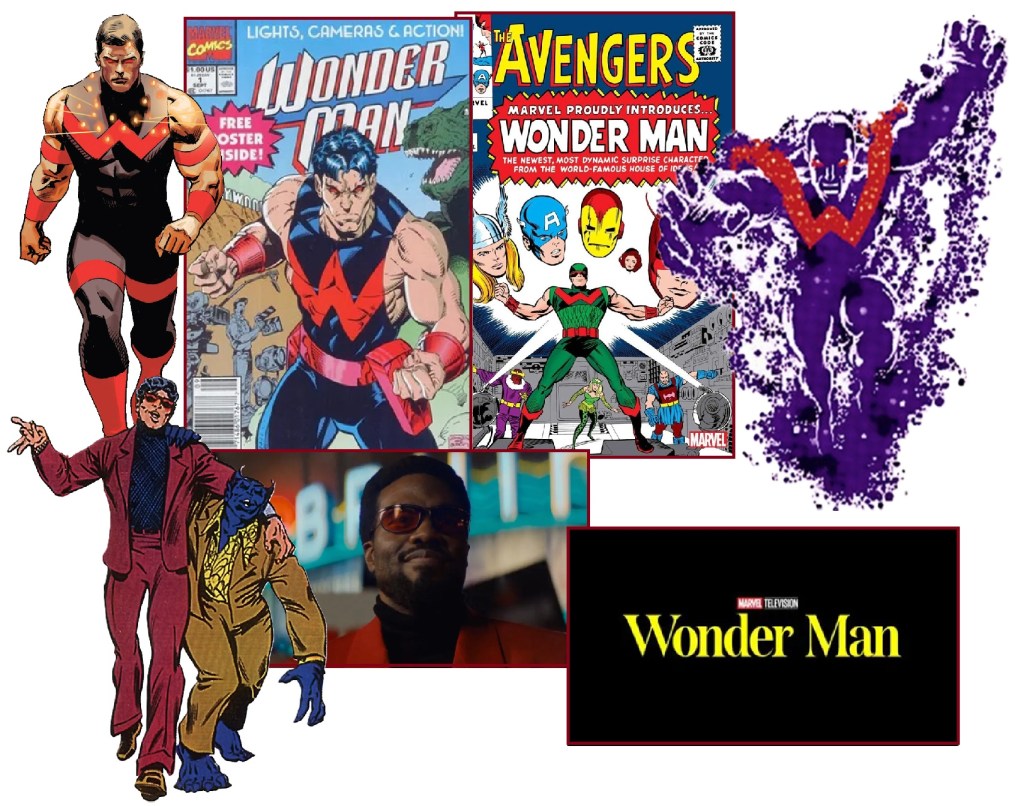
Simon Williams, better known as Wonder Man, has one of the most unusual journeys in Marvel’s pantheon. Created by Stan Lee, Jack Kirby, and Don Heck, he first appeared in The Avengers #9 in 1964. Originally introduced as a reluctant villain manipulated by Baron Zemo, Simon underwent an ionic energy experiment that granted him immense strength and durability. His debut ended in apparent death, but like so many Marvel characters, that was only the beginning.
Resurrected in the Bronze Age, Wonder Man became a fixture of the Avengers, his powers evolving into near‑immortality through his ionic physiology. His storylines often revolved around themes of death and rebirth — he was killed, revived, and transformed multiple times, embodying the instability of identity and the fragility of heroism. Beyond his powers, Simon was unique for his dual life: not only a superhero but also a Hollywood actor, a man caught between fame and responsibility. This duality gave him a distinctive voice among the Avengers, often torn between the glamour of celebrity and the burden of heroism.
In comics, Wonder Man’s relationships defined much of his arc. His bond with the Scarlet Witch was deeply emotional, complicated by Vision’s existence, whose mind was patterned after Simon’s own. His friendship with Beast brought humour and warmth, while his rivalry with Iron Man reflected his origins as a corporate heir who blamed Tony Stark for his downfall. Across decades, Simon’s character became a study in resilience, insecurity, and the search for belonging.
His long‑awaited live‑action debut is finally arriving through Marvel Studios’ Wonder Man series, with Yahya Abdul‑Mateen II cast in the role. This adaptation promises to explore Simon’s dual identity as both superhero and struggling actor, bringing his comic book contradictions into the MCU.
Wonder Man’s legacy lies in his complexity. He is not the most famous Avenger, nor the most straightforward, but his storylines have consistently explored themes of mortality, identity, and redemption. His repeated deaths and resurrections made him a symbol of Marvel’s willingness to push boundaries, while his Hollywood career added a satirical edge to the superhero genre. Today, with his upcoming MCU series, Simon Williams stands poised to step out of the shadows and claim his place as one of Marvel’s most fascinating, if overlooked, icons.




 X-Cess Minutiae
Leave a comment