


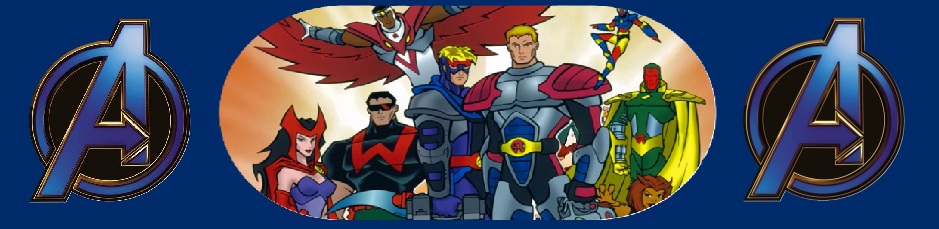
This episode dives straight into one of the Avengers’ most enduring themes: the battle between destiny and free will. Time itself becomes the battleground, and the team is forced to confront the idea that their choices — their victories, their failures, their very identities — may already be written in the pages of history. Kang is a story about heroes trying to protect the present while a conqueror from the future insists that the future has already claimed them. It’s a clash not just of armies, but of philosophies.
The plot unfolds with the sudden arrival of Kang the Conqueror, a warlord from the 41st century who believes the Avengers threaten the stability of his empire. His assault is swift and overwhelming, dragging the team into a conflict they barely understand. As Kang’s forces descend, the Avengers must piece together his motives while struggling to defend a timeline he insists is already his. The episode balances action with mystery, revealing just enough of Kang’s history to make him terrifying without giving away the full scope of his power.
Kang himself looms over the story like a force of nature. Unlike villains driven by greed or vengeance, Kang is powered by certainty — the belief that he is destined to rule. His mastery of future technology makes him nearly unstoppable, and his knowledge of the Avengers’ potential futures gives him an edge no ordinary foe could match. Even in this early animated incarnation, the episode captures the essence of Kang: a villain whose threat is not just physical, but existential. He doesn’t want to defeat the Avengers; he wants to overwrite them.
By the end, the Avengers realise that Kang is not a one‑off adversary but a long‑term danger, a conqueror who can return from any era, in any form, with any advantage time can offer. The episode sets the tone for the series’ larger conflicts, showing that the team’s greatest battles won’t always be fought in the present. Kang stands as an early reminder of how vast the Avengers’ world truly is — and how even the mightiest heroes can find themselves dwarfed by the weight of history
In New York, an ancient Egyptian artefact is disturbed during a museum tour, unleashing Kang the Conqueror — a tyrant from the 41st century. His arrival fractures time itself: civilians freeze mid-motion, buildings decay in seconds. Kang seeks the obelisk that once imprisoned him, now the key to reclaiming his dominion.
Falcon alerts the Avengers. Their first clash with Kang’s Temporal Tracker reveals his terrifying power. Tigra, Hawkeye, and Falcon engage in coordinated strikes while Vision and Scarlet Witch analyse the tech. Kang escapes. The obelisk vanishes.
At the mansion, Hank Pym identifies the obelisk as a temporal key. Vision confirms Kang’s origin. Ant-Man interfaces with the artefact, glimpsing a future Earth enslaved under Kang’s rule. Kang, unable to find the obelisk, attacks the mansion. He captures Wasp and demands the artefact. Ant-Man surrenders it — but it’s a trap.
The obelisk destabilises, dragging Kang back into his prison. Vision and Tigra detonate it at high altitude, reversing the city’s decay. New York is restored. The Avengers endure.
In the aftermath, Wasp seals Kang’s prison orb in the vault. Hank and Janet reflect on the cost. Falcon and Hawkeye acknowledge the impossible choice they made — and the future they may have rewritten.
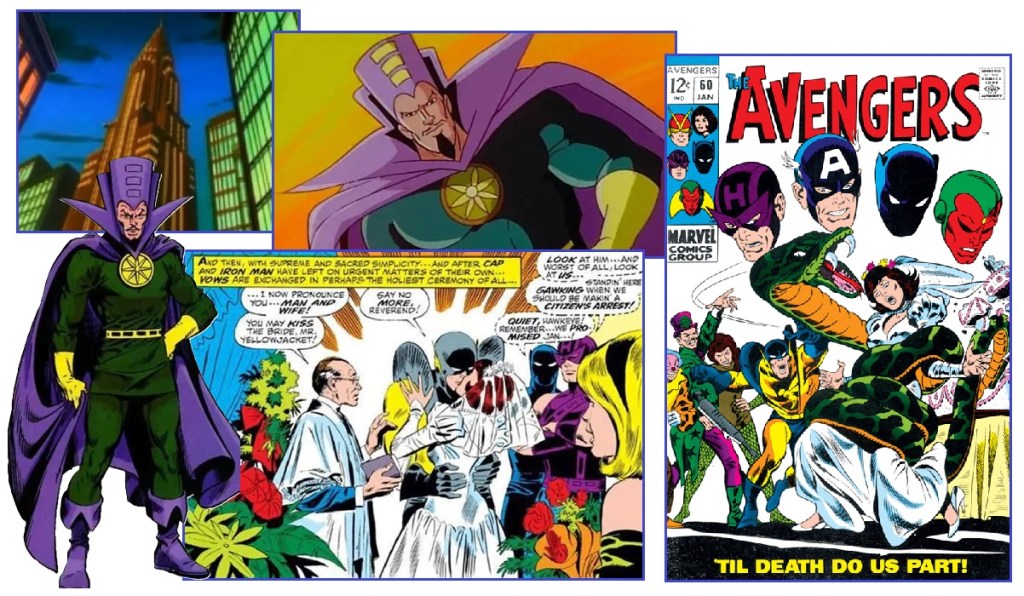
The Kingpin’s base, the Chrysler Building, can be seen when Kang is addressing the world.
This episode confirms that Hank and Janet are married.
This animation marks the first time that Kang the Conqueror had been used outside of the comics. In the Marvel Cinematic Universe, he’s played by Jonathan Majors in various projects and guises. His future counterpart, Immortus, briefly appeared in X-Men‘s Beyond Good and Evil.
THE MANY GUISES OF KANG THE CONQUEROR
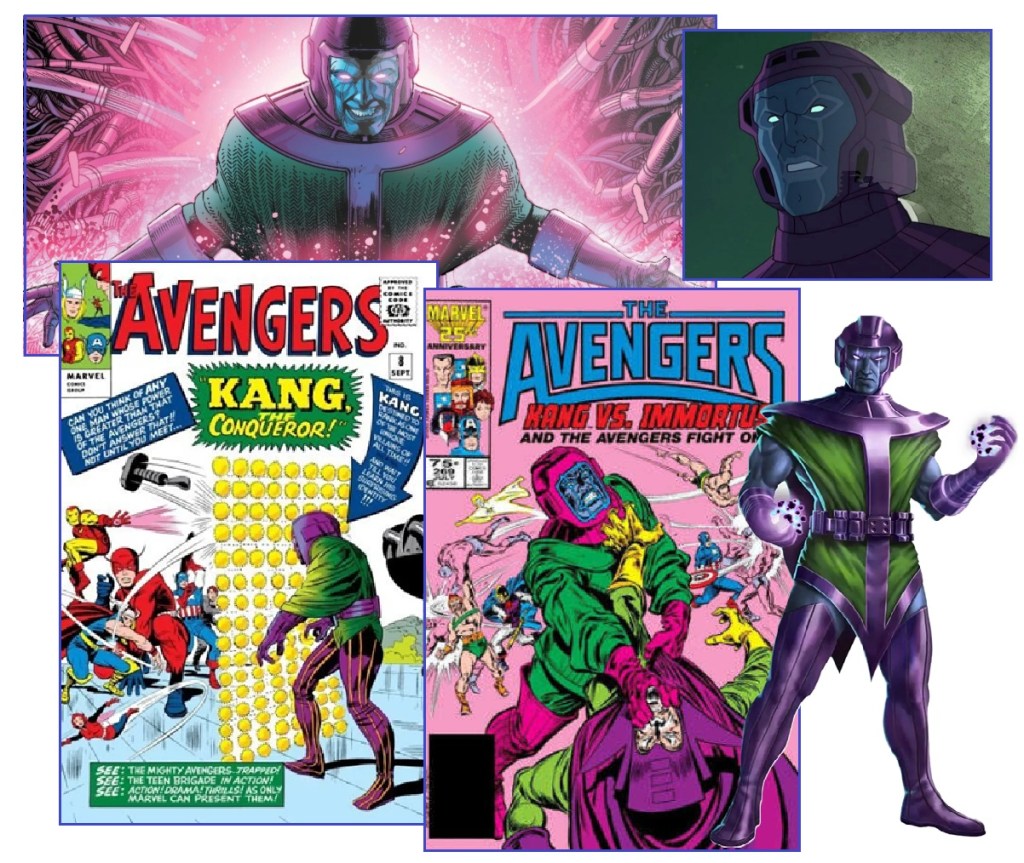
Kang the Conqueror is one of Marvel’s most enduring villains, a time‑travelling warlord whose identity is scattered across centuries. First appearing in The Avengers #8 in 1964, he began as Nathaniel Richards of the 31st century, a brilliant man who chose conquest over compassion. His story is defined by the many versions of himself — Rama‑Tut, the Scarlet Centurion, Immortus, even the young Iron Lad — each a reflection of the same man wrestling with destiny.
Kang’s battles with the Avengers stretch across eras and realities, making him less a single foe and more an inevitable force. His love for Ravonna, his obsession with order, and his fear of becoming his own worst future self give him a tragic edge beneath the armour.
On screen, Kang has appeared in animated series and now stands as a major presence in the MCU, where his multiversal nature makes him both unpredictable and unavoidable. He endures because he embodies the central Marvel question: can anyone escape the future they fear becoming, or does the attempt to control time only tighten its grip?




 X-Cess Minutiae
Leave a comment