


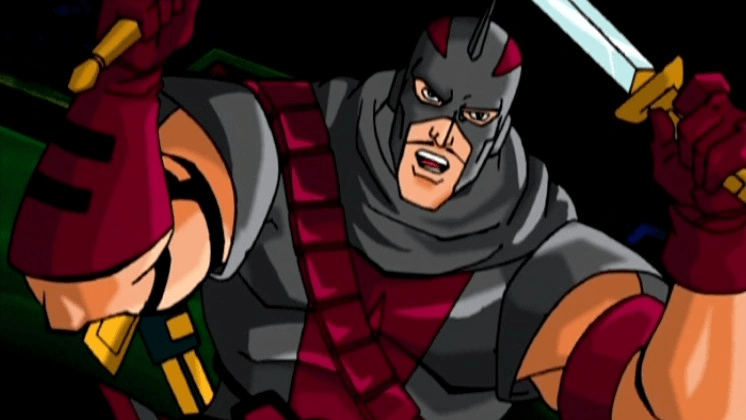
This episode turns its focus inward, exploring the uneasy line between redemption and relapse. Come the Swordsman is a story about second chances — who deserves them, who fears them, and who refuses to believe in them. The Avengers are forced to confront the uncomfortable truth that not every ally arrives with clean hands, and not every villain is beyond saving. Trust becomes the central tension, as the team must decide whether a man defined by betrayal can ever truly stand among heroes.
The plot begins with the sudden reappearance of the Swordsman, a figure tied deeply to Hawkeye’s past. Once a mentor, later an enemy, Jacques Duquesne arrives with warnings of a looming threat, but his history makes every word suspect. As the Avengers investigate, they find themselves caught between suspicion and necessity, unsure whether they are being led into danger or being offered a genuine plea for help. The episode balances action with character drama, using the Swordsman’s presence to test the team’s unity.
What elevates the episode is the Swordsman himself — a man defined by contradictions. He is skilled, charismatic, and undeniably dangerous, yet beneath the swagger lies a lifetime of regret. His shifting loyalties make him unpredictable, and the Avengers must navigate the possibility that he may betray them again. But the episode also hints at the tragedy of a man who has spent years trying to outrun his own mistakes, making him one of the more complex figures to cross the team’s path.
By the end, Come the Swordsman positions Jacques as a wildcard in the Avengers’ world — neither fully trusted nor entirely dismissed. His presence expands the emotional landscape of the series, reminding viewers that heroism is rarely straightforward and that redemption, when it comes, is often messy. It’s a quieter episode than the Kang spectacle before it, but no less important, grounding the series in the human flaws and fractured loyalties that make the Avengers more than just a team of costumes and powers.
Falcon and Hawkeye spar in training, but Clint’s reckless arrow nearly kills him. Tensions flare. When Sikorsky briefs the Avengers on a virus called Mythrax and a string of circus-linked robberies, he questions Hawkeye’s place on the team. Clint quits.
Out of costume, Clint returns to the circus and reunites with his old mentor, the Swordsman. They recall their criminal past. Swordsman introduces Clint to the Ringmaster, and Clint offers his skills as an archer. When the Avengers confront the circus mid-heist, they find Hawkeye among them. Vision counters the Human Cannonball with shifting density. Ringmaster escapes, leaving a bomb and illusions. Redwing identifies the real one, is injured in the blast, but Falcon saves him.
The circus trucks go invisible, but Vision intercepts them. Ringmaster conjures a python illusion, which Scarlet Witch turns against him. Hawkeye and Swordsman flee. Ringmaster threatens the team with a vial of Mythrax — but it’s empty. Swordsman betrayed him.
In the sewers, Swordsman reveals a Mythrax bomb and plans to detonate it under orders from a greater force. Hawkeye fails to stop him, but Ant-Man disarms the bomb from within. Back at the mansion, Hawkeye and Falcon argue again. The team jokes that Ringmaster’s tech could help them vanish from the drama.
Elsewhere, Swordsman reports to Zodiac. orders him torn into twelve pieces — one for each sign.
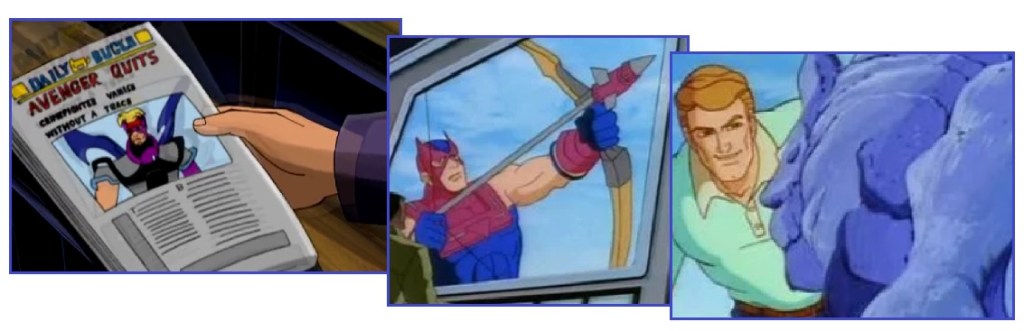
The newspaper that Hawkeye looks at is Spider-Man‘s Daily Bugle.
Hawkeye’s loyalties were also question in Iron Man‘s The Defection of Hawkeye. Sikorsky makes a reference to Clint saving the President in Avengers Assemble (Part 1).
THE SWORDSMAN: VILLAIN, MENTOR, HERO
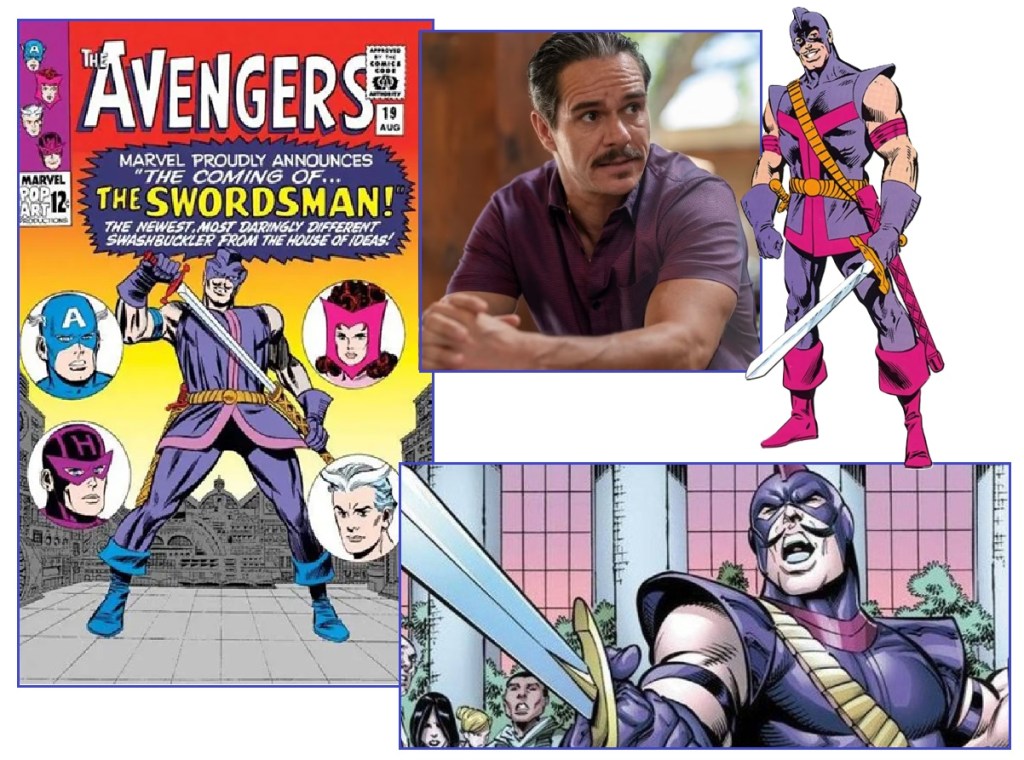
The Swordsman has always been one of Marvel’s most complicated Avengers, a man who walked the line between villainy and redemption long before it became fashionable. Introduced in The Avengers #19 in 1965, Jacques Duquesne began as a carnival performer and master swordsman who trained a young Clint Barton before Hawkeye ever picked up a bow. His early years were marked by crime, betrayal, and shifting loyalties, yet beneath the bravado was a man desperate for purpose.
His path eventually led him to the Avengers, where he became one of the team’s earliest reformed antagonists. The Swordsman’s tenure was turbulent — he struggled with guilt, insecurity, and the shadow of his past — but he also found love with Mantis, a relationship that gave him a rare moment of grace. His death defending her remains one of the Silver Age’s most poignant sacrifices, a reminder that even the most flawed characters can find redemption.
In the MCU, the role was reimagined through Jack Duquesne in Hawkeye, played with charming flamboyance by Tony Dalton. While not a direct adaptation of the comic version, the series nods to Jacques’ history as a swordsman, mentor figure, and morally ambiguous presence orbiting Clint Barton’s life. The MCU’s Jack is more playful than tragic, but the lineage is unmistakable: a man defined by skill, swagger, and a past that never quite sits still.
Across comics and screen, the Swordsman endures as one of Marvel’s great almost‑heroes — a man who stumbled often, but in the end chose to stand with the Avengers, proving that redemption is a blade that cuts both ways.




 X-Cess Minutiae
Leave a comment